The gap is visible in a single cabbage
Naogaon farmer Saidul Islam sold cabbages to wholesalers for Tk 8 to Tk 10 each. The same vegetables sold for Tk 20 to Tk 25 in the district town and around Tk 40 in Dhaka. A Dhaka shopper therefore paid roughly four to five times the amount Saidul received, yet the higher retail price did not protect him from a loss.
Contents
- The gap is visible in a single cabbage
- What the CPD figures reveal about the supply chain
- Costs rise even when harvests are good
- Perishable food forces quick and costly decisions
- The result is an exit from farming
- Credit and machinery do not fill the gap
- How the pressure has accumulated
- A digital price trail could show where costs jump
- The response must work for farmers and shoppers
- Key Points
Saidul described the economics of harvesting one bigha, a local land measurement, and selling the crop for nearly Tk 40,000.
Traders are making profits, while we are losing around Tk10,000 even after selling the cabbages grown on one bigha for nearly Tk40,000.
A similar gap appears in staple foods. A Centre for Policy Dialogue (CPD) study presented in July 2026 found that medium quality rice sold for an average of Tk 30.65 per kilogram at the farm level, compared with Tk 59.69 at retail. The difference was Tk 29.04 per kilogram, with the farm level amount equal to about 51 per cent of the retail price.
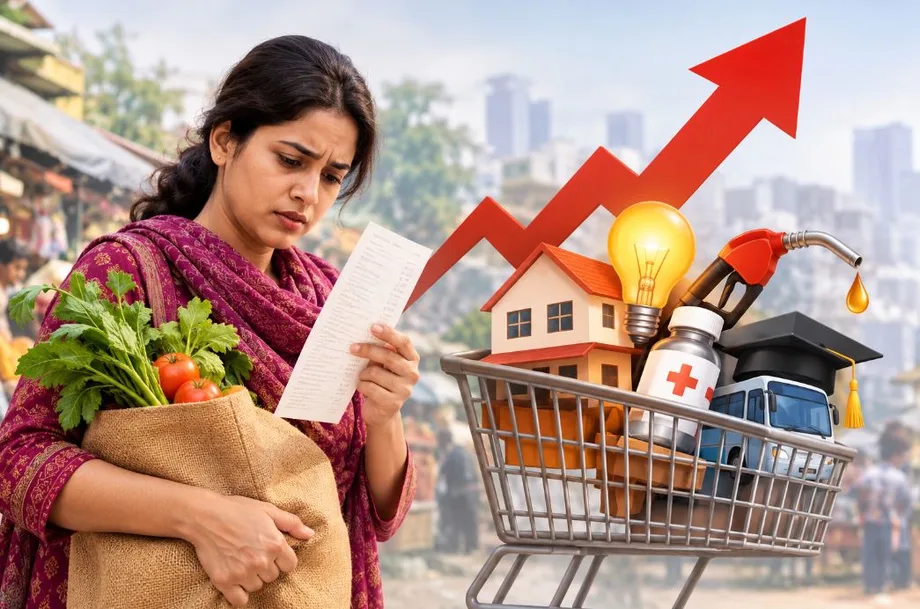
These figures connect two pressures that are often discussed separately. Farmers can lose money even when shoppers consider food expensive, while consumers receive little relief when farms produce abundant harvests. The central issue is how costs, services and profits accumulate as food moves from a field to a city shop.
What the CPD figures reveal about the supply chain
The CPD research found that green chilli prices rose by 116 per cent between producer and retail levels. The increase was around 100 per cent for medium quality rice and 87 per cent for onions. A 116 per cent increase means the final price was 2.16 times the producer price. These percentages measure changes between market stages, with transport, storage, spoilage, handling and trader margins all sitting inside the gap.
Intermediaries perform work that many small farmers cannot easily do themselves. Collectors assemble produce from numerous plots, wholesalers handle larger volumes, and distributors and retailers deliver food to places where people shop. Transport, storage and distribution have genuine costs, so removing every trader would not automatically make food cheap or ensure that farmers receive a fair return.
The concern is the difficulty of seeing where an unusually large increase occurs and whether it reflects a real service. Long supply chains, limited competition, inadequate storage and unequal bargaining power can leave small producers accepting the price offered to them. Urban consumers, facing the final bill, have equally little visibility into how that bill was built.
A transparent chain would distinguish necessary costs from possible manipulation. It would also allow authorities to examine traders who abuse a dominant position without treating every intermediary as predatory.
Costs rise even when harvests are good
In Jamalpur's Madarganj, farmer Zahurul Haque said cultivating chillies on one bigha cost Tk 20,000 last year and Tk 35,000 this year, an increase of 75 per cent. The price he received moved in the opposite direction, falling from around Tk 35 per kilogram to Tk 15 to Tk 17. His experience shows how a farmer can face a higher investment and a lower return in the same season.
Input prices have climbed across agriculture. Over four years, diesel prices rose by 69 per cent, electricity tariffs for irrigation by 45 per cent and potato seed prices by as much as 75 per cent. Urea and TSP fertiliser prices increased by 23 to 33 per cent, agricultural wages doubled, and storage, transport and other costs rose by at least 50 per cent. Farmers also say they cannot consistently obtain fertiliser at prices fixed by the government. Inflationary pressure intensified after Russia's invasion of Ukraine in 2022.
Agriculture department data show that the cost of producing a kilogram of Boro rice increased by Tk 8.11 over five years. For Boro paddy, the government set a procurement price of Tk 1,440 per maund, while farmers sold for Tk 800 to Tk 950 in the open market. Using the common Bangladeshi measure of 40 kilograms per maund, that amounts to Tk 36 per kilogram under procurement, compared with Tk 20 to Tk 23.75 in the open market. Prices rose only after many farmers had already sold their harvests.
Even recognised producers are under strain. Abu Hanif of Khayrat village in Karimganj, named the country's best jute seed producer in 2023, said his rice profit had fallen from Tk 10,000 to Tk 12,000 per bigha four years ago to Tk 3,000 to Tk 5,000. Vegetable production costs have doubled for him, while profits have fallen by at least half. Bumper harvests can deepen the difficulty when a surge in supply pushes prices down by 40 to 50 per cent, sometimes below production costs.
Perishable food forces quick and costly decisions
Poultry exposes another side of the problem. Government data put the cost of producing a kilogram of broiler chicken at about Tk 161.55, yet farmers are often compelled to sell it for Tk 120 to Tk 130. That leaves them receiving Tk 31.55 to Tk 41.55 less than the stated production cost for every kilogram. Fish farmers also face squeezed margins, while consumers continue to pay much higher retail prices.
Fish, milk and meat give producers little time to wait for a better buyer. Without cold storage, processing facilities and organised marketing channels, farmers may have to sell quickly or watch their produce spoil. This weakens their bargaining position before a trader begins negotiating. Vegetables face a related risk, although the speed of spoilage varies by crop and storage conditions.
Md Abdul Hye Al Mahmud, Additional Secretary at the Ministry of Agriculture, said profitability differs across regions, with farmers making money in some districts and incurring losses in others. He pointed to agricultural cards and the delivery of fertiliser and seeds as forms of government support, and identified storage as a wider need.
Every upazila needs a cold storage facility. If cold storages are established across the country, farmers will benefit. Being able to preserve their produce will help them make profits.
Storage changes the timing of a sale. A farmer who can safely hold produce is less dependent on the first available buyer, while processing and chilling can reduce waste. These facilities require investment and accessible services rather than simply telling farmers to negotiate harder.
The result is an exit from farming
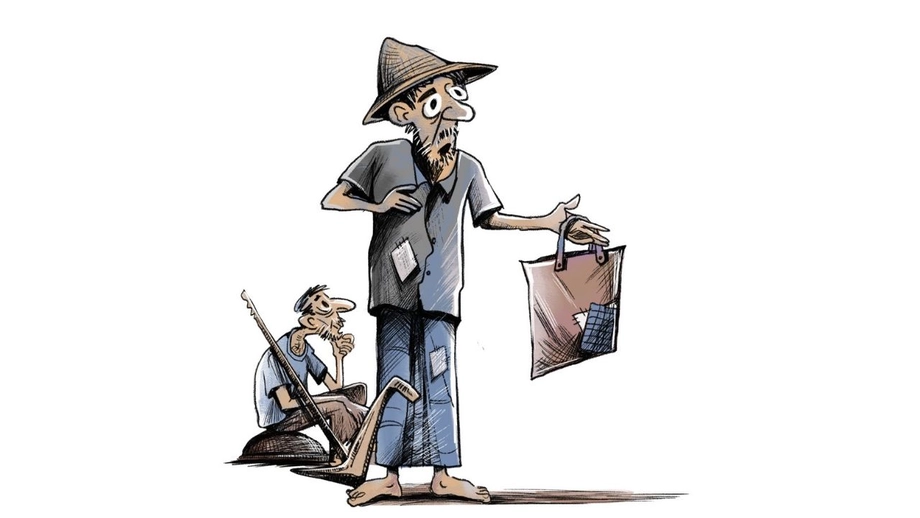
Jamal Hossain stopped cultivating five bighas two years ago after struggling to support his family. He now runs a grocery shop in Ahsanganj Bazar in Atrai upazila, Naogaon, earning a steadier income while leasing his farmland to sharecroppers. Fazlu Mia of Lakshmipur left farming to become a livestock broker, saying that crop sales could not recover cultivation costs and that available labourers demanded higher wages.
Official figures show that Naogaon lost nearly 11,000 hectares of arable land over a decade. A 2023 study covering 818 households across the district's 11 upazilas recorded several new occupations among small farmers: 12 per cent had become drivers of battery powered vans, 20 per cent agricultural day labourers, 15 per cent seasonal rickshaw pullers and 26 per cent had moved into small businesses. Elsewhere, Akhil Kumar of Manda converted six bighas into fishponds, while Sadekul Islam of Hapania leased out three bighas and began selling fish at local markets.
This movement is occurring despite substantial national output. The Food and Agriculture Organization ranks Bangladesh third globally in rice production, seventh in potato production and first in jute production. Agriculture contributes around 11 per cent of gross domestic product but directly employs 45 per cent of the workforce. High production can therefore coexist with insecure rural livelihoods.
Humayun Kabir, a professor of agricultural economics at Bangladesh Agricultural University, said the government needed to protect those livelihoods.
Farmers must be able to make a profit from their businesses. Their enterprise and initiative are essential to keeping the economy moving.
AKM Ruhul Amin, a professor of agronomy at Sher-e-Bangla Agricultural University, warned that the departure from farming could put food security at risk. He called for subsidies on fuel, electricity and fertiliser, together with affordable access to modern machinery.
Credit and machinery do not fill the gap
The agricultural loan disbursement target for the current fiscal year is Tk 60,000 crore, equivalent to Tk 600 billion. Farmers nevertheless describe paperwork and procedural barriers when seeking bank credit. Sharecroppers face particular difficulty meeting land ownership and tax documentation requirements, even though they are the people cultivating the land.
A Bangladesh Bank study published in December 2024 found that 25 per cent of borrowers received less credit than they needed, while 12 per cent received less than the amount approved. Many farmers turn to organisations and informal lenders outside the banking system. Effective interest rates on loans from nongovernmental organisations can reach 30 per cent. Repayment instalments may fall due before harvest, and crop losses can force borrowers to sell livestock or take new loans to repay old ones.
Machinery offers savings in labour but demands money that small producers rarely have. According to the Bangladesh Agricultural Research Council, a combine harvester can harvest one bigha of paddy in 20 to 25 minutes and cover up to 30 bighas in a day. The same work can require as many as 15 labourers per bigha. A combine costs Tk 25 lakh to Tk 30 lakh, or Tk 2.5 million to Tk 3 million, while a rice transplanter costs Tk 12 lakh to Tk 15 lakh.
A 2023 survey put the average farm size at 0.6 hectares, and 40 per cent of farmers said machinery services were unavailable in their areas. Small plots, narrow field boundaries and muddy low land also restrict heavy equipment. Muhammad Ashik-E-Rabbani, a professor of farm power and machinery at Bangladesh Agricultural University, has proposed government support to make equipment affordable and encourage entrepreneurs to rent machinery to farmers. Rental services would spread the purchase cost across many users.
How the pressure has accumulated
Several dated markers show that the present price dispute sits on top of years of rising costs and changing farm livelihoods.
- 2022: Inflationary pressure on farm inputs intensified after Russia's invasion of Ukraine.
- 2023: The Naogaon household study documented movement into other occupations, while a separate survey put average farm size at 0.6 hectares.
- December 2024: Bangladesh Bank published its findings on farmers receiving less credit than they needed or had been approved.
- July 2026: CPD presented its comparison of producer and retail prices for chilli, rice and onions.
The more recent cabbage, chilli, paddy and broiler figures show what those pressures mean in practice: higher production bills, weak selling prices and continued losses even as retail food remains expensive.
A digital price trail could show where costs jump
One practical proposal is a digital record of buying and selling prices at every stage, from farmers to collectors, wholesalers and retailers. Entries for transportation and handling costs would accompany those prices. Instead of seeing only a cheap farm sale and an expensive city purchase, regulators could follow the product through the chain.
Price records would locate an increase, while the accompanying cost entries and market inspections would help explain it. An unusually large jump could trigger an investigation into possible manipulation. Regular monitoring and firm action against proven price fixing would give the records a purpose beyond data collection.
The system could begin in selected markets, allowing officials to test reporting requirements before expanding it. The digital price trail remains a proposal rather than an announced national programme, and no start date or list of pilot markets has been specified.
Mohammad Kamruzzaman, deputy director of the market division at the Department of Agricultural Marketing, said removing unnecessary intermediaries could reduce consumer prices. The word unnecessary matters. A shorter chain can cut duplicated margins and handling, but farmers still need transport, aggregation, storage and access to buyers. The objective is a chain whose charges can be examined, not one without logistics.
The response must work for farmers and shoppers
Cooperatives in each upazila could pool produce and give small farmers greater bargaining power. Direct sales outlets and purchasing agreements between farmer cooperatives and retailers could shorten some routes to market. Chilling centres, accessible cold storage, processing facilities and better rural transport would address the physical losses and urgent sales that weaken producers. Subsidies and duty exemptions on animal feed, fish fry and other essential inputs would tackle costs before food enters the supply chain.
Households have already experienced the other end of this problem. When food prices climbed despite a bumper Boro harvest in 2025, the General Economics Division calculated that rice accounted for 34 per cent of food inflation in March, fish for 27 per cent and vegetables for 14 per cent. By July 4, coarse rice was selling for Tk 55 to Tk 58 per kilogram, and some shoppers were buying vegetables in portions as small as 250 grams.
Coastal farming shows why prices are only one part of the response. In Shyamnagar, where the agriculture office lists 71,000 farmers and 17,539 hectares of cultivable land, farmers returning to crops after years of shrimp cultivation have faced salinity, irrigation shortages, waterlogging and insufficient cold storage. Some borrowed from dealers, moneylenders and microfinance institutions to pay for seed, fertiliser and pesticides before harvest.
Continued losses could drive more small producers out of agriculture, weaken domestic production and increase dependence on imports. A transparent price trail, enforceable market oversight, affordable credit and practical storage would give farmers a better chance to recover their costs. Those measures would also help consumers by reducing waste, exposing unjustified charges and preserving competition among the businesses that move food.
Key Points
- CPD found price increases of 116 per cent for green chillies, around 100 per cent for medium quality rice and 87 per cent for onions between producer and retail levels.
- Medium quality rice rose from Tk 30.65 per kilogram at farms to Tk 59.69 at retail.
- A Naogaon farmer sold cabbages for Tk 8 to Tk 10 each, while they reached around Tk 40 in Dhaka.
- Rising diesel, electricity, seed, fertiliser, labour, storage and transport costs have eroded farm returns.
- Broiler farmers often receive Tk 120 to Tk 130 per kilogram against a stated production cost of about Tk 161.55.
- Nearly 11,000 hectares of arable land were lost in Naogaon over a decade as farmers moved into other work.
- Credit shortfalls, expensive machinery and inadequate storage add to the pressure on small producers.
- Proposals include a digital price trail, closer market monitoring, cooperatives, direct purchasing, cold storage and support for essential inputs.