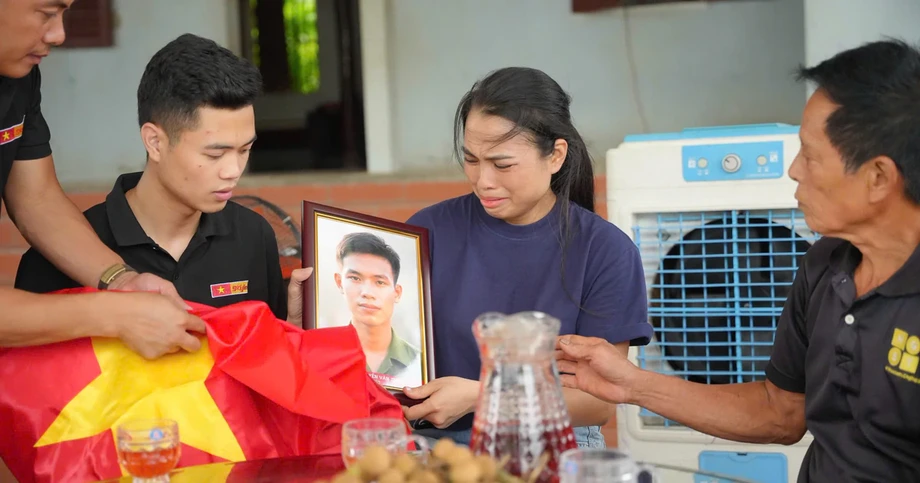
The 2 a.m. phone call behind a mission of remembrance
At about 2 a.m., Khuất Văn Hoàng sent a family the portrait they had spent years trying to recover. Their relative, a Vietnamese martyr, had left behind a photograph so badly damaged that earlier attempts to restore it had failed. Hoàng, then a graphic design student, agreed to help. Soon after he sent the finished image, his phone rang. The family were sitting together, crying as they saw their relative's face clearly for the first time in years.
Contents
- The 2 a.m. phone call behind a mission of remembrance
- The patient craft behind each restored face
- Three days too late for a waiting mother
- A love story preserved beyond war and formal titles
- When the loss is recent and the family photograph is incomplete
- Turning family memories into history for young viewers
- Why 99 digital creators were brought together
- Heritage routes across Ho Chi Minh City
- Remembrance, community care and a discussion about AI
- What Skyline hopes the attention will achieve
- Key Points
That call became the starting point for a mission lasting five years. Hoàng, now 23 and living in Hanoi, is deputy head of the Skyline photo restoration group. Together, its members have restored more than 13,000 memorial portraits and returned them to families, bringing faces once blurred by damage and time back into homes and family stories.
The Vietnamese term liệt sĩ refers to people who died serving the nation and are honored as martyrs. Many were killed during wars, while others died on duty in peacetime. A di ảnh is a memorial portrait used by relatives to remember and honor someone who has died. For families with no other clear picture, restoring one can mean recovering the face of a person whom children or grandchildren have never seen.
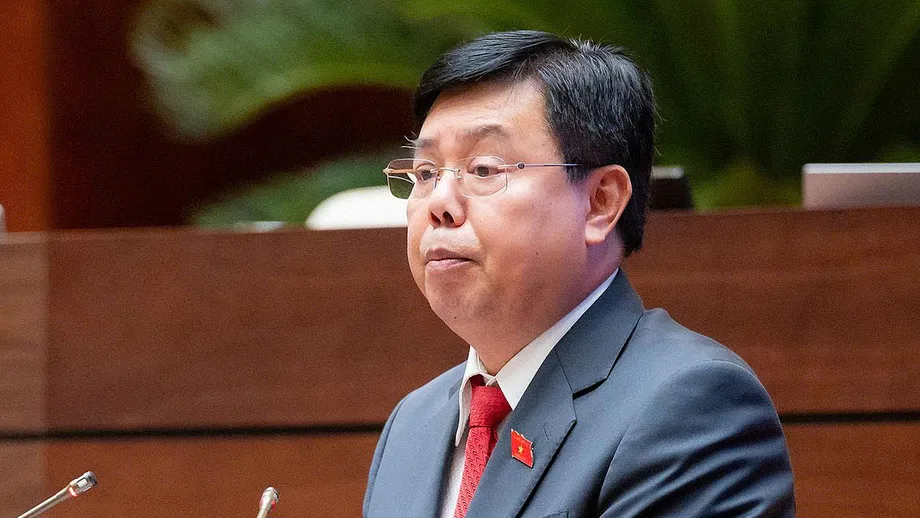
By late November 2026, Hoàng's work had also brought national recognition. He was one of 99 digital creators invited to a gathering in Ho Chi Minh City on 28 and 29 November, organized for the first time by the Central Committee of the Ho Chi Minh Communist Youth Union. The program honors young people creating positive digital content and aims to connect them through a new network.
Hoàng said the emotions of that first family gave him the reason to continue.
Those tears urged me to continue this work.
The patient craft behind each restored face
The project began in 2021, during the COVID-19 pandemic. Hoàng was studying graphic design when he started editing and restoring memorial photographs without charge for families who could not go out. He shared his work on social media. Eventually, a message arrived asking whether he could rescue the severely damaged portrait of a martyr. The late night restoration and the tearful phone call that followed changed the direction of his volunteer work.
Skyline's early restorations were completed entirely by hand, before artificial intelligence was available to assist the group. Hoàng and other members carefully redrew facial contours, hair, eyes and military uniforms. Artificial intelligence, commonly called AI, can automate parts of image processing, but their early method required repeated digital drawing and close visual judgment. Depending on the damage, one portrait could take anywhere from a single day to several months. No current breakdown was given of how the group now divides its work between manual editing and software.
Hoàng, speaking as Skyline's deputy head, described the portraits as a way for young people to express gratitude and maintain a connection with earlier generations.
These portraits are like an expression of gratitude from the younger generation to the past, and we want to connect the past with the present.
Four dates trace the development of that work and its latest recognition.
- 2021: Hoàng began restoring memorial photographs during the pandemic and accepted his first request involving a martyr's portrait.
- 2023: Skyline took part in a portrait restoration and handover program with the former Hải Dương Provincial Youth Union.
- 17 April 2025: Major Nguyễn Đăng Khải of the Quảng Ninh Provincial Police died while pursuing drug suspects. Skyline later created a family portrait incorporating his image.
- 28 and 29 November 2026: Hoàng joined 98 other creators invited to the Youth Union's meeting and honor program in Ho Chi Minh City.
Three days too late for a waiting mother
A handover in 2023 left Hoàng with the experience that still drives his sense of urgency. During the program with the former Hải Dương Provincial Youth Union, Skyline restored portraits for several families. One was intended for a mother who had spent more than half a century hoping to see her son's face again.
When Hoàng and other members arrived at her house, they found it silent and filled with sadness. They asked about the mother and learned that she had died three days earlier. The portrait had been completed too late for her to receive it, and her wait to see her son again remained unfulfilled.
Hoàng said the discovery left him blaming himself for the time the work had taken.
At that moment, I felt frozen. I blamed myself for not being able to work faster and bring the portrait to his mother in time.
He said the experience forced Skyline to think differently about every request. Many parents, spouses and other relatives of martyrs are now elderly, so a delay of even a few days can carry enormous weight.
We must do more and work faster, because the mothers and relatives of the martyrs are in the later years of their lives. Time waits for no one. Being one day late can mean losing the chance for a reunion forever.
For the group, speed has therefore become part of the care given to a family. The aim is not simply to finish a digital file. It is to place a recognizable face in the hands of relatives while they can still receive it, talk about the person and pass those memories to younger generations.
A love story preserved beyond war and formal titles
Among the personal histories Hoàng recounts is that of a woman known as cô Hóa in Hà Tĩnh and the martyr Nguyễn Mai Tán. They had feelings for each other before he left for the battlefield at 21. When she was 23, she had one more opportunity to meet him. She later received news that he had been killed.
Hóa never married. Although there had been no wedding and she had no formal status as his wife, she treated his family as her own relatives. She visited them and burned incense in his memory over many years. At 80, she was still living alone and had kept her affection for the man she had waited for since her youth.
Her story shows why the memories surrounding a portrait can extend far beyond the image itself. A restored face may represent a lost son in one household, while in another it carries an unfinished romance, decades of incense offerings and a lifetime of loyalty that had no official family title.
When the loss is recent and the family photograph is incomplete
Skyline's work also includes people who died in peacetime. Major Nguyễn Đăng Khải served in the Drug Crime Investigation Police Division of the Quảng Ninh Provincial Police. He died on the evening of 17 April 2025 while pursuing drug suspects.
His family wanted a complete family photograph that included him. Hoàng and Skyline accepted the request and joined separate images to recreate a scene of the whole family gathered together. This was a composite, meaning a new picture assembled from existing photographs, rather than a repaired snapshot of a gathering that had previously been photographed.
When the family received it, they fell silent. Khải's father struggled to contain his emotions, while his mother trembled when she saw her son returned to the family frame. The image gave them a way to place him visually within the household that continued after his death.
Another restoration involved Trần Anh Tố. His wife in Hưng Yên received her husband's restored memorial portrait. Together with Khải's composite family picture and the wartime cases, the handover demonstrates the range of Skyline's work: repairing damaged faces, preserving family memories and, when relatives request it, constructing a gathering that never had the chance to be photographed.
Turning family memories into history for young viewers
Hoàng documents these journeys on TikTok and Facebook. His personal Facebook account has about 280,000 followers, while his Facebook page and TikTok channel each have more than 220,000. His TikTok videos have received more than 8.4 million likes. Those figures measure his online reach, while the total of more than 13,000 portraits records the work completed for families.
The videos describe the lives of the people who died, the memories held by their relatives and the moments when portraits are handed over. Tears and pauses are recorded naturally rather than staged. Hoàng says this approach is intended to preserve the family's emotions and help viewers understand the person behind a name or uniform.
He also wants young viewers to encounter history through places and personal testimony, not just through schoolbooks. Speaking about that purpose, he explained where he believes history can be found.
As a young person, I think history is found beyond books too, in every place we go and every story we hear.
The films carry two practical messages. Hoàng hopes young people will better appreciate peace and the sacrifices made before them. He also wants families who still lack a usable portrait of a martyr to learn that Skyline exists and can be approached for help. As the project has gained attention, more young people have joined the restoration work, adding hands to a process that can require considerable patience.
Why 99 digital creators were brought together
The Ho Chi Minh City gathering is formally called the Meeting and Honoring of Young People Creating Positive Digital Content in Cyberspace in 2026. Its 99 invited participants include digital content creators, TikTokers, Facebook users and YouTubers with influence on social platforms. Hoàng was among the online figures selected for recognition.
KOL, an abbreviation used for some participants, means key opinion leader. It describes a person whose online audience gives them the ability to shape attention, discussion or behavior. Some invitees have millions of followers, but the organizers said fame and viewing figures were not the sole selection tests.
The stated criteria include the ability to inspire others, encourage positive changes in community awareness and behavior, maintain a sustainable creative direction and accept responsibility. Candidates were also expected to want to work alongside Youth Union activities. Hoàng's combination of technical restoration, family service and historical storytelling fits that broader definition of useful digital content.
The program also aims to establish a network of young digital content creators for the period from 2026 to 2031. After the gathering, participants are to be connected with local Youth Union organizations. Planned opportunities include promoting OCOP products, meaning goods recognized under Vietnam's One Commune One Product program, and supporting political, cultural, social and youth activities in their localities.
Heritage routes across Ho Chi Minh City
The first day, 28 November, was built around an experience program called Red Addresses, Creating from Heritage. The participants were divided among three routes with the themes Ho Chi Minh City in an Era of Rising, Heroic Ho Chi Minh City and Ho Chi Minh City's Heritage Imprints.
The scheduled visits ranged from recent infrastructure to sites associated with war and city government. They included the Galaxy Innovation Hub in the High Tech Park, Metro Line 1, the War Remnants Museum, the weapons bunker of the Saigon Special Forces, Bến Thành Market, the Ho Chi Minh City Museum of History, the City Opera House and the headquarters of the municipal People's Committee.
On the evening of 28 November, the delegation was scheduled to lay flowers at the Water Drop memorial honoring people who died during the COVID-19 pandemic in 1 Lý Thái Tổ Park. For Hoàng, whose restoration work began while families were restricted by the pandemic, the stop connected the official itinerary with the circumstances in which his own project started.
Remembrance, community care and a discussion about AI
On the morning of 29 November, participants were scheduled to offer flowers at the artistic statue of President Hồ Chí Minh with children at the city's Children's House. The program also included commemorations of General Secretary Trần Phú, Lê Thị Riêng and Trần Văn Kiểu. At Lê Thị Riêng Park, the creators were to learn about efforts to locate and gather the remains of fallen soldiers for proper reburial.
A community welfare program called A City of Compassion was planned at the Thị Nghè elderly care center and the Gò Vấp center for child care and protection. Delegates were to perform, visit residents and present gifts to elderly people living without close family support and children facing difficult circumstances.
Two specialist sessions on 29 November address responsible creativity in the age of AI and the formation of a network for positive content. The honor ceremony and the launch of the young creators network for 2026 to 2031 were scheduled for 19:30 that day at Hoa Sen University. Those events had not yet taken place when the gathering began, so their outcomes were not yet available.
What Skyline hopes the attention will achieve
Thúy Ngân, a 23 year old friend of Hoàng, described him as kind, affectionate, dutiful toward his family and responsible. She also said he can be demanding because he wants every task completed properly. What impressed her most was his patience and dedication: he treats each photograph carefully and uses that attention to comfort grieving relatives.
Hoàng's immediate goals remain concrete. He wants families without memorial portraits to find the group, more young volunteers to learn the craft and viewers to connect each restored face with a human life. The recognition in Ho Chi Minh City gives his work a larger audience, but the measure he returns to is much smaller: a family looking at a clear face, sometimes after waiting for decades, before time takes away another relative who remembers.
Key Points
- Khuất Văn Hoàng and the Skyline group have restored more than 13,000 memorial portraits over five years.
- The project began in 2021 with free memorial photograph repairs during the COVID-19 pandemic.
- Early portraits were restored entirely by hand and could take from one day to several months.
- A mother died three days before receiving her son's portrait in 2023, shaping Hoàng's urgency about elderly relatives.
- Skyline also created a composite family portrait for Major Nguyễn Đăng Khải, who died on duty in April 2025.
- Hoàng has about 280,000 personal Facebook followers, more than 220,000 followers on both his Facebook page and TikTok, and over 8.4 million TikTok likes.
- He is one of 99 creators invited to the Youth Union program in Ho Chi Minh City on 28 and 29 November 2026.
- The creators network for 2026 to 2031 was scheduled to launch at 19:30 on 29 November at Hoa Sen University.