A sharper fall in birth registrations puts the spotlight on regional gaps
Vietnam's fertility rate fell to 1.66 children per woman in 2025, down from 1.84 in 2024, according to the National Statistics Office's 2025 civil registration report. That figure, calculated from birth registration records, is well below the roughly 2.1 children per woman needed to keep a population stable over time when migration is set aside.
Contents
- A sharper fall in birth registrations puts the spotlight on regional gaps
- Where did the fall happen?
- Marriage and parenthood are happening later
- What does a low birth rate mean for the workforce?
- What do the new population policies change?
- Can cash incentives address the costs families face?
- Key dates in Vietnam's response
- The Bottom Line
The decline is steepest in parts of the south. The Southeast recorded 1.25 children per woman, the lowest rate among Vietnam's six economic and social regions. The Mekong Delta recorded 1.48. By comparison, the North Central region reached 2.00, while the Northern Midlands and Mountains recorded 1.97. The difference between the highest and lowest regional figures was 0.75 children per woman.
The rate is an average used to compare births across places and years. It estimates how many children a woman would have over her lifetime if the birth patterns recorded in a particular year continued. It does not mean every woman has that number of children.
Vietnam's national figure also depends on how it is measured. A separate population and family planning survey put the 2025 rate at 1.93, up slightly from 1.91 in 2024. The Statistics Office cautions that birth registration records do not capture every live birth. The report estimates birth registration completeness at 83.9%, which helps explain why a rate calculated from those records may be lower than a survey estimate. The two measures differ, yet both place fertility below replacement level.
Where did the fall happen?
Registration data show a steep rise and fall over five years. The rate was 1.62 in 2022, climbed to 1.86 in 2023, then slipped to 1.84 in 2024 and 1.66 in 2025. The report also identifies declines among women in the age groups that account for many births, especially ages 25 to 34.
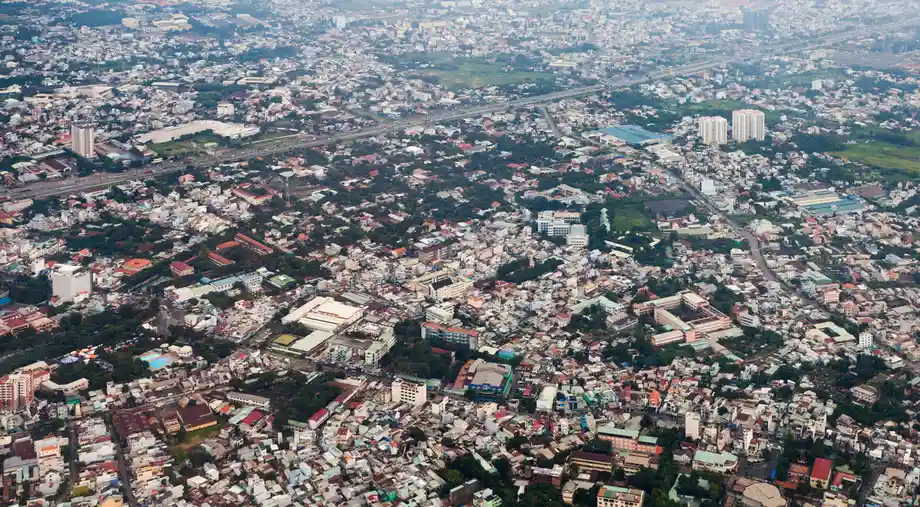
The map matters because the lowest rates occur in the Southeast, home to major cities, factories and service industries. A smaller number of births today can mean fewer people entering working age later, while employers in these areas continue to need workers. The Mekong Delta also has a low rate, at 1.48, while the Northern Midlands and Mountains figure cited in a 2025 demographic policy account was higher, at 2.34. Regional rates can vary across years and measurement methods, so the figures are best read with their dates and data sources attached.
The national average hides these different local conditions. In some regions the rate is close to replacement level; in the Southeast it is far below. That means a single nationwide incentive may not match the pressures facing families in every province.
Marriage and parenthood are happening later
Marriage and childbirth data point to another part of the change. Vietnam recorded about 759,300 registered marriages in 2025, including 636,900 first marriages and 122,400 remarriages. The highest marriage rate for women was among those aged 20 to 24, while men's highest rate was among those aged 25 to 29. The average age at first marriage for men rose to 31.7, and women have also been marrying later.
The average age at which women gave birth increased from 28.4 in 2021 to 28.7 in 2025. It reached 30 in Ho Chi Minh City, 29.8 in Ha Tinh and 29.6 in Hanoi. When people start families later, they may have less time to have the number of children they originally hoped for, especially if they face work, housing or health constraints.
Mai Xuan Phuong, a former deputy director in charge of communications and education at the former General Department of Population, described the pattern among young people as "lazy to love, reluctant to marry, afraid to have children." He pointed to delayed marriage and fewer births as part of a broader change in young adults' choices.
Money and time are central to those choices. Housing, childcare, education and healthcare costs can stretch across many years, while parents may worry about job security and career progress after a child is born. Difficulty finding a partner and prioritising work also contribute to delaying marriage or having fewer children.
What does a low birth rate mean for the workforce?
Fewer births do not shrink the workforce immediately. Children born today generally take many years to enter employment, and Vietnam's large younger generations can keep the labour force growing for a time. Demographers call this demographic momentum: the age structure continues to shape population change even after birth rates fall.
Longer-range estimates give different dates for when the workforce may turn downward. One projection says the working-age population could peak in 2042, with the country's period of having a relatively large working-age share closing around 2040. Another estimates that the labour force will begin to fall after 2050 and could be 3.6 million, or 5%, smaller in 2060 than in 2050. Working-age population and labour force are related but not identical: the labour force counts people who are working or seeking work, while the working-age measure is based on age.
The broader concern is the balance between people earning and contributing taxes and the number of older people who need pensions, health care and other support. Vietnam's population was already ageing, with people aged 65 and above making up 9.3% of the population in 2024. A smaller flow of younger workers could make it harder to meet labour demand and finance services as the older population grows.
Vietnam's gross national income per person was estimated at US$4,490 in 2025. Sustained economic growth before the workforce peaks could help the country reach high income levels while it still has a large labour supply. Thailand offers a regional example of the pressure: its fertility rate was 1.2 in 2023, and its workforce began falling in 2022.
What do the new population policies change?
Vietnam is shifting from limiting family size toward helping people decide when and how many children to have. In June 2025, the National Assembly Standing Committee approved removal of the two child limit from the Population Ordinance. The new Population Law, passed on December 10, 2025, took effect on July 1, 2026. It affirms individuals' and couples' right to decide the number and timing of children and sets out support measures.
Under the law, a female employee having a second child is entitled to seven months of maternity leave, compared with the usual six months. A male employee is entitled to 10 working days of leave when his wife gives birth to a second child. Families with two or more biological children are also eligible for priority in buying, renting to own or renting social housing, under the relevant rules.
On February 13, 2026, the Prime Minister approved a national programme to secure replacement fertility by 2030. Its target is to raise the national fertility rate by an average of 2% each year. The programme aims for more than 95% of couples and people of reproductive age to receive information about marriage and childbirth by 2030, and for every province and municipality to carry out policies supporting childbirth and child-rearing.
The Health Ministry has proposed about 1.8 trillion dong a year for support, including assistance for women who have two children before age 35, members of very small ethnic groups and people in low fertility areas. The proposal is intended to address different needs across regions rather than rely on one uniform approach.
Can cash incentives address the costs families face?
Ho Chi Minh City provides women who have two children before age 35 with 3 million to 5 million dong, depending on the policy period. By information released in April 2026, nearly 9,000 mothers had received assistance. The city is among the 10 localities identified by the Health Ministry for focused action because fertility is below the national average. The list also includes Hanoi, Can Tho, Khanh Hoa, Dong Nai, Tay Ninh, An Giang, Dong Thap, Vinh Long and Ca Mau.
A payment can help with immediate expenses, but raising a child brings costs well beyond the moment of birth. A 2025 analysis of fertility policy in different countries noted that tax cuts and one-time birth bonuses have often failed to produce lasting increases in births. Wider changes, such as affordable childcare, flexible work and greater sharing of household and caregiving duties, may make it easier for parents to combine work and family life.
Vietnam's policy plans also call for counselling and classes before marriage. They are intended to cover reproductive health, safe sex, pregnancy, childbirth, childcare, household finances and skills for building a family. The practical test will be whether families can access affordable care and keep stable work, not simply whether they hear encouragement to have children.
Key dates in Vietnam's response
June 3, 2025: The National Assembly Standing Committee approved removing the two child limit from the Population Ordinance.
December 10, 2025: The National Assembly passed the Population Law.
February 13, 2026: The Prime Minister approved the replacement fertility programme through 2030.
July 1, 2026: The Population Law took effect, including extended leave for parents having a second child.
By 2030: The national programme targets an average annual fertility increase of 2% and support policies in every province and municipality.
The Bottom Line
Birth registration data put Vietnam's 2025 fertility rate at 1.66 children per woman, while a survey estimate was 1.93. Both are below the replacement level of about 2.1.
The Southeast recorded 1.25 children per woman and the Mekong Delta 1.48, compared with 2.00 in the North Central region.
Later marriage and childbirth, alongside the cost of housing, childcare and education, are part of the challenge facing families.
The Population Law and the programme through 2030 expand leave and other support, with the stated goal of helping people raise families and maintaining the future workforce.