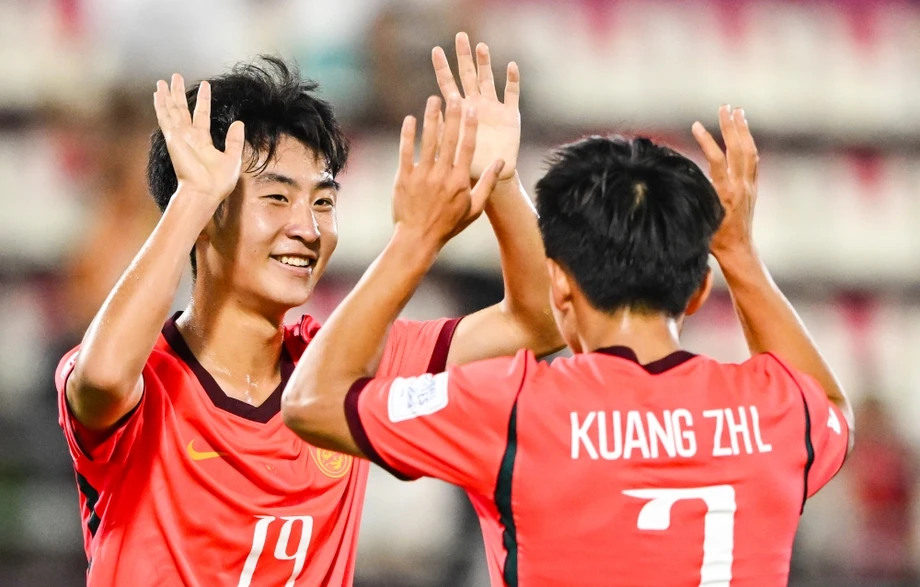
An 8-0 recovery leads to a very different test
China's U17 footballers will face Serbia on 1 December at 21:30 Beijing time, or 16:30 in Qatar, with a place in the last 16 of the FIFA U-17 World Cup at stake. The match will be played on Aspire Zone Pitch 5 in Al Rayyan, in the Doha area. It will be China's first knockout fixture at the tournament since 2005.
Contents
- An 8-0 recovery leads to a very different test
- How China turned its campaign around
- Why there was no draw for this pairing
- Serbia's perfect defensive record tells only part of the story
- China has goals, rest and an unusual source of insight
- The Asian Cup offers a closer measure of this team
- Seven Asian teams reached the knockout rounds
- What happens if the teams are level, and what comes next
- What to Know
China reached this stage by finishing third in Group H with four points, 10 goals scored, seven conceded and a goal difference of plus three. Serbia won Group L with nine points from three matches, but its scores were strikingly modest: 2-0 against Honduras, 1-0 against Japan and 1-0 against Colombia. Four goals were enough to win the group because Serbia did not concede.
For China, qualification continues a sharp change in fortunes. The team opened with a 5-0 defeat by Spain, drew 2-2 with Morocco and then overwhelmed Fiji 8-0. This is China's third appearance in the tournament's knockout rounds, following 1985 and 2005. Its best results remain quarterfinal appearances in those two years. China and Serbia have never met at a FIFA U17 World Cup.
The fixture is part of the round of 32, which consists of 16 matches. Every winner advances to the last 16. There will be no extra time, so a level score after 90 minutes and stoppage time will send the teams directly to a penalty shootout.
How China turned its campaign around
China entered its final group match knowing that only a convincing victory would give it a comfortable route through the ranking of teams finishing third. The recovery unfolded across three very different afternoons in Qatar.
- 20 November: Spain beat China 5-0, exposing the defensive pressure China would face against leading European opposition.
- 23 November: China led Morocco 2-0 through two Zhao Songyuan goals, but Morocco pulled one back from the penalty spot and equalized in the ninth minute of stoppage time.
- 26 November: China defeated Fiji 8-0, while Spain beat Morocco 2-0 in the other Group H match.
- 28 November: The completed group standings confirmed Serbia as China's opponent.
Zhao needed only three minutes to open the scoring against Fiji, tapping into an empty net. Wan Xiang had a penalty saved in the 17th minute, but Kuang Zhaolei soon added the second goal with a low finish from Zhang Xuyao's cross. Wan scored from a tight angle in the 28th minute, and his low cross forced an own goal four minutes later. China led 4-0 at halftime.
Kuang scored again in the 58th minute after a pass from Zhao. He later crossed for Zhang Junhao to head home, before Wan converted Pan Chaowei's cross in the 72nd minute. Liang Shiyu completed the scoring in the 85th minute after Wan played him through. China continued searching for a ninth goal, which would have carried it above Morocco into second place, but a late penalty appeal was rejected following a video review.
Spain finished first with nine points, 22 goals scored and none conceded. Morocco and China both collected four points, but Morocco's goal difference of plus four was one better than China's. Fiji finished without a point after losing 6-0 to Morocco, 15-0 to Spain and 8-0 to China. Those results explain both the scale of China's recovery and the much harder examination that Serbia should provide.
Why there was no draw for this pairing
The tournament began with 48 teams divided into 12 groups. The top two in each group advanced automatically, joined by the eight strongest teams that finished third. That produced 32 qualifiers. China progressed as the second ranked team among the eight advancing from third place.
The knockout pairings were generated by a seeding table rather than a draw. Group winners occupied positions 1 through 12, teams finishing second took positions 13 through 24, and the advancing teams from third place filled positions 25 through 32. The pairings joined the two ends of that table, with first playing 32nd and second playing 31st, while avoiding immediate rematches between teams from the same group.
China's second position in its category placed it 26th in the combined order. That matched it with Serbia, the seventh ranked group winner. The system also explains why a team with three victories can face a team that advanced in third place without any random selection being involved.
The winner will play either France or Uganda in the last 16. South Korea and Japan will meet on the same side of the bracket on 1 December, meaning another Asian team will definitely be eliminated before the quarterfinals.
Serbia's perfect defensive record tells only part of the story
Serbia was one of only three teams among the 32 qualifiers to complete the group stage without conceding. Its final 1-0 victory over Colombia came through a goal from substitute Nebojsa Grujic. The contrast with Spain is instructive: both teams kept their goals against column at zero, but Spain scored 22 times while Serbia scored four.
Serbia's opponents still managed 57 shots across the three matches, an average of 19 per game. Its share of possession was around 30 percent. Against Japan, Serbia had just 27.3 percent of the ball and recorded only 2 percent high pressing, a term for attempts to win possession close to the opponent's goal. An 11th minute penalty gave Serbia the lead, and its players then protected that advantage for the remainder of the match.
Colombia created even more pressure, taking 23 shots to Serbia's eight, but still lost 1-0. Dong Lu, a Chinese youth football promoter and founder of the Chinese Football Boys project, used that match to stress the importance of finishing. He also described the attacking sequence that China should expect.
This is football. You have to know how to take your chances. The goalkeeper finds midfield, a long pass releases the wing, the cross comes in and a teammate finishes it. That is Serbia's tactic: simple, efficient and decisive.
Dong called Serbia the weakest of the group winners and predicted that China could score. Serbia's approach is built around a low block, meaning defenders and midfielders stay close to their own penalty area, followed by direct counterattacks and set pieces. China may therefore see much more of the ball than it did against Spain. Turning possession into clear chances, while preventing long passes and crosses at the other end, will be the central tactical problem.
China has goals, rest and an unusual source of insight
Zhao Songyuan, who attends Tsinghua University High School, scored three times in three group matches and stood joint sixth in the scoring table. Spain's Cruz and Trujillano led with five goals each. South Korea's Kim Ji-woo and Uzbekistan's Sadirjonov were among the players on four. Zhao scored twice against Morocco and once against Fiji, making him China's most consistent threat across the group stage.
The Fiji match also showed the value of variety. Kuang Zhaolei finished with two goals and two assists and won the early penalty. Wan Xiang scored twice and forced the own goal. China's 10 goals in the group came from five players and an opponent, reducing the need to depend on one scorer.
Wan brings another resource. He plays within Red Star Belgrade's academy structure, and seven members of Serbia's squad also belong to that system. They include Serbia's No. 1 goalkeeper and the players wearing Nos. 2, 4, 5, 8, 14 and 21. Wan can offer China's coaches familiarity with the habits of opposing defenders and the goalkeeper, although China has not disclosed how that knowledge will be used.
Head coach Bin Ukishima also had four full rest days after the Fiji match to prepare. Quick pressure after losing possession could disrupt Serbia's first forward pass, while careful tracking on the wings will be essential. Set pieces may offer China a route through a packed defense, but the team did not score from one against Fiji. Giving away cheap free kicks near its own area would play into Serbia's preferred method.
The Asian Cup offers a closer measure of this team
China arrived in Qatar after finishing second at the 2026 AFC U-17 Asian Cup in Saudi Arabia. Its group campaign there also required a recovery. China lost 1-0 to Indonesia and 2-1 to Japan before beating Qatar 2-0, advancing in second place on goal difference.
A 3-1 comeback victory over Saudi Arabia followed in the quarterfinals, and China then beat Australia 2-0 in the semifinals. Japan won the final 3-2 on 22 May. China trailed 3-0 before Wan scored in the 48th minute and Zhao converted a penalty in the 79th. Japan therefore beat this Chinese team twice during that tournament.
Serbia has already supplied another reference point by defeating Japan 1-0 in Qatar. China also lost 2-1 to Honduras in a friendly before the World Cup, while Serbia beat Honduras 2-0. Those results capture the challenge facing Ukishima's players, but China's Asian Cup run also showed an ability to recover within a tournament and to keep attacking after falling behind.
Seven Asian teams reached the knockout rounds
Asia sent nine teams to the tournament and advanced seven: Australia, China, Japan, Saudi Arabia, South Korea, Tajikistan and Uzbekistan. Only host Qatar and Vietnam went out in the groups. South Korea and Australia won their groups, Saudi Arabia finished second, and the other four Asian qualifiers advanced from third place.
Europe and Africa each supplied eight of the 32 qualifiers, while Asia and South America supplied seven each. Two teams came from the North American, Central American and Caribbean region. Oceania's three entrants, Fiji, New Caledonia and New Caledonia's regional neighbor New Zealand, were all eliminated. Qatar's exit meant the host did not reach the knockout stage.
Japan produced one of the most dramatic escapes. Defeats by Colombia and Serbia left it with no points, but a 7-0 victory over Honduras transformed its goal difference to plus five. Maki Kitahara, the best player at the Asian Cup earlier in the year, scored a hat trick. Kakeru Saito added two goals, with Riku Nakashima and Takeshi Wada also scoring.
Romania's elimination demonstrated why those goals mattered. It beat Cameroon 3-1 but finished with a goal difference of zero, behind Uzbekistan's plus one. Japan now meets South Korea at 21:00 Beijing time on 1 December, shortly before China and Serbia kick off.
What happens if the teams are level, and what comes next
Article 14.1 of the tournament regulations removes extra time from every knockout match, including the final. If China and Serbia remain level after 90 minutes and stoppage time, the players will go directly to penalties. There will be no additional 30 minutes to recover from a mistake or find a winning goal.
Viewing listings identify DAZN through FIFA+ for the round, with selected matches also available on ZEE5. Viewers should check local availability before kickoff. The match starts at 16:30 local time, 21:30 in Beijing and 19:00 in India.
This is the 21st edition of the competition and the second consecutive edition staged in Doha, with the tournament running from 19 November to 13 December. Defending champion Portugal is absent after failing to qualify through the European route. The final is scheduled for midnight Beijing time on 14 December.
France and Uganda play later on 1 December, and their winner will await China or Serbia. China's immediate assignment is much narrower: withstand Serbia's direct counters, convert possession into chances and prepare for the possibility that one penalty shootout will decide a return to the last 16 after 21 years.
What to Know
- China plays Serbia on 1 December at 21:30 Beijing time, or 16:30 in Qatar.
- The round of 32 match will take place on Aspire Zone Pitch 5 in Al Rayyan.
- China advanced with four points after losing 5-0 to Spain, drawing 2-2 with Morocco and beating Fiji 8-0.
- This is China's first U17 World Cup knockout match since 2005 and its third appearance in the knockout rounds.
- Serbia won all three group games, scoring four goals and conceding none.
- Serbia faced 57 shots, while its direct attacking style relies on counterattacks, crosses and set pieces.
- Zhao Songyuan scored three group goals, while Wan Xiang offers familiarity with seven Serbian players from Red Star Belgrade's academy system.
- A draw after 90 minutes leads directly to penalties, and the winner will face France or Uganda in the last 16.