What the Feed Really Costs
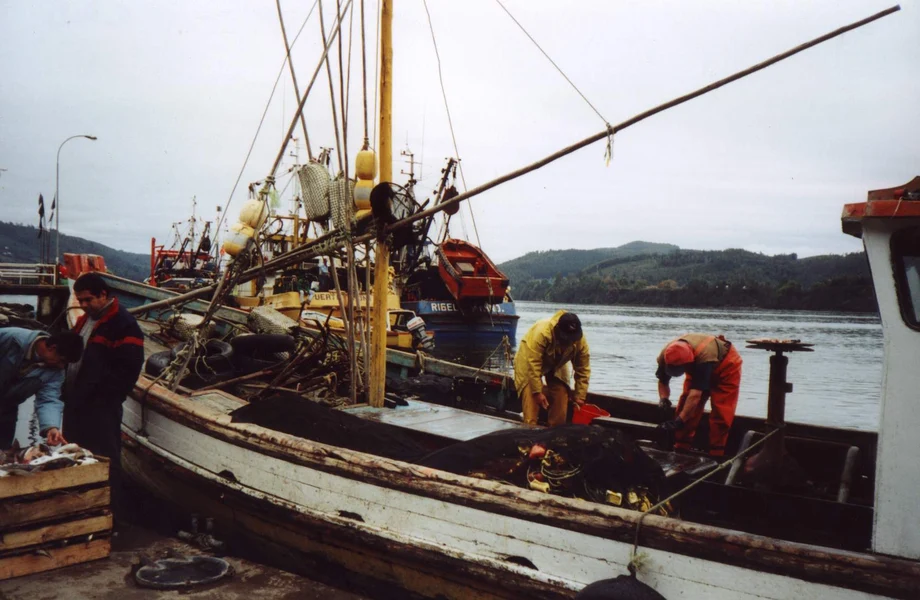
In May 2025, a regional office of the Philippine fisheries agency in Visayas invited fishers to government meetings about expanding fish farming. Officials planned to show them breeding, processing and distribution projects, with the aim of moving coastal work toward fish farming rather than catching wild fish. The message was that cultivation could ease pressure on the sea.
Contents
- What the Feed Really Costs
- How the Investigation Traced a Global Supply Chain
- Why Ocean Pressure Starts Before the Farm
- Where Whole Fish Become Animal Feed
- When Local Meals Are Diverted to Factories
- Unrest, Smell and Polluted Water
- Forced Labor in Remote Production Hubs
- What the Philippines Produces and Imports
- Can Algae Break the Feed Loop?
- Key Points
Community development officer Joel Lutao described the idea in plain terms. He said fishers should be given a way to raise fish instead of taking more from the ocean, so the ecosystem could recover.
Instead of constantly taking from the sea, let's try to cultivate fish and give the ocean a chance to recover.
Farmed seafood is often presented as a solution to overfishing. That promise runs into a basic problem: many farmed species eat wild fish. Milkfish, tilapia, salmon, shrimp and trout are among the species raised with feed made from fishmeal and fish oil, which are produced by cooking and grinding fish into protein rich powder and oil.
Two thirds of global aquaculture involves species fed with fishmeal and fish oil. At some farms, a salmon eats more than six times its own weight in wild fish before it reaches market. Economists call the wider damage externalities, costs that do not appear on a price tag but are paid by workers, coastal communities and ecosystems.
How the Investigation Traced a Global Supply Chain
A five year investigation mapped much of the fishmeal industry. It identified more than 1,400 fishmeal factories across 64 countries and followed supply chains from fishing vessels to processing plants, feed mills, fish farms and seafood retailers.
Dozens of journalists from as many countries took part. They visited factories and farms and boarded fishmeal ships at sea. That reach matters because the ingredients in a feed bag can pass through many hands before a fillet reaches a shop or restaurant.
The investigation found costs far beyond the health of fish stocks: lost artisanal fishing jobs, chronic chemical exposure, avoidable worker deaths, violent protests often triggered by factory smells, and tension between countries competing for scarce protein.
Those costs fall hardest on poorer countries where the feed ingredient is harvested and processed. The seafood made with that feed is often eaten elsewhere, including in wealthier markets.
Why Ocean Pressure Starts Before the Farm
The ocean carries a large share of the burden. More than a fifth of wild fish caught worldwide is used for purposes other than feeding people, especially as feed for farmed fish, chickens and pigs.
The investigation assessed more than 2,400 ships tied to fishmeal production in the waters of at least 30 countries. It found that most did not fully meet the Global Charter for Fisheries Transparency, a guide created by ocean focused civil society groups to set accountability standards for industrial fishing fleets.
Less than 30% of the ships had public location information, and under 25% had a unique vessel identification number, essentially a ship license plate. Without those basics, regulators and communities struggle to know which boats caught fish, where they worked and what they landed.
Scientific studies classified at least half of the species landed by assessed fishmeal vessels as overexploited or worse. Most of the fleet uses purse seines or trawls, nets that sweep through dense schools of fish. These gears can take large volumes of bycatch, meaning animals the fishers did not aim to catch.
At least 165 of the ships were bottom trawlers. Bottom trawling uses weighted nets that scrape the ocean floor, damaging much of what lies in the path. Heavy government subsidies keep too many vessels working, adding pressure to fisheries already under strain.
Daniel Pauly, project director of the Sea Around Us initiative at the University of British Columbia, said the true footprint of aquaculture begins with its feed. He argued that counting only the farm gives a much smaller and more flattering picture.
Any accounting of the true impact of aquaculture has to start not with the farm, but with the feed.
Pauly's framing puts the feed at the center of the story, because the fish meal is made long before any farmed fish reaches a plate.
Where Whole Fish Become Animal Feed
Since 2022, more than half of the seafood eaten globally has come from fish farms rather than wild catch. Aquaculture is a $313 billion industry and the fastest growing part of global food production.
Fishmeal and fish oil are valuable because they pack protein and omega 3 fats into feed. Omega 3 fats are fatty acids known for their role in human nutrition and in animal growth. For fish farmers, those ingredients help farmed fish grow efficiently, but they also tie aquaculture to small wild fish that seabirds, mammals and larger fish depend on.
The feed connection helps explain why farmed salmon can consume several times its weight in wild fish. Shrimp and trout operations also rely on feed inputs made from marine animals. When demand for farmed seafood rises, demand for feed fish rises with it.
When Local Meals Are Diverted to Factories
In The Gambia and Mauritania, fish that once sustained local communities is increasingly diverted into fishmeal factories for export. That shift can leave families with less affordable protein even while fish is being caught nearby. The fish is not gone from the sea in an instant; it is redirected into a global market that pays for feed rather than local food.
Senegal shows how the loss of fishing income can become a migration crisis. Fishmeal production has eroded traditional fishing grounds and put local fishers out of work. Some sell or repurpose boats for the dangerous voyage to Spain's Canary Islands, roughly 930 miles away. That route claimed more than 3,000 lives in 2025.
Cheikhou Omar, a 21 year old fisher from Senegal, explained why he left after his own crossing failed. He spoke in September 2024 after a boat carrying him to Spain capsized, killing two dozen people, and after he was rescued on a beach in Senegal.
We're fishermen, but there's no fish left here, so we left.
Unrest, Smell and Polluted Water
Coastal anger often starts at the factory door. Fishmeal plants cook thousands of tons of decomposing fish, creating smells and waste that can disturb nearby communities. The Bait to Plate online tool, which tracks fishing and seafood industries, tied the industry to at least 80 incidents of civil unrest in countries including India and Peru.
Most of these were labor strikes or community protests. They were usually sparked by water pollution or the stench from fishmeal factories, according to the tool. In some cases, the protests turned violent.
Chile offered a vivid example. Several hundred protesters burned tires and blocked coastal highways and railway tracks over the early closure of the fishing season. That closure was partly driven by overfishing tied to fishmeal production.
Forced Labor in Remote Production Hubs
The investigation also documented forced labor in remote parts of Russia's Far East and in China's Xinjiang region. Workers were described on ships, at farms and in factories, far from the markets where the finished seafood would be sold.
In Russia, fishmeal workers were held in secluded company towns or stranded on ships far from shore. One fishmeal worker appealed to President Vladimir Putin during a television program that took calls from viewers, describing a life with no money and no way to leave.
People have nowhere to go, no money.
A second worker on the same program made a direct plea for help to Putin.
Please, help us.
In China, the investigation linked the growth of aquaculture to forced labor and land appropriation. Those practices show how feed demand can reshape lives far inland as well as along fishing coasts.
What the Philippines Produces and Imports
The Philippines has its own fishmeal plants, but its role in the story is more complicated than that of countries processing whole edible fish for feed. Fishmeal production in the country is concentrated in three cities.
Navotas, the port city in Metro Manila known as the country's fishing capital, has at least one fishmeal plant. Zamboanga on Mindanao, known as the sardine capital, has half a dozen. General Santos, the national tuna capital, also on Mindanao, has four.
Many Philippine plants mainly process seafood for human consumption and turn inedible offcuts into fishmeal. That practice is often presented as sustainable because it uses material that might otherwise be discarded. It makes Philippine fishmeal production less of a driver of food insecurity than production that uses whole edible fish.
The Philippines still faces severe food insecurity because of general overfishing and the export of most of its catch, from small anchovies to tuna. The country imported more seafood than it produced as of 2023. Several of the places exporting the most seafood to the Philippines, including China, Vietnam, Papua New Guinea, Chile and Japan, have fish farms tied to serious problems caused by fishmeal production.
Can Algae Break the Feed Loop?
Dr. Pallab Sarker, a researcher at UC Santa Cruz, is working on a different answer. His team is developing feed made without fish, using marine microalgae and protein rich leftovers from macroalgae after oil has been extracted for the nutraceutical industry. Microalgae are tiny marine algae, while macroalgae means seaweed. Nutraceutical products are health supplements, and the leftover biomass from making them can still contain useful protein.
Sarker said current aquaculture diets depend heavily on fishmeal and fish oil made from wild caught sardines, anchovies and mackerel. Those fish are used in diets for farmed species such as rainbow trout. About 16 million tons of small fish are harvested each year for aquaculture, by his account.
He said the loss of small fish threatens ocean wildlife because those fish feed mammals, seabirds and other animals. He described the scale of the harvest in direct terms.
There is the huge concern because in the marine ecosystem, mammals and seabirds and other animals, they directly feed on the small fish like anchovies and mackerel. Every year, around 16 million tons of the small fish are harvested for the aquaculture industry. So that is harming our ocean wildlife.
Sarker also tied the issue to people who rely on small fish as a daily protein source. His argument was that fish farming should not compete with those food needs.
We need to keep our ocean intact for wildlife and also for humans who directly rely on their protein source. We need to make sure that aquaculture is not relying on small fish.
The proposed feed is designed to be nutritionally complete, not merely a filler. Sarker said the team has to show that fish raised on the new diet remain good food for people, since human nutrition is the final goal.
Two commercial field trials in California have produced promising results, including one through the California Department of Fish and Wildlife (CDFW) Fish Hatchery. The team plans more trials on farms and partnerships with microalgae companies. It supplies the formula to manufacturers, which produce the feed.
No timetable was given for wider adoption. The next known steps are more trials on farms and work with microalgae industries using byproducts from their production.
Key Points
- In May 2025, a Visayas fisheries office invited fishers to meetings about expanding fish farming and introducing breeding, processing and distribution projects.
- A five year investigation mapped more than 1,400 fishmeal factories in 64 countries and assessed more than 2,400 ships in waters of at least 30 countries.
- More than a fifth of wild fish caught worldwide is used for purposes other than feeding people, and farmed salmon can eat more than six times its weight in wild fish at some farms.
- Job losses linked to fishmeal in Senegal were tied to migration voyages toward Spain's Canary Islands, a route that claimed more than 3,000 lives in 2025.
- The Philippines has plants in Navotas, Zamboanga and General Santos and imported more seafood than it produced as of 2023.
- Dr. Pallab Sarker is testing feed made without fish, based on microalgae and leftover byproducts, with two commercial trials in California and more planned.