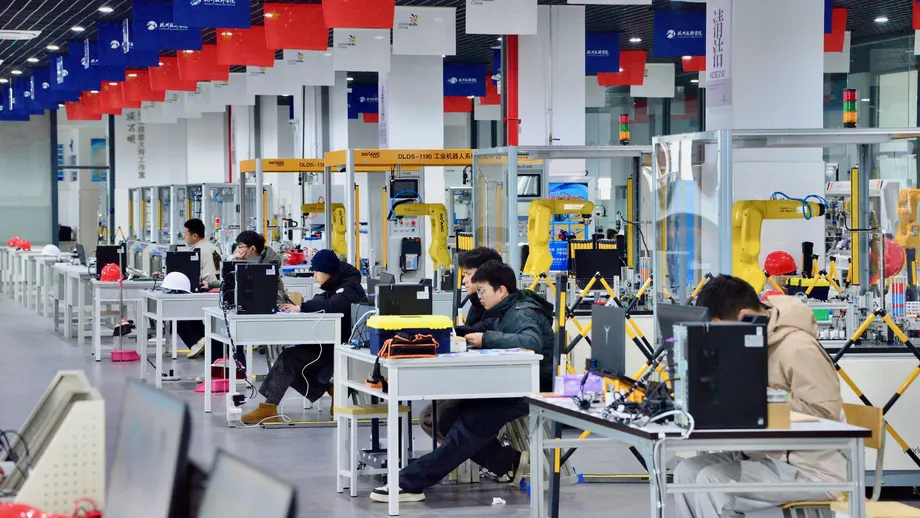
A new data cooperation hub takes shape in Chengdu
China on 28 November 2026 unveiled the Asia-Pacific Digital Intelligence Empowerment Innovation and Development Cooperation Platform in Chengdu, Sichuan province, and formally started building it. The ceremony turned one of the 75 outcomes from China's year as host of Asia-Pacific Economic Cooperation (APEC) into a vehicle for practical cooperation on data, industry and digital skills.
Contents
- A new data cooperation hub takes shape in Chengdu
- Where the platform fits among 75 APEC outcomes
- Four months from data talks to a cooperation vehicle
- What will the platform do in practice?
- Why Chengdu has the industrial base for it
- Infrastructure extends beyond industry output
- Tianfu New Area becomes the main host
- Two company cases show the international ambition
- What changes now, and what is still undecided
- Key Points
The platform's name is cumbersome, but its central idea is simple: help Asia-Pacific economies make better use of data and digital technology by sharing experience, connecting organisations and developing uses together. Digital intelligence is a broad description for applying data and advanced digital tools, including artificial intelligence (AI), to economic and social activity. The National Data Administration says the services will be open to Asia-Pacific economies and will support innovation and growth within the APEC framework.
The National Data Administration and the Sichuan provincial government are driving the project. Liu Liehong, director of the administration and a member of the Communist Party leadership group at the National Development and Reform Commission, jointly unveiled the platform with Shi Xiaolin, governor of Sichuan and deputy secretary of its provincial Communist Party committee.
Chengdu's government information service, in its official launch account, describes the platform as a strategic window linking China's national data work with the Asia-Pacific. The administration says it should produce practical cooperation results, help narrow the region's digital divide and contribute to shared prosperity. The digital divide is the gap between economies and communities that have the infrastructure, money and skills to use digital services and those that do not.
Where the platform fits among 75 APEC outcomes
China's full list of host year outcomes was published on 24 November, four days before the unveiling. Its 75 entries consist of 18 meeting documents, three major Chinese initiatives and 54 practical cooperation outcomes. The platform appears as item 27 in the practical cooperation list, within the innovation section, under an entry calling for its establishment.
Its neighbours in that section show how it relates to other projects. Item 25 establishes the China-APEC Digital Technology Empowerment Center, while item 26 establishes a China center to promote APEC cooperation on data flows across borders. Item 16 is the APEC Digital Intelligence Empowerment Case Collection. Together, these entries cover examples that economies can study, help with adopting digital technology, cooperation on data movement and a wider platform for development and innovation.
The meeting documents include the Chengdu Statement from the 2026 APEC Digital and Artificial Intelligence Ministers Meeting, a statement on AI development and a chair's statement from the APEC roundtable on Data for Growth. The three major Chinese initiatives include a commitment of $20 million to support practical APEC cooperation. No allocation from that sum to the Chengdu platform was announced.
Four months from data talks to a cooperation vehicle
The launch followed a series of APEC Digital Week data sessions held in Chengdu in July 2026. The official account describes those sessions as the first time in APEC's history of more than 36 years that data was treated as an independent agenda item. Officials call data a key factor of production, meaning an input to economic activity alongside more familiar inputs such as labour and capital.
- July 2026: APEC Digital Week data sessions in Chengdu examined policy dialogue, industrial cooperation and practical applications.
- 24 November 2026: China published its list of 75 APEC host year outcomes, including the platform and the Data for Growth statement.
- 28 November 2026: Liu and Shi unveiled the platform in Chengdu and construction of the initiative formally began.
The July discussions sought to move APEC data cooperation from managing data well towards using it well. That distinction matters because storing and protecting information is only part of the task. Economies also need ways to use data responsibly in production, public services and new products.
The platform is intended to consolidate the Data for Growth consensus formed during the digital week activities and implement the roundtable's chair's statement. Chengdu's government says the data field contributed two outcomes to the host year list: the statement was released in Chengdu, while the platform is being established there. The digital and AI ministers meeting in the city adds another layer to that connection through the Chengdu Statement.
What will the platform do in practice?
The National Data Administration has named five priority areas. They range from physical systems to creative work and education, giving the platform a broader mandate than data regulation alone.
- Data infrastructure, covering the facilities and systems on which data services depend.
- Development and use of data resources, so information can support economic and social activity.
- Digital and intelligent transformation of industries, bringing new tools into production and services.
- Digital cultural and creative industries, already a substantial part of Chengdu's economy.
- Training digital talent, giving people and institutions the skills needed to use these technologies.
Across those areas, the platform will promote four kinds of activity: exchanges of experience, connections between resources, cooperation on applications and capacity building. Capacity building means developing durable skills and organisational ability rather than holding a single training event. An application scenario is a real setting in which a technology is used, such as a factory, an airport or a public service, allowing partners to move beyond general policy discussions.
Officials describe the intended services as open to Asia-Pacific economies. Their stated objective is to deepen regional data cooperation, release the value of data and create room for innovation and economic growth under APEC. For Chengdu, the platform also provides a way to connect local technology, products and practical experience with partners elsewhere in the region.
Why Chengdu has the industrial base for it
Figures supplied for the launch explain why Chengdu was selected. Value added by the city's core digital economy industries grew by an average of about 7.6% a year from 2022 to 2025. In 2025, those industries accounted for approximately 15.3% of gross domestic product, equivalent to about 15.3 yuan in every 100 yuan of local economic output.
Core digital economy industries are the activities directly producing digital goods and services. Value added measures the new economic value they create. Chengdu's electronics and information industry has recorded revenue above 1.4 trillion yuan, while its core AI industry has reached a scale of more than 150 billion yuan. Revenue in its core digital cultural and creative industries reached 413.97 billion yuan.
Those figures connect directly to the platform's agenda. The electronics and information sector supplies an industrial base for infrastructure and equipment, AI supports the intelligent part of its mandate, and the creative industries provide a substantial local setting for digital content cooperation. The platform's inclusion of talent training also reflects the need for people who can carry these technologies into ordinary businesses and services.
Infrastructure extends beyond industry output
Chengdu has built more than 40 data centers and reports 36,000P of computing capacity through work associated with the Chengdu-Chongqing national hub node. A data center houses servers that store and process information, while computing capacity determines how much processing those systems can perform. The national hub programme coordinates such resources across regions. The launch account expresses the capacity using the official P measure and gives no further unit breakdown.
The city has also established 52 digital transformation promotion centers recognised at provincial level and created more than 100 Data Element X application scenarios. Officials say these uses are bringing data into industrial development, urban governance and public services. This combination of facilities and applications gives the platform local material for technical exchanges, training and cooperation on specific uses.
Tianfu New Area becomes the main host
Sichuan Tianfu New Area is the platform's main host site. It has cultivated more than 1,400 enterprises recognised for advanced technology, including significant businesses in AI, integrated circuits and industrial software. Facilities such as the Tianfu Digital Intelligence Industrial Park and the Chengdu Science and Technology Innovation Ecological Island are being used to gather innovation resources, turn research into products and expand practical applications.
Chengdu plans to use the platform to bring together government, industry, universities and research bodies from across the Asia-Pacific. Its priorities include stronger digital infrastructure, improved regional data governance and cooperation mechanisms, and the efficient, convenient and secure movement of data across borders. Data governance means the rules and practices determining who can use information, how it is protected and how it can be shared.
Companies, universities, research institutions and industry associations are expected to take part in regular exchanges and application cooperation. Chengdu's stated aim is to attract international innovation resources while helping local technologies, products and experience reach broader markets.
Two company cases show the international ambition
Yuefan Innovation, a Chengdu company, provides one example. Its intelligent delivery robots began operating at Singapore Changi Airport in April 2026. According to the official launch account, this was the first time a Chinese robotics manufacturer had provided intelligent delivery services at an international airport outside China.
A second example is SeaArt, an AI product developed by Chengdu Haiyi Zhichuang Technology in Tianfu New Area. The launch account puts its monthly active users at 25 million. Monthly active users measure how many users engage with a service during a month, giving an indication of reach rather than revenue. Officials cite the product as another case of a local digital business expanding into global markets.
One case involves deploying equipment and services in an overseas airport, while the other involves operating an AI product at scale. The launch account presents both as evidence that Chengdu's international digital cooperation can extend beyond meetings into products and services used outside China.
What changes now, and what is still undecided
The immediate change for Chengdu is institutional. The city now has a named platform and a main host area for work that was previously advanced through meetings and individual company activities. For other economies, the stated offer is access to open services, technical experience, partner connections, training and opportunities to develop applications together.
For local institutions, planned regular channels with businesses, universities, research bodies and industry associations are intended to make international contacts easier to sustain. For the wider region, the central promise is that practical projects and shared experience can help reduce disparities in infrastructure and skills while creating new uses for data.
Several operating details remain undecided or unpublished. The announcements give no platform budget, construction completion date, staffing plan, governance chart, list of participating economies or date for a first joint project. They also set no numerical target for narrowing the digital divide. The next steps described by officials are to assemble resources, establish regular cooperation channels and develop concrete applications. Until further details are released, the confirmed commitments are the Chengdu host site, the five priority areas and the intention to turn July's data consensus into continuing cooperation.
Key Points
- The Asia-Pacific Digital Intelligence Empowerment Innovation and Development Cooperation Platform was unveiled in Chengdu on 28 November 2026.
- China's National Data Administration and the Sichuan provincial government are driving its construction.
- It is item 27 among 54 practical cooperation outcomes in China's list of 75 APEC host year results.
- Its priorities are data infrastructure, data use, industrial transformation, digital creative industries and talent training.
- The launch follows APEC Digital Week data sessions held in Chengdu in July 2026.
- Chengdu's core digital economy industries recorded average annual growth of about 7.6% from 2022 to 2025 and represented about 15.3% of GDP in 2025.
- Tianfu New Area is the main host site, with more than 1,400 enterprises recognised for advanced technology.
- No platform budget, completion date or initial project list has been announced.