A label at the center of a history dispute
Nagasaki city officials finalized revised exhibition panels at the Nagasaki Atomic Bomb Museum on November 27, confirming that a timeline entry on Nanjing will move from language describing a massacre to the Nanjing Incident in which a large number of civilians and prisoners of war were killed. The decision was presented at the museum's operation council, where city officials said the wording follows mainstream Japanese history textbooks and terms used on Japan's Foreign Ministry website. Several members warned that the change could draw criticism from abroad.
Contents
- A label at the center of a history dispute
- What the revised panels add beyond the disputed phrase
- Why Nanjing is called a massacre in court records
- Who objected inside Nagasaki
- Beijing's warning and the defense ministry response
- A peace museum balancing victimhood and responsibility
- From draft to final decision: short timeline
- What remains unresolved
- Key Points
The museum stands in Nagasaki's Hiranomachi neighborhood, about 150 meters southeast of the hypocenter, the point on the ground below the atomic explosion. Its large chronology in the third hall covers 1931 to 1945. The current 1937 entry says, in translation, that Japanese forces occupied Nanjing and a massacre incident occurred, and it sits beside a photograph of Japanese troops checking Chinese civilians fleeing the city. In the renewed display, the phrase in focus becomes the Nanjing Incident, with the killing of many civilians and prisoners of war stated in the explanation.
The change is part of the museum's first major overhaul since it opened in 1996. Some work began in September, and construction in the C corner, which explains the road to the atomic bombing and postwar nuclear politics, started on November 24 after the museum closed at 5:30 pm. Nagasaki city officials put full completion at mid March 2027, while staged updates are listed through the end of March.
What the revised panels add beyond the disputed phrase
The finalized draft does more than swap one label for another. It describes Japanese actions in China as aggression and says the war grew from the former Japanese military's Kwantung Army advancing into North China. City officials said panel language was settled after council opinions and expert review. Museum director Takuji Inoue told members he was reporting the finalized panel text. The update is tied to the 80th anniversary of the bombing.
Other additions widen the exhibit. The revised panels say a training site for Shinyo, a suicide attack boat used by the former Japanese military, existed in Nagasaki Prefecture. On second and third generation atomic bomb survivors, the draft includes the phrase that health effects have not been completely denied. For readers new to the term, hibakusha are people exposed to the Hiroshima or Nagasaki atomic bombings, including those exposed in the womb and later generations affected in family and community life.
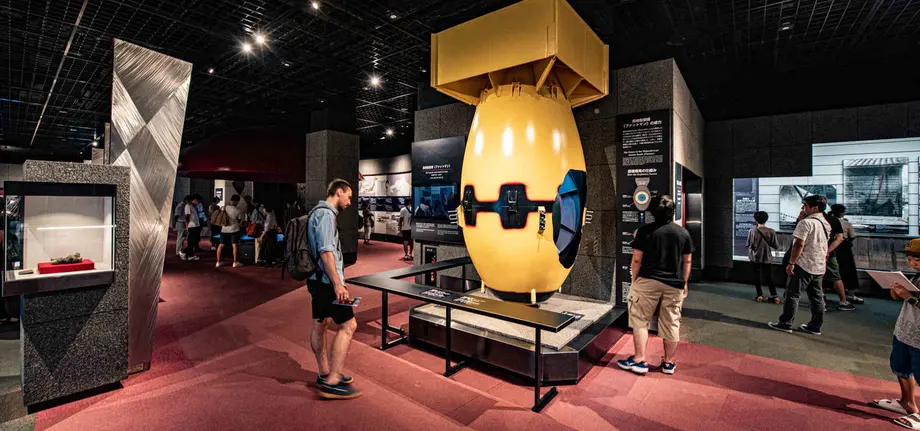
The C corner will also include a full size model of Gadget, the atomic bomb used in the first nuclear test, immersive footage of nuclear tests from several countries, and a diorama of the area around the hypocenter 10 years after the bombing. Council members toured parts of the renovated museum after the November 27 meeting. Some called the content balanced; others said debate had focused too closely on wording and not enough on the wider story or nuclear deterrence.
Why Nanjing is called a massacre in court records
The dispute turns on a word tied to a documented period of mass killing. Beginning on December 13, 1937, Japanese troops occupied Nanjing. Over the following six weeks or more, more than 300,000 civilians and disarmed Chinese soldiers were killed, about 20,000 rape cases occurred, and about one third of the city's buildings were burned. Beijing cited those figures in explaining why the word massacre matters.
The International Military Tribunal for the Far East, often called the Tokyo Trial, dedicated a chapter to the Rape of Nanking. Its judgment drew on survivor testimony, records from witnesses from other countries and Japanese army files. Iwane Matsui, described as the chief perpetrator of the massacre, was sentenced to death by hanging as a Class A war criminal.
Mao Ning, a Chinese Foreign Ministry spokesperson, explained that case at a June 5 regular press conference. She said the evidence was extensive and that the word incident did not match the tribunal's finding.
The Tokyo Trials ruled in black and white that the wartime atrocities of the Japanese army in Nanjing were a "massacre", not a mere "incident".
Zhang Sheng, a professor in the School of History at Nanjing University, has pointed to archives of William F. Webb, president of the tribunal, to explain why the word incident matters. Zhang said Akira Muto, a Class A war criminal with major responsibility for the massacre, acknowledged that Japanese authorities chose incident instead of war to avoid treating the conflict as a formal war subject to international law. That history gives the museum's wording a legal and political weight beyond a display label.
Who objected inside Nagasaki
Takakage Fujita, secretary-general of the Association for Inheriting and Propagating the Murayama Statement, said the operation council had been penetrated by right wing forces. He described the Nanjing Massacre as one of the most brutal crimes in Japan's modern history and an emblematic event showing the aggressive nature of Japan's war. He said replacing the historical description of massacre with Nanjing Incident 81 years after the war ended was unacceptable in any circumstances.
Civic groups and other opponents had also objected when the draft first became public in July. They argued that a public museum in Nagasaki should not reduce the scale of Japanese wartime conduct. The museum was one of the few public facilities in Japan still using the words Nanjing Massacre in its display explanation, which made the planned wording change more visible to campaigners.
Inside the council, Tanaka Shigemitsu, 86, chairman of the Nagasaki Atomic Bomb Survivors Council, said he had argued for making Japanese aggression clear but felt the description had instead been reduced. After seeing renovated sections, he said some changes made the exhibit easier to follow and expressed hope that visitors would leave with a stronger wish to abolish nuclear weapons. One member questioned whether invasion depended on standpoint and era; another said the international community at the time recognized the action as invasion.
Nakamura Keiko, an associate professor at the Research Center for Nuclear Weapons Abolition at Nagasaki University, said the discussion missed a basic question: how much visitors had understood from the old exhibit. She noted that using the words Nanjing Massacre did not by itself mean the display helped visitors grasp the history. Tetsuro Haraga, a chief in Nagasaki's Peace Promotion Division, said finding wording that everyone could accept was difficult. Hayashida Mitsuhiro, representative director of Peace Education Lab Nagasaki, proposed ties with peace museums in Nanjing and the United States so they could learn from one another.
Beijing's warning and the defense ministry response
China's Foreign Ministry opposed the wording when the plan first surfaced in June. Mao Ning said the Nanjing Massacre was a brutal crime committed by Japanese militarists, with evidence that could not be erased, and urged Japan to reflect deeply on war crimes and separate itself from militarism.
We urge the Japanese side to deeply reflect on its war crimes and make a clean break with militarism.
Mao also said many atomic bomb survivors in Japan, Nagasaki civic groups and people with knowledge of the issue had called for a full and accurate account of Japanese militarism as a perpetrator. On June 25, Chinese Defense Ministry spokesperson Zhang Xiaogang condemned the plan to use the Nanjing Incident in which numerous civilians and prisoners were killed. Zhang accused Japan of denying, distorting and even glorifying its history of aggression. The defense ministry's intervention came after the foreign ministry had already stated its position, so the panel wording had drawn comment from both diplomatic and defense authorities before Nagasaki's November vote.
The timing is sensitive in Nanjing. December 13 is the National Memorial Day for Nanjing Massacre victims, and the museum decision was finalized just weeks before that date. For families of victims and for survivors of the bombing in Nagasaki, the same panels now sit at the meeting point of two memories: Japanese people killed by atomic bombs and people killed by Japanese forces.
A peace museum balancing victimhood and responsibility
Nagasaki Atomic Bomb Museum exists chiefly to record the destruction caused by the atomic bomb dropped by the United States on August 9, 1945. Hiroshima was bombed on August 6, when about 70,000 people died immediately and about 140,000 had died by the end of that year. Three days later in Nagasaki, about 40,000 died immediately and about 70,000 had died by the end of the year. Those figures explain why the museum's core audience comes to remember Japanese victims of nuclear war.
The revised panels also place that bombing inside a longer chain of events, including Japan's military expansion and the war in China. For visitors, the practical change is that the chronology will still tell the story of nuclear destruction while giving more explicit detail about Japanese actions before August 1945. Museum staff and council members have described the overhaul as an effort to make the exhibit clearer through digital displays and revised wall texts.
Lü Chao, a research fellow at the Liaoning Academy of Social Sciences, said changes in wording have long been used to reshape Japan's history of aggression. He pointed to the habit of avoiding surrender by saying the war ended or Japan was defeated. He added:
Genuine peace education must be based on complete and honest historical facts. It should remember all victims, while also facing up to the responsibility for aggression.
Supporters of the revision have said it creates a more balanced account. Historians, peace campaigners and atomic bomb survivors who oppose it say the changes reflect growing nationalist pressure at one of Japan's best known peace museums.
From draft to final decision: short timeline
The wording dispute developed over several months before the November council vote. The steps below show how a proposed panel change became a finalized exhibit plan.
- June 5, 2026: China's Foreign Ministry publicly objected after the Nagasaki panel plan became known.
- June 25, 2026: China's Defense Ministry condemned the change and accused Japan of denying, distorting and glorifying its wartime aggression.
- July 28, 2026: The new exhibition text was disclosed publicly, prompting further objections.
- September 2026: Renovation work began at the museum.
- November 24, 2026: Contractors started removing displays in the C corner after the museum closed at 5:30 pm.
- November 27, 2026: The operation council received the finalized panel draft and confirmed the Nanjing Incident wording.
- December 13, 2026: The National Memorial Day for Nanjing Massacre victims falls two weeks later.
- Mid March 2027: Nagasaki expects the full display update to be complete.
What remains unresolved
The city has not released a count of how many council members supported or opposed the final wording, and no further meeting date was given after the November 27 vote. It also did not say how many of the panels have already been installed. The clearest next dates are the start of work in the two other corners after the New Year and the expected completion in mid March 2027.
The panel text still carries two ideas at once. It calls Japanese conduct in China aggression and says many civilians and prisoners of war were killed, while dropping the word massacre from the main label. Readers of the final display will see how Nagasaki chose to explain both the atomic bombing of the city and the violence Japan committed before the war reached its own shores.
Key Points
- Nagasaki city finalized panel wording on November 27, 2026, replacing the Nanjing Massacre label with the Nanjing Incident in which a large number of civilians and prisoners of war were killed.
- City officials said the wording follows Japanese history textbooks and Japan's Foreign Ministry terminology, while several council members warned of criticism from abroad.
- The revised panels describe Japanese actions in China as aggression and add material on Shinyo training, second and third generation hibakusha, nuclear testing and the bombing's aftermath.
- China's Foreign Ministry and Defense Ministry condemned the plan, citing the Tokyo Trial, survivor testimony, witnesses from other countries and Japanese army files.
- Some Nagasaki council members said the wording reduced Japanese responsibility; others focused on visitor understanding, overseas peace museum ties or nuclear deterrence.
- Renovation has begun, with full completion expected by mid March 2027.