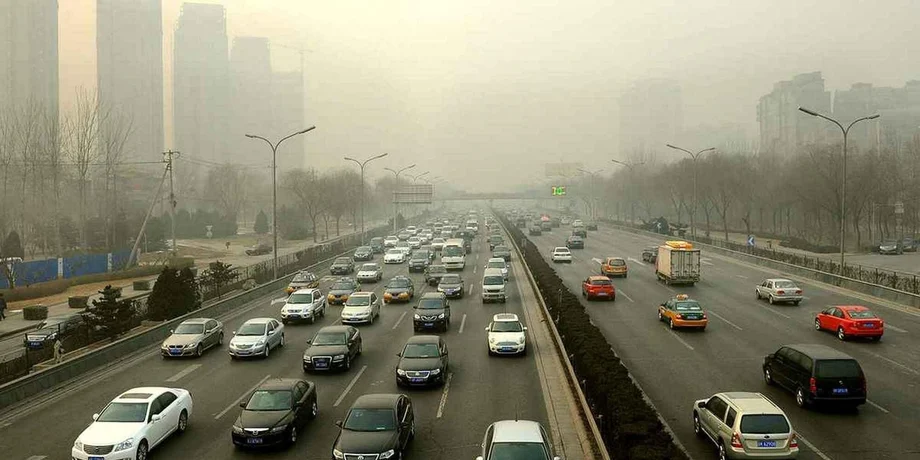
A draft plan for the most dangerous pollution days
Uzbekistan could divert heavy trucks away from city centers, restrict cars according to their registration numbers, limit construction and require certain factories to reduce production when air pollution becomes dangerous. The measures are contained in a draft Cabinet of Ministers resolution prepared by the National Committee for Ecology and Climate Change and submitted to the national portal for discussion of draft regulatory legal acts. Public discussion is scheduled to continue until December 12.
Contents
- A draft plan for the most dangerous pollution days
- How the national index would work
- Health advice would become stricter with each color
- Traffic and construction limits would be targeted
- Factories, power plants and greenhouses would face controls
- Fountains and street watering would be used during dust episodes
- Schools, state offices and clinics would adjust their work
- SMS warnings and public reviews would frame each episode
- What still depends on adoption and local decisions
- What to Know
The committee developed the document to implement presidential decree PF-46, issued on March 25, 2026, on measures to carry out the nationwide Clean Air project. That project is planned for 2026 to 2030 and aims to reduce atmospheric pollutant emissions by 10.5 percent and harmful emissions from vehicles by 10 percent. The new resolution addresses a different task: what government agencies, businesses and residents should do during individual pollution episodes.
At the center of the proposal is a national air quality index with five colors, ranging from green to purple. Daily measurements would provide a common basis for health advice, traffic restrictions, industrial controls and public warnings. Some measures would apply whenever air quality deteriorates or weather conditions become unfavorable, while the strictest industrial and public health steps would begin at the red and purple levels.
How the national index would work
The Hydrometeorology Service Agency would analyze six priority pollutants every day and determine the general air quality level for different territories. They are PM2.5 and PM10 particles, nitrogen dioxide, ozone, sulfur dioxide and carbon monoxide. PM2.5 and PM10 refer to airborne particles no wider than 2.5 and 10 micrometres respectively. The smaller particles can travel deep into the lungs. Including four gases alongside the particle measurements means the index would cover more than visible dust or smoke.
The draft lists the following numerical concentration bands for PM2.5 and PM10, alongside a health description for each color:
- Green: PM2.5 from 0 to 60 and PM10 from 0 to 75. Pollution is considered safe.
- Yellow: PM2.5 from 60.1 to 120 and PM10 from 75.1 to 150. Brief exposure may affect sensitive population groups.
- Orange: PM2.5 from 120.1 to 180 and PM10 from 150.1 to 225. This is a moderate level of pollution.
- Red: PM2.5 from 180.1 to 300 and PM10 from 225.1 to 375. There is a risk of adverse health effects for a large part of the population.
- Purple: PM2.5 from 300.1 upward and PM10 from 375.1 upward. Pollution is high enough to require restrictive and preventive measures.
For PM2.5, the purple band begins at 300.1, just over five times the upper green value of 60. The particle figures provide clear numerical boundaries, while the daily assessment of all six pollutants would supply the wider picture. The same colors and descriptions would be used nationally, replacing the need for residents to interpret separate local descriptions of pollution.
Health advice would become stricter with each color
At yellow, people with respiratory illnesses would be advised to limit physical activity outdoors. At orange, the sensitive groups would include children, pregnant and breastfeeding women, older people, and people with cardiovascular or respiratory diseases. They would be advised to reduce outdoor activity and keep their medicines with them. Other people would be advised to use protective masks.
Red would indicate a serious risk even for healthy residents. Vulnerable people would be told to remain indoors as much as possible, while others would be advised to wear protective masks. At purple, everyone would be advised to avoid spending extended periods outdoors and to stop outdoor sport. Vulnerable residents should remain at home, and work and study should move online where possible.
The color system therefore connects a measurement with a practical response. A family could use the yellow or orange classification to decide whether a child with a respiratory illness should exercise outside. At purple, the advice would extend to schools, employers, event organizers and healthy adults, rather than being limited to people already considered vulnerable.
Traffic and construction limits would be targeted
Heavy trucks could be temporarily restricted in regional and city centers or redirected onto alternative routes that bypass urban areas. If officials consider it necessary, vehicles could also be allowed to travel on odd or even calendar days according to their state registration numbers. Electric vehicles and special service vehicles would be exempt from this arrangement.
The Interior Ministry would monitor the odd and even day measure under an instruction from the Presidential Administration. Separate streets and road sections could be selected for temporary restrictions according to the local environmental situation. Those selections would require a substantiated proposal from the Ecology Committee, allowing the response to vary between locations instead of relying on one fixed national road list.
Construction work in city centers and densely populated districts could also face temporary restrictions during polluted periods. Sites would have to use equipment and technology that suppress dust, store and transport building materials in enclosed conditions, and wet their premises regularly. Additional requirements could be imposed to reduce the spread of dust. The draft distinguishes these temporary controls from a permanent stop to construction activity.
Factories, power plants and greenhouses would face controls
At the red and purple levels, enterprises classified as Category I or II according to their environmental impact would have to reduce production capacity temporarily. The purpose would be to cut pollutant emissions from stationary sources, such as industrial installations and chimneys. Strategic facilities and enterprises operating under a special legal regime would be exempt. The State Environmental Control Inspectorate, known as Ecopolice, would monitor compliance.
Energy companies would be prohibited from burning mazut, a heavy fuel oil, during unfavorable meteorological conditions. Exceptions would cover accidents and emergencies in which its use is necessary to keep the energy system operating stably. This creates a specific exemption for electricity system security rather than a general permission to continue using the fuel.
Ecopolice and other relevant agencies would also conduct regular inspections of greenhouses in or near regional and city centers. The inspections would seek to prevent operators from burning products that are not intended or suitable for use as fuel. The measure places small combustion sources close to residential areas within the same response plan as major industrial sites.
Fountains and street watering would be used during dust episodes
Local administrations, known as hokimiyats, would have to keep all existing city fountains operating continuously when natural dust increases and air quality worsens. They would also intensify irrigation and wetting of central streets, public spaces and green areas, including through the use of special vehicles. Wetting dry surfaces can help prevent settled dust from being lifted again by wind or movement.
Districts with high pollution would receive priority for expanded green spaces, tree planting and other greening programs. The Ecology Committee could also propose additional measures that are not specifically listed in the resolution. These provisions sit alongside the controls on vehicles, construction and combustion, which address different sources of pollution.
Schools, state offices and clinics would adjust their work
During poor air quality or unfavorable weather, the Ministry of Health would advise residents to limit time outdoors, with particular recommendations for children, older people and those with chronic illnesses to remain at home. The ministry would submit proposals to the Cabinet of Ministers to suspend outdoor activities at educational institutions temporarily, restrict public events, alter working schedules at state organizations or introduce remote work where necessary.
At the purple level, outdoor public events and sporting competitions would have to be canceled or postponed. Remote work and study would be recommended wherever possible. These steps would reduce the number of people traveling, gathering outdoors or exerting themselves while pollution is at its highest classification.
Family polyclinics and emergency medical services would provide priority primary care at the red and purple levels to citizens whose health deteriorates. Family polyclinics are local institutions that provide initial medical care. The Health Ministry would also keep statistics on health consequences associated with high pollution and report that information to the government every year, adding a continuing health record to the emergency response.
SMS warnings and public reviews would frame each episode
The Ministry of Emergency Situations would send warnings to mobile phones through a specialized automated system when pollution reaches red or purple. Air quality information would also be published on the official websites of the Health Ministry, the National Committee for Ecology and Climate Change and the Hydrometeorology Service Agency, as well as in the mass media.
After air quality returns from an emergency level to normal, the Ecology Committee would have to prepare an analytical report and publish it in the media. The report would explain the causes of the episode, the measures taken and their effectiveness. Responsibility for reviewing the response would therefore extend beyond the end of the restrictions and the final SMS warning.
What still depends on adoption and local decisions
The document remains a draft, and its discussion period ends on December 12, 2026. The resolution would enter into force on the day of its official publication. It does not establish a nationwide start date for odd and even driving days, an advance list of restricted streets or one percentage by which every affected factory must reduce output. Those measures would depend on necessity, local conditions, pollution levels and the category of the enterprise.
The formal sequence set out around the proposal is as follows:
- March 25, 2026: Presidential decree PF-46 established measures to implement the nationwide Clean Air project.
- 2026 to 2030: The Clean Air project is scheduled for implementation, with its emission reduction targets.
- December 12, 2026: Public discussion of the draft pollution response resolution is scheduled to end.
- Day of official publication: The adopted resolution would take effect.
- After an emergency pollution episode: The Ecology Committee would publish its analysis of the causes, response and effectiveness.
The final text and its publication date have not been announced. For residents, the clearest practical change would be a shared national sequence of measurement, color classification, health guidance and mobile warnings. For businesses and public authorities, the resolution would assign duties ranging from factory adjustments and road controls to priority medical care and a public review after the air improves.
What to Know
- Uzbekistan is discussing a draft Cabinet resolution for responding to serious air pollution episodes.
- A national index would use green, yellow, orange, red and purple levels based on daily analysis of six pollutants.
- Heavy trucks could be diverted, and cars could be restricted on odd or even days, with exemptions for electric and special service vehicles.
- Category I and II enterprises would reduce production at red and purple levels, while strategic and specially regulated facilities would be exempt.
- Construction dust controls, restrictions on mazut and greenhouse inspections are also included.
- Red and purple pollution would trigger SMS warnings and priority primary medical care for people whose health worsens.
- Purple pollution would require outdoor public events and sports competitions to be canceled or postponed, with online work and study encouraged.
- Public discussion runs until December 12, 2026, and the resolution would take effect upon official publication.
- The draft implements decree PF-46 and supports the Clean Air project for 2026 to 2030.