A Year Later, Tai Po Still Faces Hard Choices
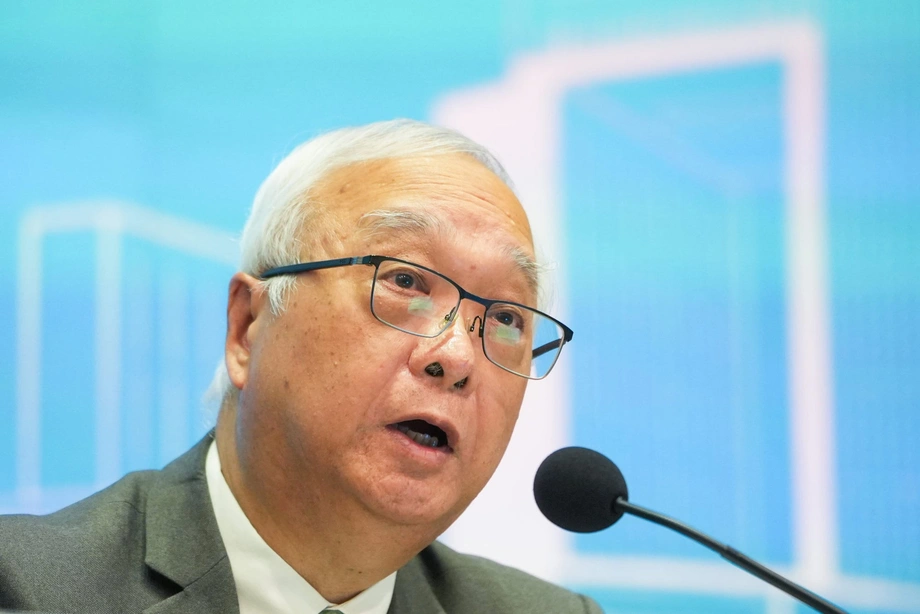
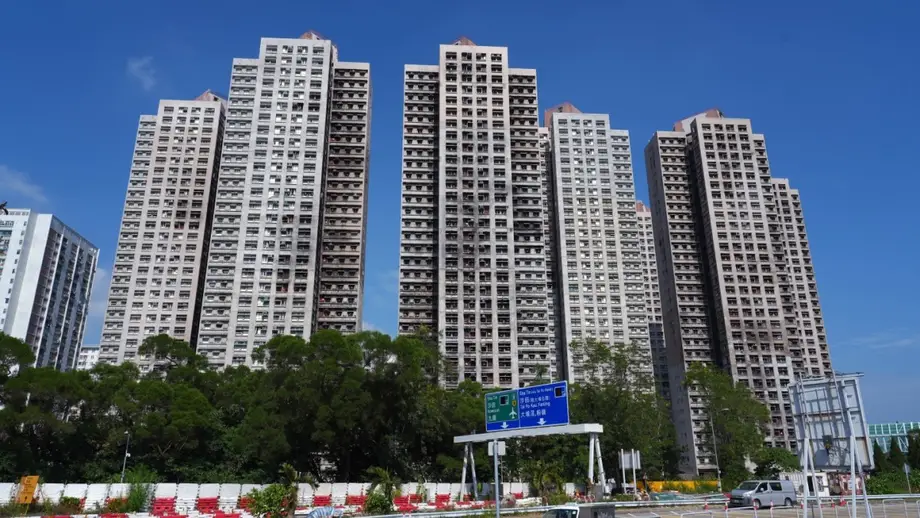
Tai Po marked the first anniversary of the Wang Fuk Court fire with flowers, private prayers and fresh decisions about the burned estate. The blaze on November 26, 2025 killed 168 people, burned seven of the estate's eight blocks and left nearly 2,000 households without homes. It was Hong Kong's deadliest fire in nearly 80 years. Michael Wong Wai-lun, the acting financial secretary and acting housing secretary, said the cleared site is planned as a park and community facilities while buyouts, rehousing and reforms continue.
Contents
- A Year Later, Tai Po Still Faces Hard Choices
- How Many Families Have Settled Their Property Claims?
- What Will Happen to the Burned Estate?
- Why the Anniversary Became a Test of Public Grief
- What Did the Inquiry Find, and Who Faces Consequences?
- Where Are Displaced Residents Living Now?
- What Did Families Lose Beyond a Roof?
- How Are Schoolchildren Coping?
- What Timing Do Residents and Officials Face Now?
- Why the Site Decision Matters Beyond Property
- Key Points
Numbers show the scale of the task. The government's latest figures put 1,915 of 1,984 households as having signed provisional sale and purchase agreements, or more than 96 per cent, with 1,749 transactions completed, more than 88 per cent. The land cannot be reshaped until ownership is consolidated, demolition is finished and town planning and funding steps are cleared, a process expected to take years.
How Many Families Have Settled Their Property Claims?
Wong told a television programme that one more household whose ownership had been waiting for confirmation had signed an agreement, taking the provisional total to 1,915. The government has been buying homes above market prices. It will not offer better terms to remaining owners than the terms accepted by more than 1,900 households, a stance it links to protecting public funds and fair treatment.
Of the 69 households that have not signed, 56 owners want to sell but face legal delays. Probate, the court process for dealing with an estate after death, can hold up a sale. Questions of legal capacity can also delay it; that means whether an elderly or ill owner can make a binding property decision. Wong said outreach officers will contact the 13 households that previously refused to sell next month and see whether any change their minds.
For residents, the paperwork is practical. Signing is the first step, while completion transfers the property to the government. No date has been given for all 1,984 cases to be closed.
What Will Happen to the Burned Estate?
Wong said the government is not buying Wang Fuk Court for profit. The cleared land is intended for a park and community facilities for Tai Po and New Territories East. All eight blocks will eventually be removed before public space can be built, including the seven that burned in the fire.
He described a slow legal sequence. Ownership must be consolidated, demolition must be carried out, town planning procedures must be followed and funding must be approved. Town planning is the official process for deciding what land can be used for. Wong said design details will be discussed with residents and the wider community in the years ahead.
When asked whether a memorial park could resemble sites created after the Sichuan earthquake in 2008 and the 9/11 attacks, Wong said the question involved public feeling and could not be settled now.
This is a serious matter that requires consideration for the feelings of various stakeholders. The process will span several years and involve aspects such as land planning and the specific design of the park. Therefore, I do not intend to speculate on the details.
Public calls have grown for a memorial park with a stone recording each victim's name, while others have pressed for tighter repair rules and stronger enforcement. No decision has been made on a memorial park, and no construction date has been set.
Why the Anniversary Became a Test of Public Grief
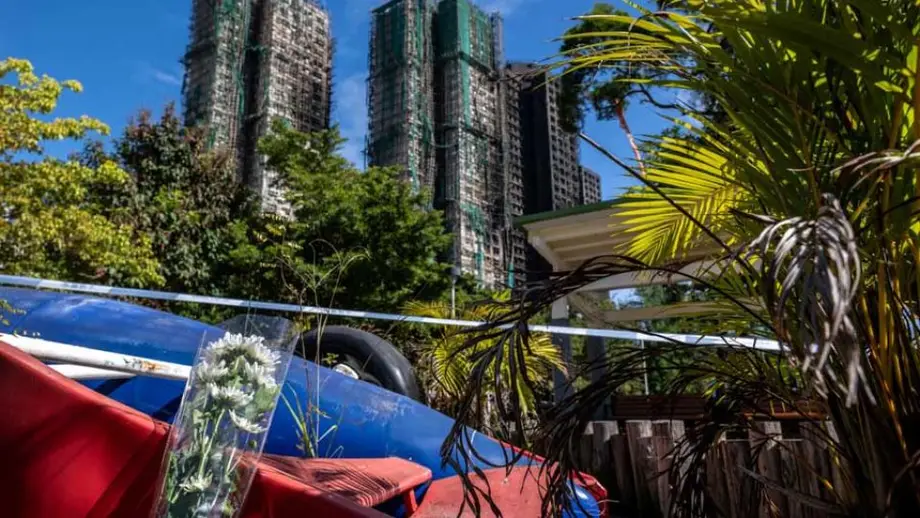
Mourners gathered on November 26 at Kwong Fuk Sitting-out Area, opposite the charred estate, throughout the day and evening. There was no official commemoration. Civil Aid Service officers moved flowers as the crowd grew; some mourners were angry at the haste, while others carried tributes themselves. The government said the tributes would be progressively relocated to religious venues.
A government spokesperson said some bouquets and mourning items were put in plastic boxes and moved to a nearby lawn so more people could lay flowers. The spokesperson framed the move as respect for mourners.
ensuring that every gesture of goodwill is respected.
Chief Secretary for Administration Eric Chan Kwok-ki's position, restated by Wong, was that lawful and peaceful tributes are allowed and supported with arrangements such as transport management. Unlawful acts, including incitement to violence, would be dealt with strictly. Security chief Chris Tang said memorial events were lawful, while warning that people might seek to hijack the occasion and that some acts could amount to sedition. Police kept a low key presence. Beijing warned against using the disaster to destabilise the city.
A Catholic memorial service at the Cathedral of the Immaculate Conception drew hundreds. Placards with all 168 names stood before the altar, and four family members read every name aloud. Father Chan Chi-ming, who led the Mass, said the victims were unique lives rather than a single total. A two week exhibition by the group Never Forget Love collected stories of loss, and residents continued to ask why accountability remains incomplete.
What Did the Inquiry Find, and Who Faces Consequences?
The fire was fuelled by flammable materials installed during a renovation required under a government scheme, according to the independent inquiry. Wang Fuk Court was more than 40 years old and undergoing major repair work. The inquiry identified failings in four government departments and set out 120 recommendations, including changes to the Buildings Ordinance and the Competition Ordinance. The first governs building works; the second covers fair competition, which can affect how repair contracts are awarded.
Wong said the government would oversee implementation of all 120 recommendations. Some measures are already in place, he said, while wider institutional changes, including stronger communication and regulatory oversight, remain a continuing process.
Seven people and two companies face charges including manslaughter, an accusation of causing death without a premeditated plan to kill. Those charged include people linked to the repair contractor and an engineering consultant. Only one official has resigned, the housing secretary, and residents say accountability remains incomplete. Dozens of civil servants are under disciplinary investigation, with results expected within three months. Chief Executive John Lee visited displaced residents before the anniversary and promised law changes to close loopholes in building repairs.
Where Are Displaced Residents Living Now?
The government is keeping one social worker per household across 10 rehousing projects. Some residents have stayed in Tai Po, while others are moving to Kai Tak and Kowloon Bay. Social workers are working with volunteer groups to welcome families, explain local services and arrange referrals. The Housing Bureau is coordinating with Secretary for Home and Youth Affairs Alice Mak Mei-kuen to mobilise district networks.
Athena Kwong and Marco Chan, both 29, have been living in a 12 sq m transitional housing unit with a bathroom and a small cooking area. Transitional housing offers temporary accommodation while residents wait for permanent flats. The couple bought a flat in Fanling, about a 10 minute drive from Tai Po, through a special sales exercise. Chan had hoped to stay in the neighbourhood where they grew up and met. Some subsidised flats will not be ready until 2031, so he said a five year wait was too long. Kwong said the unit restored routine but not belonging.
I feel like I've only adjusted to going to work and coming back from work here, but I've never felt like I belong here. I have never been able to call this place home.
Another step is set for next month, when Wong said about 70 to 80 households will revisit their former units to retrieve belongings. Visits will be arranged around move in times, especially for residents going to Shing Chi Yuen and Lok Ling Hin in Fanling, where some households have started renovation and hope to move before Lunar New Year. Exact arrangements will be announced in due course; no precise date was given.
What Did Families Lose Beyond a Roof?
Kwong and Chan's apartment was not directly burned, yet they cannot return to a home they designed and decorated together. They made two trips back for possessions, including Kwong's yangqin, a traditional Chinese hammered dulcimer played with rubber tipped sticks. The instrument, worth about US$10,000, was partly damaged.
In May, Kwong played it one last time in their Tai Po flat. She chose "Cherish Tonight", a song by the late singer Danny Chan, and later said the music helped her face leaving the home.
For me, it was like, I like this house a lot but I can't continue staying here.
The couple postponed their wedding because of the fire and have resumed planning with a new flat secured. Kwong said they never argued over the disaster. Chan said having a partner through such an event made the burden lighter. Their story shows why buyout totals cannot describe the loss of a room, an instrument and a familiar street.
How Are Schoolchildren Coping?
Tai Po Baptist Public School stood directly opposite Wang Fuk Court. The school escaped the fire, but its campus was closed for emergency relief work. Pupils and teachers spent more than six months split between two temporary sites before moving in September to a renovated campus in Fu Shin Estate.
Principal Siu Ting said the return brought relief to the school community.
Teachers, parents, students, we are all very happy, because we are finally back together again.
Thirty pupils formerly lived at Wang Fuk Court. All survived, but their routines changed. The new campus has an indoor court designed to resemble the old one, and four pet reptiles from the former school were brought along. Siu said these details were meant to show pupils that their work and traces from the old campus were valued.
Twin brothers Wong Cheuk Nam and Wong Cheuk Fung now face a bus journey of more than 20 minutes. Wong Cheuk Nam said the fire meant they had to wake earlier. Social worker Dawn Leung said children who witnessed the blaze can be distressed by loud bells, bright lights that resemble flames, smells and sudden noise. Fire drills are handled with advance notice for affected pupils, and staff repeatedly reassure children that the new surroundings are safe.
They would be very sensitive to sounds, and bright lights that may look like flames, this might be a trigger, because at that time they witnessed the whole scene, sounds, smells and lights.
Leung said adjustment is a long process that cannot be completed in a few sessions. Many families with children at the school remain in temporary housing.
What Timing Do Residents and Officials Face Now?
Several dates and stages now shape recovery. The sequence shows what has happened and what is still ahead.
- November 26, 2025: Fire breaks out at Wang Fuk Court during major renovation, killing 168 people and burning seven of eight blocks.
- November 26, 2026: Mourners gather at Kwong Fuk Sitting-out Area for the first anniversary; tributes are moved and later earmarked for religious venues.
- November 28, 2026: Wong speaks about buyouts, rehousing, memorial questions and future use of the site.
- December 2026: Outreach officers plan to contact the 13 households that previously refused to sell; about 70 to 80 households are expected to collect belongings.
- Within three months: Disciplinary investigations involving dozens of civil servants are expected to produce results.
- Coming years: Ownership consolidation, demolition, town planning, funding and design discussions must take place before the park and community facilities can be built.
- 2031: Some subsidised flats offered to displaced residents will not be ready before this date.
Remaining uncertainties are practical. The government has not chosen a memorial design, set a construction start date or named a completion date for the cleared site. It has also not said when every property case will be closed.
Why the Site Decision Matters Beyond Property
The Tai Po Wang Fuk Court Assistance Fund raised HK$4.8 billion, with about HK$2 billion used to support residents' living needs. That money, the buyout programme and rehousing form the practical response to a disaster that displaced thousands. The planned park would turn private homes into shared public space, while community facilities could serve Tai Po and New Territories East.
That choice carries memory as well as planning. Families seeking a memorial park with names carved in stone want a public place where grief is recognised. Officials are weighing that wish against the feelings of other residents and the legal work needed to clear titles. The land cannot become a memorial until the government controls it and the community agrees on its use.
For Tai Po, the change will show up in daily routines. A park could give children a place to play and neighbours a place to meet. Those benefits will not bring back the 168 people who died or restore the old blocks, but they will shape what the neighbourhood becomes. The anniversary closed one phase without ending the story: signatures are being counted, reforms are under way, and questions about safety, accountability and remembrance remain live.
Key Points
- The fire on November 26, 2025 killed 168 people, burned seven of eight blocks and left nearly 2,000 households without homes.
- Of 1,984 households, 1,915 have signed provisional sale agreements and 1,749 transactions are complete.
- The government plans a park and community facilities, not redevelopment for profit, but land planning and demolition will take years.
- No decision has been made on a memorial park, and no date has been given for that choice.
- An inquiry found failings in four government departments and called for 120 reforms, including changes to building and competition laws.
- Seven people and two companies face charges including manslaughter; dozens of civil servants remain under investigation.
- Residents are being rehoused through 10 projects, with one social worker per household, while some families still live in temporary flats.
- A fund raised HK$4.8 billion, with about HK$2 billion spent on residents' living needs.