An Opening Designed to Grab the Audience
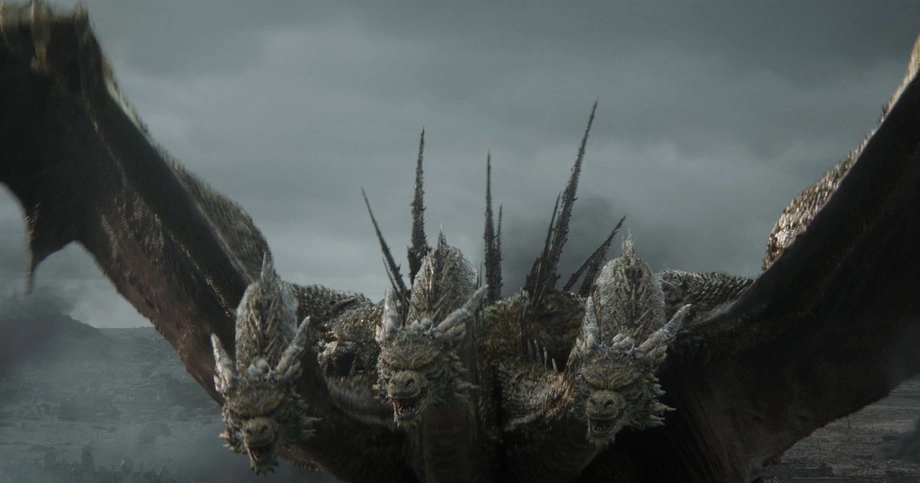
Takashi Yamazaki begins Godzilla Minus Zero with an attack on Matsumoto in Nagano Prefecture, not with the return of its title monster. A horned creature with one head, initially called Ghidorah, tears through the city before the film has explained its world. Yamazaki, who again served as writer, director and visual effects supervisor, says that immediate disturbance was deliberate. This article discusses major plot developments and the ending.
Contents
- An Opening Designed to Grab the Audience
- Why Matsumoto and Ghidorah Are Personal
- Why Godzilla Stays Away Until the Midpoint
- How Operation Narukami Creates a Worse Monster
- What Happens When Godzilla Finally Arrives
- A New Ghidorah Built From Six Decades of Films
- From the 2024 Approval to an Unusual IMAX Release
- How the Actors Approached Family and Scale
- Records in Japan and North America
- Strong Notices and Seven Awards Shortlists
- Key Points
The sequel opened in Japan on November 3, 2026, three years after Godzilla Minus One. Its story takes place in 1949, two years after former kamikaze pilot Koichi Shikishima and his companions apparently destroyed Godzilla in Sagami Bay. Koichi, played by Ryunosuke Kamiki, has married Noriko, played by Minami Hamabe, and they are raising their adopted daughter, Akiko. Their modest family life is the peace that Matsumoto's destruction threatens.
Minus One had also introduced its monster early, with Godzilla killing military personnel on Odo Island near the beginning. The sequel repeats that speed but changes the attacker and the location. Viewers expecting another Godzilla attack instead encounter an unfamiliar animal whose body and abilities will continue changing.
Yamazaki explained that he wanted a monster on screen before the necessary exposition could slow the film down.
I had heard that people remembered how early Godzilla appeared in the first film, so this time I again thought I would bring a monster out as quickly as possible. With this kind of film, explaining the unusual situation takes time. I wanted a monster on screen the instant the film began, to grab the audience, and then keep pulling them back whenever there was an opening.
Why Matsumoto and Ghidorah Are Personal
Matsumoto is Yamazaki's hometown, and Ghidorah connects that place with his earliest memories of the series. The director was born in 1964, the same year Ghidorah, the Three-Headed Monster reached cinemas. That film includes Ghidorah flying over Matsumoto, giving the new opening a personal geographical echo as well as a historical one.
Yamazaki said his affection for the monster influenced the sequel from its early development.
I really, really love Ghidorah for my personal reasons.
The production concealed that choice for months. Trailers offered golden lightning, an unusual cry and warnings that the approaching threat was not Godzilla, without showing the dragon in full. Fans also connected the title with Monster Zero, the codename given to Ghidorah in the 1965 film Invasion of Astro-Monster. Merchandise images circulating in late October then hinted at back spikes, wings resembling those of a wyvern and arms recalling a pterosaur.
The finished creature also resembles the Ghidorah in Godzilla the Ride: Giant Monsters Ultimate Battle, a theme park film directed by Yamazaki. He had similarly used the ride's Godzilla as a starting point for Minus One. Before release, the sequel's Matsumoto attack had already been presented alongside its 1949 family story, its running time of 135 minutes and its selection for the 64th New York Film Festival.
Why Godzilla Stays Away Until the Midpoint
Ghidorah's instant arrival creates the sequel's central structural trick: Godzilla remains absent until roughly the middle of the story. Shikishima and the Large Scale Disaster Response Bureau first have to fight Ghidorah without him. Yamazaki says this timing was fixed from the beginning, allowing Godzilla to return when the human characters already believe their situation cannot become worse.
The director described the intended effect as a second catastrophe landing on top of the first.
Godzilla does not appear until around the very middle of the film. That was decided from the beginning. I wanted Godzilla to arrive at the bottom of the story's midpoint, at the moment when things were at their absolute worst.
Yamazaki also wanted to suppress signs of the return rather than fill the first half with reminders. His extreme version of the desired reaction was that viewers would become so absorbed in a King Ghidorah film that they would temporarily forget Godzilla, then remember him with a sense of despair.
The regenerated Godzilla eventually surfaces near Kozu-shima. Biologist Kanji Murakami proposes drawing the two monsters together, but Yamazaki insisted that this must not turn Godzilla into humanity's friendly defender. People manipulate the encounter for their own survival; Godzilla does not join their cause. That distinction preserves the danger when the plan requires an aircraft to approach him and guide him toward Ginza.
How Operation Narukami Creates a Worse Monster
Murakami, played by Min Tanaka, determines that the Matsumoto attacker arrived in a meteorite as a gelatinous organism. It consumed animals including deer and birds, absorbed their characteristics and developed a body resembling a European dragon. He combines the names of Chimera, a creature assembled from different animals, and Hydra, a monster with many heads, to call it Ghidorah.
Kenji Noda, played by Hidetaka Yoshioka, now directs the government bureau responsible for large disasters. His first plan uses the Nakajima G5N Shinzan bomber to drop a US supplied bomb containing a fuel air explosive while Japanese pilots escort the aircraft in Douglas A-1 Skyraiders. Ghidorah survives a fireball described as reaching 5,400 degrees Fahrenheit and kills members of the escort.
Meteorologist Makoto Aoyama, played by Masami Nagasawa, then activates her alternative plan, Operation Narukami. Harpoons carrying enormous lightning rods are driven into Ghidorah's back so that a storm can strike them. Shikishima helps complete the operation at the cost of two pilots, and the creature falls.
The apparent victory instead supplies the energy for its transformation. Ghidorah revives, grows larger, acquires three heads and two tails, and becomes the golden King Ghidorah. Its beams can lift buildings and other objects before smashing them down. It returns to Matsumoto and then flies between storms across Japan, seeking more electrical energy. Aoyama's expertise has saved people from the initial attack while unintentionally producing the more powerful enemy, giving her a personal reason to remain in the later operation.
What Happens When Godzilla Finally Arrives
Murakami's Resonance Wave Amplifier provides the means to arrange the final confrontation. The device amplifies a biological signal, and Noriko can supply it because Godzilla's cells entered her body during the Ginza attack two years earlier. Those G-cells saved her life but left her with a golden right eye, dark scales and other mutations. Koichi initially flees with Noriko and Akiko rather than allow the military to turn his wife into a weapon.
Noriko changes her mind after seeing Matsumoto's devastation. In Ginza, lightning balloons interfere with King Ghidorah's energy supply while Koichi pilots a Kawanishi H8K seaplane carrying Noriko, Murakami and the amplifier. Godzilla follows the signal and attacks. He cuts off one of Ghidorah's heads with a swing of his tail, but Ghidorah eventually buries him beneath rubble.
Noda's team then freezes Ghidorah with liquid nitrogen and covers it with fuel, intending the abrupt temperature change to destroy its body. When the ignition system fails, Koichi fires a rocket from the seaplane. Noda is caught in the explosion after Ghidorah disables his vehicle. Aoyama later tells Koichi that Ghidorah killed Noda, sparing him the additional knowledge that his rocket caused the death.
Koichi and Noriko use the amplifier to revive Godzilla. Ghidorah restores its lost head, absorbs some of Godzilla's cells and begins copying his energy beam, but Godzilla fires first and destroys it. The human victory remains uneasy. American forces stop bombarding Godzilla only after receiving orders to preserve the monster and the person carrying its cells for possible military use.
Murakami's own motive is also revealed. The Hiroshima survivor had considered sending Godzilla toward New York to avenge his family, but Noda persuaded him that preventing further use of weapons was the truer answer. Murakami destroys his research and the amplifier, although American soldiers detain him and his assistant. Koichi and Noriko collect Akiko rather than leave her behind, and the three flee through ruined Tokyo as Godzilla returns to the sea.
A New Ghidorah Built From Six Decades of Films
The 1964 original introduced King Ghidorah from a meteorite in the Kurobe Gorge and described it as the destroyer of a civilization on Venus. Godzilla needed help from Rodan and Mothra to confront it. In Invasion of Astro-Monster the following year, the Xilians used electromagnetic control to make Ghidorah, Godzilla and Rodan attack humanity. The monster subsequently appeared in films including Destroy All Monsters in 1968 and Godzilla vs. Gigan in 1972.
Later films repeatedly replaced its origins. The 1991 Godzilla vs. King Ghidorah made it the product of three small animals called Dorats, left in the past by visitors from the 23rd century and transformed by nuclear testing. The 2018 animated film Godzilla: The Planet Eater presented Ghidorah as a being from another dimension whose necks could pass through openings in space while ordinary physical contact failed.
Minus Zero retains the meteorite and the monster's extraordinary power but removes an invading alien conspiracy. Its most consequential change is showing growth instead of presenting a finished creature. It progresses from a gel to an animal with one head and finally to the familiar golden form. A radio announcer supplies the full King Ghidorah name only after that evolution.
The new film also includes Ghidorah destroying a shrine gate, recalling a scene from the 1964 production. Its habit of absorbing cells connects it with earlier enemies that borrowed Godzilla's body or biology, including Biollante in 1989, SpaceGodzilla in 1994 and Orga in 1999. Here, that ability explains why Ghidorah can imitate Godzilla's beam rather than treating the resemblance as a visual coincidence.
From the 2024 Approval to an Unusual IMAX Release
Toho approved another Yamazaki Godzilla film in November 2024. He was writing and preparing storyboards by February 2025, and Toho International president Koji Ueda confirmed that April that the project would be a sequel. Filming ran from August to December 2025. Shirogumi handled the visual effects with a team of about 50 people, while animator Atsushi Sato supervised Ghidorah.
The reported production budget was $13 million to $18 million, roughly 30 percent above that of Minus One. The production became the first Japanese film made under the Filmed for IMAX program. A collaboration with the IMAX countdown shown before screenings was also a first for a Japanese film.
- November 2024: Toho announced that Yamazaki's next Godzilla film had been approved.
- November 3, 2025: The Godzilla Minus Zero title and logo were revealed at Godzilla Fest.
- September 26, 2026: The film had its world premiere at the 64th New York Film Festival, the first selection for the Godzilla series.
- November 3 and 6, 2026: Toho opened the film in Japan, followed by GKIDS in the United States and Canada.
The Japanese Wikipedia film entry lists TOHO Studio and ROBOT as the production companies and Naoki Sato as composer. It also records release plans covering 100 countries and regions, additional Japanese screenings in MX4D, 4DX and Dolby Cinema from November 13, and the first R rating given to a Godzilla film in the United States. That classification requires viewers under 17 to attend with an adult.
Yamazaki has connected the unusual title with the Shikishima family's desire for ordinary life. He explained that, in some fields, a minus sign attached to zero can express a force moving toward zero. The family begins with something close to normality, making the effort to preserve it more concrete than simply preventing another city from being destroyed.
How the Actors Approached Family and Scale
Nagasawa saw Aoyama as an unusual woman for 1949: a meteorologist working beside men inside a specially established secret organization. She said she tried to balance the character's strong will with the social expectations of the period. Aoyama's earlier experience with an unpublished typhoon forecast also explains her determination to act on her calculations rather than wait for institutional approval.
Hamabe concentrated on the two years during which Noriko, Koichi and Akiko had become a family. She said her growing ease with young actor Sae Nagatani helped their scenes. Noriko's decision to use her altered body in the operation consequently becomes a choice about the world Akiko will inherit, not simply another military assignment.
The actors also had to imagine destruction that was added later. For the climax, Nagasawa expected more of the Wako building in Ginza to remain around her. The completed images instead left her character standing close to a sheer drop while the monsters fought below. Yamazaki smilingly reminded her afterward just how close to the edge she had been.
Hamabe said Godzilla's eventual entrance overcame even her advance knowledge of the script.
Even though I knew the script and the entire flow, the music started, Godzilla appeared, and I forgot everything. It gave me chills.
On set, Yamazaki often described unseen action through vocal sound effects rather than technical explanations. Hamabe found those booming and rumbling noises easier to answer than a detailed effects briefing. Nagasawa said he generally trusted performers with their characters and intervened when he saw a specific additional possibility.
Records in Japan and North America
The Japanese opening on November 3 produced 910 million yen and 590,000 admissions, setting a national opening day record for a film made with live actors. Admissions passed one million on the fourth day. The first six days brought more than 1.61 million admissions and 2.5 billion yen.
By November 23, the 21st day, Japan had reached 3.32 million admissions and 5.3 billion yen. The film crossed 5 billion yen in about one third of the 62 days that Minus One needed. Its third weekend, from November 20 to 22, still ranked first in Japan, adding 352,000 admissions and 590 million yen for a cumulative 5.33 billion yen.
The detailed North American weekend tally gives approximately $31.61 million from 3,254 cinemas between November 6 and 8; the worldwide production summary lists the US and Canadian opening as $30.6 million. The higher weekend figure is about 2.8 times the $11.4 million opening of Minus One. It was the largest North American opening for a film with live actors in a language other than English, and the sequel topped the weekend charts in both Japan and North America.
IMAX supplied $12.7 million, or 40 percent, of the North American weekend gross. The share reached 74 percent when other premium large format screenings were included. Worldwide opening revenue reached $63 million, including $21.3 million from IMAX. The second North American weekend added $8.31 million, taking that market's cumulative total beyond $48.88 million.
Toho subsequently put worldwide ticket sales above 19.2 billion yen, equivalent to about $120.5 million in the global summary, passing the 16 billion yen earned by Minus One. The sequel thereby became the Japanese Godzilla film with the highest recorded gross. The audience response also arrived despite a reported production budget of only $13 million to $18 million, although cinemas and distributors share in ticket revenue.
Strong Notices and Seven Awards Shortlists
Rotten Tomatoes listed a 90 percent positive score from 221 reviews, with an average rating of 7.8 out of 10. Metacritic listed 74 out of 100 from 44 critics, while CinemaScore gave the film an A based on audience polling. Reviews commonly praised the visual effects as an advance on Minus One, but differed over whether the sequel's larger monster battles, pacing and sentiment worked as well as the earlier film.
The 32nd Critics Choice Awards placed Godzilla Minus Zero on seven shortlists, the largest number yet for a Japanese film. Sae Nagatani was selected in the young performer category. Anri Kamijo and Wataru Hirai were recognized for art direction, Ryuji Miyajima for editing and Naoki Sato for his score. The film itself appeared on the visual effects, sound and stunt design shortlists.
Those seven selections placed it fourth among films by number of appearances, behind The Odyssey with 11 and La Bola Negra and Dune: Part Three with eight each. Shortlists for picture, screenplay, direction and the principal acting categories were still to follow. Nominations are scheduled for December 4, 2026, with the ceremony set for January 3, 2027.
The awards attention returns the focus to Yamazaki's original gamble. The biggest creature effects serve two carefully timed entrances: Ghidorah seizes the audience before the story can settle, and Godzilla arrives only when the human plan has already produced a disaster. The box office figures show that viewers responded to that structure in large numbers, while the family ending leaves Koichi, Noriko and Akiko facing pursuit rather than a simple restoration of peace.
Key Points
- Yamazaki opens with Ghidorah attacking his hometown of Matsumoto so that a monster appears before lengthy exposition.
- Godzilla is withheld until the story's midpoint, when Operation Narukami has accidentally created the more powerful King Ghidorah.
- Humans lure Godzilla into the Ginza battle; Yamazaki does not treat him as their ally.
- Noriko's G-cells make her essential to the plan and leave her family vulnerable to military exploitation.
- Japan reached 5.3 billion yen in 21 days, while worldwide grosses passed 19.2 billion yen, or about $120.5 million.
- The film received seven Critics Choice shortlist selections, with nominations due December 4 and the ceremony on January 3.