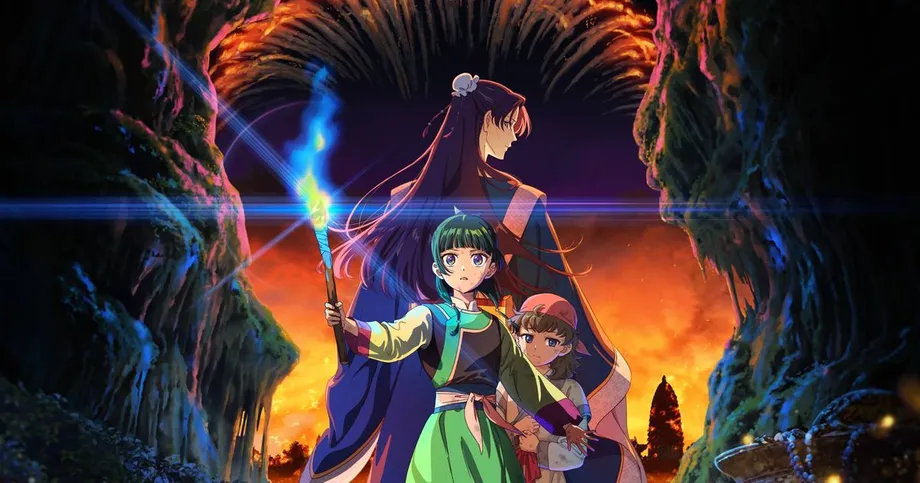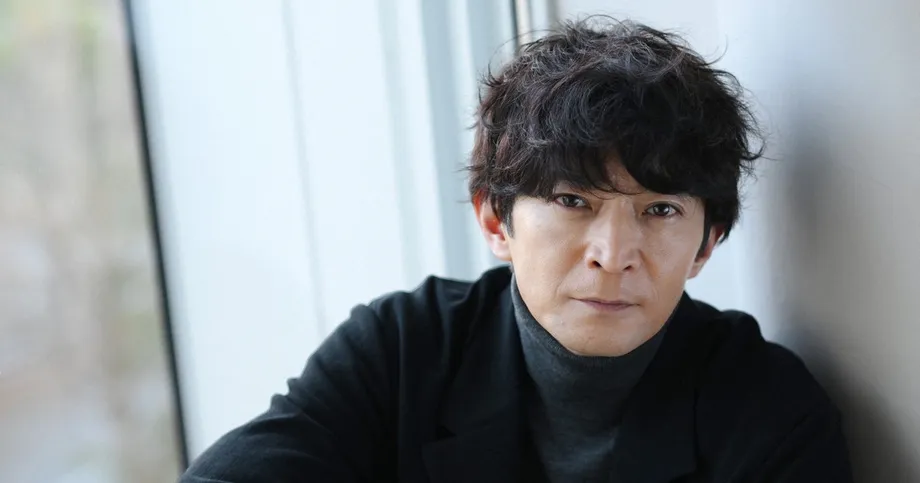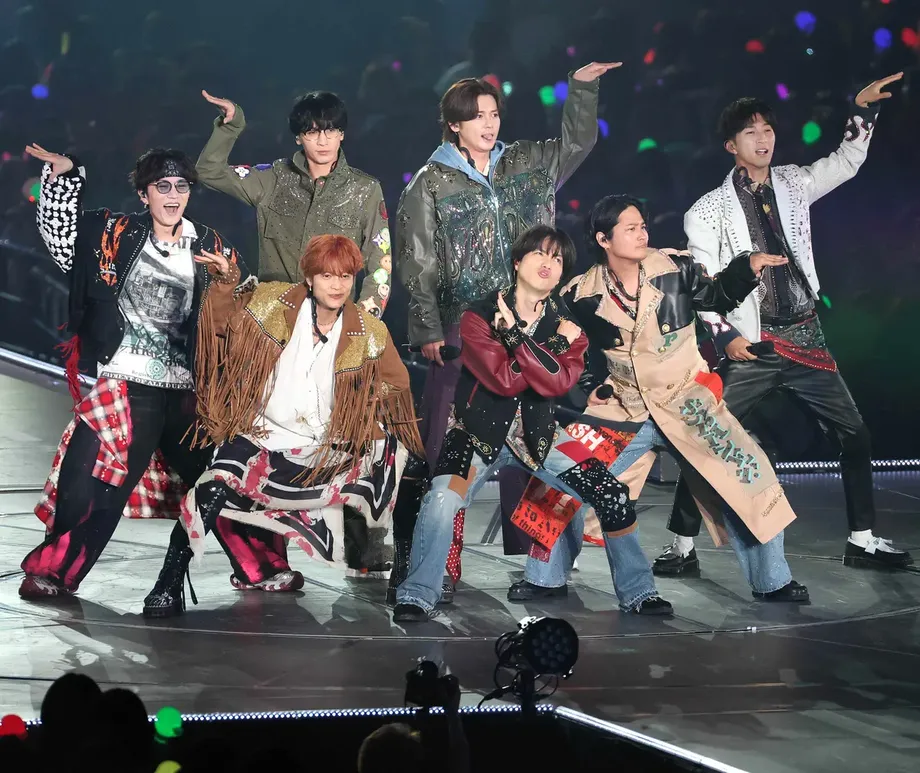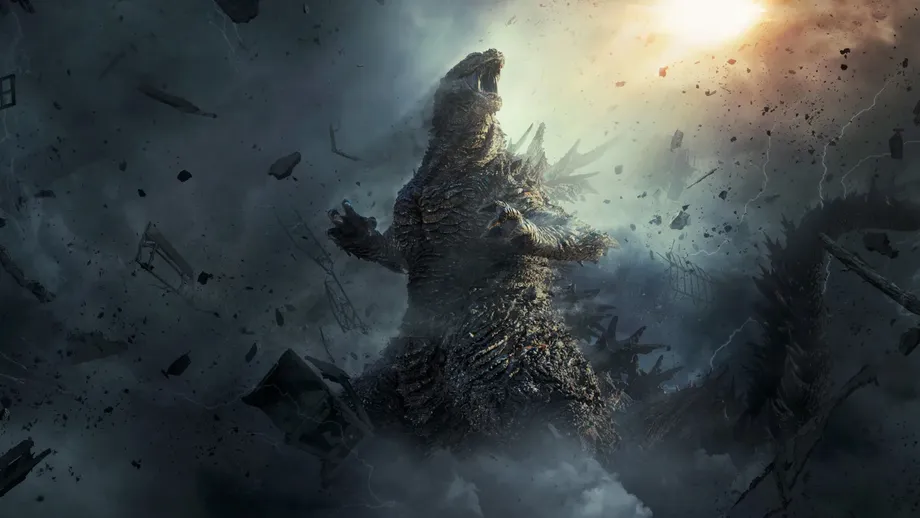
A new catastrophe arrives in Matsumoto
Takashi Yamazaki's Godzilla Minus Zero moves the surviving Shikishima family into 1949, introduces King Ghidorah in an attack on Matsumoto and expands the filmmaker's vision of a Japan still recovering from war. The 135 minute sequel pairs a larger monster confrontation with a more intimate problem: how people who have finally built a home decide what they are willing to risk to protect it.
Contents
- A new catastrophe arrives in Matsumoto
- Why Yamazaki chose King Ghidorah
- A family has something new to lose
- Noriko's survival becomes part of the defense plan
- The response team turns danger against danger
- Godzilla is not humanity's ally
- Two billion particles and a sound recorded at a dam
- What the release calendar establishes
- Early reactions agree on spectacle, not on the drama
- At a Glance
Film at Lincoln Center's festival film listing identifies the Japanese production as a World Premiere and Spotlight Gala selection at the 64th New York Film Festival, with GKIDS as its distributor. The institution places the story two years after Godzilla Minus One and lists Japanese dialogue with English subtitles.
The Japanese theatrical opening is scheduled for November 3, 2026, followed by North America on November 6. Reports differ on some dates, including the festival screening and the American opening, but the festival's listed September 26 start date and the separate Japanese and North American release schedule provide the clearest distinction between those events.
Yamazaki returns as writer, director and visual effects supervisor after Godzilla Minus One won the Academy Award for Visual Effects. His sequel again treats destruction as something experienced by specific people rather than anonymous crowds. Ryunosuke Kamiki, Minami Hamabe and Sae Nagatani return as Koichi Shikishima, Noriko and their adopted daughter, Akiko.
The story details below include spoilers about the new monster, Noriko's condition and the human response to the attacks. Those developments explain why this continuation is more than a rematch with a creature presumed defeated.
Why Yamazaki chose King Ghidorah
Ghidorah first attacks Matsumoto with only one head, according to multiple accounts of the film, before developing the familiar three headed form. That progression makes the opening destruction a warning of greater power to come. The creature's wings generate destructive winds, while its gravity beams lift buildings, trains and other objects before sending them crashing down.
Yamazaki, the film's writer and director, says the choice of opponent was personal. Ghidorah made its screen debut in 1964, the year Yamazaki was born, and the director associates the monster with childhood memories of his hometown, Matsumoto.
It had always been in my mind to have Ghidorah appear if I were to make a second film, and I never really strayed from that idea.
The sequel does not require viewers to understand the character's many earlier connections to aliens or travelers through time. One account describes a meteorite arrival shortly before the Matsumoto attack, but the dramatic focus is the immediate threat to Japan rather than a lengthy explanation of its cosmic origins.
The monster also gives Yamazaki a second kind of catastrophe to place beside Godzilla's nuclear associations. The director connects Ghidorah's control of the weather to the typhoons that disrupted Japan's recovery after World War II. His hometown setting therefore serves both a personal memory and the film's account of reconstruction repeatedly interrupted by disaster.
A family has something new to lose
In Godzilla Minus One, Koichi was a former kamikaze pilot struggling with guilt, the deaths of his parents and the ruins of Tokyo. Noriko and the orphaned Akiko became his family almost before he could accept that he deserved one. The sequel finds those relationships established, with Koichi and Noriko described as married and Akiko now seven.
Sakura Ando also returns as Sumiko, the neighbor whose own losses helped bind her to the household. Her role as an aunt to Akiko extends the family beyond the central three characters and keeps the consequences of another attack rooted in ordinary care.
Yamazaki explains that his attachment to those people was a reason to continue their story. Speaking about the returning family, the director said:
I'm very attached to the family.
Koichi's response to renewed danger is described differently across accounts. Some present him as eager to return to flying, driven by duty and lingering guilt. Others stress his initial reluctance to leave Noriko and Akiko. Both readings point to the same conflict: fighting may protect his family, but it may also deprive them of a father. The question is no longer simply whether he can survive, but how he can act without treating his life as expendable.
Noriko's survival becomes part of the defense plan
Noriko's recovery from Godzilla's 1947 attack is no longer only a miraculous ending to the earlier film. The sequel makes her unusual healing and the presence of Godzilla DNA in her body central to the new emergency. Her eyepatch is a visible reminder that survival has not restored her life to its previous state.
Jun Kunimura plays the doctor Ogata, who studies the condition of people exposed to Godzilla's cellular tissue. The final trailer opens with his assessment that a patient should not have survived. That medical thread connects the aftermath of the Ginza attack to the effort to bring the two monsters together.
The scientific language belongs to the film's fictional biology. Regeneration means rebuilding damaged tissue; here, the monsters possess that ability on an extraordinary scale, and Noriko appears to carry some of its effects. Her condition may be useful against the creatures, creating a conflict between treating a survivor as a patient and treating her as a weapon.
This gives Noriko a decision of her own rather than simply making her someone Koichi must rescue. Accounts describe her fear, resistance and eventual willingness to protect other families. Whether that journey deepens the drama or repeats Koichi's emotional arc is one of the sharpest divisions in the film's early reception.
The response team turns danger against danger
Hidetaka Yoshioka returns as Kenji Noda, the former naval weapons engineer now leading a disaster response bureau. His wartime experience is a source of expertise and guilt: he knows how to design a defense, but he also remembers the lives taken by the weapons he helped create.
Two new specialists broaden the team. Masami Nagasawa plays meteorologist Makoto Aoyama, whose understanding of storms helps track Ghidorah. Min Tanaka plays biologist Kanji Murakami, a Hiroshima survivor who lost his family and whose research is inseparable from his anger.
Aoyama identifies the creature's response to the electromagnetic conditions of a moving storm system. That means weather forecasting becomes part of the operation, rather than scenery around the fighting. Accounts also describe her guilt over an earlier prediction that cost lives, placing her beside Noda as someone forced to make decisions despite the memory of failure.
Conventional attacks do not provide a lasting solution. An aerial assault against Ghidorah in the mountains, using American aircraft and weapons, instead demonstrates how dangerous it is to underestimate the creature. When a regenerated Godzilla returns from the ocean, the team considers drawing both monsters to one location.
The plan is not simply to ask Godzilla to save Japan. One account specifies that the humans intend to let the creatures weaken each other, then attack whichever survives. Murakami's separate agenda complicates the operation, especially where grief begins to turn into a desire for revenge.
Godzilla is not humanity's ally
Making Godzilla an opponent of Ghidorah might suggest a familiar turn toward a protective monster. Yamazaki rejects that interpretation. The creatures may fight in a way that benefits people, but Godzilla's indifference remains part of the threat.
The writer and director described his approach to Godzilla's place in the story:
I didn't want to depict Godzilla as a being that is on the side of humanity. He is not our friend.
Yamazaki places the creature somewhere between a beast and a god. For the human characters, that creates a moral limit as well as a tactical problem. The director says their attempt to fight it involves methods that cross a taboo, and he wanted the film to portray the conflict that comes with doing so.
The sequel also brings the American occupation more directly into the story. American military personnel view the monsters partly as opportunities for power, while the Japanese survivors approach them through experiences of bombing, displacement and loss. That contrast extends the film's concern with who pays for military ambition.
A Manhattan sequence pushes those ideas beyond Japan. It is described as a vision or revenge fantasy of Godzilla approaching New York, not simply another confirmed attack in the main action. Connected to Murakami's anger, it imagines destruction reaching a country that has not experienced the monsters as Japan has. The distinction matters because the sequence expresses a character's desire rather than establishing a straightforward expansion of the battlefield.
Two billion particles and a sound recorded at a dam
The production's larger scale is visible in a specific technical detail: an ocean sequence featuring Godzilla pursuing a plane reportedly used two billion particles and was created by two people. In visual effects, particles are simulated points used to build phenomena such as spray, foam and debris. The figure describes the complexity of the simulated water, not two billion individually animated objects.
Producer Kazuaki Kishida says younger artists received responsibility for complete shots or scenes. At a New York Comic Con panel, he described team members aged 22 and 23 taking on that work and said Yamazaki welcomes their approaches to technical problems.
Kishida, speaking through a translator about those artists, said:
They're talented enough to be given an entire cut or a scene to manage on their own.
Visual effects artist and compositor Tatsuji Nojima, whose work on Minus One brought him into its Oscar winning team, was among the panel participants. The production accounts describe collaboration across experience levels rather than a rigid age hierarchy.
The sound team sought physical spaces that could give the monsters an imposing acoustic presence. For Minus One, Godzilla's roar was recorded in a baseball stadium to capture its echo. Sound designer and Foley artist Natsuko Inoue says work on the new monster took the crew to a dam.
Sound finishing took place at Toho Studios in Seijo, Tokyo, where a renovated stage allowed the team to complete a native Dolby Atmos mix. Atmos can position sound around and above an audience. For this film, that makes the movement of a flying creature, falling debris and a monster's roar part of the sense of scale.
Returning composer Naoki Sato supplies the musical contrast between family drama and catastrophe, with accounts describing alarming strings, solemn choral passages and large orchestral surges. Cinematographer Kozo Shibasaki also returns, while Anri Jojo and Wataru Hirai are credited with the period production design.
What the release calendar establishes
The film is described as the first Japanese production made under the Filmed for IMAX designation. That wording is more precise than assuming every scene was captured with a particular IMAX camera. The production and presentation are designed for the format, with image and sound work supporting its larger screens.
Japan's rollout includes midnight screenings at 31 IMAX theaters on November 3. Dolby Cinema, 4DX and MX4D engagements are scheduled to begin November 13, ten days later. The latter two formats add synchronized seat movement and environmental effects, while Dolby Cinema combines Dolby Vision projection with Dolby Atmos sound.
The main dates, including the points where reports differ, are:
- November 2025: The sequel was reportedly officially revealed.
- September 25 to October 12, 2026: The 64th New York Film Festival runs during this period.
- September 26, 2026: The festival lists the film's start date, and a separate account places the world premiere on this date. Another review records a September 24 screening.
- October 23 and November 10, 2026: Big Comic issues featuring Godzilla and King Ghidorah on their respective covers are scheduled for release.
- November 3, 2026: Japan's theatrical opening and midnight IMAX screenings are scheduled. One interview account also gives this date for the United States, conflicting with the November 6 North American schedule.
- November 6, 2026: GKIDS' United States theatrical release is reported as planned for this date.
- November 13, 2026: Japan's Dolby Cinema, 4DX and MX4D screenings are scheduled to begin.
The Big Comic promotion marks the first consecutive monster covers since the magazine began in 1968. A related giveaway offers 50 readers shirts bearing the cover illustrations. Releases across Latin America, Europe, Asia, the Middle East, Australia and New Zealand are also described as planned for roughly the same period, although individual country dates are not specified.
Early reactions agree on spectacle, not on the drama
The sequel arrives after a predecessor reported to have earned ¥7.65 billion and more than 50 awards, including its visual effects Oscar. That success helps explain the expectations around a continuation, but it does not establish how Minus Zero will perform at the box office or in awards voting.
Early assessments repeatedly praise the monster action and visual effects. The aerial fighting above Matsumoto, a tense encounter between Godzilla and a seaplane, and the eventual clash with Ghidorah are described as major attractions. Multiple reviews report a United States R rating, although the festival listing does not supply a rating certificate or its official reasons.
Opinions divide over what happens between those sequences. Favorable assessments see a stronger account of survivors balancing family, grief and responsibility. Less favorable ones describe slow planning scenes, repeated changes of heart and emotional arcs that revisit lessons already resolved in Minus One. Some also find the final battle's gray surroundings less vivid than the earlier film's Ginza destruction.
Godzilla's limited presence is part of that debate. One review counts only three appearances in the first 90 minutes, while another identifies two sustained monster sequences across the film. Those observations suggest that the larger effects production has not necessarily produced constant action. Much of the running time still depends on the audience's investment in the people preparing for it.
The ending reportedly leaves room for another installment. Yamazaki has discussed the possibility of creating an original monster for a third film, but that is an idea rather than a confirmed production announcement. For now, Minus Zero extends his central approach: the creatures can grow more powerful, while the human stakes remain the survival of a family and the refusal to repeat destructive choices.
At a Glance
- Godzilla Minus Zero runs 135 minutes and follows the Shikishima family in 1949.
- King Ghidorah attacks Matsumoto before Godzilla returns from the ocean.
- Yamazaki links Ghidorah's weather effects to natural disasters that disrupted Japan's recovery.
- Noriko's exposure to Godzilla's cells becomes central to the defense effort.
- Japan's release is scheduled for November 3, 2026, with North America scheduled for November 6. One account gives a conflicting American date.
- The festival lists September 26, while one review records a September 24 screening.
- Early reviews praise the effects and action but disagree over pacing and repeated character conflicts.
- A further sequel is possible, but no confirmed third production is identified.