A voice can carry commercial rights, Tokyo court says
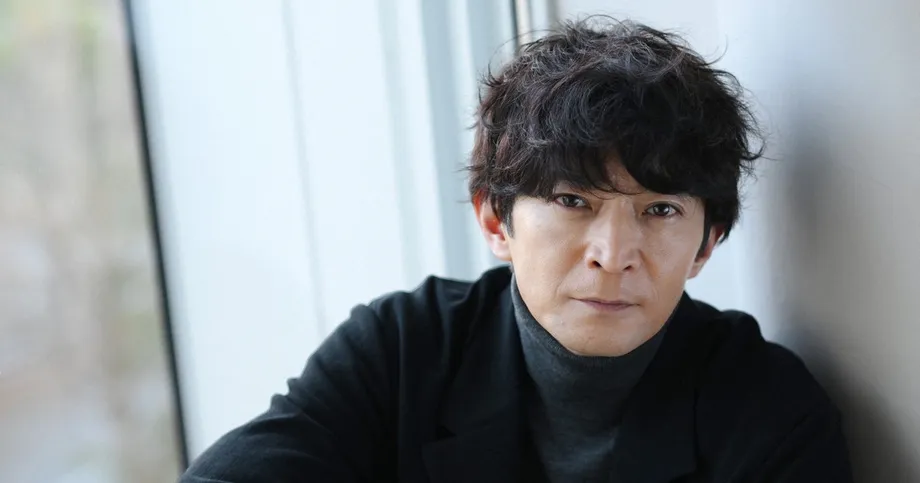
The Tokyo District Court recognized on September 30, 2026, that a person's voice can be protected under Japan's right of publicity, extending a legal principle associated with names and likenesses to vocal identity. The decision came in a lawsuit brought by actor Kenjiro Tsuda over 188 TikTok videos that he alleged used an artificial intelligence imitation of his voice without permission.
Contents
- A voice can carry commercial rights, Tokyo court says
- What was posted, and why Tsuda challenged it
- Why dismissal did not make the voice use lawful
- The commercial appeal test comes from a 2012 decision
- What the union's voice tests found
- The timeline contains a disputed deletion date
- Ministry guidance supports protection without a new statute
- Deletion leaves the platform responsibility issue open
- Performers seek permission and payment at every stage
- Recognition now, unanswered legal questions next
- Key Points
Presiding Judge Aya Takahashi dismissed his request for removal because the videos had already disappeared from the platform, including its servers. The court did not decide whether the narration actually imitated Tsuda, whether his voice had been used to generate it, or whether his rights had been infringed.
That distinction defines the ruling: it recognizes a possible legal protection without establishing liability in this particular dispute. It was reported as the first Japanese judicial decision recognizing that voices fall within publicity rights, and the lawsuit as Japan's first case challenging an alleged infringement of vocal identity involving generative AI.
Tsuda, known for voicing Kento Nanami in Jujutsu Kaisen, sought removal rather than financial compensation. His attorney, Takashi Hirano, said the court's statement could discourage unauthorized exploitation of voices:
By making it clear that the unauthorized use of a person's voice can constitute an infringement of their right of publicity, the ruling will serve to some extent as a deterrent against similar harm.
The practical outcome was therefore mixed. Tsuda achieved the removal he wanted, and the court recognized a legal principle relevant to future claims. Yet performers and platforms still lack answers about the evidence needed to prove imitation and the obligations that arise when disputed content remains online.
What was posted, and why Tsuda challenged it
The disputed account published 188 videos between July 2024 and September 2025. Its narration covered urban legends, paranormal stories and conspiracy theories. The account's image reportedly resembled Tsuda's anime character, while viewers left comments recognizing a similarity between the narration and his voice.
The Japan Actors Union identifies the poster as Hakkai, using the name Yami. The complaint described an audience of about 210,000 subscribers and an average of roughly 1.47 million views per video. Other accounts put the following at more than 200,000 or more than 210,000. These figures describe the same substantial audience, although they are not identical measurements.
Tsuda's team argued that the narration deliberately reproduced his distinctive voice through generative AI and used its appeal to attract viewers and earn revenue. TikTok disputed that account, saying the poster had described using an AI model trained on a friend's voice. The platform maintained that the result was a generic male voice and that perceived similarity to Tsuda was subjective.
The alleged monthly earnings were ¥500,000 to ¥750,000. One report prints an inconsistent range of ¥500,000 to ¥75,000; the complaint figures described elsewhere, including in legal commentary, give ¥750,000 as the upper figure. None of these amounts was established as an infringement award, because Tsuda did not seek damages.
Why dismissal did not make the voice use lawful
Tsuda based his removal request on publicity rights and the Unfair Competition Prevention Act. The latter claim alleged that the voice's use created confusion associated with his identity. The court did not resolve that argument or determine whether the disputed narration breached either legal basis.
Instead, it found that the account and the relevant video data had been deleted. Even if a removal obligation could otherwise have arisen, there was no longer content for TikTok to remove. The dismissal therefore cannot be read as permission to imitate performers through AI.
In its discussion of the broader legal principle, the court described the relationship between voice and identity:
A person's voice, similar to a likeness, is a symbol of the individual's personality
The Japan Actors Union's response to the judgment welcomes both the deletion and the recognition of voice protection. It also stresses that the action sought to protect Tsuda's personal interests through removal, rather than recover money. That limited remedy explains why deletion ended the dispute without an infringement finding.
The commercial appeal test comes from a 2012 decision
A publicity right protects a person's ability to control the commercial attraction of their identity. For a performer, a recognizable voice may draw an audience in much the same way that a name or photograph draws customers to a product.
The Supreme Court recognized Japan's publicity right in its 2012 Pink Lady decision. According to Orrick's legal analysis, the Tokyo court applied that decision's test: unauthorized voice use can infringe publicity rights where its purpose is exclusively to exploit the voice's power to attract customers.
Judge Takahashi described the condition governing protection in these terms:
if the purpose of using the voice is exclusively to take advantage of its commercial appeal
The word "exclusively" matters. The ruling did not declare every similar voice unlawful, nor did it determine how the test applies to narration that both entertains viewers and generates revenue. A future claimant would still need to establish the connection to an identifiable person and explain how the use exploited that person's commercial attraction.
The dispute also illustrates why copyright alone does not settle vocal identity claims. A recording or performance may have legal protection, but that is different from ownership of a person's vocal qualities. Japan has no statute expressly setting out voice publicity rights, which is why the court's interpretation of existing principles carries weight.
What the union's voice tests found
The Japan Actors Union published numerical results from JVOXPRO, its performer database and voice comparison system. Across 30 comparisons between Tsuda's voice and the disputed audio, it reported a maximum similarity score of 0.881 and an average of 0.814. At least 15 comparisons scored 0.80 or higher.
Under the union's classification, scores from 0.80 to below 0.90 indicate a high possibility that the audio is either the person's own voice or an AI generated version of it. Scores of 0.90 or more indicate a very high possibility of a match to the person; scores from 0.74 to below 0.80 require further checking; lower scores suggest another person.
Those categories are the union's technical assessment, not an evidentiary threshold adopted by the court. A score of 0.814 should not be presented as an 81.4 percent probability of infringement. The tests support the union's view that Tsuda's voice was probably used, but they do not resolve the competing explanation offered by TikTok.
The union says its system was tested using recordings of the same person, different people and people with similar vocal qualities, across different file sizes and formats. The judgment nevertheless left open how much similarity would be enough in court and how to distinguish a recognizable imitation from an independently generated voice.
The timeline contains a disputed deletion date
The case followed a growing industry campaign against unauthorized AI use of performers' identities. Japanese actors launched the No More campaign in 2024, opposing unauthorized use of faces and voices. The legal and policy developments then unfolded over several dates:
- July 2024 to September 2025: The account published the 188 videos challenged by Tsuda.
- November 2025: Tsuda filed his lawsuit seeking removal.
- April 2026: The Ministry of Justice convened a study group on legal protection for voices.
- May 2026: Orrick's account dates the deletion of the TikTok account to this month.
- August 2026: The ministry study group released its report on voice protection.
- September 30, 2026: The Tokyo District Court dismissed the removal request while recognizing that voices can receive publicity protection.
Reports differ about when the account disappeared. Several describe deletion as occurring soon after the November filing, while Orrick gives May 2026. Both accounts agree on the fact decisive to the judgment: the videos had been removed before the court ruled. The distinction matters when assessing how quickly the platform dispute ended, but it does not change the court's reason for dismissing the removal claim.
Ministry guidance supports protection without a new statute
The Ministry of Justice study group brought together intellectual property scholars and practicing lawyers. Its August 2026 report recognized legal protection for voices that identify a particular individual, including recognizable performers, and a right not to have one's voice used without permission.
Its approach addressed both personality rights and publicity rights. The first concerns a person's interest in their identity and its unauthorized use; the second concerns the commercial value that identity attracts. The Tokyo court's description of voice as a symbol of personality fits that interpretive direction.
The report and judgment are not new legislation. The Japan Actors Union wants lawmakers to put voice publicity rights expressly into statute, reducing the uncertainty and expense performers face when seeking protection.
The union also points to Copyright Act Article 30-4, concerning uses outside the enjoyment of a work's expressive content, and Article 91(2), concerning limitations on performers' recording rights for cinematographic works. It argues that these provisions, together with the absence of a performer reproduction right, leave gaps in protection. Those are the union's arguments for reform, not findings that the Tsuda court made about the disputed videos.
Deletion leaves the platform responsibility issue open
Before seeking removal in court, Tsuda's side requested information identifying the poster. The Japan Actors Union says the platform refused that initial disclosure request. It argues that platforms should preserve relevant information when notified of alleged harm and that a stronger disclosure system could help identify people responsible for unauthorized use.
Removal and evidence preservation serve different purposes. Deleting a video can stop its circulation, while preserving account and upload information may help a performer pursue a claim against its creator. The judgment resolved the removal request but did not decide what duties a platform would have if allegedly infringing voice content stayed online.
The Information Distribution Platform Act forms part of Japan's framework for responding to harmful online information, including false or misleading content and copyright complaints. The debate now includes whether publicity complaints need a more explicit response mechanism. The court did not establish that mechanism in this case.
TikTok said it would respect the judgment and review its details before deciding its next steps. Its statement also addressed the relationship between technological development and personal rights:
We will continue to sincerely work on the balance between technology development and rights protection.
Performers seek permission and payment at every stage
The Japan Actors Union, representing about 2,600 actors and voice actors, has also prepared its first guidelines for AI voice use. Two industry bodies representing talent management businesses and voice actor agencies support the framework.
The guidelines seek advance permission and a stated purpose at each stage, from training an AI system to generating, publishing and using its audio. They treat synthetic voice use as the provision of a new performance by the person concerned and call for payment reflecting the extent and actual use of that performance.
For multilingual dubbing, they seek fresh permission and additional compensation for each language. For recreating a deceased performer's voice, they call for respect for the person's wishes during life and strict authorization from relatives or others holding the relevant rights. These are proposed industry standards, not requirements created by the Tokyo judgment.
Yuko Sasaki, executive director of the Japan Actors Union, explained before the ruling why performers regard vocal identity as the product of professional work:
is the result of years of rigorous training and apprenticeship
The financial estimates cited in the debate measure different things. Itochu Techno-Solutions projects ¥25.8 billion in combined Japanese losses from pirated video and games and audio related content, including AI generated material, during 2026 through 2030. That is not an estimate of voice cloning alone. Separately, a survey cited by Orrick identified more than 40,000 suspected unauthorized social media posts involving celebrity voices and likenesses, with an estimated economic impact of ¥2 billion to ¥4.5 billion. The two estimates cannot be added together or treated as equivalent.
Recognition now, unanswered legal questions next
The concern about imitating a recognizable voice predates generative AI. In a late 1980s American case, Ford used a singer to imitate Bette Midler after she declined to participate in a commercial. A US court recognized her distinctive singing voice as part of her identity and found the unauthorized imitation unlawful. That case offers a comparison, not a legal rule governing Japan.
Tsuda's case brings the identity issue into a different production environment, where software can generate narration at scale. The Japanese ruling recognizes that voice can carry protected commercial value, but leaves undecided the standard for proving an AI imitation, the treatment of mixed entertainment and commercial purposes, platform responsibility, and the alternative unfair competition claim.
No appeal date, legislative vote or other binding deadline has been announced in the accounts of the decision. For now, the concrete result is removal without damages or an infringement finding, alongside a judicial statement that performers can invoke in future disputes.
Key Points
- The Tokyo District Court recognized on September 30, 2026, that voices can receive publicity rights protection.
- Kenjiro Tsuda challenged 188 TikTok videos posted between July 2024 and September 2025.
- The court dismissed his removal request because the videos had already been deleted.
- It did not decide whether the narration imitated Tsuda or infringed his rights.
- The commercial protection follows the Supreme Court's 2012 test concerning exclusive exploitation of an identity's customer appeal.
- The Japan Actors Union seeks explicit legislation, evidence preservation rules, and permission and payment for AI voice use.