A Bigger Push for Factories, Roads, Farms and Homes
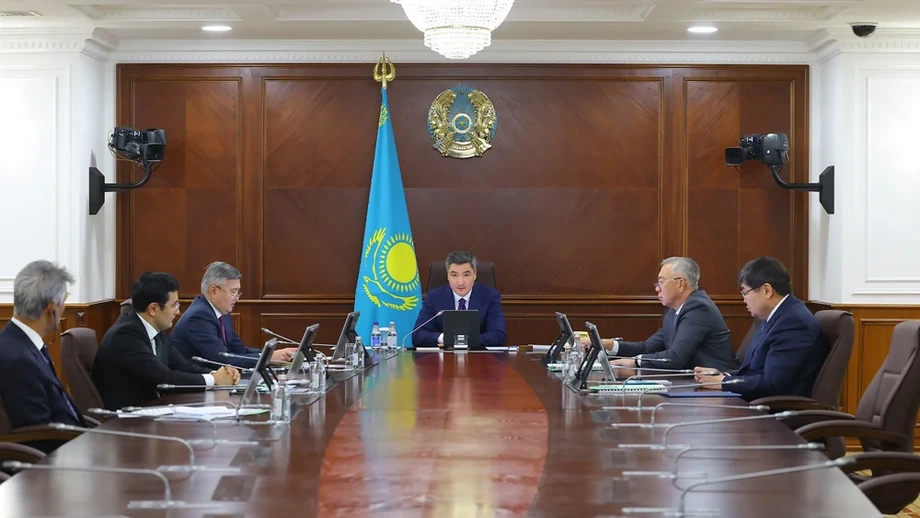
Baiterek National Investment Holding plans to channel 8 trillion tenge, about US$17.5 billion, into Kazakhstan's economy in 2027, putting factories, infrastructure, agriculture and housing at the centre of a push backed by the state. The Baiterek group of companies approved the annual budget and management targets at a board meeting on November 27, 2026, chaired by Prime Minister Olzhas Bektenov. The plan sets a fixed capital investment target of 1.17 trillion tenge, about US$2.6 billion, and aims to commission roughly 2.7 million square meters of housing with the holding's participation.
Contents
- A Bigger Push for Factories, Roads, Farms and Homes
- What the Board Approved on November 27
- Where the 8 Trillion Tenge Is Meant to Go
- How Baiterek Plans to Raise the Money
- The 2033 Plan Behind the 2027 Budget
- What Baiterek Did in 2025 and 2026
- Orleu Loans and a New Project Manager Model
- Corruption Risks Move to the Centre
- Can Existing Businesses Reach the Support?
- Key Dates Behind the Decision
- What Still Needs Detail
- Key Points
Baiterek's scorecard now matters as much as the money. The state investment holding will be judged on whether supported companies invest, sell more and export more. The announcement also carries a tougher instruction from the prime minister to tighten procurement, audits and corruption prevention inside the holding, which sits at the centre of Kazakhstan's investment system led by the state.
The decision follows President Kassym-Jomart Tokayev's address to the people of Kazakhstan, where he set improving investment efficiency and developing the real sector as priorities. The real sector means businesses that make goods and provide services, as distinct from financial trading. Baiterek's board also approved key performance indicators, or KPIs, for its chair and management board members, setting the yardstick by which their 2027 work will be judged.
What the Board Approved on November 27
The board approved Baiterek's 2027 budget and KPI package for the chairman and management board members at the November 27 meeting. The government said the holding's work would focus on carrying out tasks set by the head of state, especially better investment results and growth in the real sector.
The Kazakh government, announcing the decision through its press service, said the KPI system now reaches beyond the amount of money lent or guaranteed. It said the measures will look at what happens inside supported firms.
In this regard, the holding's KPI system for next year includes investments in fixed capital, the revenue of enterprises that received support, as well as the volume of their export sales.
That change gives the scorecard a practical test. A factory that receives help should invest in equipment, raise sales and, where possible, sell abroad. Baiterek's managers will have a direct incentive to look past loan paperwork and follow the performance of the companies they support.
Where the 8 Trillion Tenge Is Meant to Go
Baiterek's 2027 support package is broad, but the government gave two concrete anchors. The first is 1.17 trillion tenge of fixed capital investment in manufacturing, infrastructure and agriculture and food processing. Fixed capital means physical assets that last, such as plants, machines, roads, rail links and utility networks.
The second anchor is housing. With Baiterek's participation, about 2.7 million square meters of residential space are expected to be commissioned in 2027. Commissioning means the homes are completed and accepted for use, not merely included in a plan.
The government said housing matters because it supports building work and related industries, creates jobs and expands the country's housing stock. Housing is a construction target and an industrial policy target at the same time, since new buildings pull in cement, steel, fittings, transport and labour.
How Baiterek Plans to Raise the Money
Baiterek will keep borrowing on the market rather than relying only on budget money. The government forecast that sources outside the government will provide 54% of the holding's total borrowing in 2027, meaning more than half of the money it raises would come from investors, banks or other market lenders.
The Kazakh government, announcing the board decision through its press service, described the financing approach and the role of commercial banks in lending backed by the state.
To finance projects, the holding will continue to raise funds on the market. In 2027, non-state sources are projected to account for 54% of the total borrowing volume. The participation of second-tier banks in financing businesses using state support instruments will be assessed separately.
Second-tier banks are ordinary commercial banks that take deposits and lend to customers. State support instruments are the tools used by the government to encourage lending, such as subsidies, guarantees or shared risk arrangements. Baiterek said it would assess how actively those banks use such tools rather than simply record how much the holding itself lends.
The 2033 Plan Behind the 2027 Budget
The 2027 targets are based on Baiterek's updated Development Plan through 2033, which the board approved on August 27, 2026. That longer plan puts emphasis on financing companies that are building new production facilities or expanding existing ones, instead of limiting support to already established borrowers.
Baiterek intends to bring commercial banks and private investors into those projects. The idea is to combine public money with private capital so that large investments can be shared rather than carried by the state alone. This approach also gives banks and investors a role in judging whether a project is workable.
Kazakhstan has also outlined a planned Kazakh Invest merger with Baiterek. Foreign Minister Mukhtar Tleuberdi said on November 9 that Kazakh Invest could attract foreign companies but had no power to invest alongside them, while Baiterek would handle project delivery inside Kazakhstan and joint investment. No completion date or legal timetable was announced for that merger.
What Baiterek Did in 2025 and 2026
Baiterek's management board chair, Rustam Karagoishin, gave a picture of the holding's recent work at a November 25 meeting of the Project Office for Lending to the Real Sector of the Economy, chaired by Deputy Prime Minister and National Economy Minister Serik Zhumangarin. Karagoishin said Baiterek subsidiaries and commercial banks supported 6,490 businesses in 2025 with more than 3.56 trillion tenge, about US$7.8 billion, in financing.
He also described 20 investment projects worth around 12 trillion tenge, about US$26.2 billion, being carried out through joint and syndicated financing. Syndicated financing means several lenders share a large loan package. Banks and international financial institutions provided about 43% of that money.
In 2026, Baiterek set aside 4.1 trillion tenge, about US$8.9 billion, to stimulate bank lending and indirect business support. The 2027 support target of 8 trillion tenge is nearly twice that 4.1 trillion tenge lending and indirect support amount, though the categories are not identical. The 2026 figure formed part of an 8 trillion tenge plan that excluded housing.
Orleu Loans and a New Project Manager Model
Baiterek also changed the way it sizes support. The maximum financing available for one project under the Orleu lending programme was raised to 15 billion tenge, about US$32.7 million. Projects below that amount are expected to go mainly to commercial banks, while Baiterek's direct financing focuses on large investment projects outside the resource sector.
Karagoishin presented a model in which each project gets a dedicated manager. That manager would stay with an investor from the first application through construction and after the plant or facility starts operating. A unified digital system would track progress, financing needs and unresolved issues.
The same November 25 discussion covered mortgage finance, venture finance, cooperation between the Agrarian Credit Corporation and banks, help for exporters, and work on modernising energy and utility infrastructure. These areas sit alongside the headline 2027 figures and show how Baiterek's role stretches from household credit to industrial plants.
Corruption Risks Move to the Centre
The board meeting was not only about volumes of finance. Bektenov called for stronger work by Baiterek's corruption prevention compliance service, internal audit units and procurement control teams. Compliance means following laws and internal rules, while procurement is the process of buying goods and services. In a holding that handles trillions of tenge, those functions decide whether contracts are fair and whether money reaches real work.
The Kazakh government, speaking in its statement on the meeting, said the prime minister wanted concrete action rather than paperwork.
Special attention was paid to taking concrete measures to prevent corruption risks. The importance of avoiding a formalistic approach to solving assigned tasks and preparing specific proposals to improve the efficiency of the holding's operations was noted.
Bektenov's instruction fits a wider political setting. On November 13, President Tokayev called the detentions of executives from Samruk-Kazyna and KTZ an alarming signal of corruption on a large scale in the part of the economy made up of companies controlled by the state. Baiterek operates in that sector, even though it works with private investors and market borrowing.
Can Existing Businesses Reach the Support?
Daniya Yespayeva, deputy chair of the Kurultai, Kazakhstan's parliament, criticised Baiterek's investment preferences on November 23. She said the support was effectively out of reach for many existing enterprises because project selection requirements were strict. Her criticism goes to the heart of the 2027 plan: money set aside for new production and expansion helps only firms that can clear the entry rules.
A study by a National Bank analyst found that trillions of tenge poured into Kazakh industry under state support programmes since 2015 did not produce the expected results. The study pointed to funding spread across too many directions and the absence of one common strategy. Baiterek's new KPIs address the same question by checking whether support changes business performance.
A factory owner deciding whether to apply faces a practical choice. If selection rules favour very large projects, a company planning a smaller expansion may look elsewhere. If the new manager system and digital tracking work as described, applicants may get a clearer route through the process.
Key Dates Behind the Decision
Several dates explain how the 2027 budget fits into wider changes in Kazakhstan's investment policy.
- August 27, 2026: Baiterek's board approved the updated Development Plan through 2033.
- November 9, 2026: Foreign Minister Mukhtar Tleuberdi outlined the planned merger of Kazakh Invest with Baiterek.
- November 13, 2026: President Tokayev described detentions at Samruk-Kazyna and KTZ as a sign of corruption on a large scale in businesses controlled by the state.
- November 23, 2026: Daniya Yespayeva criticised access to Baiterek investment preferences for existing enterprises.
- November 25, 2026: Baiterek's management board chair presented 2025 lending figures and changes to project financing at the Project Office for Lending to the Real Sector of the Economy.
- November 27, 2026: Bektenov chaired the Baiterek board meeting that approved the 2027 budget and KPIs.
What Still Needs Detail
Baiterek's announcement did not name individual projects, provinces or companies behind the 2027 support figure. It also did not say how much of the 8 trillion tenge would take the form of loans, guarantees, direct investment or other instruments. The government gave no interest rates, application deadlines or project selection rules for firms seeking support.
No date was given for a further board review, and no list of the lenders behind the expected 54% share of borrowing from sources outside the government was published. The dated milestones available are the 2027 budget year, the housing commissioning target for 2027 and the Development Plan through 2033. The plan is a budget and target framework, with the individual project list still undisclosed.
Key Points
- Baiterek's board approved a 2027 budget and KPIs on November 27, 2026, under Prime Minister Olzhas Bektenov.
- The group of companies plans 8 trillion tenge, about US$17.5 billion, in economic support next year.
- Fixed capital investment in manufacturing, infrastructure and agriculture and food processing is targeted at 1.17 trillion tenge, about US$2.6 billion.
- Roughly 2.7 million square meters of housing are expected to be commissioned with Baiterek's participation.
- Sources outside the government are forecast to supply 54% of Baiterek's 2027 borrowing, and commercial banks will be assessed separately.
- Bektenov called for stronger audits, procurement control and corruption prevention, while the new KPIs focus on supported firms' revenue and exports.