A proposed merger would connect investors with state financing
Kazakhstan plans to combine Kazakh Invest with Baiterek Holding, giving the state institution a larger role in financing and delivering projects alongside foreign investors, Foreign Minister Mukhtar Tleuberdi said at a November 9, 2026, briefing in Astana.
Contents
- A proposed merger would connect investors with state financing
- Why Tokayev wants a more unified system
- What would change for foreign investors?
- Which responsibilities would stay with the ministries?
- Why Baiterek is central to the proposal
- What the $14 billion commitment means
- Kazakhstan wants technology and management skills too
- Pressure is focused on operating enterprises
- Key Points
Tleuberdi outlined the proposal while answering a question from Brazil's ambassador to Kazakhstan. He said Kazakh Invest had attracted foreign companies and supported their projects but lacked the ability to invest money alongside them. Baiterek would take responsibility for project implementation inside Kazakhstan and joint investment.
The proposal comes as the government plans to direct more than $14 billion from the National Fund toward projects in the coming years. Tleuberdi described a state ready to help finance large, complex developments while seeking technology, practical knowledge and management experience from foreign partners.
The foreign minister explained the intended institutional change:
We plan to merge the Kazakh Invest with the Baiterek holding company," Tleuberdi said. "There was no possibility for Kazakh Invest to co-invest in the projects [that it attracted]. Baiterek will be the institution that will be responsible for the realization of the projects inside of Kazakhstan and for co-investing.
The merger remains a proposal. No completion date, legal timetable or detailed arrangements for transferring staff, contracts and existing projects were announced. The practical change envisaged is substantial: foreign companies would work with an institution able to contribute financing as well as help them move a project through government processes.
Why Tokayev wants a more unified system
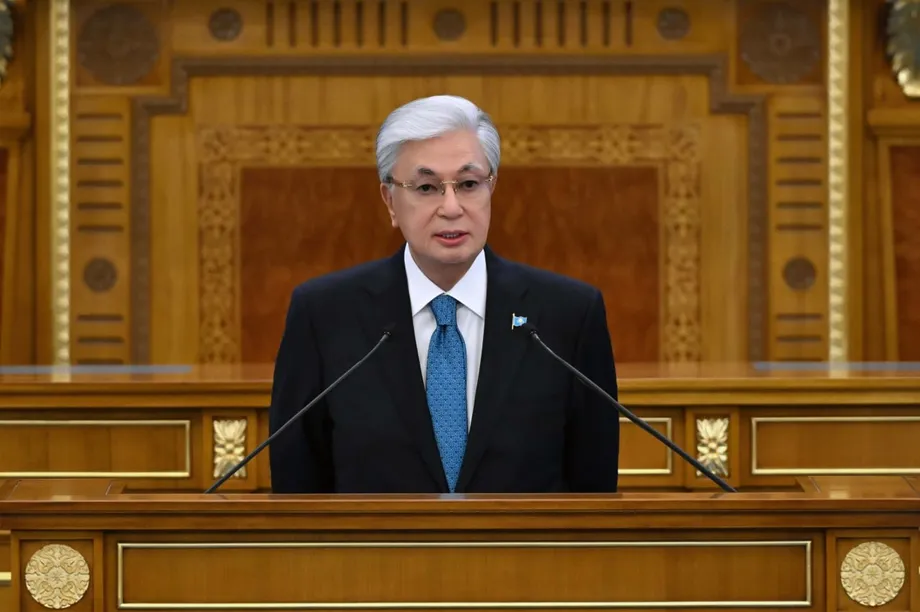
President Kassym-Jomart Tokayev set out the broader direction on October 28, 2026, in his address, "Kazakhstan's Current Priorities in a New Historical Cycle." He called for more centralized management of investment attraction and suggested giving Baiterek a stronger role.
Tokayev said competition between countries for investment was intensifying, making quick decisions and action more important. Kazakhstan's existing arrangements, he said, lacked consistency, with several government bodies holding overlapping investment powers.
The president described the organizational problem and the need for a body with continuing responsibility:
"We therefore need to improve an integrated system that enables centralized management of investment attraction. In my view, we must resolve a long-standing issue: designate an organization to handle investment systematically," Tokayev said.
His proposed solution still left work for the ministries involved. Tokayev said the Ministry of National Economy and the Ministry of Foreign Affairs would retain some investment responsibilities even if Baiterek took a more active role.
The sequence of statements shows how the broader policy proposal developed into a specific merger plan:
- 2013: Baiterek was established as a state investment holding.
- 2017: Kazakh Invest took its current form through the rebranding of Kaznex Invest.
- About a year before the November 2026 announcement: Prime Minister Olzhas Bektenov criticized Kazakh Invest's performance and rejected proposed organizational changes.
- October 28, 2026: Tokayev called for a more unified investment system and a stronger role for Baiterek.
- November 9, 2026: Tleuberdi outlined plans to merge Kazakh Invest with Baiterek.
What would change for foreign investors?
Kazakh Invest was created to attract foreign investment into priority sectors and help investors work with government agencies. After its rebranding from Kaznex Invest in 2017, it described itself as a "one-stop shop" for investors, meaning a central place to seek help instead of approaching each public agency separately.
Tleuberdi identified a financial limit to that service. The company could help attract an investor and support a project, yet it could not put its own money into the venture alongside the foreign partner.
Joint investment means two or more parties contribute financing to the same project. In the arrangement under discussion, a foreign company could bring capital and technical expertise while a state institution also contributes funding. The ownership shares, financial returns and responsibilities would depend on each project's agreements.
Moving this work to Baiterek would connect investor support with an institution whose proposed mandate includes financing and implementation. For a company considering a large development, that could put discussions about government support and a possible state financial contribution within the same institutional structure.
Successful delivery would still require coordination with the ministries retaining investment duties. The proposed merger addresses the gap Tleuberdi described between helping an investor arrange a project and having the ability to help fund it.
Which responsibilities would stay with the ministries?
The Ministry of National Economy currently oversees Baiterek and is responsible for investment policy. The Ministry of Foreign Affairs oversees Kazakh Invest and handles the attraction of foreign investors and support for projects involving them.
Tleuberdi said the Foreign Ministry would continue negotiating with potential investors, finding foreign companies interested in Kazakhstan and bringing them into the country. It would also continue signing investment contracts and providing public services.
Baiterek's proposed role would focus on implementation within Kazakhstan and investment alongside foreign partners. In simple terms, the ministry would continue building relationships and negotiating agreements, while the holding would take a larger role in turning those agreements into operating projects.
Tokayev's October remarks and Tleuberdi's November explanation point toward centralized project work with some responsibilities remaining across government. That makes the division of duties important for investors who need to know which institution can negotiate an agreement, commit financing or resolve an implementation problem.
Why Baiterek is central to the proposal
Baiterek, established in 2013, is a state investment holding with subsidiaries working across several parts of Kazakhstan's economy. They include the Development Bank of Kazakhstan, Damu Fund, Otbasy Bank and the Agrarian Credit Corporation.
The proposed merger would therefore bring Kazakh Invest's experience in attracting and assisting foreign companies into a group that already contains institutions connected with development financing, enterprise support, housing and agriculture.
Tleuberdi presented that combination as a way to address the financing constraint at Kazakh Invest. His explanation focused on Baiterek's ability to become the institution responsible for implementation and joint investment, rather than on criticism of Kazakh Invest's staff or individual projects.
For the state, the change would also create a more direct connection between efforts to secure foreign commitments and decisions about contributing public financing. The proposed structure puts those two tasks closer together, which is the central practical reason given for the merger.
What the $14 billion commitment means
Tleuberdi said more than $14 billion from Kazakhstan's National Fund would be directed toward projects in the coming years. He referred to construction spending, while his broader explanation also described projects across different sectors.
The National Fund holds state financial assets. Directing money from it toward projects would commit public financial resources to the government's development plans. The figure was presented as part of Kazakhstan's readiness to participate in major investments, rather than as a budget allocated to the Kazakh Invest merger.
The minister's argument was that Kazakhstan could contribute capital to important, complex projects while asking foreign partners to bring capabilities the country wants to develop. State participation could therefore form one part of a financing package involving an overseas company.
For readers, the distinction between the two decisions matters: reorganizing investment institutions changes who handles the work, while committing National Fund resources concerns how projects are financed. Tleuberdi connected them through the government's intention to become a joint investor.
Kazakhstan wants technology and management skills too
Foreign companies would be expected to contribute more than money. Tleuberdi said Kazakhstan also wanted technology, know-how and management experience across different sectors.
Technology can include equipment and production methods. Know-how is the practical knowledge needed to use those methods effectively, maintain machinery or solve problems. Management experience concerns how an enterprise organizes staff, controls costs and keeps production running.
Those contributions affect what a project leaves behind once construction is complete. A new facility needs people who can operate it, maintain its equipment and manage its business. Tleuberdi's stated priorities place those skills alongside the initial financial investment.
The proposed Baiterek role fits that approach by giving the state a potential financial place in projects involving foreign partners. Kazakhstan's stated aim is to combine its own funding with outside capital and expertise, particularly for developments that are large or difficult to deliver.
Pressure is focused on operating enterprises
Prime Minister Olzhas Bektenov had criticized Kazakh Invest about a year before Tleuberdi's announcement and rejected proposed changes to its organizational structure. His comments focused on measurable delivery rather than changes to the institution itself.
Bektenov set out the government's performance expectation in direct terms:
"We need results. The most important thing is not beautiful reports, but launched projects and operational enterprises," Bektenov said.
Investors had also complained publicly that Kazakh Invest promised assistance but failed to provide it. Those complaints add a service concern to the financing limitation described by Tleuberdi: investors need practical help as a project moves from an initial commitment toward operation.
The proposed merger would bring a different institutional arrangement to that task. The government's own stated measure of success is concrete: projects launched and enterprises operating. Baiterek's expanded role would place more responsibility for achieving those results with the holding, while the ministries continue their assigned investment work.
Key Points
- Kazakhstan plans to merge Kazakh Invest with Baiterek, according to Foreign Minister Mukhtar Tleuberdi's November 9, 2026, announcement.
- Baiterek would handle project implementation inside Kazakhstan and invest alongside foreign partners.
- The Foreign Ministry would retain negotiations, investor attraction, investment contracts and public services.
- President Tokayev called for more centralized investment management on October 28, citing overlapping government responsibilities.
- More than $14 billion from the National Fund is planned for projects in the coming years.
- Kazakhstan wants foreign partners to contribute technology, practical knowledge and management experience as well as financing.
- The merger's completion date and detailed implementation arrangements have not been announced.