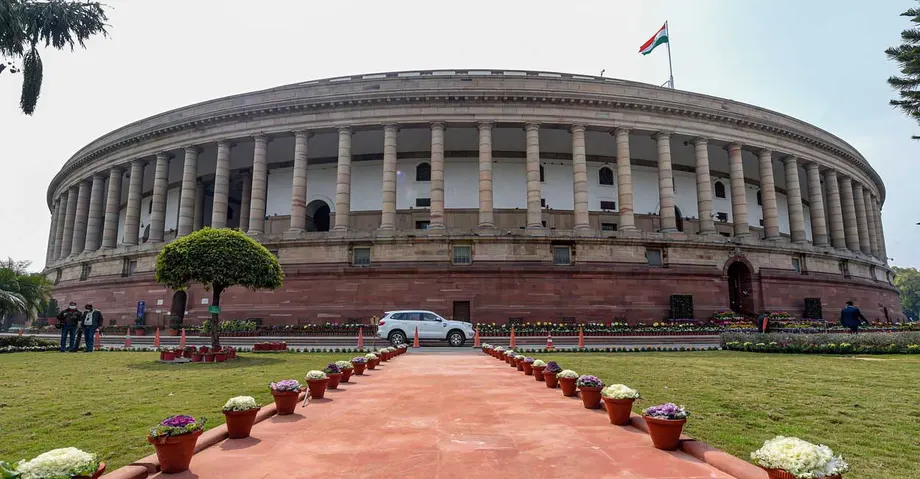
Cabinet Sets Up a Decisive Parliament Vote
India's Cabinet, chaired by Prime Minister Narendra Modi, approved a plan on November 27 to enlarge the Lok Sabha and bring a 33% women's quota into force before the 2029 general election. The proposal would raise the elected lower house from its current 543 seats to a maximum of 850, with up to 815 members from states and 35 from Union territories that have assemblies. Every state and Union territory would get 50% more seats at the first delimitation, the exercise that redraws constituency lines. The Cabinet decision does not pass a law. It sends the government into a special sitting lasting four days starting November 30, with the Lok Sabha meeting from that day and the Rajya Sabha due on December 2.
Contents
- Cabinet Sets Up a Decisive Parliament Vote
- What the Bills Actually Change
- Why Seat Numbers Range From 815 to 850
- How Delimitation Works and Why It Matters
- A Freeze Built Around 1971 and 2011
- A Short Timeline of the Dispute
- Why the April Vote Failed
- The Vote Math Now Favours the Government, Barely
- Regional Parties Hold the Keys
- Women's Quota at the Center of the Deal
- What Changes for Voters and States
- What Remains Undecided Before the Vote
- Key Points
The original proposal put the working figure at 815 seats, 272 more than today, while allowing rounding to lift the total to about 824 and a legal ceiling of 850. Another planning figure put the likely House at 816 seats. The plan says the share of seats among states will stay as it is until 2051. It uses the 1971 census to keep those shares and the 2011 census to redraw constituency boundaries inside states, avoiding a wait for the census now underway. Union Parliamentary Affairs Minister Kiren Rijiju urged opposition parties to join the debate. Congress accused the government of trying to assemble a majority by stealth, and the bill text was still a point of attack when Parliament prepared to meet.
After the April 17 defeat, the November revival plan said government sources believed they had gained 15 to 16 votes more than needed, with other estimates putting the margin at 15 to 18, but the revised text was still undecided. The Cabinet meeting changed the political situation: a defeated package is now a set of bills heading for a vote, and the question is whether the government can turn a narrow arithmetic path into actual support.
What the Bills Actually Change
The new package carries the Constitution (132nd Amendment) Bill and the Delimitation (Second) Bill, with a third measure covering Delhi, Jammu and Kashmir and Puducherry. The names matter because the April package was built around the Constitution (One Hundred and Thirty-First Amendment) Bill, 2026, the Delimitation Bill, 2026 and the Union Territories Laws (Amendment) Bill, 2026. A paper published on May 14, 2026 by the Carnegie Endowment for International Peace, Delimitation After Defeat, by Louise Tillin, Milan Vaishnav and Andy Robaina, says those three bills tried to change both the size of the House and the rules for sharing power between states.
The Constitution Bill would raise the Lok Sabha ceiling from 550 to 850, with up to 815 seats for states and 35 for Union territories. The companion delimitation bill would create a commission to allocate seats, draw boundaries and decide reservations. The Constitution (132nd Amendment) Bill also proposes raising the maximum size of a state assembly from 500 to 650, a change that matters most to Uttar Pradesh, whose assembly has 403 members. The bill text says the exercise shall provide an increase of 50% in seats over the number existing immediately before delimitation.
Why Seat Numbers Range From 815 to 850
The numbers can look confusing because they describe different things. 543 is the present elected strength of the Lok Sabha. 550 is the constitutional ceiling today. 850 would be the new ceiling, not a guaranteed final number. 815 is the maximum number of members from states inside that ceiling. 35 is the maximum from Union territories with assemblies. A uniform 50% rise, rounded to whole seats in each state, works out to about 824 seats. Another planning figure put the likely House at 816. Final seat totals would be settled by the delimitation exercise if the bills pass.
That expansion would change the size of an average constituency. The Carnegie paper says an average Lok Sabha member now represents about 2.7 million people, more than in any other lower house in the world. A House of about 824 seats would bring that average to about 1.8 million. Even then, a constituency would remain much larger than a United States congressional district, which the paper puts at about 780,000 people.
How Delimitation Works and Why It Matters
Delimitation means fixing the number of constituencies and drawing their boundaries. A census, the official count of people, tells the government how many people live in each area. Article 81 states the one person, one vote principle and says each state's seats should have the same ratio to population as far as practicable. If seats were shared strictly by population after a new count, states growing fast would gain influence and states growing slowly would lose it. That is the plain math behind the fight.
The Carnegie paper says roughly 8% of Lok Sabha representation is misallocated, the equivalent of about 44 of 543 seats. Uttar Pradesh and Bihar are the most underrepresented, while Tamil Nadu and Kerala are the most overrepresented. In plain language, a vote in a southern state carries more weight than a vote in a northern state because MPs represent different numbers of people. The paper also says southern states contribute a disproportionate share of India's economic output and finance fiscal transfers to poorer, more populous northern states.
A Freeze Built Around 1971 and 2011
India's Constitution originally required seat readjustment after each census. Article 82 deals with Lok Sabha seats between states and Article 170 with state assemblies. The 42nd Amendment in 1976 froze the allocation based on the 1971 census, and the 84th Amendment in 2001 extended the freeze until the first census after 2026. The reason was political: states that lowered birth rates were supposed to keep their seats rather than be punished with less influence for succeeding.
The new plan keeps the old arrangement for 25 years while using newer population figures for boundaries. It uses 1971 data to preserve each state's share of the House and 2011 data to draw constituencies within states. That split lets the government avoid waiting for the census that began on April 1 and is expected to conclude in 2027. The 2023 women's reservation law, the Nari Shakti Vandan Adhiniyam, had already promised one third of seats for women, but tied implementation to a fresh census and delimitation. The new bills try to move that date forward to the 2029 election.
A Short Timeline of the Dispute
The sequence matters because each step changed the legal question and the vote math.
- September 21, 2023: Parliament passed the 106th Constitutional Amendment, creating the women's reservation law known as the Nari Shakti Vandan Adhiniyam.
- April 1, 2026: The census began and is expected to conclude in 2027.
- April 16 to 18, 2026: The government held a special parliamentary session and introduced three bills on delimitation, constitutional change and Union territories.
- April 17, 2026: The Constitution (131st Amendment) Bill was rejected in the Lok Sabha.
- August 13, 2026: The Monsoon Session was adjourned sine die, meaning no return date was set, but Parliament was not prorogued.
- November 26, 2026: Kiren Rijiju announced the special sitting from November 30.
- November 27, 2026: The Cabinet approved the revised package.
- November 28, 2026: The DMK backed the package and opposition leaders met to plan their response.
- November 30 to December 3, 2026: Parliament is due to hold the special sitting, with the Rajya Sabha meeting on December 2.
Why the April Vote Failed
The government tried this in April and lost. An NDA leaders meeting on March 24 had shaped the road map. During the special session from April 16 to 18, it introduced the three bills. The Constitution (131st Amendment) Bill needed two thirds of members present and voting. On April 17, 298 MPs voted for it and 230 against, with 528 present. The requirement was 352 votes, so the bill fell 54 votes short. Parliament withdrew the two linked bills because they could not move on their own.
Opposition parties said they supported women's reservation but objected to the way it was tied to delimitation. Their central complaint was that the prime minister's guarantee of a 50% pro rata rise was spoken in the House but not written into the text. Home Minister Amit Shah said near the end of the April debate that he could change the bill if needed. The Carnegie paper records his words:
return in an hour with an amendment
The Vote Math Now Favours the Government, Barely
Original parliamentary numbers put the NDA at 320 members in a House with 543 seats, with three seats vacant. If all 540 sitting members vote, a constitutional amendment needs 360 yes votes, leaving the alliance 40 short. A count based on five vacancies put the effective House at 538 and the threshold at 359. Political changes since April narrowed the gap. Twenty of the 28 Trinamool Congress MPs broke away in June and aligned with the NDA, six Shiv Sena MPs joined the Eknath Shinde faction, and the lone Shiromani Akali Dal MP is expected to vote with the government.
A later tally used 324 likely votes in favour before adding regional parties. With the DMK's 22 MPs, the NCP (SP)'s eight and the YSRCP's four, that reaches 358, two below 360 if every sitting member votes. A pre session count that added the same regional parties put support at 355. Senior NDA leaders have said they expect at least 358 votes. Absences can lower the target. Two jailed MPs, Amritpal Singh and Abdul Rashid Sheikh, are not expected to vote, which would bring the threshold to 358. In the Rajya Sabha, original figures put the NDA at 151 members, with 243 likely voters and 162 votes needed, a gap of 11. A later count put the NDA above 150 in a House with about 244 members, needing about 163 votes.
Regional Parties Hold the Keys
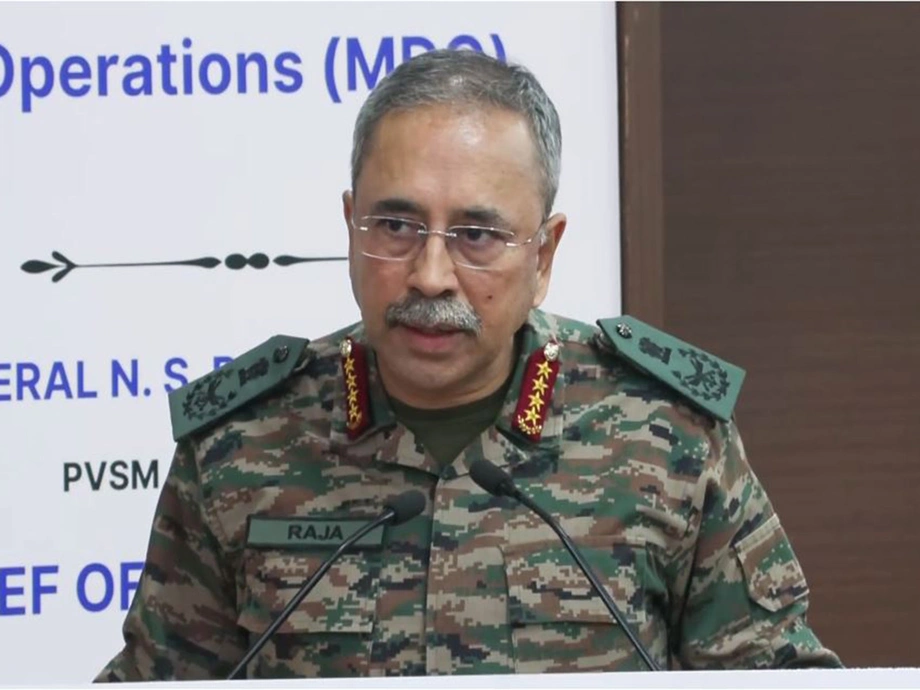
DMK chief M K Stalin set two conditions in April and repeated them on November 27: Tamil Nadu's 7.18% share of Lok Sabha seats must not fall, and the state proportions based on the 1971 census must remain frozen for another 25 years. The revised bill appears to meet both. The DMK passed a resolution backing the package after a meeting of its MPs, and party MP A Raja explained the shift. He said the uniform rise protected the party's demand for fair treatment:
Since the Bill allows 50 per cent uniform increase in the number of seats for all states, the DMK has decided to support the Bill. We have always batted for a Fair Delimitation. Our stance on this issue has not changed.
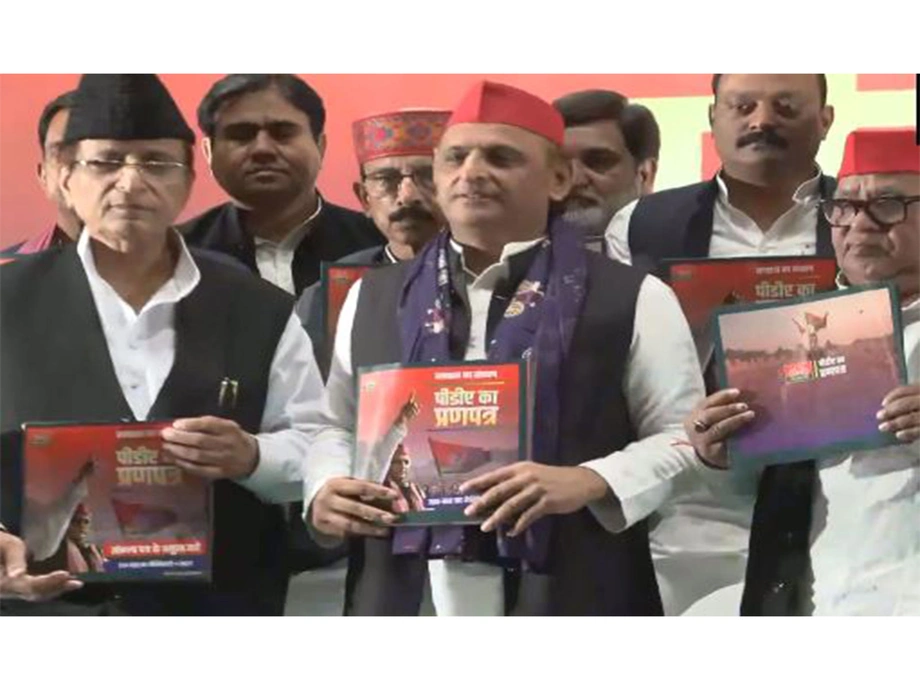
NCP (SP) also moved toward the government. Its MP Supriya Sule said on November 26 that the party would decide after seeing the bill; a day later, senior leader Jitendra Awhad announced support, quoting Sharad Pawar. The YSRCP is inclined to support if regional representation is protected. Congress leader Mallikarjun Kharge called opposition floor leaders to a meeting on November 28, and party leader Jairam Ramesh said the draft had not been shared with MPs by 6 pm on Friday. Rahul Gandhi alleged that delimitation would let the BJP gerrymander seats for the 2029 election. Gerrymandering means drawing boundaries to favour a party. Samajwadi Party chief Akhilesh Yadav called the move the BJP's biggest mistake and linked it to Uttar Pradesh politics. Andhra Pradesh Deputy Chief Minister Pawan Kalyan supported the reform, saying every state and region needs an adequate voice in Parliament. Attention is also on whether the Speaker will rule on the legality of the TMC split involving 20 MPs.
Women's Quota at the Center of the Deal
The women's quota is the policy that gives the bill its public appeal. The plan would reserve 33% of Lok Sabha seats for women, about 273 seats if the House reaches 816. Article 334A and the 2023 law already promised one third of seats in the Lok Sabha and state assemblies, including seats for women from Scheduled Castes and Scheduled Tribes. The reservation was never implemented because it waited on delimitation after a fresh census. The revised bill would reserve seats after the first delimitation under the new law and keep the reservation for 15 years, unless Parliament extends it.
Opposition leaders say the quota is being used to push a larger change in representation. Rajya Sabha MP and senior lawyer Kapil Sibal said the bill would consolidate power through defections and changes to Parliament's structure. He warned about the vote date and the state of democracy:
Whatever is left of democracy in 2026 on November 30, if the 131st Constitutional Amendment Bill is passed, it will be the end of whatever was left in democracy in India.
What Changes for Voters and States
Seat changes in the states depend on the 50% formula. Uttar Pradesh would rise from 80 seats to about 120, Bihar from 40 to 60 and West Bengal from 42 to 63. Tamil Nadu would go from 39 to about 59, Maharashtra from 48 to 72, Karnataka from 28 to 42 and Kerala from 20 to 30. Andhra Pradesh, Gujarat and Rajasthan would each move from 25 or 26 seats to about 38 or 39. Delhi would rise from seven to 11, Odisha from 21 to 32 and Jharkhand from 14 to 21.
Those figures show why the government sold the plan as fair to every state. No state would lose seats in absolute terms, and no state's relative share would fall if the proportions based on 1971 are kept. Voters would get more MPs and smaller constituencies. At the same time, the old imbalance between states would remain. Uttar Pradesh and Bihar would still represent more people per MP than Tamil Nadu and Kerala. Southern states such as Andhra Pradesh, Telangana, Tamil Nadu, Kerala and Karnataka had opposed redistribution based on population for that reason.
What Remains Undecided Before the Vote
Several points are still open. The final text had not been circulated to MPs by Friday evening, according to Congress, although the Cabinet had cleared the package. The bills have not passed either House. The final number of seats is not fixed because 850 is a ceiling and the commission has yet to settle seat totals. The delimitation bill would let a commission chaired by a sitting or former Supreme Court judge redraw boundaries, with the Chief Election Commissioner or a nominated election commissioner and state election commissioners involved. Its final orders, once published in the Gazette, would have the force of law and could not be challenged in court.
The next dates are clear. The Lok Sabha is due to meet from November 30, the Rajya Sabha on December 2, and the special sitting is expected to end by December 3. Parliament had been adjourned since August 13, and this sitting comes on the 104th day after that adjournment. A vote would require more than party discipline. It would require the government to keep allies, manage abstentions and secure enough support from regional parties whose first concern is the share of power their states keep.
Key Points
- The Cabinet approved a plan on November 27 to raise the Lok Sabha from 543 seats to a ceiling of 850, with 815 for states and 35 for Union territories.
- The proposal gives every state and Union territory 50% more seats and keeps state shares frozen until 2051.
- The plan would reserve 33% of seats for women and aims to implement the quota before the 2029 election.
- The April version failed on April 17 by 54 votes, with 298 in favour and 230 against.
- Party shifts since April have brought the government closer to the two thirds threshold, but the vote still depends on regional parties and attendance.
- Parliament meets from November 30 to December 3, with the Rajya Sabha due on December 2.