A Daily Habit Becomes a Health Test
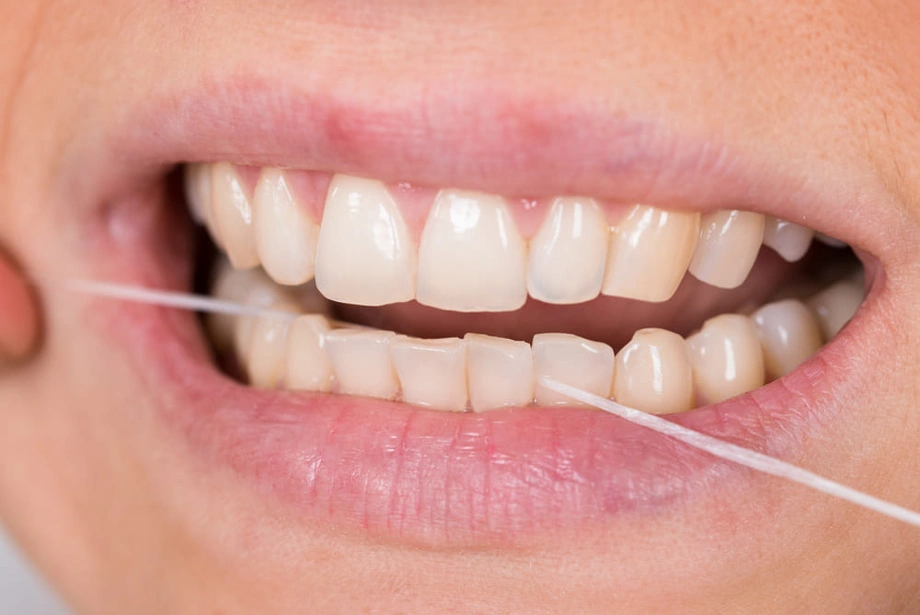
A dental floss that usually removes food between teeth may also become a small laboratory. Researchers at the Hong Kong University of Science and Technology, working with dentists at The University of Hong Kong, built a device built around ordinary dental floss that collects fluid from the gap between a tooth and the gum, then measures glucose, uric acid, acidity and hydrogen peroxide. The result reaches a smartphone in about three minutes after roughly 20 seconds of flossing.
Contents
- A Daily Habit Becomes a Health Test
- Why the Fluid Around Teeth Matters
- What Makes the Smart Floss Different
- From 20 Seconds of Flossing to a Phone Result
- What the Early Tests Showed
- Why Diabetes and Gout Make This More Than a Dental Gadget
- What Could Stop the Floss From Becoming a Real Test
- Who Built It and What the Paper Says
- What Happens Before Stores Could Sell It
- Key Points
The Hong Kong University of Science and Technology set out the work in its HKUST announcement and a related HKUST press release. The university introduced the device on November 19, 2026. The study appears in Science Advances, Volume 12, Issue 47, for November 2026. An image from the study was also featured in that issue. The paper's DOI is 10.1126/sciadv.aeg8698.
The idea is simple to describe but hard to engineer. The fluid, called gingival crevicular fluid, seeps from tiny blood vessels in the gums. It contains chemical traces from the body and signals from inflamed tissue near each tooth. The team put a microfluidic channel and sensor array into a disposable floss, turning a routine clean into a way to look at metabolism and gum health without a needle.
Why the Fluid Around Teeth Matters
Gingival crevicular fluid is easy to overlook because there is so little of it. It sits in the narrow space where the tooth meets the gum, also called the gumline crevice. Because it starts from serum, the liquid part of blood, it can carry glucose and uric acid. It also picks up molecules released when gum tissue is inflamed.
Saliva is easier to collect but too diluted for this job. It mixes signals from the whole mouth, so a problem around one tooth can disappear into a whole mouth sample. Dentists can collect gum fluid with paper strips, but the strips must be placed carefully, samples from several teeth are often pooled, and laboratory analysis can take time.
The link between diabetes and gum disease gives the work practical weight. High blood sugar can speed damage in mouth tissue, and inflamed gums can release inflammatory molecules into the bloodstream that make insulin resistance worse. The HKUST announcement says people with diabetes are three times more prone to severe periodontal disease, a serious form of gum disease that can destroy the bone holding teeth in place.
What Makes the Smart Floss Different
The team calls the hardware a gingival fluid device, or GFD. It looks much like a dental floss pick, with a disposable thread stretched across a small handle. The thread is not ordinary floss. It uses two fibers coated with food grade pectin, a plant extract used to thicken fruit preserves. The pectin helps the gum fluid stick to the fibers.
When a person flosses gently for about 20 seconds, the movement stirs the thick fluid at the gumline and pulls a microscopic droplet between the two strands. Surface tension, the same force that lets water form droplets, holds the liquid as a tiny bridge between the fibers. That design matters because the fluid evaporates quickly and is lost easily with older collection methods.
After sampling, a mechanical pulley reels the floss into a sealed chamber inside the handle. The user does not touch the wet section. Inside the chamber is what the researchers describe as a 3D pyramidal microfluidic sensing stack with interdigitated volumetric electrodes. That sounds technical, but the job is straightforward: guide a tiny droplet over contacts that turn chemical concentrations into electrical signals, and measure how much fluid is present so the calculation can be adjusted.
From 20 Seconds of Flossing to a Phone Result
The device combines sampling and analysis in one sequence. The handle contains a volume counter and an onboard microprocessor, a small computer that can calculate results before sending them by wireless connection to a phone. The volume counter is important because one person may produce a larger droplet than another, and a larger droplet changes the concentration calculation.
The four readings have different meanings:
- Glucose points to blood sugar levels.
- Uric acid is linked to gout risk and high uric acid levels.
- pH shows how acidic or alkaline the gum area is.
- Hydrogen peroxide is a sign that can rise where inflammation is active.
In simple terms, the floss does two jobs at once. It checks chemistry that reflects the body, and it checks conditions close to individual teeth. That second part is why dentists see promise in site by site monitoring instead of a single whole mouth sample.
The timing fits daily life better than a laboratory test: about 20 seconds to collect, about three minutes to analyze, then a phone result. No product release date or price was given.
What the Early Tests Showed
The first tests involved people of different ages, including people with diabetes, people with elevated uric acid, and volunteers with different levels of gum health. The preliminary test included 12 people, including people with type 2 diabetes and volunteers with gum disease. Participants described the device as comfortable and easy to use. Older participants and people with diabetes especially valued monitoring without finger pricks.
The team led by Prof. Hnin Yin Yin Nyein gave a Pearson correlation of 0.89 for glucose against capillary blood from a finger prick and 0.78 for uric acid. A Pearson correlation, written as r, is a number that shows how closely two sets of measurements move together; closer to 1 means a stronger match. The paper's saliva comparison gives 0.37 for glucose in saliva and 0.87 for glucose in gingival fluid, which is more than twice as close on that measure. The team said gum fluid comes from blood, so it reflects blood sugar changes better than saliva.
Inflammation readings also differed by location. Inflamed gum sites had hydrogen peroxide levels about 2.6 times those of healthy sites. Their pH was 7.84, compared with 7.04 at healthy sites. A higher pH means the area was more alkaline. The team also reported that pH and hydrogen peroxide readings tracked with periodontal probing, the standard check where a dentist measures the depth of the gap between tooth and gum. Those readings let the researchers see not just whether a mouth had inflammation somewhere, but which tooth sites looked more inflamed.
Prof. Hnin Yin Yin Nyein, an assistant professor in HKUST's Department of Chemical and Biological Engineering and the lead researcher, explained the aim in the official announcement. Precision medicine means health care shaped by measurements from the person being treated, rather than a single approach for everyone.
The true breakthrough here is bridging the gap between daily personal care and precision medicine. Monitoring chronic conditions often fails because it feels painful, intrusive and inconvenient. By embedding biosensors into an everyday flossing routine, we give people an effortless window into both their metabolic health and oral inflammation, shifting care from reactive clinic visits to proactive daily prevention.
Why Diabetes and Gout Make This More Than a Dental Gadget
Diabetes is a condition in which the body has trouble controlling glucose. Many people with diabetes check glucose by pricking a finger several times a day or using continuous monitors that sit under the skin. Neither method says much about the gums. The smart floss, if it proves reliable in larger studies, could sit beside those methods and add a view of inflammation in the mouth.
Gout is linked to uric acid crystals forming in joints, often when uric acid levels are high. The floss sensor tracks uric acid, so the reading is framed as a gout risk signal. For someone already managing high uric acid, a home reading could eventually become another piece of information to discuss with a clinician.
The oral health link is not a small detail. Severe gum disease can make eating painful and can lead to tooth loss. When diabetes and gum inflammation occur together, each can make the other harder to control. The floss device aims to capture that two way relationship in one reading session.
What Could Stop the Floss From Becoming a Real Test
The prototype still has engineering problems. The gumline is a wet, crowded place. When the floss passes between teeth, it can pick up saliva along with gum fluid. The researchers say nearly half of the collected material may be saliva, and small amounts of blood can also enter the sample. Since the sensor is calibrated for gum fluid, those extra liquids can shift the readings.
Sample size is another challenge. The built in counter helps, but the device must keep working when droplets are tiny, thick or uneven. The team will need to show that the two fiber floss collects enough fluid in ordinary homes, not just in a research setting, and that results stay consistent when people floss with different pressure or timing.
The clinical evidence is also early. The small pilot involved 12 people in the work described above, and larger studies are planned. Strong correlations are a useful first step. Larger studies will show whether the floss readings can guide treatment. For now, people should keep using the glucose tests and dental checkups recommended by their clinicians.
The researchers also said more work is needed to confirm that gum fluid monitoring can improve health outcomes for people who have diabetes and gum disease at the same time. No trial date, price or product release date was given.
Who Built It and What the Paper Says
The project was led by Prof. Hnin Yin Yin Nyein, an assistant professor in the Department of Chemical and Biological Engineering at HKUST. The Faculty of Dentistry at The University of Hong Kong worked on the study, bringing periodontal testing experience to the validation of gum inflammation readings.
The paper lists Yixin Yan, Asmita Veronica and Chaoqi Wang as joint first authors. Other contributors named in the work include Yue Guo, Anwei He, Minjin Gu, Lu Zhang, Ge Han, Saloni Vimal Chandwaney, Jaehyeon Cho, Xuejie Wang and Sin Yu Pau from HKUST chemical and biological engineering; Prof. Shuhuai Yao and Dr. Johnson Q. Cui from mechanical and aerospace engineering at HKUST; and Prof. Sang Jin Lee and Prof. Ke Deng from the HKU Faculty of Dentistry.
The paper's title describes a floss platform for native gingival crevicular fluid analysis and monitoring for both whole body metabolism and oral health. Its publication in Science Advances placed the work in a scientific journal that publishes research across many fields. The November 2026 issue also featured an image from the study.
What Happens Before Stores Could Sell It
The team has set out a practical route from prototype to product. First comes larger clinical testing to check convenience and reliability at home. Those studies will need to include enough people with diabetes, gum disease and other metabolic conditions to see whether the device works across different mouths and health states.
Second comes engineering for production. The researchers want to improve mass manufacturing and automated quality control, both essential when a device uses tiny fluid channels and sensor surfaces. If every floss tip varies, the readings can vary too.
The HKUST press release says the team plans to mass-produce the device and bring it to stores "in the near future". No licensing arrangement, named commercial partner or regulatory approval path was disclosed.
Third comes proof of usefulness. The researchers want to test whether monitoring with gum fluid can improve the health and treatment results of people living with diabetes and gum disease at the same time. Until those studies are done, the smart floss is best understood as a promising research device that shows how an ordinary daily habit could carry medical information.
Key Points
- HKUST and HKU researchers built a floss device that samples gingival crevicular fluid during about 20 seconds of flossing.
- The handle analyzes glucose, uric acid, pH and hydrogen peroxide in about three minutes and sends results to a phone.
- Early tests found correlations of 0.89 for glucose and 0.78 for uric acid with finger prick blood; a saliva comparison gave 0.37 for saliva glucose and 0.87 for gum fluid glucose.
- Inflamed gum sites had about 2.6 times more hydrogen peroxide and a pH of 7.84, compared with 7.04 at healthy sites.
- Saliva mixing, blood contamination, small pilot numbers, manufacturing and clinical benefit all remain open issues.
- The study appears in Science Advances, Volume 12, Issue 47, for November 2026, with DOI 10.1126/sciadv.aeg8698.