A Rp20 million goal with no immediate start date
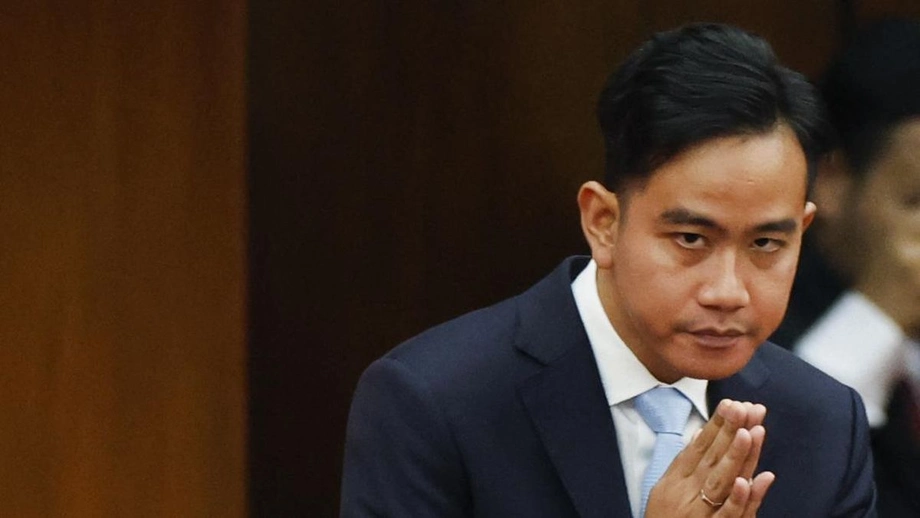
Mardani Ali Sera, a Prosperous Justice Party (PKS) politician and member of Commission II of the House of Representatives (DPR), proposed in Jakarta on Friday, 27 November 2026, that teacher salaries should eventually reach Rp20 million per month. That means 20 million Indonesian rupiah monthly. Commission II deals with domestic governance, and Mardani connected his salary appeal to a second concern: employment security for honorary teachers whose current arrangements in public schools are approaching an end.
Contents
- A Rp20 million goal with no immediate start date
- How the staged increases would work
- The Rp240 trillion calculation and the education budget
- What pay data reveals about the gap
- Debt, second jobs and a commitment to keep teaching
- Employment status shapes income and security
- Honorary teachers face a December 31 deadline
- A presidential training promise and the coming dates
- Key Points
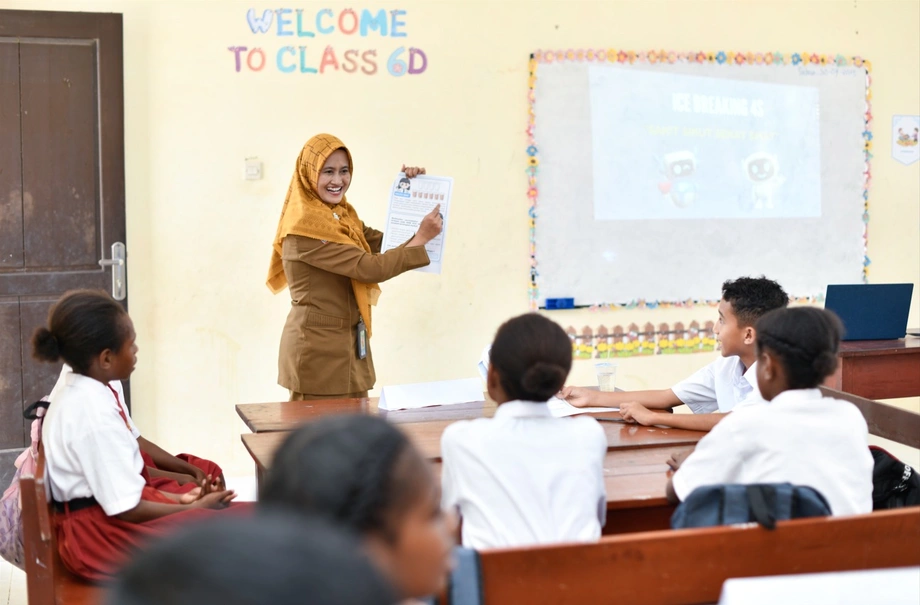
Mardani said the state had a moral obligation to provide decent living standards for teachers regardless of their employment status. He cited State Civil Service Agency (BKN) data showing that Indonesia had 1,101,103 teachers with civil servant, or PNS, status as of 30 June 2026. His appeal also covered teachers outside that category, including those working in remote areas and schools with limited facilities.
Speaking as a Commission II lawmaker, Mardani said dedication in the classroom should be matched by a government commitment to welfare and career certainty.
They deserve decent welfare, especially those who continue to teach at schools under limited conditions.
The Rp20 million figure is a policy proposal, not an approved national salary scale. Mardani acknowledged that introducing it immediately would be difficult. He did not announce a starting date, an implementing regulation or a year in which every eligible teacher would reach the full amount.
How the staged increases would work
Mardani described salaries currently around Rp3 million to Rp5 million per month as the starting point for his illustration. The first stage would lift that band to Rp5 million to Rp7 million. A second stage would take it to Rp7 million to Rp9 million, followed by further increases until pay reached about Rp15 million in the seventh year.
He explained the sequence in his own words after presenting the proposal to reporters.
The increase can be implemented gradually. Initially, it could rise from the current Rp3–5 million to Rp5–7 million, then to Rp7–9 million. By the seventh year, it could reach around Rp15 million, and so on.
The seventh year target is therefore Rp15 million, not Rp20 million. Mardani did not set out the later steps needed to close that remaining Rp5 million gap. He also did not publish eligibility rules explaining how the illustration would apply to teachers whose pay already falls outside the starting band, or how rank, workload, location and allowances would be treated.
For someone earning Rp3 million per month, the eventual Rp20 million goal would represent an additional Rp17 million monthly. Mardani said reaching that level would require both budgetary support and legislation giving educators greater certainty. No bill containing the staged scale accompanied his statement.
The Rp240 trillion calculation and the education budget
Mardani argued that the national budget could finance his ambition, pointing to the Free Nutritious Meals programme, known as Makan Bergizi Gratis (MBG), as evidence of the state's capacity to fund a large education initiative. His cost example used a rounded group of one million teachers. Paying each of them Rp20 million per month would cost Rp20 trillion per month, or Rp240 trillion across 12 months.
Applying the same assumption to the BKN count of 1,101,103 PNS teachers produces an annual figure of about Rp264.3 trillion. That is a calculation based on Mardani's salary assumption, rather than a government costing. His rounded example does not describe the entire teaching workforce. Under the same one million teacher assumption, the initial band of Rp5 million to Rp7 million would equal Rp60 trillion to Rp84 trillion annually, illustrating why a staged introduction would cost less in its early years than immediate payment at the full target.
Indonesia's 2026 state budget allocates Rp769.1 trillion to education, including Rp268 trillion for MBG. Mardani's Rp240 trillion estimate is Rp28 trillion below that MBG allocation and equal to roughly 31 percent of the total education allocation. These comparisons show the scale of the proposal, but he did not identify which existing budget lines would be reduced, expanded or replaced to finance it.
Education spending realised through September 2026 reached Rp574.2 trillion. Within that amount, Rp153.19 trillion had gone to MBG and Rp177.9 trillion to teacher salaries and professional allowances. The Rp240 trillion salary estimate remains Mardani's calculation, not an appropriation approved by the government.
What pay data reveals about the gap
Statistics Indonesia (BPS) put the average wage in the education sector at Rp3.21 million per month in its August 2026 National Labour Force Survey, or Sakernas. The national average across workers was Rp3.42 million. Finance averaged Rp5.35 million and public administration Rp4.51 million, placing education Rp2.14 million behind finance and Rp1.3 million behind public administration.
The education sector figure covers more occupations than classroom teaching. Even with that wider scope, it provides context for Mardani's target: Rp20 million is about 6.2 times the Rp3.21 million sector average.
A separate BPS teacher pay series for August 2024 gave an average of Rp2.86 million per month, below the Rp3.11 million average provincial minimum wage. Teachers at government education institutions averaged Rp3.68 million, compared with Rp2.19 million at private institutions and Rp1.24 million at institutions in the remaining category.
Location added another divide. Kalimantan recorded the highest regional average in that breakdown at Rp3.49 million per month, while Nusa Tenggara recorded the lowest at Rp2.24 million, a difference of Rp1.25 million. Alongside these averages, individual cases show much lower incomes. Teachers in some regions were reported earning between Rp50,000 and Rp500,000 per month, demonstrating why a single national figure cannot describe every teacher's circumstances.
Debt, second jobs and a commitment to keep teaching
An online survey conducted in May 2024 by the Institute for Demographic and Poverty Studies (IDEAS) and Dompet Dhuafa examined the finances of 403 teachers across 25 provinces. Among the respondents, 42 percent earned less than Rp2 million per month and 13 percent earned less than Rp500,000.
The gap became steeper among honorary and contract teachers who took part. In that group, 74 percent reported monthly earnings below Rp2 million and 20.5 percent reported less than Rp500,000. The online sample was not a census of Indonesia's teaching workforce, but it supplies detailed accounts of the financial pressure experienced by its respondents.
Across the full sample, 89 percent said their teaching income was barely sufficient or insufficient. Respondents supported an average of three family members. A total of 55.8 percent held additional work, including private tutoring and trading, while most of those receiving extra income reported that it remained below Rp500,000.
Financial reserves were also limited. The survey found that 79.8 percent of respondents had debt and 56.5 percent had sold or pawned valuables when facing urgent expenses, including gold jewellery and motorcycles. Despite those pressures, 93.5 percent said they intended to remain teachers until retirement. For households in this position, a predictable monthly payment and a definite employment decision would affect daily budgeting as directly as the long term salary target.
Employment status shapes income and security
Three terms help explain the debate. PNS refers to civil servants. PPPK, short for Pegawai Pemerintah dengan Perjanjian Kerja, covers government employees appointed under work agreements. Honorary teacher is the widely used term for many educators working outside PNS status, often while seeking a PPPK appointment or another secure placement.
The World Bank's September 2023 report, Fixing the Foundation: Teachers and Basic Education in East Asia and Pacific, examined low teacher pay and differences in employment conditions. Its Indonesia pay estimate used 2015 labour survey data. The report found that teachers without PNS status were often paid from local government or school funds at lower wages, without the pension and other benefits available to civil servants.
Cases recorded by P2G, an education and teachers association, show how low some payments can be. A teacher working part time under PPPK in West Nusa Tenggara received Rp135,000 per month, while another in Sumedang received Rp50,000. These individual cases sit far below the sector averages and illustrate the variation created by working hours, local financing and employment arrangements.
The government has also expanded formal appointments and allowances. More than 900,000 honorary teachers were appointed as PPPK within the state civil apparatus over five years. On 26 January 2026, the Ministry of Primary and Secondary Education said more than Rp14 trillion was provided for teachers outside that apparatus: Rp1.8 trillion for an incentive of Rp400,000 per month covering 377,143 teachers, Rp11.5 trillion for professional allowances covering 392,870 teachers, and Rp706 billion for special allowances covering 28,892 teachers.
Honorary teachers face a December 31 deadline
Employment arrangements for honorary teachers and other teachers without PNS status in public schools are set to end on 31 December 2026. Mardani asked the government to give affected teachers written answers about whether their assignments would continue and what steps they could take next, with enough time to prepare.
He said honorary teachers had contributed greatly while receiving very low welfare, and described some travelling tens of kilometres over difficult terrain to reach their schools.
Honorary teachers have made a significant contribution, but their welfare remains very low.
Mardani said Commission II was also pressing the government to consider extending the service of honorary teachers who had not received PPPK placements. He wanted officials to explain which groups could qualify, the legal or policy basis for an extension, and which authorised official would decide each employment status.
His statement did not give the number of teachers facing the deadline. It also announced no government extension, parliamentary vote or implementing regulation. For teachers waiting for an answer, the immediate date is therefore the end of December, rather than the unspecified starting point for a salary increase.
A presidential training promise and the coming dates
Mardani spoke one day after President Prabowo Subianto addressed a National Teachers Day event at the Sentul International Convention Centre in Bogor, West Java, on Thursday, 26 November 2026. Prabowo promised that 3,350 teachers would be sent abroad for education and training in 2027.
The listed destinations were Canada, the United Kingdom, China, India, Morocco, Thailand, the Philippines, Malaysia and Russia. That announcement concerned teacher development. It did not include adoption of Mardani's Rp20 million salary scale or his staged schedule.
- 25 November 2026: Indonesia marked National Teachers Day, renewing attention on teacher welfare.
- 26 November 2026: Prabowo announced the plan to send 3,350 teachers abroad in 2027.
- 27 November 2026: Mardani proposed staged salary increases and written career decisions for honorary teachers.
- 31 December 2026: The current honorary teacher arrangements in public schools are due to end.
- 2027: The teacher training deployments announced by Prabowo are scheduled to take place.
Mardani's proposal now requires political and budgetary decisions before it could change payslips. The salary target, the detailed eligibility rules and the treatment of teachers approaching the December deadline remain separate pieces of the same welfare debate.
Key Points
- Mardani Ali Sera proposed on 27 November 2026 that teacher pay eventually reach Rp20 million per month.
- His illustration starts by raising Rp3 million to Rp5 million into the Rp5 million to Rp7 million band, then Rp7 million to Rp9 million, reaching about Rp15 million in the seventh year.
- Paying one million teachers Rp20 million monthly would cost Rp240 trillion annually. That figure is Mardani's estimate, not an approved budget.
- BKN recorded 1,101,103 PNS teachers as of 30 June 2026, while pay data and surveys show wide gaps by status, institution and region.
- Honorary teacher arrangements in public schools are due to end on 31 December 2026, prompting demands for written decisions and possible service extensions.
- Prabowo's announcement one day earlier concerned overseas training for 3,350 teachers in 2027, not approval of the proposed salary scale.