House panel sets out rules for digital campaigning
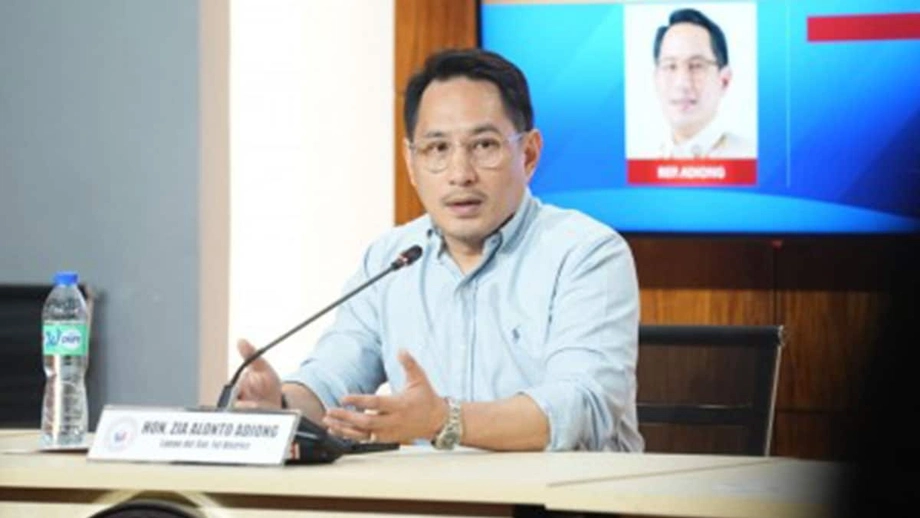
The House Committee on Suffrage and Electoral Reforms approved an unnumbered substitute bill on Thursday, November 26, 2026, that would regulate artificial intelligence, social media and internet technology during Philippine elections. The measure seeks to keep elections free, orderly, honest, peaceful and credible while allowing candidates to continue campaigning online.
Contents
- House panel sets out rules for digital campaigning
- What online campaigning would look like
- Adiong's example: a flood project and old images
- A political dispute enters the legislative debate
- Lente warns against censorship and a chilling effect
- House Bill 3691 supplies key definitions
- Past Facebook takedowns reveal the scale of coordinated networks
- Key dates in the debate
- Comelec considers election offenses and disqualification
- What to Know
Committee chairman and Lanao del Sur Rep. Zia Alonto Adiong said the rules should be prepared before the 2028 elections. He expects AI to be used more extensively to spread false information and attack candidates. He also raised the possibility of foreign interference through troll networks, which can use groups of accounts to repeat accusations, harass people or manipulate public discussion.
The committee approved the bill subject to style, leaving its wording and technical presentation open to drafting changes before finalization. Adiong said recommendations from resource persons and lawmakers who attended the hearing would also be considered. No date was given for the completion of the final text or for a vote by the full House.
The actual text of the approved substitute bill or committee report, including its penalty provisions and definitions, was never released with the approval.
What online campaigning would look like
The measure would allow election propaganda on the internet and social media for all candidates seeking national and local elective positions. That permission would come with three principal conditions: compliance with authorized spending limits for candidates and parties, observance of truth in advertising, and supervision and regulation by the Commission on Elections (Comelec).
Original social media posts and material reposted from another source would also be allowed. This applies to posts connected to a person's advocacy on social issues and posts whose primary purpose is to endorse a candidate. Paid internet advertisements are covered as well, subject to the bill's requirements and limitations and to the Fair Elections Act.
The proposal therefore permits online political activity rather than imposing a general ban. A candidate could still pay for an internet advertisement, while a supporter could publish or share an endorsement. Spending limits, advertising rules and Comelec oversight would apply within that framework. The committee summary did not provide a schedule of penalties or a detailed process for resolving disputes over allegedly false material.
Adiong's example: a flood project and old images
Adiong used his own experience to explain why he believes regulation is necessary. He said he had been targeted by fake news during the previous election and now faces a disinformation campaign concerning a supposedly unfinished flood control project. According to Adiong, some pictures and videos circulating online were not even from his district, while other old material was presented as evidence that nothing had been completed.
The lawmaker said the flood control work began before his term and had been finished two years ago. He explained that his district forms part of the Nationwide Operational Assessment of Hazards (NOAH) and has four major tributaries, which is why flood control projects there began years earlier. A viewer encountering an old photograph without that history could easily reach the wrong conclusion, he said.
Adiong told the hearing that social media companies such as Meta may approach disinformation through fact checking, but its victims experience damage to their careers, reputations and families. He said people often cannot verify what they see and that his wife and children are also affected. The committee chairman then addressed the personal consequences directly:
It may not be personal to Meta, but it deeply harms our personal lives.
A political dispute enters the legislative debate
On Tuesday, November 24, Davao City Rep. Paolo Duterte shared a video on his official Facebook page concerning projects allegedly associated with Adiong in the second district of Lanao del Sur. Adiong serves as a spokesperson for the House prosecution panel in the impeachment trial of Vice President Sara Duterte, Paolo Duterte's sister.
In the post, as translated by Facebook, Duterte accused Adiong of commenting on the vice president's unexplained wealth while failing to show where funds for projects worth billions of pesos in his own district had gone. The post also warned that Adiong's district would be flooded if he remained stubborn.
Adiong did not name the House colleague during his hearing remarks, but he said a colleague had also posted the false material and appeared to believe it. He maintained that the project images appeared to have been taken years earlier and that the projects shown were already completed. The dispute gave the committee a concrete example of how old images, missing context and reposting by a public official can combine in a political attack.
Lente warns against censorship and a chilling effect
The Legal Network for Truthful Elections (Lente), an election watchdog, used an earlier October 5 hearing to caution against building the proposed law around content regulation. Lente said this approach could lead to censorship because the implementing agency would have considerable influence over how misleading and false content is defined. Protected speech could also be affected.
Lente's warning about a chilling effect concerns what people may do when they fear punishment or official action. A person might avoid lawful political criticism, satire or commentary because of uncertainty over how a regulator will interpret it. The risk extends beyond the removal of a particular post if the rules discourage broader participation in election debates.
That concern sits alongside the bill's requirements on truth in advertising and Comelec supervision. Adiong's commitment to consider stakeholder recommendations gives the committee an opportunity to address both problems: deception that can damage candidates and mislead voters, and regulatory language that could reach lawful expression. The final wording will determine where those boundaries are drawn.
House Bill 3691 supplies key definitions
One proposal before lawmakers is House Bill No. 3691, filed by House Majority Leader Ferdinand Alexander Marcos. Its formal title is the Social Media, Artificial Intelligence and Internet Technology Regulation for Fair Elections Act. It seeks to define AI, bots, deepfakes and coordinated inauthentic behavior, commonly abbreviated as CIB.
These terms describe different activities. AI can be used to produce or alter text, images, audio and video. A bot is an automated account or program that can perform actions online. A deepfake is manipulated or synthetic media that can make a person appear to say or do something. CIB involves coordinated accounts or networks that conceal identities or purposes while attempting to manipulate public debate.
House Bill 3691 would also permit election propaganda on the internet and social media, subject to candidate and party spending limits, truth in advertising, and Comelec supervision and regulation. That approach closely matches the framework described in the committee's substitute measure. No final consolidated text showing which detailed definitions and safeguards survived the committee process was provided with Thursday's action. The full text of House Bill 3691 as filed was not included in the available material, so it could not be used to check which definitions and safeguards survived into the substitute measure.
Past Facebook takedowns reveal the scale of coordinated networks
At the time of the hearing, no one had been penalized for engaging in CIB in the Philippines. Facebook had nevertheless announced several enforcement actions involving networks operating in or addressing the country. These cases show why lawmakers are examining coordinated activity rather than focusing exclusively on individual posts.
In March 2019, Nathaniel Gleicher, then Facebook's cybersecurity policy head, announced the removal of 200 fake accounts linked to a network operated by communication strategist Nic Gabunada Jr., who was associated with former president Rodrigo Duterte's social media campaign. Gleicher said the accounts were made to appear normal and legitimate while boosting messages favoring certain political candidates.
In September 2020, Facebook removed two more networks for CIB. One was traced to the Philippine National Police and the Armed Forces of the Philippines. The other was traced to individuals in China's Fujian province. The second network included sites with posts in Filipino supporting President Rodrigo Duterte and the possible 2022 presidential candidacy of his daughter, Sara Duterte, who was then Davao City mayor and is now vice president.
These enforcement actions were carried out by Facebook. They provide a historical reference for Adiong's warning about possible foreign interference and organized troll activity, although no finding of a current foreign operation was announced during the committee proceedings.
Key dates in the debate
The committee's decision follows years of platform enforcement, recent warnings about speech rights and a political dispute involving its chairman:
- March 2019: Facebook announced the removal of 200 fake accounts linked to Nic Gabunada Jr.'s network for coordinated inauthentic behavior.
- September 2020: Facebook removed two additional CIB networks, one traced to Philippine security institutions and another to individuals in Fujian, China.
- October 5: Lente warned at a committee hearing against content regulation, censorship and a possible chilling effect on protected speech.
- November 24, 2026: Paolo Duterte shared the Facebook video criticizing Adiong over projects in Lanao del Sur.
- November 26, 2026: The House committee approved the unnumbered substitute bill, subject to style.
- Before the 2028 elections: Adiong wants election rules addressing AI and online disinformation to be ready.
Comelec considers election offenses and disqualification
Comelec is separately studying whether using AI to spread false information against candidates should be classified as an election offense. It is also examining whether that conduct could serve as a basis for disqualification. An election offense concerns a violation of election law, while disqualification concerns a candidate's eligibility rather than only the post or advertisement involved.
Comelec has separately cautioned the public against a circulating AI-generated video falsely announcing financial assistance for voter applicants and said it has no cash incentive program for registered voters. That advisory did not say that AI-assisted disinformation is an election offense or grounds for disqualification, and no Comelec statement or resolution making that determination appears in the available material.
The study has not produced an announced final rule, penalty or implementation date. On the legislative side, the immediate task is to finalize the substitute bill after considering the recommendations raised during deliberations. No next hearing date or plenary vote has been announced.
National and local candidates would be directly affected by the proposed framework because original posts, reposts, endorsements and paid advertisements would remain subject to spending and election requirements. Voters would be affected by how lawmakers and Comelec address deceptive material while responding to Lente's warning about censorship. Adiong's stated deadline is the 2028 elections, when he expects AI to play a larger role in both false information and attacks on candidates.
What to Know
- The House Committee on Suffrage and Electoral Reforms approved an unnumbered substitute bill on November 26, 2026, subject to style.
- The measure allows online election propaganda for national and local candidates, subject to spending limits, truth in advertising and Comelec regulation.
- Original posts, reposts, candidate endorsements and paid internet advertisements would also be covered by the bill and the Fair Elections Act.
- Chairman Zia Alonto Adiong wants rules ready before the 2028 elections and cited his own experience with old images and claims about a completed flood control project.
- Lente has warned that poorly defined content regulation could produce censorship and discourage protected political speech.
- House Bill 3691 seeks to define AI, bots, deepfakes and coordinated inauthentic behavior.
- Facebook previously removed networks linked to Philippine political activity, including 200 fake accounts in 2019 and two additional networks in 2020.
- Comelec is studying whether AI-assisted disinformation against candidates should become an election offense and possible grounds for disqualification, but no final rule or date has been announced.