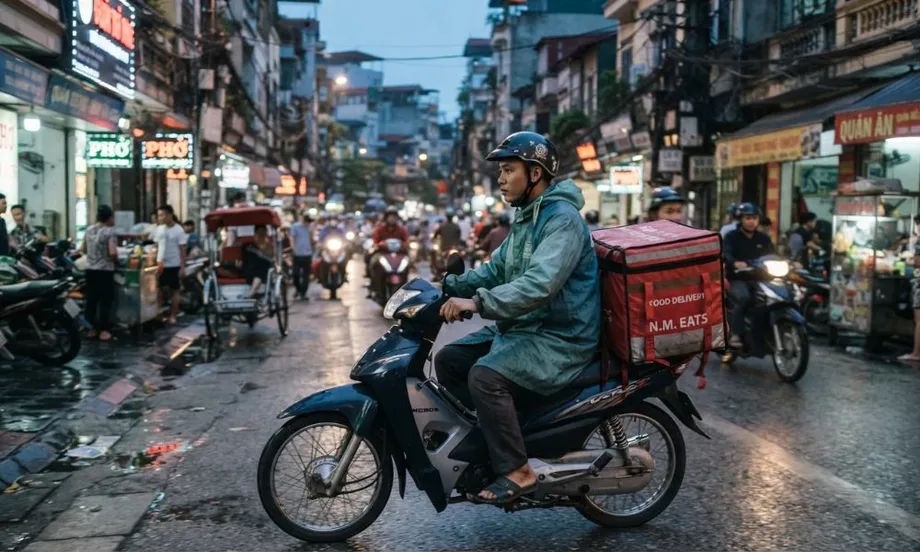
A new legal safety net for Hong Kong delivery riders
Hong Kong gazetted the Digital Platform Workers Compensation Bill on November 27, 2026, setting out the city's first statutory work injury compensation system for people delivering food, drinks and goods through apps. If the Legislative Council passes it, platform operators would be legally responsible for compensating workers injured or killed while carrying out covered platform work. The bill covers fatal and non fatal cases.
Contents
- A new legal safety net for Hong Kong delivery riders
- What the bill would make platforms and workers do
- Why Hong Kong is acting now
- Who would be covered, and during which minutes
- How much could an injured rider receive
- How monthly earnings would be worked out
- The bill does not make riders employees
- Riders welcome cover but fear gaps at the edges
- What operators and customers may feel
- What happens at LegCo next
- Key Points
For riders, the change is practical. Today, many platform workers are treated as independent contractors, so an injured person may first have to prove in court that an employment relationship existed before gaining statutory protection. The bill would create a separate route tied to platform work itself. In simple terms, it would give a rider a clearer path to medical costs, income support and death benefits after a crash on the job.
What the bill would make platforms and workers do
The Digital Platform Workers Compensation Bill would make operators pay compensation in covered cases. It would also require them to buy compulsory work injury compensation insurance, keep records about platform workers, issue payment slips and give accident notices to the Commissioner for Labour. Those rules are meant to put the evidence and the insurance in place before an accident happens, rather than leaving a rider to chase papers afterwards.
Workers would have duties too. They would need to notify both the operator and the Commissioner about an accident, and to undergo a medical examination when an operator asks. Bill papers add that a worker who refuses an examination can have the claim suspended, and after 15 days may lose the right to claim unless a court accepts a reasonable excuse. The bill also defines platform worker, operator and monthly earnings at the time of an accident, because those definitions decide who is covered and how large a payout can be.
Why Hong Kong is acting now
The plan began as a policy promise. Paragraph 256 of the 2025 Policy Address said the government would legislate to improve the work injury compensation mechanism for platform workers in food delivery and goods delivery, while using the Digital Platform Industry Tripartite Group for consultations. The 2026 Policy Address carried the commitment forward, and the First Five-Year Plan for Economic and Social Development of the Hong Kong Special Administrative Region (2026-2030) pointed to new laws for emerging forms of employment. Paragraph 257 of the 2025 Policy Address, in the same labour and safety chapter, said fatal construction industry accidents fell 30% in 2024 compared with 2023.
A written reply in the Legislative Council on January 21, 2026 gave more detail. Secretary for Labour and Welfare Chris Sun was answering a question from lawmaker Lam Wai-kong. The question said more than 10 000 digital platform workers in Hong Kong were doing food and goods delivery, and that many accepted orders as independent contractors. It said disputes often required courts to decide whether an employment relationship existed. Mr Sun said the Tripartite Committee for the Digital Platform Industry brought together government, platform companies and labour organisations. The Labour Department had been collecting views since the previous October from platform companies, labour groups, the insurance sector and academics.
- October 2025: consultations begin through the tripartite committee and separate meetings.
- January 21, 2026: the government tells LegCo it aims to submit a proposal within the year.
- July 20, 2026: the Labour and Welfare Bureau sets out the framework in a LegCo paper.
- November 22, 2026: Chris Sun describes the draft pay structure on a public programme.
- November 25, 2026: the Labour and Welfare Bureau submits the draft bill to LegCo.
- November 27, 2026: the government gazettes the bill.
- December 9, 2026: first and second readings are scheduled.
Who would be covered, and during which minutes
The first phase focuses on food and beverage delivery and goods delivery. A July paper described in a Simmons & Simmons analysis said coverage generally starts when a worker travels to collect an order and ends when the delivery is completed, including the journey back to the vehicle used for the task. Bill papers add that, in severe weather, cover can extend for four hours after work stops on the way home if there is a typhoon signal 8, red or black rainstorm warning, or extreme conditions announced by the government.
The boundary matters because delivery work has quiet stretches that are still part of the job. Riders may be logged in, waiting for an order, competing for an order or responding to an alert between deliveries. Those periods sit outside the main statutory window unless an operator chooses to cover them. When a worker is serving several platforms at the time of an accident, the bill sets out a way to apportion liability among those platforms, with the platform linked to the current task carrying responsibility for sick pay.
How much could an injured rider receive
Compensation would be paid on a no blame basis, meaning a rider would not normally have to prove the operator was at fault. The July proposal listed limited exceptions, including injury deliberately caused by the worker, certain accidents involving drugs or alcohol, serious and wilful misconduct, and deliberate worsening of an injury. Covered items include medical expenses, payments during temporary incapacity, compensation for permanent incapacity, death benefits, funeral costs and prosthetic or surgical appliances.
The bill keeps two major safety nets from the Employees' Compensation Ordinance (Cap. 282). The minimum compensation for death is HK$514,510, and the minimum for permanent total incapacity is HK$584,220. A monthly earnings ceiling of HK$38,670 is also retained for those calculations. Sick pay during recovery is different. The bill creates three bands based on task hours in the look back period before the accident: fewer than 230 hours brings up to three months, 230 to 385 hours brings up to six months, and more than 385 hours brings up to 12 months. The 12 month ceiling is half the 24 month ceiling for ordinary employees.
Secretary Sun described the same bands as daily averages across a week with six working days: up to three hours a day, more than three but fewer than five hours, and five hours or more. Sick pay is four fifths of wages. The bill does not apply the Employees' Compensation Ordinance monthly minimum of HK$5,710 to these payments, because the government said that floor could produce payments higher than the platform income of people who work only scattered hours. Medical expenses, death compensation and permanent incapacity compensation are not divided by these bands.
How monthly earnings would be worked out
Monthly earnings are like an average of many small pay packets. The bill uses income up to 90 days before the accident rather than the month before the injury, which riders have criticised as unfair when orders vary sharply. Income from the platform responsible for the accident is counted after a 25% deduction for costs. Income from other platforms is counted after a 50% deduction. The total is divided by 90 and multiplied by 30 to reach a monthly figure. If the look back is shorter than seven days, the calculation treats it as seven days and makes no cost deduction.
The July proposal said service fees, tips paid through the platform and cash bonuses under reward programmes would be included. Expense reimbursements, direct tips from users, separately negotiated fees for extra services and earnings from non platform work would be left out. Two riders said the formula still needs care. One argued that a 90 day average should be divided by actual working days, not all calendar days, because a long holiday could dilute the result. Another said a bonus paid the next day should be counted in that day's income.
The bill does not make riders employees
The central choice is a legal one. The bill creates a stand alone compensation statute. It does not reclassify platform workers as employees, and the July paper said the Employment Ordinance and the Employees' Compensation Ordinance would remain inapplicable to a platform work agreement. Mr Sun's January reply said the relationship between a platform company and a platform worker cannot easily be defined by reference to an ordinary employment relationship. The government chose to move first on injury compensation.
The Hong Kong Labour Rights Monitor released a paper on November 23, 2026 titled Better Than None? Hong Kong Government's Proposed Work Injury Compensation Scheme for Platform Workers. The group said the plan refused to answer the employee status question and narrowed protection through definitions, working hours and pay formulas. It pointed to the International Labour Organisation's Decent Work in the Platform Economy Convention, 2026 (No. 193), adopted in June, which calls on governments to ensure that platform workers do not lose protections because of how their status is classified.
Christopher Mung, the group's executive director, said some riders who were really employees could end up with less protection under the new law. He pointed to the international convention as the standard he wanted Hong Kong to follow.
Some platform workers who are in fact employees could see their protection go backwards under the new law. That runs against the spirit of the international convention.
HKLRM listed five concerns: no statutory cover while waiting or competing for orders, no counting of earnings from other jobs, no monthly minimum for sick pay, no cover for substitutes or agency workers, and no duty of care requiring operators to protect safety. Algorithms, the software that allocates orders and monitors acceptance rates, were also left out. The group noted that the United Kingdom Supreme Court had treated all logged on time on the Uber app, including standby time, as working time, and that Singapore had imposed a duty of care on platform operators. It also said recent rider strikes showed anger was building.
Norman Hui, a barrister and principal lecturer at the University of Hong Kong, wrote before the bill was gazetted that the same issue appears in injury claims. GPS records, dispatch logs, acceptance histories and messages inside apps are usually held by the operator. An injured rider may need those records to show what happened, while the operator may resist handing them over. The bill sets compensation duties, but it does not give riders a new right to obtain that evidence.
Riders welcome cover but fear gaps at the edges
Delivery riders who spoke publicly after publication gave a mixed response. Mr Cheung, who has delivered by motorbike in Hong Kong Island's Eastern District for years, said riders currently pay their own medical and repair costs after crashes. He once broke a hand while delivering and received a small payout because the platform used his low order count from the previous month. He supported the 90 day calculation and the hours based bands, but worried that platforms would reduce delivery fees to absorb new costs, mentioning cuts of HK$5 now and HK$10 in peak season.
Mr Cheung also said some platforms had bought insurance covering one hour before logging on and one hour after finishing, and he feared the statutory scheme would remove that broader cover. He proposed a review after six months to one year and an extension of injury compensation from one year to two years to match ordinary employees. Mr Chan, a rider based in Wong Tai Sin who often travels to Tsim Sha Tsui, said the bill was a clear improvement over a system without explicit rules. He asked for one hour of cover before and after the working session, noting that trips in Hong Kong can take about an hour.
Workplace groups raised similar points. Mak Tak-ching, an officer of the Hong Kong Christian Industrial Committee, said fewer working hours did not mean a less serious injury. The Federation of Trade Unions rights committee welcomed the move from no statutory protection to legal protection, but asked for at least one hour before and after order taking to be covered and for an annual review.
foodpanda Hong Kong said it was studying the bill and would keep communicating with the government and industry through the tripartite group. Keeta had no additional comment. A May case shows why the boundaries are so contested. Joe, a 53 year old Keeta courier, was left with largely permanent cervical spinal paralysis after a crash while looking at an urgent order notification between deliveries. He had not received insurance compensation.
What operators and customers may feel
For platform operators, the practical question is now preparation. Once the law takes effect, they would need insurance contracts, accident reporting channels, worker records, payment slips and processes for medical examinations. The bill says a person who meets the criteria of an operator must notify the Commissioner for Labour, and the Labour Department will publish a list of operators. A failure to notify does not remove the duty to comply.
The government has said the system will be phased in so operators have time to prepare. It has also acknowledged that insurance and administrative costs could be passed on, through higher delivery charges or lower payments to workers. Customers could therefore feel the law in delivery fees, while riders could feel it in earnings. No commencement dates for the phases were announced, and the bill summary did not give exact notice deadlines.
What happens at LegCo next
The December 9 first and second readings are the next formal step. The government said it will fully support LegCo's scrutiny and seek passage. Lawmakers can question the definitions, the compensation bands, the treatment of standby time and the balance between rider protection and operator costs. Chris Sun said in November that he was confident the bill could pass during his term.
The scope may grow later. Officials have said other platform work, including ride hailing drivers, home care and medical escort services, could be brought under similar cover as new business models appear. Rider groups want a formal review mechanism, either every year or within six months to one year of implementation, so the rules can catch up with working patterns.
Hong Kong's choice is to protect a defined slice of platform work first and leave bigger questions open. The December vote will decide whether the city accepts that first step, and how much pressure there will be to widen it once riders, operators and insurers have lived with the rules.
Key Points
- The Digital Platform Workers Compensation Bill was gazetted on November 27, 2026 and is set for first and second readings on December 9.
- The bill would cover food, beverage and goods delivery workers injured or killed during defined platform work.
- Operators would pay compensation, buy compulsory insurance, keep records, issue payment slips and report accidents.
- Sick pay would be capped at three months, six months or 12 months according to work hours before the accident.
- Death and permanent total incapacity compensation would keep minimums of HK$514,510 and HK$584,220.
- The bill does not make platform workers employees, and labour groups say standby time and other rights remain outside it.
- Riders support clearer cover but want one hour before and after work, fairer pay formulas and a review mechanism.
- No phased commencement dates were announced.