New Ordinance Lays Legal Foundation for Flagship Growth Zone
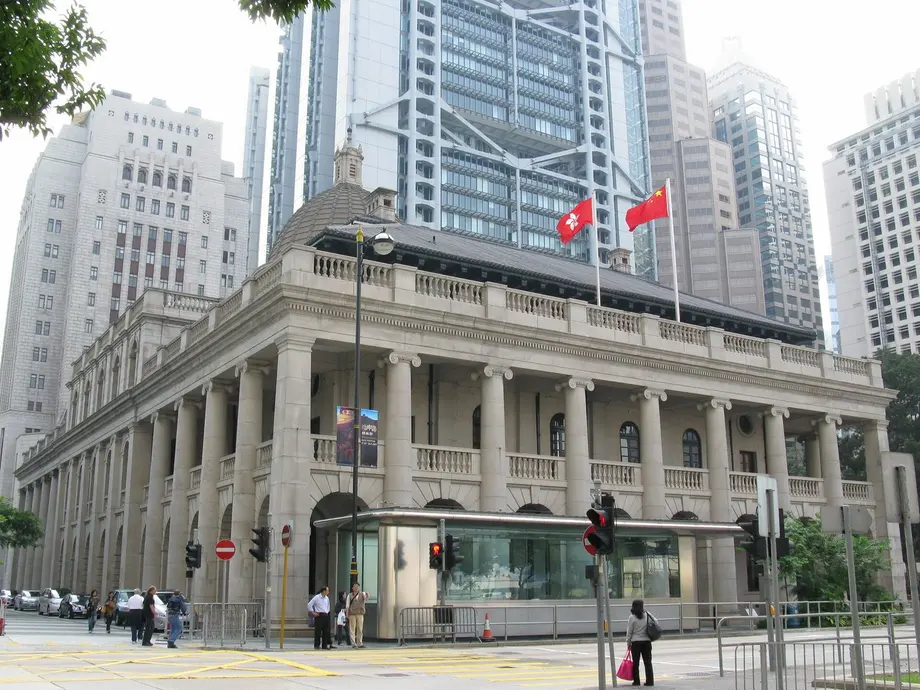
The Northern Metropolis Development Ordinance was officially gazetted, establishing a dedicated legal framework designed to accelerate land development and streamline regulatory approvals across Hong Kong's major growth zone. Passed by the Legislative Council on November 12, the legislation targets administrative hurdles by facilitating town planning, land resumption compensation, building approvals, noise control, and cross-border movement. This milestone aligns Hong Kong's first five-year plan directly with the national 15th Five-Year Plan, positioning the region as a primary driver for economic transformation and modern industrial growth.
Contents
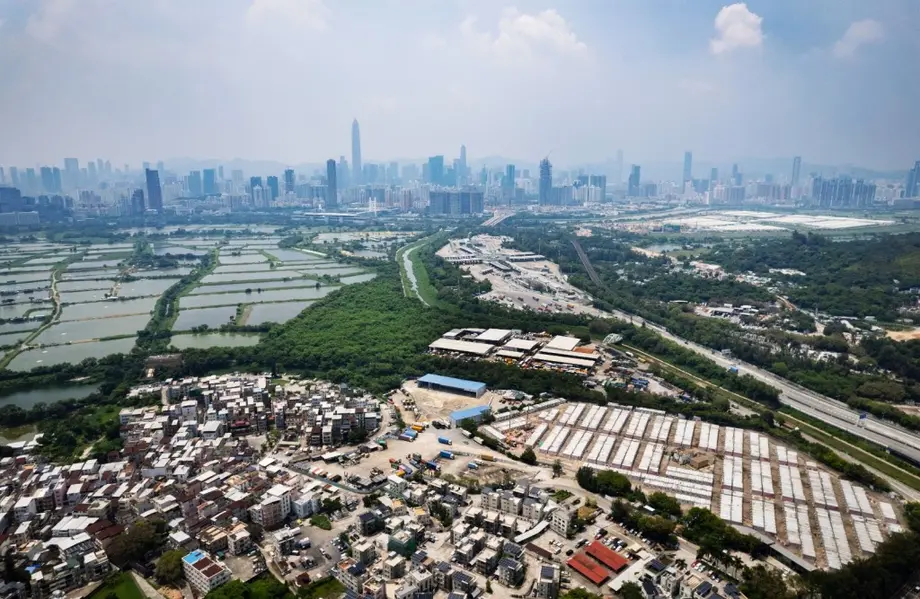
The Development Bureau and relevant policy departments are finalizing the initial batch of subsidiary legislation for submission to the legislature in January, with formal implementation targeted for the first quarter. Spanning roughly 30,000 hectares, or approximately one-third of Hong Kong's total land area, the massive development zone is projected to house around 2.5 million residents, which accounts for one-third of the city population. Officials estimate the project will create 500,000 new jobs and contribute about 13 percent of the local gross domestic product.
Pragmatic Governance and Cross-Border Collaboration
Speaking at the International Infrastructure Project Leadership Summit, Chief Executive John Lee Ka-chiu emphasized the necessity of building future-ready infrastructure that prioritizes quality over sheer quantity. He highlighted how smart city concepts will guide transport, housing, greening, and public facilities, with artificial intelligence serving as a primary driver to optimize resource allocation and boost productivity. During recent meetings in Shenzhen, Lee actively promoted the development zone and the Hong Kong Park of the Hetao Shenzhen-Hong Kong Science and Technology Innovation Co-operation Zone to visiting international leaders, welcoming interest from Singapore sovereign wealth fund GIC and various technology firms.
Lan Kwai Fong Group Chairman Allan Zeman described the initiative as a transformative new engine that will reshape the city economic landscape. Having served as an adviser to successive chief executives, Zeman noted that historical planning constraints led to chronic land shortages and an overreliance on finance and real estate. In an interview regarding the project, he shared his perspective on the long-term vision.
The Northern Metropolis will unlock vast tracts of land under a revised land policy that allows promising businesses to establish operations at significantly lower land costs.
Northern Metropolis Advisory Committee member Lau Kwok-fan described the statutory backing as a crucial institutional breakthrough. He noted that the new rules provide greater predictability for investors and stakeholders, helping transform broad reform goals into concrete operational procedures.
Streamlined Procedures and Legislative Milestones
The Northern Metropolis Development Bill sets out specific legal mechanisms across six distinct policy areas, empowering the Chief Executive in Council to enact tailored regulations. These measures include compressing town planning application procedures from a typical duration of at least nine months down to just two months for designated areas. Furthermore, temporary land use permits can now be extended for up to seven years.
The legislative timeline moved swiftly through the Legislative Council following formal introduction and review:
- July 3, 2026: Bill gazetted following a public consultation period
- July 8, 2026: First and second readings initiated in the legislature
- July 17, 2026: Bills Committee consideration and detailed scrutiny
- November 12, 2026: Bill passed at the third reading with amendments
- November 20, 2026: Ordinance officially gazetted under reference number NM/001
University Town and New Development Areas
Secretary for Development Bernadette Linn Hon-ho stated that the government is pursuing a planning-led and infrastructure-first strategy to supply around 900 hectares of formed land, over 70,000 residential units, and one million square meters of new economic floor area over the next five years. InvestHK Director-General Alpha Lau Hai-suen added that the planned Northern Metropolis University Town has attracted strong interest from local institutions and overseas universities wishing to establish research facilities.
The Civil Engineering and Development Department oversees nine New Development Areas within the zone, including Kwu Tung North and Fanling North, Hung Shui Kiu and Ha Tsuen, Yuen Long South, San Tin Technopole and the Loop, Ngau Tam Mei, Lau Fau Shan, Ta Kwu Ling, Ma Tso Lung, and Au Tau. Construction works have already commenced across roughly 800 hectares in the first four of these areas.
Detailed planning is advancing rapidly for the Ngau Tam Mei New Development Area, where the government is seeking HK$19.8 billion from the legislature to fund early development. Spanning 130 hectares, Ngau Tam Mei will create roughly 26,000 jobs and house up to 38,500 residents. The area will allocate 52 hectares to the San Tin University Town, featuring 5 hectares reserved for the city third medical school run by the Hong Kong University of Science and Technology, alongside 10 hectares designated for a general hospital. Site formation and infrastructure works in Ngau Tam Mei are scheduled to progressively begin in 2027 and reach completion by 2034, allowing residents to move in as early as 2033.
Financing Infrastructure and Cross-Border Transit
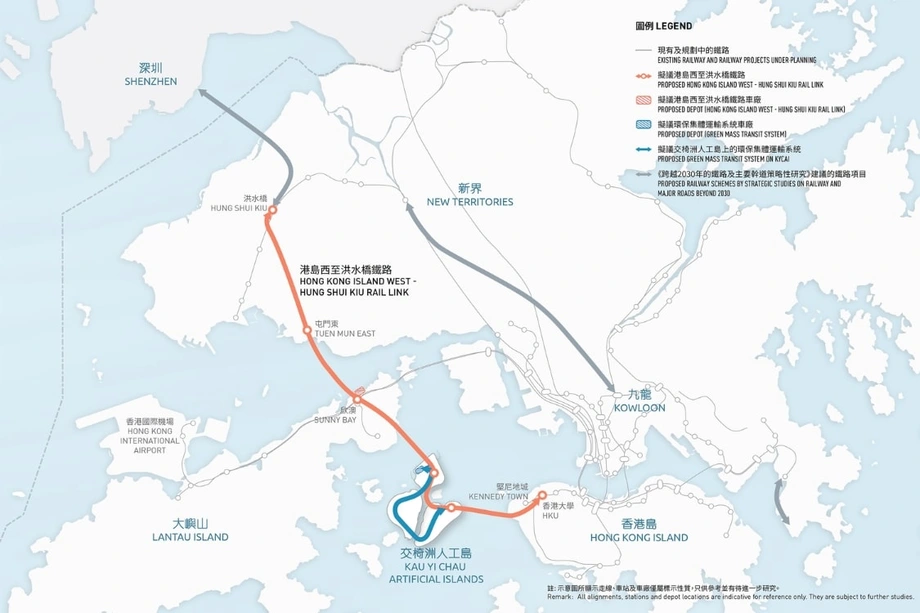
Financial Secretary Paul Chan Mo-po announced that the government will issue approximately HK$150 billion to HK$200 billion equivalent in bonds annually over the next five years. These funds will support major capital projects like the Northern Metropolis while advancing digital bond issuance and tokenization. Major transport links are also moving forward under the Closer Economic Partnership Arrangement framework, including the Tsing Lung Bridge, the Northern Link railway, and the Hong Kong-Shenzhen Western Rail Link, which aims to complete tendering next year ahead of a target opening in 2035.
To facilitate operational efficiency, the legislation empowers authorities to regulate cross-border flows of personnel, capital, and data. This includes establishing a White List system for personnel entering and leaving the Hong Kong-Shenzhen Innovation and Technology Park, as well as permitting the disapplication of certain local rules regarding construction equipment on joint infrastructure projects.
The Bottom Line
- The Northern Metropolis Development Ordinance establishes a dedicated legal framework to accelerate land development and streamline approvals across a 30,000-hectare growth zone.
- Town planning application procedures are compressed from at least nine months to two months, and temporary land use periods can be extended up to seven years.
- The Ngau Tam Mei development phase requires HK$19.8 billion in funding to create 26,000 jobs, house up to 38,500 residents, and host a new university town.
- Financial authorities plan to issue HK$150 billion to HK$200 billion in bonds annually over five years to finance these regional infrastructure projects.
- First-batch subsidiary legislation will be submitted to the Legislative Council in January for implementation within the first quarter of 2027.