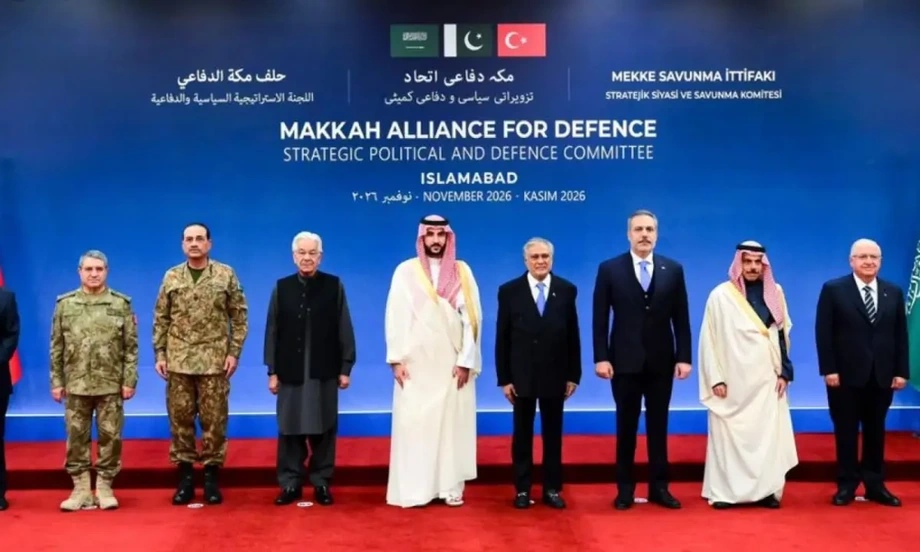
Islamabad talks turn a pledge into plans
Pakistan, Saudi Arabia and Turkiye promised on Friday, 27 November 2026, to accelerate support for Saudi security and turn their new mutual defence pact into a working organisation. After more than two hours of talks in Islamabad, their Strategic Political and Defence Committee condemned Houthi attacks on civilians and civilian infrastructure, backed diplomacy to reduce regional tensions and discussed principles for admitting new members.
Contents
- Islamabad talks turn a pledge into plans
- The delegations and a capital under tight security
- What the agreement requires
- How the alliance has developed since August
- Support for Riyadh, with limits on Yemen
- Expansion is discussed as command questions remain
- Iran diplomacy sits beside deterrence
- The agenda reached beyond the Houthis
- What Pakistan could gain beyond security
- Key Points
The Makkah Joint Defence Agreement, signed on 7 August by Pakistani Prime Minister Shehbaz Sharif, Saudi Crown Prince Mohammed bin Salman and Turkish President Recep Tayyip Erdogan, treats an armed attack on one member as an attack on all three. In plain terms, each country has promised to help the others if they come under attack. Friday's discussions concerned how that promise should be put into practice, rather than whether it should exist.
Deputy Prime Minister and Foreign Minister Ishaq Dar addressed a press briefing after the committee finished its second regular meeting. Introducing its conclusions, he used unusually strong language about the attacks on Saudi Arabia:
The three sides reiterated their strong condemnation of the persistent and heinous attacks by the Houthi militia, targeting civilians and civilian infrastructure in the Kingdom of Saudi Arabia.
Dar said the three countries had also reaffirmed their resolve to "continue and intensify efforts to support the Kingdom in safeguarding its security, sovereignty, and territorial integrity." The joint declaration issued through Pakistan's Foreign Office described the alliance as purely defensive. It said the members would continue consultations, support a reduction in regional tensions and encourage the peaceful resolution of disputes through dialogue and diplomacy. No new military deployment was announced on Friday.
The delegations and a capital under tight security
Saudi Defence Minister Prince Khalid bin Salman and Foreign Minister Prince Faisal bin Farhan represented Riyadh, accompanied by the army chief. Turkiye sent Foreign Minister Hakan Fidan, Defence Minister Yasar Guler and Chief of General Staff General Selcuk Bayraktaroglu. Pakistan's participants included Dar, Defence Minister Khawaja Asif and army chief Field Marshal Syed Asim Munir, who also serves as Chief of Defence Forces.
Shehbaz Sharif later received the Saudi and Turkish delegations. He welcomed their unity in defending one another's security, sovereignty and territorial integrity, expressed satisfaction with the committee's work and repeated Pakistan's full support for Saudi Arabia. National Security Adviser Lieutenant General Muhammad Asim Malik joined the Pakistani side, alongside Dar, Asif and Munir. The delegations also discussed the latest regional situation and promised to continue working together for lasting peace and stability.
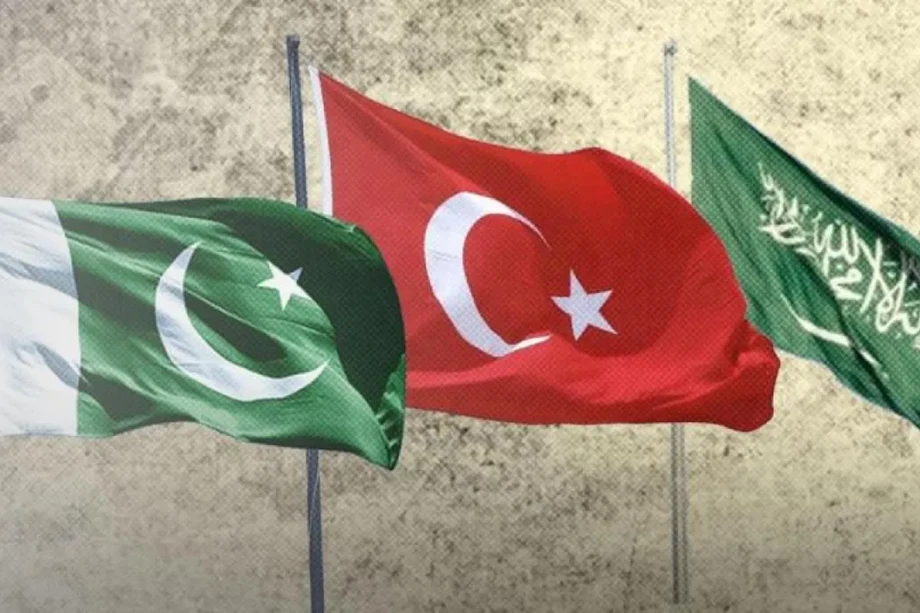
Islamabad residents felt the immediate effects of the gathering. Authorities declared a local holiday to limit public movement, while the flags of Pakistan, Saudi Arabia and Turkiye lined the delegations' route. Police sealed the Red Zone, which contains Parliament, the Supreme Court, federal ministries and diplomatic missions. Ministries and other federal offices in that area were instructed to work remotely for the day.
Traffic police barred heavy vehicles from entering Islamabad and neighbouring Rawalpindi through the motorway and Grand Trunk Road until 12:30 a.m. on Saturday. The Faizabad Bus Terminal, part of the capital's bus network and two hiking trails in the Margalla Hills were also affected. Most other roads remained open to ordinary traffic, although motorists were advised to use alternative routes.
What the agreement requires
The Makkah agreement requires immediate assistance when a member suffers an armed attack from outside the pact. That assistance can include military support, but the text leaves the three governments to determine what help to provide and whether to use military resources. This distinction matters because a political promise of solidarity does not, by itself, specify how many troops would move, who would command them or what operation they would conduct.
The agreement also contains detailed legal provisions. It takes effect when the last instrument of ratification is deposited with the committee's secretariat. It then remains in force indefinitely, although a member may withdraw after 10 years by giving the others at least three months of written notice through diplomatic channels. No date for the final deposit was announced in Islamabad.
Turkiye supplied the day's main legal development. Its parliament approved the agreement on 5 November by a clear majority in the 600-seat chamber, and Erdogan formally approved it on 27 November. Publication of that decision in the Official Gazette completed Turkiye's ratification and, according to Pakistani officials, completed the accession process for all three members. Parliamentary approval had faced objections from opposition politicians concerned that Turkish soldiers could be drawn into regional wars.
How the alliance has developed since August
August, October and November brought three different kinds of meetings. Friday's gathering was the committee's second regular session. Counting the emergency talks in Riyadh as a separate gathering makes it the third ministerial meeting held under the agreement, which explains the different descriptions attached to the Islamabad talks.
- 7 August: Sharif, Mohammed bin Salman and Erdogan signed the agreement in Makkah, committing their countries to collective deterrence and defence.
- 31 August: The committee's first meeting in Istanbul agreed to establish a permanent secretariat in Riyadh and pursue joint development and production of defence technology.
- 5 October: An emergency session in Riyadh followed Houthi attacks on Saudi Arabia. Members condemned attacks on Saudi cities and civilian facilities, discussed rapid deployment arrangements and confirmed retired Pakistani Lieutenant General Nauman Mahmood as the first secretary general.
- 5 November: The Turkish parliament approved the pact, clearing the way for Erdogan's final approval.
- 27 November: Turkiye completed ratification while ministers and military chiefs met in Islamabad for the committee's second regular session.
Nauman Mahmood will serve a term of three years. Riyadh has been selected as the secretariat's permanent home, and ministers reviewed plans to establish and fully operationalise that institution. Asif said a secretariat would place the alliance on a practical and permanent footing, moving it beyond a document signed by three leaders.
Support for Riyadh, with limits on Yemen
The Houthi movement, which controls Yemen's capital, Sanaa, and receives backing from Iran, resumed attacks against Saudi Arabia after breaking a truce that had held for four years. The renewed attacks followed the outbreak of war between Iran and the United States in February. Saudi cities, oil facilities and shipping have been among the targets since fighting in Yemen's civil war intensified in July.
At the emergency Riyadh meeting on 5 October, the three governments called for practical implementation of their collective defence commitments. That included arrangements for rapidly deploying agreed forces and capabilities to Saudi Arabia, subject to national laws. The joint statement supplied neither troop numbers nor a deployment timetable, and Friday's meeting did not fill those gaps.
Khawaja Asif has described Pakistan's commitment in direct terms. He said Pakistan would use "whatever means are available" to defend Saudi Arabia against Houthi attacks. Turkish officials said Ankara was considering military assistance for the kingdom, while insisting that no Turkish troops would be sent to fight in Yemen or attack the Houthis. Turkiye has therefore drawn a distinction between helping Saudi Arabia defend its territory and joining combat inside Yemen.
Hasan Karal, an opposition lawmaker from the New Path parliamentary group, had pressed the Turkish government on that point during ratification. He asked what support Ankara might have to provide if Saudi Arabia came under attack from Yemen and called for parliament to have a clear role in decisions involving combat missions.
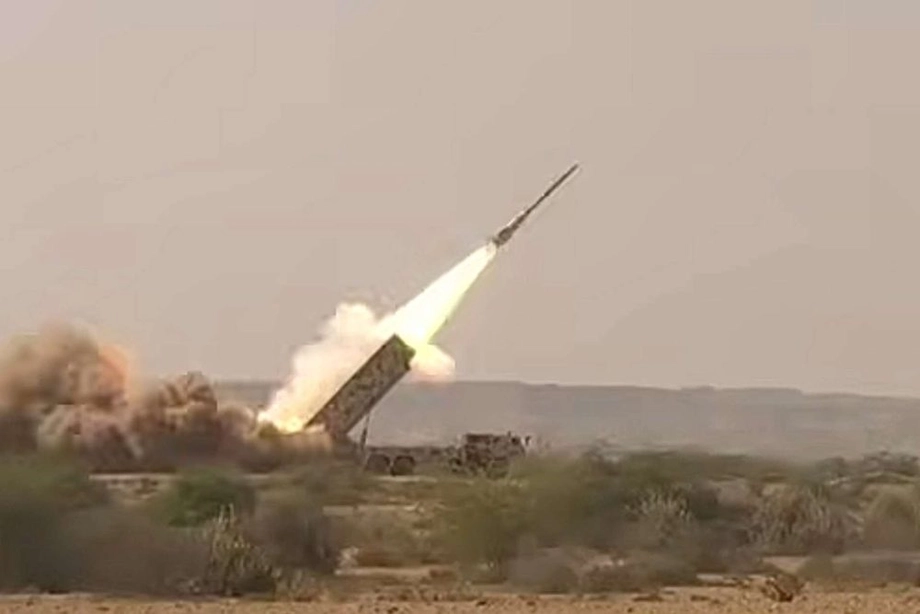
A security source said recent Pakistani military deployments involving JF-17 aircraft, drones and HQ-9 air defence systems were made under bilateral arrangements that existed before the alliance. HQ-9 systems are used to defend against aircraft and missiles. The existing arrangements would now become part of the trilateral framework, giving the new organisation some practical military cooperation on which to build.
Expansion is discussed as command questions remain
The alliance has yet to publish its military doctrine, force composition, command arrangements or procedures for a collective military response. Its institutional and operational structure therefore remains at an early stage, despite the selection of a secretary general and the choice of Riyadh as the secretariat's base. Friday's declaration announced closer cooperation in defence industries, technology development, training and capacity building, but it did not announce a standing joint force.
Hakan Fidan disclosed another decision after the talks. The Turkish foreign minister said the members had begun setting rules for other countries that might want to join:
We held discussions on what kind of a roadmap should be followed for other countries wanting to become members... We took decisions on some principles. In short, everything is going very well
Fidan did not name any candidate country, and the agreed principles were not published. No timetable for admitting a fourth member was given. Expansion is consequently an agreed subject of work, rather than an open invitation with publicly known conditions.
The membership discussion adds a diplomatic dimension to an organisation created during a period of intense regional tension. A larger membership could widen collective deterrence, but it would also require agreement on whose security concerns should shape the alliance. The existing members have different relationships with Iran, Israel, the United States and the parties fighting in Yemen.
Iran diplomacy sits beside deterrence
Pakistan's border with Iran makes its position particularly delicate. Islamabad describes the Makkah pact as defensive and says it is not directed against any country, including Iran. Representatives of Pakistan, Saudi Arabia and Turkiye have also met Iranian officials in Tehran, keeping communication open while the three governments deepen their military cooperation.
Asif declined to say how the alliance would respond to a direct Iranian attack on Saudi Arabia. He nevertheless identified Israel as a possible threat to countries in the region. His refusal to outline a response to one scenario, combined with the public promise to defend Saudi Arabia, illustrates how much of the alliance's operational policy remains unstated.
The June accord brokered by Pakistan briefly halted fighting between the United States and Iran. It also set out a roadmap for reopening the Strait of Hormuz, the narrow sea passage between the Gulf and the Gulf of Oman, and for negotiations over Tehran's nuclear programme. The truce collapsed, with Washington and Tehran accusing one another of violating it. Washington subsequently rejected an Iranian proposal in September.
Pakistan is now working with regional partners, including Qatar, to encourage the United States and Iran to return to negotiations. Asif said Pakistan had played a constructive role between the two capitals, but he cautioned that mediation remained fragile and peace was not yet secure. For Islamabad, maintaining that diplomatic channel is as immediate a concern as preparing military assistance.
The agenda reached beyond the Houthis
Turkish officials said before the meeting that Fidan would press for continued diplomacy in the dispute involving the United States, Israel and Iran. He was also expected to discuss maritime security and safe navigation through the Bab al Mandab Strait, the passage off Yemen that connects the Red Sea with the Gulf of Aden. Threats to shipping there can disrupt trade well beyond the countries directly involved in the fighting.
Fidan's wider agenda included the humanitarian devastation in Gaza, settler violence in the occupied West Bank and violations of the historical status quo in occupied East Jerusalem. Turkish officials said he would call for a resolute international response and reaffirm support for Syria's sovereignty, territorial integrity and lasting stability. These were positions previewed by Turkiye; Friday's joint declaration did not announce specific joint decisions on Gaza, Jerusalem or Syria.
On the sidelines, Dar and Fidan reviewed growing bilateral cooperation in trade, investment, defence and energy. They agreed that strong political relations should produce clearer economic benefits and that close coordination would continue under the pact. Fidan thanked Pakistan for its hospitality and active diplomacy.
What Pakistan could gain beyond security
Defence manufacturing offers Pakistan the most tangible possible return beyond military cooperation. Asif said collaboration with Saudi Arabia and Turkiye could help build Pakistan's defence capabilities. The JF-17 fighter, developed jointly with China and produced in Pakistan, is already part of that discussion. Negotiations have examined converting roughly $2 billion in Saudi credit into a potential JF-17 purchase, although no signed aircraft contract was announced on Friday.
Pakistan also signed the Badr defence manufacturing agreement with Qatar, Indonesia and Turkiye in Doha in October. That arrangement is intended to combine manufacturing capabilities, support shared production and enable technology sharing. Together with the Makkah committee's interest in joint technology development, it creates possible routes for Pakistani firms to supply components, train engineers and participate in production rather than simply sell equipment.
The economic backdrop explains why those details matter. The Lowy Institute's 2026 Asia Power Index placed Pakistan tenth among 27 Asian countries and territories for military strength, eighteenth for economic capacity and sixteenth in the combined ranking. Its available foreign reserves stood just above $16 billion in January, enough for fewer than three months of imports. Military and diplomatic influence therefore coexist with limited financial room.
State Bank figures show a stronger performance in parts of the technology economy. IT exports reached a record $4.6 billion in the year to June, an increase of 21 percent. Freelancers earned a record $1.76 billion, up 78 percent, with IT specialists contributing more than $1.16 billion of that amount. Defence cooperation could create another industrial opening, but preliminary negotiations do not guarantee orders, factories or jobs.
Friday's declaration contained no factory contract, training quota or procurement timetable. For Pakistani engineers, technicians and manufacturers, the practical test will be whether joint projects include production within Pakistan, internationally recognised technical qualifications and permission to use knowledge gained on later contracts. For Saudi Arabia, the nearer priority is protection against attack. For Turkiye, it is assistance that stops short of combat in Yemen. The Islamabad meeting advanced all three conversations without settling their most difficult military details.
Key Points
- Pakistan, Saudi Arabia and Turkiye met in Islamabad on 27 November 2026 and promised accelerated support for Saudi security.
- The three members condemned Houthi attacks on Saudi civilians and civilian infrastructure and repeated their collective defence commitment.
- The pact, signed on 7 August, treats an armed attack on one member as an attack on all and permits assistance that can include military support.
- Turkiye completed ratification on the day of the talks, but no date was announced for deposit of the final ratification instrument.
- Riyadh will host the permanent secretariat, led for three years by retired Pakistani Lieutenant General Nauman Mahmood.
- Rapid deployment arrangements have been discussed, but troop numbers, command arrangements and a deployment timetable remain undisclosed.
- Turkiye says its troops will not fight in Yemen or attack the Houthis, while Pakistan says it will use available means to defend Saudi Arabia.
- The members agreed some principles for possible new admissions, without naming candidates or publishing a timetable.
- Pakistan is continuing diplomacy with Iran and the United States while seeking defence manufacturing, technology and training benefits from the alliance.