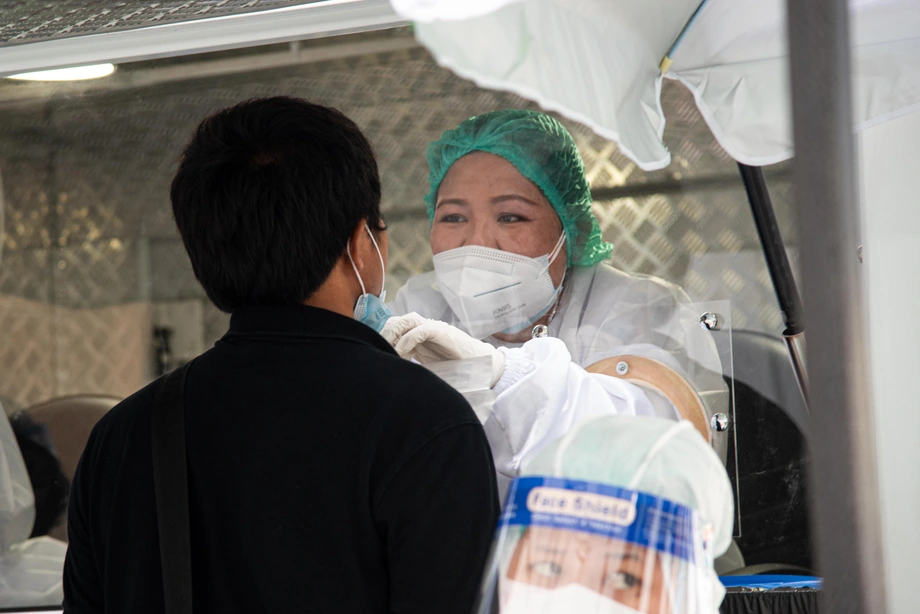
A Flu Wave With Two Very Different Faces
Thailand is carrying a heavy influenza burden in 2026, with the national picture depending on the date of the count. The National Communicable Disease Committee listed 613,292 cumulative flu cases and 134 deaths. An epidemiology update covering 1 January to 21 November put the totals higher, at 695,186 cases and 164 deaths. Both sets of figures point to the same pattern: influenza A/H1N1 was detected most often, children aged 5 to 9 had the highest illness rate, and people aged 60 and older had the highest case fatality rate.
Contents
- A Flu Wave With Two Very Different Faces
- Nakhon Ratchasima Becomes the Flu Center
- How the Virus Travels From Classrooms to Older Relatives
- A Timeline of the 2026 Warnings
- Polio Gets a Dangerous Disease Classification
- New Airport Checkpoints Expand Border Disease Control
- RSV and Mpox Add Separate Pressures
- Dengue Turns Deadlier for Adults in the South
- Rabies Deaths Nearly Double as Vaccine Gaps Persist
- Late in the Year, More Health Threats Demand Attention
- What Families and Communities Can Do Now
- What to Know
Case fatality means the share of reported cases that end in death. In this flu wave, the people most likely to become ill and the people most likely to die were not the same group. More than 83 percent of those who died had chronic conditions such as diabetes, high blood pressure, kidney disease, gout or emphysema. Provincial and national updates also said many deaths occurred among people who had not received a 2026 flu vaccine.
Dr. Sailak Phimko, director of Disease Prevention and Control Region 9 in Nakhon Ratchasima, urged people in seven risk groups to take a flu vaccine every year. He named older adults, people with chronic illness, pregnant women and children aged 6 months to 2 years among the groups that should be prioritized. The vaccine does not stop every infection, but it lowers the chance of severe illness, complications and death.
Nakhon Ratchasima Becomes the Flu Center
Nakhon Ratchasima, often called Korat, has recorded the heaviest flu death toll in the country. One national update through 21 November put the province at 53 deaths. A provincial update dated 24 November listed 21,831 cases and 51 deaths from 1 January to 24 November. Dr. Wichan Khit Hen, the province's public health physician, identified Mueang Nakhon Ratchasima, Kham Thale So, Lam Thamenchai, Huai Thalaeng and Phimai as the districts with the most cases.
Provincial officials said the case and death burden was 2.5 times higher than in the previous year. That rise turns a familiar seasonal infection into a local emergency for families with older relatives or chronic illness. Schools and child care centers are part of the reason the virus spreads quickly: children mix closely in classrooms and share toys, desks and air space.
How the Virus Travels From Classrooms to Older Relatives
Flu figures in Nakhon Ratchasima show children aged 0 to 14, especially those aged 5 to 9, with the most cases. Older people and people with long term illness made up most deaths. Health officials described a household chain: a child brings infection home from school, then an older relative with weaker immunity develops severe pneumonia.
The Nakhon Ratchasima communicable disease committee and the provincial public health office set four measures to break that chain:
- Children with fever, cough or a runny nose should stay apart from older relatives and high risk family members for the rest of the illness, including hugs, kisses, shared meals and sleeping in the same room.
- Sick children should stay home from school and tell their teacher, reducing spread inside the classroom.
- High risk people should seek vaccination quickly, including people aged 65 and older, people with chronic disease, pregnant women and children aged 6 months to 2 years.
- Families should seek urgent care for sudden high fever, severe body aches, heavy cough, drowsiness, inability to eat, shortness of breath or trouble breathing, and should call 1669 rather than buying medicine on their own.
The advice is simple enough for a child to follow: if you are sick, stay away from grandparents; if an older person looks ill, get help fast. That separates the group with the most infections from the group with the most deaths.
A Timeline of the 2026 Warnings
The disease alerts built up across the year, and several carried deadlines or seasonal windows that matter to the public.
- From 1 January to 21 November, national flu surveillance counted 695,186 cases and 164 deaths, while Nakhon Ratchasima alone was reported with 53 deaths in one update.
- In April and May, the main mpox strain in Thailand shifted from 2b to 1b.
- On 24 November, a late year health briefing warned about rabies, mpox, pertussis, suspected diphtheria and dengue.
- Also on 24 November, Nakhon Ratchasima reported 21,831 flu cases and 51 deaths.
- During 2026, the National Communicable Disease Committee approved the polio classification, the two airport checkpoints and new rabies guidelines. No exact meeting date was given.
The sequence shows how disease control had to cover very different routes at once: school contacts, mosquito bites, animal bites, close household contact, air pollution and borders.
Polio Gets a Dangerous Disease Classification
The National Communicable Disease Committee approved classifying polio as a dangerous communicable disease under the Communicable Diseases Act B.E. 2558 (2015). Polio is a viral infection that can cause paralysis, especially in children, and spreads mainly through contaminated food or water. Putting it in this legal category gives health authorities a stronger framework for reporting, surveillance and control if a case appears.
The decision gives Thailand a clearer legal tool for a disease that many countries have pushed to the edge of elimination. It also means polio sits alongside diseases that require rapid public health action and clear reporting rules.
New Airport Checkpoints Expand Border Disease Control
The committee also approved two additional international communicable disease control checkpoints at Trat Airport and Nakhon Si Thammarat Airport. Such checkpoints are places where health and border staff can coordinate disease monitoring, information sharing and response when travellers or goods cross a frontier.
Officials linked the additions to support for international trade, investment, transport and tourism. Trat sits near the eastern border with Cambodia and is a gateway for traders and visitors. Nakhon Si Thammarat serves the south, where dengue outbreaks were concentrated in 2026. No start date was given for the new checkpoints.
RSV and Mpox Add Separate Pressures
The committee listed 32,007 respiratory syncytial virus cases and 7 deaths in 2026. RSV often causes cold like symptoms, but it can lead to bronchiolitis or pneumonia in infants and older adults. Mpox was another concern: the committee recorded 512 cases and 3 deaths, mostly among men, many of whom also had HIV.
A late November update counted 545 new mpox cases in 2026 and 1,568 cumulative cases since July 2022. It also said the main strain changed from 2b to 1b in April and May. Cases were concentrated in Bangkok, Chonburi, Nonthaburi, Samut Prakan, Chiang Mai and Pathum Thani. Mpox spreads through close, prolonged skin to skin contact, so household and intimate contact can matter as much as public places.
Officials warned that overseas experience with strain 1b included spread among people in sex work, families and young children. People suspected of having mpox were advised to separate themselves at home, use separate items and tie garbage bags shut. The change in strain gives hospitals and clinics another reason to ask about travel and contacts when a patient has a rash or fever.
Dengue Turns Deadlier for Adults in the South
The committee listed 34,875 dengue cases and 47 deaths in 2026. A late November health update put the death toll at 49 and the case fatality rate at 0.13 percent, about 1.5 times higher than before. Total cases were lower, but 43 of the 49 deaths were adults older than 15. The committee said outbreaks were concentrated in the South, and cases were common among students and people of working age. The late update identified dengue strains 3 and 4 in the southern outbreak.
Dengue is spread by mosquitoes and can cause high fever, severe joint pain and bleeding in severe cases. Patients with chronic illness, obesity or late medical care face higher risk. Officials advised people to avoid nonsteroidal anti inflammatory drugs such as ibuprofen and aspirin, which can raise bleeding risk. High fever for more than two days with pinpoint red rash should prompt an NS1 antigen test, a rapid test that detects a dengue protein early in infection.
Rabies Deaths Nearly Double as Vaccine Gaps Persist
Thailand recorded 13 rabies deaths in 2026, nearly twice the 7 deaths recorded in 2025. Eight of the 2026 deaths, or 60 percent, were in the Northeast. The late November update said all 13 people who died had not received rabies vaccine after exposure. Many had been bitten, scratched or licked on an open wound by puppies or stray dogs with no known owner or vaccination history. Officials also identified young owned pets under three months old.
Rabies attacks the nervous system and is almost always fatal once symptoms begin. That is why the first minutes after a bite matter. Washing the wound with soap and clean water, applying antiseptic and getting medical care quickly can save a life through vaccination after exposure. The committee approved guidelines for rabies surveillance, prevention and control as deaths rose over six years.
The committee assigned specific jobs to four agencies:
- The Ministry of Public Health must make sure exposed people can quickly obtain assessment, treatment and a first rabies vaccine dose.
- The Department of Livestock Development must strengthen animal disease surveillance and control.
- The Department of Local Administration must improve animal population surveys, vaccination coverage and management of stray and unowned animals.
- The Department of National Parks, Wildlife and Plant Conservation must monitor disease, especially at boundaries where forests meet communities.
Late in the Year, More Health Threats Demand Attention
Pertussis and suspected diphtheria also rose in young children and in the three southern border provinces. Pertussis, also called whooping cough, causes severe coughing fits and can be dangerous for infants. There were 206 pertussis cases and 1 death, with the highest rates in children under 1 year and children aged 1 to 4. Eleven clusters were detected in one month. There were 74 suspected diphtheria cases and 8 deaths, with the highest number in children aged 0 to 4 and white membrane patches in the throat.
Vaccination is the main defense. The combined diphtheria, pertussis and tetanus vaccine, known as DTP, is given on schedule and free to pregnant women at 20 to 32 weeks. Adults should receive a booster every 10 years. Officials also warned about PM2.5 smoke from El Nino, tiny particles that can lodge deep in the lungs, with risk in central Thailand and Bangkok from November to March and in the North and Northeast from January to May. Groups at higher risk should wear N95 masks, which filter fine particles.
Gas water heaters posed a different late year danger because faulty systems can produce carbon monoxide, a gas that can cause dizziness, nausea and vomiting. Authorities urged people to check four risk points in bathrooms where gas heaters are used. People who feel those symptoms in a bathroom should leave immediately. Measles is highly contagious and is returning in many countries, so people traveling over the New Year were advised to get a booster at least two weeks before departure and watch for symptoms for 14 days after returning to Thailand.
What Families and Communities Can Do Now
The immediate steps are practical and familiar, but they have to be done early. Children with flu symptoms should stay home and away from older relatives. Adults in high risk groups should get a flu vaccine each year. Families should know the danger signs and call 1669 when breathing becomes difficult, the patient cannot eat or drowsiness appears.
Animal bites require the same urgency. Wash the wound, seek the first vaccine dose and ask about the animal's vaccination status. Dog owners should vaccinate pets, and local authorities should count animal populations and manage stray animals. In dengue areas, people should remove mosquito breeding sites, seek early testing for high fever and avoid aspirin or ibuprofen unless a clinician says otherwise.
What to Know
- The committee listed 613,292 flu cases and 134 deaths in 2026, while an update through 21 November listed 695,186 cases and 164 deaths.
- Influenza A/H1N1 was the most detected strain; children aged 5 to 9 had the highest illness rate and people aged 60 and older the highest case fatality rate.
- Nakhon Ratchasima recorded the country's highest flu death toll, with 53 deaths in one update and 21,831 cases plus 51 deaths in a 24 November provincial figure.
- Polio was approved as a dangerous communicable disease under the Communicable Diseases Act B.E. 2558 (2015).
- Trat Airport and Nakhon Si Thammarat Airport were approved as additional international communicable disease control checkpoints.
- Rabies deaths reached 13 in 2026, up from 7 in 2025, and all 13 deaths in the late November update had no vaccine after exposure.
- Mpox, RSV, dengue, pertussis, suspected diphtheria, PM2.5, carbon monoxide and measles all drew late year warnings.