Why Cambodia Is Waiting Until 2029
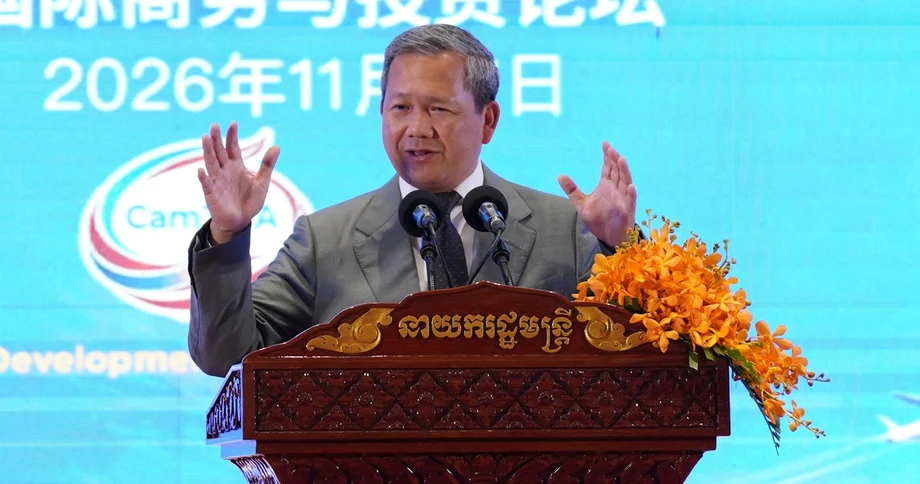
Cambodia has set December 19, 2029, for its exit from the United Nations category of least developed countries, choosing two extra years of preparation instead of a possible graduation in 2027. Prime Minister Samdech Moha Borvor Thipadei Hun Manet announced the decision on Friday at the Cambodia International Business and Investment Forum, held at the Koh Pich Convention and Exhibition Centre in Phnom Penh.
Contents
- Why Cambodia Is Waiting Until 2029
- How Cambodia Passed the Three Tests
- The Dates That Shape the Transition
- What Preferences and Financing Are at Stake
- Why EU Market Access Runs Until 2032
- The Five Pillars of the Transition Strategy
- What Changes for Workers, Farmers and Investors
- Laos and the Shrinking LDC Group
- What to Know
The country first met the graduation requirements in 2021. The government's prime minister's announcement, dated November 27, 2026, said a comprehensive assessment had persuaded the Royal Government to wait, giving businesses and state institutions more time to build national capacity and competitiveness.
Hun Manet told investors that the decision concerned the quality of the transition, not whether Cambodia could pass the UN tests.
Based on the country's performance, Cambodia could proceed with graduation in 2027. However, following a comprehensive assessment, the Royal Government decided to defer the transition until 2029 to ensure a successful and sustainable graduation.
He said Cambodia could not retain its preferences forever and wanted to leave when fully prepared. LDC status is reserved for countries facing low income, weak human assets and severe economic or environmental vulnerability. Cambodia joined the category in 1991. Worldwide, LDCs are home to more than 880 million people, roughly 12 percent of humanity, yet generate less than 2 percent of global GDP and about 1 percent of trade in goods.
Hun Manet said the extra period would be used to strengthen national capacities, improve competitiveness and preserve development gains after graduation. He also argued that graduation could attract more domestic and foreign investment and widen access to international markets.
How Cambodia Passed the Three Tests
The UN Committee for Development Policy assesses countries through reviews held every three years. Graduation normally requires a country to meet at least two of three criteria in two consecutive reviews. Cambodia met the criteria in 2021 and again in 2024, and the government says it satisfied all three tests.
Hun Manet presented the following figures and thresholds for 2026:
- Gross national income per capita reached US$2,750, against a required minimum of US$1,222. The income figure is more than twice the threshold. GNI per capita divides the income of residents, including net income from abroad, by the population, so it is an average rather than a typical worker's wage.
- The Human Assets Index reached 77.50 points, above the required 66. This index measures progress in health and education, giving a broader picture than income alone.
- The Economic and Environmental Vulnerability Index stood at 22.15 points, comfortably below the maximum of 32. This index measures exposure to economic and environmental shocks, and a lower score indicates less vulnerability.
The Ministry of Planning report Cambodia's Readiness for Graduation from the Least Developed Country Category, issued on November 27, separately records the 2024 review. At that review, GNI per capita was US$1,590 against a threshold of US$1,307, the Human Assets Index was 77.8 against 66, and the vulnerability index was 24.1 against the ceiling of 32. The two sets of numbers describe different assessments: the ministry documented the review that confirmed eligibility, while Hun Manet presented the position in 2026.
Passing these tests means Cambodia has moved beyond the statistical conditions associated with the poorest and most vulnerable countries. It does not remove the practical work of preparing exporters, public finances and workers for the loss of special treatment.
The Dates That Shape the Transition
The formal timetable rests on UN General Assembly Resolution A/79/L.49, dated December 19, 2024. According to the Ministry of Planning, the resolution provides a preparatory period of five years and sets Cambodia's graduation for December 19, 2029. Hun Manet's comparison with 2027 concerns when Cambodia could proceed on the strength of its performance; the ministry's timetable identifies the formal date.
- 1991: Cambodia was included in the LDC category.
- 2021: Cambodia met the graduation criteria for the first time.
- 2024: A second consecutive review confirmed that it met the criteria. Resolution A/79/L.49 was dated December 19.
- April 2026: UN Under Secretary General Rabab Fatima told Hun Manet that Cambodia had met the criteria in two assessments and that the UN would establish a task force to support the transition.
- November 2026: The government reaffirmed the 2029 schedule, the Planning Ministry issued its readiness report, and the European Union explained its trade transition.
- December 19, 2029: Cambodia is scheduled to leave the LDC category.
- 2032: The EU transition period ends, with Cambodia expected to move to a less generous tariff arrangement.
Government spokesman Pen Bona said on November 26 that Cambodia had met the criteria to graduate in 2029. He cited Fatima's April meeting with Hun Manet and the promised UN task force. The task force adds international support to the preparations being directed by Cambodia's National Committee for LDC Graduation.
What Preferences and Financing Are at Stake
The Ministry of Planning identifies trade and exports as the largest risks. Cambodia is expected to lose preferential arrangements, including the European Union's Everything But Arms scheme, after 2032. It could then face higher tariffs in some major markets, along with stricter requirements on financing, international regulations and rules of origin. Rules of origin are the requirements used to decide whether a product qualifies as Cambodian for preferential treatment.
Graduation can also affect development assistance and borrowing. Access to loans on concessional terms, which carry cheaper interest than commercial borrowing, has been a central argument for caution among Cambodian leaders.
Senate President and former prime minister Hun Sen defended that caution in a Facebook exchange on November 26. He said he took responsibility for delaying graduation while he was prime minister and summarised his position with a warning about moving too quickly.
Remember, if we can't yet stand firmly, don't try to run or we'll fall.
Hun Sen was responding after Facebook user Hakleng Lim listed benefits of LDC status, including preferential access to markets such as the EU, development assistance and more time to meet certain World Trade Organization obligations. Hun Sen said the list omitted borrowing costs. Cambodia could obtain concessional loans as an LDC, he argued, while commercial rates would have cost the country dearly. Extra time for WTO obligations gives LDCs longer to implement some trade rules that wealthier members must apply sooner.
Why EU Market Access Runs Until 2032
EU Ambassador Igor Driesmans welcomed Cambodia's planned graduation on Friday, calling it evidence of economic success rather than a development setback. He also said Cambodia probably already fulfilled the objective economic criteria used by the UN committee.
It is proof of the success of the economic growth that Cambodia has undergone for so many years.
For Cambodian exporters, the ambassador drew a clear distinction between graduation and the immediate trade consequences. Cambodian goods will retain access to the European market free of duties and quotas for three years after graduation. Nothing in the EU trade regime will change during that period, which runs until 2032.
Cambodia will then automatically move to the EU Generalised Scheme of Preferences. This programme gives developing countries tariff advantages, but its benefits are less generous than the present arrangement for LDCs. The expected end of Everything But Arms after 2032 therefore creates a later trade deadline rather than an immediate loss of European preferences in 2029.
Driesmans said Cambodia should strengthen and diversify its economy regardless of the tariff regime. He acknowledged that graduation could reduce access to some assistance and trade benefits, but said EU development cooperation, funding and partnership programmes would continue. Their delivery would evolve as Cambodia's needs changed, just as it had over the previous 10 and 20 years.
The Five Pillars of the Transition Strategy
The Ministry of Planning, which leads the National Committee for LDC Graduation, is working with the UN Resident Coordinator's Office in Cambodia on the Cambodia Smooth Transition Strategy for Graduation from the LDC Category. The strategy has five pillars:
- Strengthening macroeconomic stability and raising more financial resources within Cambodia.
- Managing trade preferences while improving diversification, competitiveness and value chains.
- Changing the structure of the economy, expanding productive capacity and developing human capital.
- Pursuing sustainable development that can withstand climate shocks.
- Building institutional capacity, governance, cooperation and partnerships.
Raising domestic resources means increasing the revenue available to the state at home, rather than depending as heavily on outside assistance. Value chain work concerns the steps between a raw commodity and a finished product, while structural transformation means shifting workers and businesses toward more productive activities.
Planning minister Bin Trachhey described graduation as national pride and evidence of achievements built on peace, political stability and sustainable economic growth. He called it a strategic step in phase one of the seventh mandate government's Pentagonal Strategy, which aims for Cambodia to become a country with high income by 2050. He also linked preparation directly to employment and household security.
We will use the remaining period to prepare ourselves more thoroughly and safeguard jobs and people's livelihoods, particularly those of workers and vulnerable families.
UN resident coordinator in Cambodia Vladanka Andreeva said the focus must now be on making the transition endure.
Graduation from the Least Developed Country category is an achievement resulting from Cambodia's efforts. The task now is to ensure that this graduation takes place smoothly, sustainably and irreversibly.
Her wording sets the practical test for the five pillars: gains in income, health, education and economic resilience must continue after the special treatment ends.
What Changes for Workers, Farmers and Investors
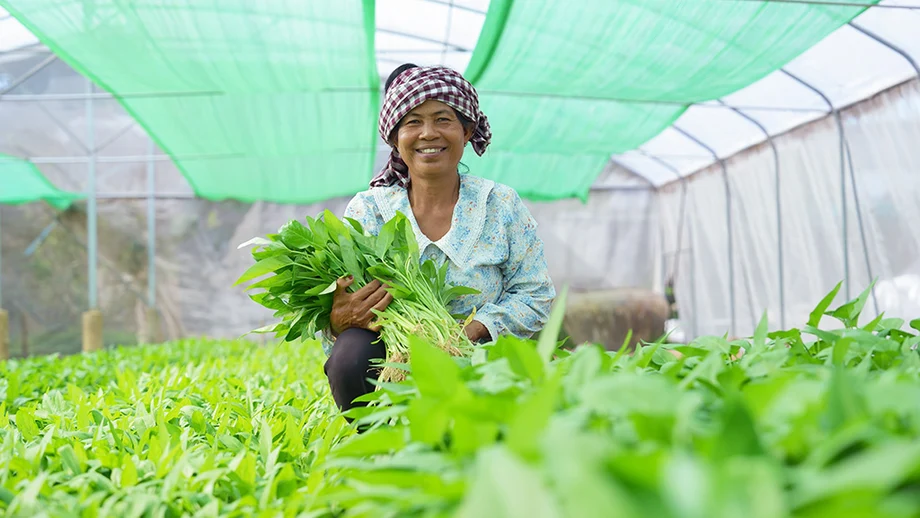
Cambodian farmers could see much of the transition work take place far beyond their fields. Driesmans said many raw agricultural commodities are still processed elsewhere before reaching international markets. The EU is working with government institutions, cooperatives and local partners to expand processing inside Cambodia so products with greater value can be exported directly to European consumers.
Infrastructure and laboratory testing are part of that effort. The EU is supporting Cambodia's ability to meet international sanitary and phytosanitary standards, which are rules protecting food safety and human, animal and plant health. Better testing can determine whether an agricultural shipment is accepted by an overseas market, while processing can create more activity within Cambodia instead of sending that stage of production abroad.
Garment and footwear producers face a different challenge. Driesmans said Cambodia should gradually move beyond a concentration on raw materials, garments and footwear toward more advanced products. For investors, Hun Manet has presented graduation as a chance to improve confidence and reach broader markets. The Planning Ministry also expects it to reduce dependence on preferences and external assistance while deepening regional and global economic integration.
No estimate was given for the number of jobs that could be affected or for tariff costs in each export sector. Preparation now runs on two clocks: national readiness until December 2029 and the change in EU market treatment in 2032.
Laos and the Shrinking LDC Group
Laos became the first Southeast Asian country to graduate from the LDC category in November 2026, after 55 years in the group. Its announcement prompted debate on Cambodian social media about whether leaving or retaining the status offered greater benefits, leading into the exchanges involving Hun Sen and other Cambodian officials.
The Ministry of Planning said 52 countries had been classified as LDCs since the UN created the category in 1971, with 43 remaining. The nine graduates are Botswana in 1994, Cabo Verde in 2007, Maldives in 2011, Samoa in 2014, Equatorial Guinea in 2017, Vanuatu in 2020, Bhutan in 2023, São Tomé and Príncipe in 2024, and Laos in November 2026.
Seven LDCs remain in Asia: Cambodia, Bangladesh, Myanmar, Nepal, Timor-Leste, Afghanistan and Yemen. Bangladesh and Nepal have also requested postponements until 2029. Cambodia's schedule therefore forms part of a wider regional attempt to turn eligibility into a durable economic transition.
The government has tied its own transition to the Pentagonal Strategy and its 2050 income ambition. Export diversification, domestic revenue, worker skills and stronger institutions are the practical measures that will show whether the additional preparation has achieved its purpose.
What to Know
- Cambodia is formally scheduled to leave the LDC category on December 19, 2029, although Hun Manet said its performance could have supported graduation in 2027.
- The timetable follows UN General Assembly Resolution A/79/L.49, dated December 19, 2024, after Cambodia met the criteria in reviews in 2021 and 2024.
- Hun Manet cited GNI per capita of US$2,750, a Human Assets Index score of 77.50 and an Economic and Environmental Vulnerability Index score of 22.15 in 2026.
- A transition strategy built around five pillars covers public finances, trade, productive capacity, human capital, climate resilience and governance.
- EU access free of duties and quotas will continue for three years after graduation. Cambodia is expected to move to the less generous Generalised Scheme of Preferences after 2032.
- Hun Sen defended the delay by pointing to concessional borrowing, while the EU said its funding and partnership programmes would continue after graduation.
- Laos became Southeast Asia's first LDC graduate in November 2026; Cambodia aims to become a country with high income by 2050.