A return to specialization, with a wider map
Indonesia's Ministry of Primary and Secondary Education has proposed restoring specialization in senior high schools in 2027, using four broad study clusters: technology and engineering, science and health, social studies, and humanities. Students would explore subjects during grade 10 before beginning lessons based on their chosen program in the first semester of grade 11.
Contents
- A return to specialization, with a wider map
- The four problems behind the proposal
- What would students study in each cluster?
- How the choice would unfold across three semesters
- Who must prepare schools and guide families
- The existing regulation and planned assessments
- Why Commission X wants consultation and limited trials
- Why assessment results are sharpening the debate
- What is still undecided before 2027
- Key Points
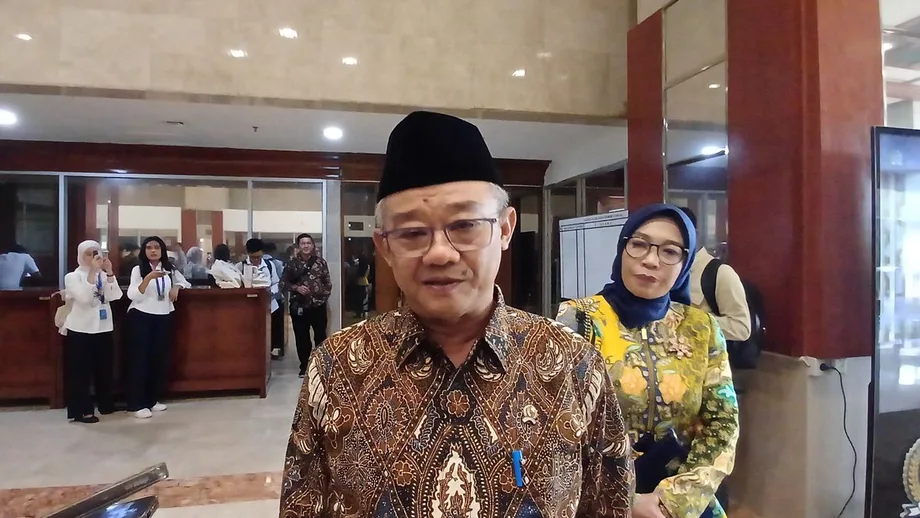
Minister Abdul Mu'ti presented the model to Commission X of the House of Representatives at the Parliamentary Complex in Senayan, Jakarta, on Wednesday, 25 November 2026. The proposal covers senior high schools and equivalent institutions, including Islamic senior high schools. Specialization, known in Indonesia as penjurusan, places students in a broad academic program intended to shape their later subject choices and preparation for university.
Mu'ti said the current freedom to choose subjects had not been matched by adequate student guidance, school management or teacher capacity. His answer is a model called directed study programs, in which each student selects one program with three mandatory subjects from its cluster and one or two additional subjects chosen more freely.
Speaking after the hearing, Mu'ti stressed that the design remained a draft rather than a final national decision.
So, this is still in the drafting stage, and according to the law, it must go through public testing and receive feedback from the community, so this is still an early process that cannot yet be concluded.
Public testing, or uji publik, is a consultation stage in which a draft is opened to scrutiny and community responses before a regulation is completed. The detailed proposal therefore provides an early map of the government's intentions, while its final contents remain open to revision.
The four problems behind the proposal
At the hearing, which was broadcast through parliament's TVR Parlemen YouTube channel, Mu'ti explained why the ministry believes the present subject selection system needs a clearer structure.
Freedom to choose subjects in senior high school, in relation to specialization, has not been fully matched by adequate readiness, guidance and governance. There are four problems.
The ministry's presentation separated those problems into student readiness, university preparation, school capacity and the support available around each student.
- Student readiness and direction: Students do not all have the same maturity when choosing an academic direction. Decisions can be influenced by trends, friends or parental expectations, leaving subject choices misaligned with a student's interests, abilities and plans for further study.
- Academic readiness for university: Universities have found gaps in the basic competencies of students entering some degree programs. Missing preparation in supporting school subjects cannot always be repaired through matriculation, a short course intended to fill knowledge gaps before or around the start of degree study.
- School capacity: Teacher availability and distribution remain uneven, which can produce imbalanced teaching loads. Classrooms, laboratories, timetables and the organization of class groups also restrict the range of subject combinations a school can realistically provide.
- The guidance ecosystem: School counseling services, aptitude and interest assessments, and career information are not yet optimal or evenly available. Information connecting school subjects with university requirements is not fully operational, while coordination among education offices, schools, universities and parents needs strengthening.
For a student, the capacity problem has a direct practical meaning: a preferred combination may be unavailable because the school lacks a teacher, a laboratory or a workable timetable, even before personal preference is considered. The ministry argues that simply offering freedom on paper does not give every student the same usable choice.
Mu'ti also told lawmakers that the proposal forms part of the implementation of directions from President Prabowo Subianto during a limited meeting with the primary and secondary education minister. He presented the four clusters as a way to guide talent rather than restrict students.
What would students study in each cluster?
The familiar Indonesian division of IPA, IPS and Bahasa refers respectively to natural sciences, social sciences and languages. Mu'ti said the proposed model would not simply reproduce those tracks. It would modify specialization to reflect developments in academic fields and the direction of degree programs in higher education.
The ministry presented anchor subjects for each of the four proposed clusters. These lists show the academic territory covered by each group, while individual programs within a cluster would have their own combination of required subjects.
- Technology and engineering: advanced mathematics, physics, chemistry and informatics.
- Science and health: advanced mathematics, biology, chemistry and physics.
- Social studies: sociology, geography, economics, advanced history and anthropology.
- Humanities: advanced Indonesian, advanced English, foreign languages and anthropology.
Each student would choose one specific program. That program would contain three mandatory subjects from its cluster, followed by one or two free subjects. The free subjects could come from the same cluster or another cluster, allowing a student to retain subjects outside the main field.
The lists also contain substantial overlap. Advanced mathematics, physics and chemistry appear in both the technology and science lists, while anthropology appears in both social studies and humanities. The design therefore creates connected groups of subjects rather than four entirely separate curricula.
How the choice would unfold across three semesters
Students would not enter a cluster immediately upon starting senior high school. Grade 10 would remain a period of general learning and exploration, with counseling and school capacity checks taking place before a selection is confirmed.
- Grade 10, first semester: Schools would introduce the available subjects, help identify each student's interests, talents and abilities, and provide an introduction to further study.
- Grade 10, second semester: Students would undergo assessment and mapping of their potential, consult school counselors and parents, and have their choices verified against school capacity before the selection is finalized.
- Grade 11, first semester: Teaching in the selected subjects would begin, accompanied by deeper study of the chosen field, continuing guidance and an early evaluation.
The verification stage would require schools to compare student preferences with teacher availability, rooms, quotas, facilities and schedules. The design also allows time for adaptation and for students to connect their subject choices with the degree programs they may eventually want to enter.
Mu'ti said this preparation period was intended to help students understand themselves before committing to a program, with school guidance and counseling teachers, known as guru BK, working alongside parents.
Students will be given time to recognize their potential, guided by academic advisors and their parents.
The result is a full grade 10 year devoted to exploration and confirmation, followed by evaluation after cluster lessons begin. Counseling is therefore built into both sides of the decision rather than being left until a student encounters difficulty.
Who must prepare schools and guide families
The Ministry of Primary and Secondary Education would write the regulations, technical guidance and references used by schools. Its remit would include subject selection, the identification of interests and talents, and the guidance provided to students during the process.
The Ministry of Higher Education, Science, and Technology, together with universities, would supply the connection to degree study. That includes information about the characteristics of degree programs, admission requirements and the school subjects relevant to each program. Universities would also be encouraged to introduce higher education to senior high school students before choices are fixed.
Local education offices would map the readiness of teachers and school facilities. Guidance counselors, homeroom teachers and parents would then help individual students consider their options, while schools assess whether their staff, rooms and timetables can support the requested programs.
This division of labor makes university admissions part of the design from the beginning. It also gives local offices a central role because a national list of attractive subjects would have little practical value where schools cannot staff or schedule them.
The existing regulation and planned assessments
Toni Toharudin, head of the ministry's Agency for Primary and Secondary Education Policy, said specialization still has a legal basis under Government Regulation No. 17 of 2010 on the Management and Implementation of Education. He said that regulation has not been revoked, even as the ministry evaluates how specialization operates and prepares guidance for the proposed model.
The ministry is also preparing routine aptitude and interest assessments, known as Asesmen Bakat Minat (ABM), before students choose their programs. Toni said the assessment work would be conducted by the ministry's Pusmendik team to help identify where each student's talents and interests lie.
Teachers and guidance counselors would monitor students as well, including before a decision to change specialization. Toni described flexibility as one of the considerations in drafting the policy so that academic choices can respond to developing interests. Detailed national procedures for transferring between programs have not yet been published.
Why Commission X wants consultation and limited trials
Lalu Hadrian Irfani, deputy chairman of Commission X, responded on 26 November by calling for a comprehensive study. He said the policy should develop students rather than merely replace the names IPA and IPS with four new labels.
We view the ministry's proposal to develop four study clusters in senior high school as needing comprehensive study. In principle, this policy must be genuinely oriented toward developing students' interests, talents and potential, not simply changing the nomenclature of specialization from IPA and IPS into four new clusters.
Lalu set out three practical tests for the proposal.
- Choices should rest on interest and aptitude assessments, supported by guidance from teachers and parents, so students receive help before selecting a direction.
- School readiness must be considered so that implementation does not widen the gap between urban schools and schools in 3T areas, meaning disadvantaged, frontier and outermost regions.
- The clusters must align with university admissions so that a school choice does not unnecessarily close off access to a wide range of degree programs.
He urged the ministry to conduct an academic study, public testing and limited trials involving education stakeholders before national implementation. Such trials would test the model in a restricted group of schools. Lalu warned that a policy intended to improve learning should not create new barriers or constrain students' futures.
Why assessment results are sharpening the debate
During the same hearing, Mu'ti raised a separate concern about students being perceived as automatically advancing to the next grade. He said school reports do not always reflect students' actual competencies or the learning support and interventions already provided.
He connected that concern with results from the 2025 Programme for International Student Assessment (PISA). The figures he cited show that about 17% of Indonesian students reached at least Level 2 in mathematics, compared with 27% in reading and 37% in science. PISA uses Level 2 as its baseline proficiency threshold.
The science figure was 20 percentage points above the mathematics figure. Even in science, however, the cited result means that 63% of students remained below the baseline, while the corresponding figure for mathematics was 83%.
Mu'ti used those findings to argue for a stronger connection between classroom teaching, assessment and decisions about grade promotion. For the proposed clusters, assessment would have two immediate tasks: helping students make informed choices and checking whether subsequent lessons address their learning needs.
What is still undecided before 2027
The ministry has presented 2027 as the year for bringing specialization back, but it has not announced dates for public consultation, limited trials or a final regulation. Mu'ti's description of an early drafting process leaves room for the cluster structure and its supporting rules to change.
The proposal presented at the hearing did not identify the first participating cohort by its year of entry into senior high school. It also did not say whether every school would be expected to offer all four clusters, how places would be allocated when demand exceeds capacity, or what specific programs would sit beneath each cluster.
The next visible work will include readiness mapping by education offices, preparation of technical rules and clearer university admission information. Lawmakers want academic review, public testing and limited trials to accompany that work, with particular attention to schools that have fewer teachers and facilities.
Mu'ti has sought to reassure students and parents that the purpose is guidance rather than rigid classification.
Specialization is not about putting students into boxes, but guiding their talents so they do not take the wrong path.
For schools, turning that aim into practice begins with teachers, laboratories, rooms and timetables. For families, the decisive documents will be the final regulation, the specific subject requirements for each program and the university admission information intended to accompany them.
Key Points
- Indonesia's primary and secondary education ministry has proposed restoring senior high school specialization in 2027.
- The four proposed clusters are technology and engineering, science and health, social studies, and humanities.
- Each student would choose one program with three mandatory cluster subjects and one or two free subjects, which may come from another cluster.
- Exploration would occur in the first semester of grade 10, selection would be confirmed in the second semester, and cluster lessons would begin in grade 11.
- The ministry cites uneven student readiness, gaps in university preparation, limited school capacity and uneven counseling as the four reasons for change.
- Government Regulation No. 17 of 2010 remains in force, and routine aptitude and interest assessments are planned before students choose.
- The proposal is still being drafted and requires public consultation, while Commission X has requested academic study and limited trials.
- Mu'ti also cited PISA 2025 results showing 17% reaching at least Level 2 in mathematics, 27% in reading and 37% in science.