A 2027 Start Date With the Scheme Still Open
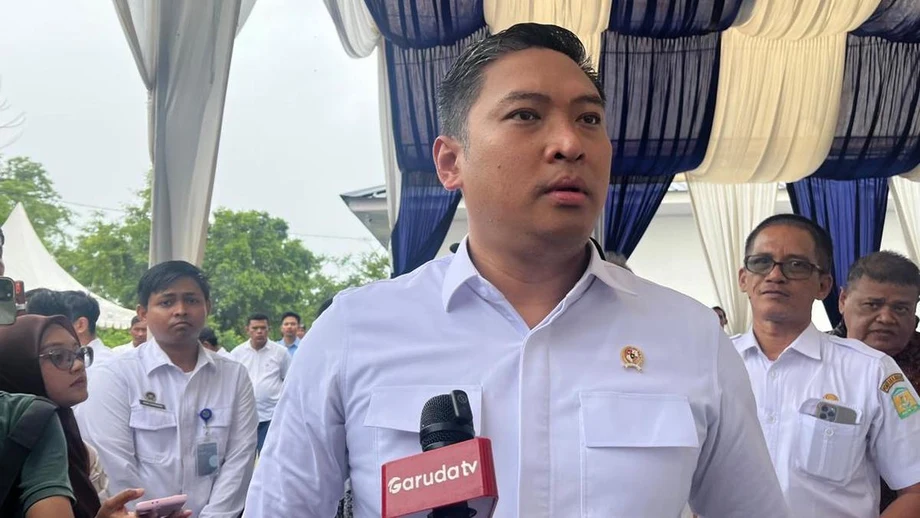
Higher Education, Science and Technology Minister Brian Yuliarto told reporters in Jakarta on Thursday, 26 November 2026 that free tuition at state universities, known in Indonesia as PTN, is still being studied, with the government aiming to have it ready for the 2027 intake of new students. The technical work is running with the National Development Planning Agency (Bappenas) and the Finance Ministry, under the Coordinating Ministry for Human Development and Culture. Brian spoke after a national gathering of students holding the KIP Kuliah scholarship and the ADik affirmative scholarship for the 2026 cohort, at Building D of his ministry in Central Jakarta.
Contents
- A 2027 Start Date With the Scheme Still Open
- The Three Scenarios, and a Gap of Almost Rp60 Trillion
- What Free Actually Means in a Family Budget
- The Scholarship That Would Not Change
- Four Tests Stella Christie Set for the Policy
- Private Campuses Ask Where They Fit
- The Numbers Behind the Promise
- Timeline From the Palace Order to the 2027 Intake
- Key Points
He described the plan as far wider than the scholarship that exists today. KIP Kuliah is a grant that pays tuition and part of living costs for students from poor households. Free state university would reach families above that line. Brian said the ministry would keep the value of the existing scholarship in view.
We are still studying this free higher education further. Of course we will also take into account the value of the KIP-K that has already been given. Why? Because in the end the wish of the President is to make state universities free, as we all know.
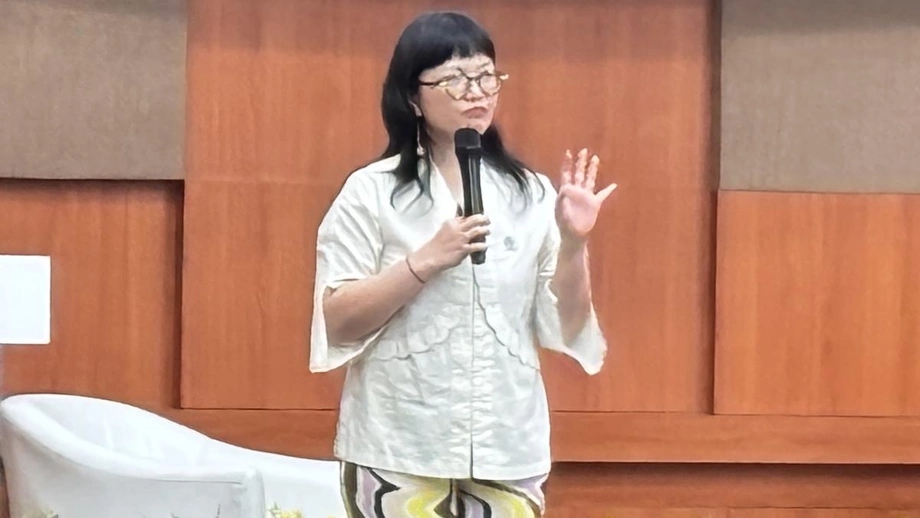
President Prabowo Subianto set that direction at a limited cabinet meeting at Merdeka Palace on 23 September 2026, ordering ministers to prepare free education at state universities as fast as possible while weighing how it would be staged and what the budget could carry. The same meeting ordered a special team led by the coordinating ministry to finish the study. Deputy Minister Stella Christie told the House education commission, Commission X, on Wednesday, 25 November 2026 that the plan is timed for the opening of the academic year.
We plan that it will start for the new academic year 2027 semester. So, July to August 2027. We plan it and we will optimize it as well as we can to start.
Brian said the room to maneuver is still wide. "So there is still plenty of time for us to do the calculations and build the simulations," he said, adding that no component of tuition has yet been named for waiving. "Soon we will announce which components of education costs will start to be waived for students. Of course we will consider our fiscal strength. We will do it in stages until, as the President said, higher education at state universities is free."
The Three Scenarios, and a Gap of Almost Rp60 Trillion
Stella brought three finished designs to the 25 November meeting, and all three remain on the table. Each defines free education differently and each carries its own annual bill, calculated by a task force that also involves the basic education ministry, the religious affairs ministry, Bappenas and the Finance Ministry.
- The ideal scheme covers 2,833,169 students at Rp86.88 trillion (about US$4.7 billion) a year. Every student is exempt from the single tuition fee, known as UKT, and from the institutional development fee, known as IPI, while students from deciles 1 to 4 also receive money for living costs.
- The moderate scheme covers the same 2,833,169 students at Rp45.55 trillion. Students pay nothing in UKT or IPI and deciles 1 to 4 again receive a living allowance.
- The essential scheme covers 1,530,225 students at Rp27.86 trillion (about US$1.5 billion), a sum the ministry put at Rp27.68 trillion in its presentation to Commission X. Deciles 1 to 4 get full tuition coverage and a living allowance, decile 5 gets free tuition only, and deciles 6 to 10 pay normal tuition but escape the IPI.
The choice is not only about money, because the three designs also differ in what the state hands to the universities themselves. In the ideal scheme the government pays 100 percent of the base tuition cost, or BKT, that a campus needs to run a course. The moderate scheme pays 50 percent, leaving the rest to be found elsewhere. Stella put the difference plainly to lawmakers.
The difference lies in the university. In the moderate scenario, the single tuition cost paid is 50 percent. In the ideal scenario, the single tuition cost paid is 100 percent.
The scale of the gap is easy to see. The ideal scheme costs 3.1 times the essential one, and the two cheaper designs still require changes to the 2024 regulation of the education minister. The ideal scheme needs something larger: a new presidential regulation on top of that revision. Stella told the commission that the final call is not hers to make. "Of course the decision on which scenario cannot be taken independently because it is closely tied to the approval of the Finance Ministry, the availability of our funds and so on," she said.
What Free Actually Means in a Family Budget
Three separate charges sit behind the word free, and understanding them explains why the letters UKT, IPI and BKT keep appearing in the debate. UKT, the single tuition fee, is the amount a state university charges each student for a semester, set according to the family's income group rather than a flat national rate. IPI, the institutional development fee, is a one-time payment that universities levy mainly on students admitted through independent selection routes. Stella said that charge has been a common complaint because families treat it as an extra burden on top of tuition.
BKT is the cost side of the ledger. It is the calculated base cost of teaching a student in a given program, and it is the figure the government would reimburse to campuses under the ideal and moderate designs. The distinction matters because free tuition for a student and full funding for a university are two different promises, and the moderate scheme keeps the student fully exempt while paying the campus only half of BKT.
Eligibility would be decided by a dataset rather than by campus paperwork. DTSEN, the National Social and Economic Single Data, ranks Indonesian households into ten groups called deciles, from decile 1, the poorest, to decile 10, the most comfortable. Social programs across the government already use the same ranking. In the free university plan, the decile number decides who pays nothing, who also receives living costs, and who continues to pay tuition.
The Scholarship That Would Not Change
Whatever the government picks, one budget line is being ring-fenced. KIP Kuliah, the existing card that funds poor students, stays at Rp16.67 trillion (about US$909 million) for a target of 1,097,243 students, split 44.94 percent for state universities and 54.93 percent for private universities. Stella told lawmakers that the figure would not move, and she used a blunt phrase that drew attention in the room.
The KIPK budget remains Rp16.67 trillion for a target of 1,097,243 students, of which 44.94 percent is for state universities and 54.93 percent for private universities. Any scenario that might be chosen will not affect the KIPK budget by a single rupiah.
The current year shows how heavily the scholarship is already used. The government allocated Rp15.638 trillion in 2026 for 1,072,240 students, a group that includes about 210,000 new entrants and an automatic guarantee for every state university student from deciles 1 to 4. That automatic guarantee is the piece of today's system that the free tuition plan would build on and then widen, which is why Brian said the existing scholarship's value has to be weighed inside any new design.
Four Tests Stella Christie Set for the Policy
Stella listed four conditions that the plan has to meet if it is to survive more than one budget cycle: sustainable funding, accurate targeting, flexibility for regions, and accountable governance. She tied the whole effort to the 1945 Constitution, citing Article 28C on the right to education and self-development, and Article 31, whose fourth paragraph requires the state to prioritize education in the budget.
Article 31 also guarantees the right to education, and paragraph 4 prioritizes the education budget. Then, in September 2026, as we know, the president directed that state education be free through university level.
On targeting, Stella rejected the idea that free is simply free. "What is certain is not to make it free for the sake of being free, but to give opportunities for those who cannot afford it to get a quality higher education," she said. The regional test is more open. Some provinces have thin networks of state campuses, and the task force is weighing whether the money should follow students into private institutions in those places. "In certain regions, therefore, we may need to consider whether free university education should remain limited to state universities or be expanded," she said. She later added that campuses in the 3T regions, the country's least developed, frontier and outermost areas, would be allowed to join the program.
Governance is the fourth test, given the size of the sums involved and the number of ministries with a hand in the scheme. The task force's membership, spanning basic education, religious affairs, planning and finance, reflects how much of the state budget the plan touches.
Private Campuses Ask Where They Fit
The loudest caution has come from the House committee that will oversee the rollout. Commission X chair Agung Widyantoro raised it during a Commission X work visit to the higher education service agency for Region VI in Semarang, Central Java, on 20 November 2026, a session that brought together leaders of state and private universities with the directorate general for higher education. Region VI alone supervises 210 private institutions running 1,890 study programs; 17 of them are rated excellent, 51 very good and 97 good.
Agung argued that pulling students toward state campuses through a bigger state-funded quota could drain the tuition income that small private colleges depend on, and he pointed to accreditation costs borne by self-financing accreditation bodies as a parallel burden on mid-sized campuses. He wants the whole question folded into the deliberation of the draft national education system bill, known as RUU Sisdiknas.
Do not let the government's good intention to provide free higher education end up harming the managers of private universities. This policy must still guarantee the quality of education and the sustainability of higher education.
The fiscal frame around that argument is tight. The 2027 state budget is estimated at more than Rp4,000 trillion, with education spending above Rp800 trillion, the minimum 20 percent share the law demands. The ideal scenario alone, at Rp86.88 trillion a year, would consume roughly 11 percent of that education allocation. Stella framed the ambition in broader terms than ownership of the campus.
We are not even talking about state or private universities. We are talking about the opportunity for every individual in Indonesia who wants to get the best higher education.
The Numbers Behind the Promise
The target is one slice of a very large system. Ministry statistics for 2025 count 4,303 higher education institutions, 34,711 study programs, 328,241 lecturers and 10,754,154 students. The 2025 intake alone was 2,158,826 new students, of whom 816,350, or 37.8 percent, chose science, technology, engineering or mathematics.
Against that base, the ideal and moderate schemes would cover about 26 percent of all students, and the essential scheme about 14 percent. KIP Kuliah's 1,097,243 places amount to roughly one student in ten. Each new figure therefore buys a different shape of promise: universal coverage inside state universities, or a narrower guarantee aimed at the poorest households plus the abolition of the one-off development fee for everyone else.
What remains undecided is the order of events. No date has been set for the announcement of which cost components are freed first, and no scenario has been chosen. The task force is still simulating, the Finance Ministry has not signed off, and Parliament's education committee has asked for its own say before the program reaches the July 2027 intake.
Timeline From the Palace Order to the 2027 Intake
- 23 September 2026: President Prabowo Subianto directs his cabinet, at a limited meeting at Merdeka Palace, to prepare free education through university level and sets up a team under the coordinating ministry for human development.
- 20 November 2026: Commission X visits the Region VI higher education service agency in Semarang, where private college leaders warn about the effect on their finances.
- 25 November 2026: Stella Christie presents the ideal, moderate and essential schemes to Commission X, with annual costs of Rp86.88 trillion, Rp45.55 trillion and Rp27.86 trillion.
- 26 November 2026: Brian Yuliarto confirms the study is ongoing with Bappenas and the Finance Ministry and that implementation will be gradual.
- July to August 2027: Target start of the program for the 2027/2028 academic year.
Key Points
- Free tuition at state universities is planned for the 2027 intake, with a start targeted for July or August 2027.
- Three designs are on the table: an ideal scheme costing Rp86.88 trillion a year for 2,833,169 students, a moderate one at Rp45.55 trillion for the same group, and an essential one at Rp27.86 trillion for 1,530,225 students.
- All three remove the single tuition fee and the institutional development fee, but the ideal scheme pays universities 100 percent of base teaching costs while the moderate scheme pays 50 percent.
- Students from deciles 1 to 4 of the DTSEN household ranking would also receive living cost support in every scenario.
- The KIP Kuliah budget stays at Rp16.67 trillion for 1,097,243 students and is unaffected by the choice of scheme.
- No scheme has been chosen, the Finance Ministry has not approved the funding, and the announcement of which fees are waived first has no date.
- Commission X chair Agung Widyantoro has asked for safeguards for private universities, warning that free state places could hurt campuses that rely on tuition income.