An 8-0 victory that still hinged on one miss
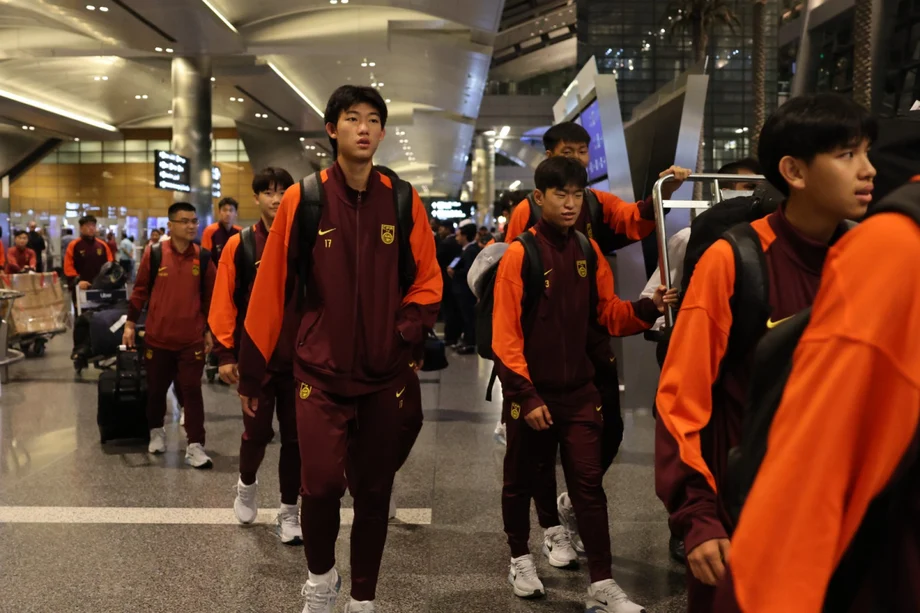
China defeated Fiji 8-0 on 26 November 2026 at Aspire Zone Pitch 3 in Al Rayyan, Qatar, securing a place in the FIFA U17 World Cup round of 32. The young Chinese side advanced as one of the eight best teams finishing third in their groups. It was China's first appearance in the tournament's knockout rounds since 2005 and only its third, following 1985 and 2005.
Contents
- An 8-0 victory that still hinged on one miss
- How China recovered from conceding five to Spain
- The goals that finally arrived against Fiji
- Why four points were enough in a 48-team tournament
- Two forwards and a squad drawn from different routes
- The problems that remain after a record victory
- The resilience was visible before Qatar
- A youth development plan meets a visible example
- What awaits in the round of 32
- China's route to the knockout stage
- Key Points
The celebration came with an unusually precise regret. Spain beat Morocco 2-0 in the other Group H match, finishing first with nine points. Morocco and China both collected four points, but Morocco took second place with a goal difference of plus four, compared with China's plus three. Goal difference is simply goals scored minus goals conceded.
A 9-0 victory would have given China the same goal difference as Morocco. China would then have moved above its rival on goals scored, by 11 to eight. The players therefore kept attacking after scoring their eighth, while a late appeal for another penalty was rejected following a video review.
Wan Xiang was central to both sides of the story. His penalty was saved in the 17th minute with China leading 1-0, but he recovered to score twice, force an own goal and provide the pass for the final goal. He was named player of the match, yet apologised afterwards to the people beside him.
I am disappointed that I missed the penalty kick. In the end, we finished third in the group by a one-goal difference in goal differential. I want to say sorry to each and every one of my teammates.
Wan's disappointment was understandable, although his four goal contributions formed half of China's total against Fiji. His missed penalty became decisive only because the group was settled by the narrowest possible margin.
How China recovered from conceding five to Spain
China's campaign began on 20 November with a 5-0 defeat by Spain at Aspire Zone Pitch 5. Coach Toshimi Ukishima's players initially defended deep and tried to leave little room between their defenders. Pesquer broke through with a penalty in the 40th minute, Tunkara added another goal in first half stoppage time, Emeka scored twice after the interval and Trujillano completed the scoring in the 85th minute.
The score exposed the speed at which an elite youth team can turn pressure into goals. China struggled to maintain its technique when pressed, to match the pace of Spain's attacks and to sustain concentration through the closing stages. Ukishima responded by asking his players to reset emotionally and treat the remaining two matches as finals for qualification.
Morocco presented a very different examination on 23 November. China pressed aggressively from the opening whistle rather than waiting near its own penalty area. Zhao Songyuan intercepted the ball in the attacking half after two minutes, drove into the box and finished calmly with his left foot. It was China's first goal of the tournament.
Zhao struck again in the 57th minute, finishing He Sifan's low cross from close range after a flowing passing move. Morocco reduced the deficit through Ziyad Baha's penalty in the 64th minute, awarded after Nan Zixun held an opponent inside the area. Rami Lougmani then equalised in the ninth minute of stoppage time as China's tired players retreated under growing pressure.
Morocco finished with 69 percent of possession and led the shot count 21-14, including 9-5 in efforts on target. Some Chinese players were also distracted by an unofficial whistle during the match. The draw nevertheless demonstrated that China could disturb a strong opponent with organised pressure, quick counterattacks and brave movement around the penalty area. Zhao received the player of the match award.
The goals that finally arrived against Fiji
China entered its final group match knowing that victory was essential and that every additional goal could improve its position. Zhao supplied the ideal start after three minutes, tapping into an empty net. Kuang Zhaolei doubled the lead in the 22nd minute with a low finish from Zhang Xuyao's cross.
Wan, having missed from the penalty spot five minutes earlier, scored from a tight angle in the 28th minute. His low cross then forced Vatanitawake into an own goal four minutes later. China's 4-0 advantage at half time set a national record for goals scored in the first half of a match at a U17 World Cup final tournament.
The pressure continued after the break. Kuang scored his second in the 58th minute following Zhao's pass, then crossed for Zhang Junhao to head home in the 65th. Wan converted Pan Chaowei's cross in the 72nd minute before playing Liang Shiyu through to complete the scoring in the 85th.
Fiji had already lost 6-0 to Morocco and 15-0 to Spain. It finished without a point or a goal, conceding 29 times across three matches. China's attacking variety was still impressive: five players scored, Kuang and Wan each found the net twice, and the goals came through crosses, headers, passes behind the defence and finishes from difficult angles.
The eight goals also lifted China's total for the tournament to 10, a national record for one edition of the U17 World Cup. The victory was the country's largest at this level and supplied its first win at a finals tournament since its previous appearance in 2005.
Why four points were enough in a 48-team tournament
The expanded competition divided 48 teams into 12 groups of four. The winners and runners-up supplied 24 places in the round of 32. The remaining eight places went to the strongest teams finishing third, allowing China to recover from its opening defeat.
Teams in third place were compared first by points, then goal difference, goals scored and fair play points, with a draw used if every measure remained level. China began the Fiji match with a goal difference of minus five. The 8-0 win transformed that figure into plus three and moved the team securely into qualifying territory.
The same arithmetic explained why China continued searching for a ninth goal. Its position in the ranking across all groups would influence the knockout draw, quite apart from the contest with Morocco for second place in Group H. China stood second among the teams in third place when its match ended, but unfinished fixtures elsewhere meant that its final position was not yet settled.
Group winners, runners-up and advancing teams in third place are placed into a seeding order for the knockout pairings. The strongest qualifiers face the lowest ranked qualifiers in principle, while teams from the same original group cannot meet in the first knockout round. China was assured of facing a group winner, making the final ranking important to the difficulty of its next assignment.
Two forwards and a squad drawn from different routes
Zhao finished the group stage with three goals and also created Kuang's second against Fiji. His two goals against Morocco showcased different qualities: anticipation and pressure for the first, then movement and a composed finish for the second. FIFA's website devoted an article to his development, describing it as an amazing story, while another assessment portrayed him as the kind of player leading clubs would covet.
Wan's tournament was less tidy but equally revealing. He missed a penalty, apologised publicly and still produced one of his team's most productive performances. That mixture of technical ability, visible disappointment and immediate recovery offered a more useful picture of a young footballer than the score alone.
The 25-player squad announced on 28 October brought together several development routes. Zhao, Zhou Yunuo and Nan Zixun came through Tsinghua University High School. Kuang and Shuai Weihao had already appeared in the Chinese Super League. Four players were based overseas, including Wan at Red Star Belgrade and Jin Yucheng at Lokomotiva Zagreb. Zhang Bolin, who scored an important goal during the Asian Cup, missed the tournament through injury.
Preparation extended beyond domestic training. Between the continental tournament and the World Cup, China arranged matches against youth teams associated with Arsenal, Athletic Club and River Plate, as well as national opposition including Mexico, Argentina, Nigeria and Tanzania. Those fixtures gave players experience of contrasting speeds, physical demands and tactical approaches.
The problems that remain after a record victory
Spain and Morocco supplied sterner tests than Fiji, and their matches identified the areas most likely to matter next. Against Spain, China's passing and movement deteriorated under pressure, while three late goals turned a difficult evening into a heavy defeat. Against Morocco, a 2-0 lead disappeared as possession was lost, energy dropped and defending became less controlled.
The coaching staff also saw room for improvement in matches China dominated. Ukishima said his players created numerous opportunities from corners and free kicks against Fiji without using them efficiently. He pointed to shortcomings in the details rather than allowing the score to close the discussion.
Other weaknesses were visible in the combinations between players stationed centrally and those near the touchlines, the selection of passing targets and the handling of set pieces at both ends. These are small moments individually, but a single one can decide a knockout match.
The next round will demand careful use of energy as well as technical consistency. Players must decide when to press, when to conserve strength and how to reorganise immediately after losing possession. Maintaining composure after a disputed decision or an unexpected whistle belongs to the same education.
The resilience was visible before Qatar
China's recovery in Qatar echoed its route through the 2026 AFC U17 Asian Cup in Saudi Arabia. The team opened that tournament with a 1-0 defeat by Indonesia and a 2-1 loss to Japan. On 13 May, a 2-0 victory over Qatar secured second place in the group through the applicable results between the tied teams and goal difference, while also confirming China's first U17 World Cup qualification in 21 years.
The knockout rounds brought stronger performances. China recovered from conceding first to beat host Saudi Arabia 3-1 in the quarterfinals, with Wan equalising six minutes after the opening goal, Zhao putting China ahead and He Sifan contributing a goal and an assist. A 2-0 semifinal victory over Australia followed.
Japan won the final 3-2, but China again responded after falling three goals behind. Three substitutions and renewed pressure helped Wan score less than three minutes after half time, and the team continued chasing the match until the end. Finishing second gave this group experience of recovery long before it faced Spain.
Australia also offers a useful comparison with another Asian programme. Australia beat India 4-0 at the continental tournament before China defeated Australia 2-0. India additionally lost 3-0 to Uzbekistan and left without scoring. Those results place China's progress in context while retaining Spain and Morocco as the clearest measures of the standard still ahead.
A youth development plan meets a visible example
The Chinese Football Association released its Red Blueprint Plan on the same day that China drew with Morocco. The document, running to more than 200 pages, attempts to connect a child's introduction to football with coaching, competitions, talent identification, sports science and the national teams.
Its central playing principle is technique first, with technical skill and physical contest developed together. Five areas shape that education: technical, tactical, physical, psychological and social development. Its priorities include placing development before results, learning before victory and potential before selection based on how mature a child appears at an early age.
Zhao's second goal against Morocco provided a timely illustration. The move contained 16 passes before he finished, while his opening goal began with determined pressure to recover the ball. Possession and pressing were not separate slogans; they produced two tangible scoring opportunities.
For this squad, the immediate benefit is experience against opponents who punish slow decisions. For the wider programme, the challenge is to give later age groups similarly consistent teaching and regular matches against strong opposition. The expanded World Cup and its annual cycle make that continuity more valuable, with eight Asian qualification places now available through the continental tournament.
What awaits in the round of 32
China's opponent was due to emerge after the remaining group matches concluded on 28 November. France appeared in one projection as the likely opponent, but no pairing had been confirmed. China's exact match date, venue and kickoff time also remained to be announced.
The round of 32 was scheduled for 30 November and 1 December, with the opening match listed for 20:30 Beijing time on 30 November. The final was set for midnight Beijing time on 14 December. China's players were expected to have three days between their last group match and the start of the knockout programme.
Article 14.1 of the tournament regulations removes extra time from every knockout match, including the final. A draw after 90 minutes leads directly to a penalty shootout. That rule increases the importance of concentration late in the match and leaves little opportunity to recover from a careless passage.
Wan chose to focus on the shared task rather than the unresolved draw.
No matter who our next opponent is, we will all do our best.
Ukishima struck a similarly measured note after qualification, saying that his team would prepare thoroughly and approach its opponents one match at a time. China's earlier knockout appearances in 1985 and 2005 both ended in the quarterfinals, giving this generation a clear historical marker without requiring it to look beyond the next opponent.
China's route to the knockout stage
Six dates explain how an uncertain qualification campaign became a place among the final 32 teams in Qatar.
- 13 May 2026: China beat Qatar 2-0 at the Asian Cup and secured its first U17 World Cup berth in 21 years.
- 20 November: Spain defeated China 5-0 in the Group H opener at Aspire Zone Pitch 5.
- 23 November: Zhao scored twice against Morocco, but a goal in the ninth minute of stoppage time left the match at 2-2.
- 26 November: China beat Fiji 8-0, while Spain's 2-0 victory over Morocco left Morocco second and China third, separated by one goal in goal difference.
- 28 November: The remaining group fixtures were due to complete the ranking and determine China's opponent.
- 30 November and 1 December: The round of 32 was scheduled, with drawn matches proceeding directly to penalties.
Key Points
- China reached the U17 World Cup knockout rounds for the first time since 2005 and the third time in its history.
- The decisive result was an 8-0 victory over Fiji on 26 November in Al Rayyan.
- China and Morocco both earned four points, but Morocco finished second with a goal difference of plus four against China's plus three.
- Wan Xiang missed a penalty, then scored twice, forced an own goal and assisted the eighth goal against Fiji.
- Zhao Songyuan scored three times during the group stage, including both Chinese goals in the 2-2 draw with Morocco.
- China's results were a 5-0 defeat by Spain, a 2-2 draw with Morocco and an 8-0 win over Fiji.
- The team qualified for the World Cup by finishing runner-up at the 2026 Asian Cup, where it recovered from two opening defeats.
- China's next opponent remained undecided after its final group match, and knockout fixtures will go straight to penalties if level after 90 minutes.