How a Small Horse Changed History
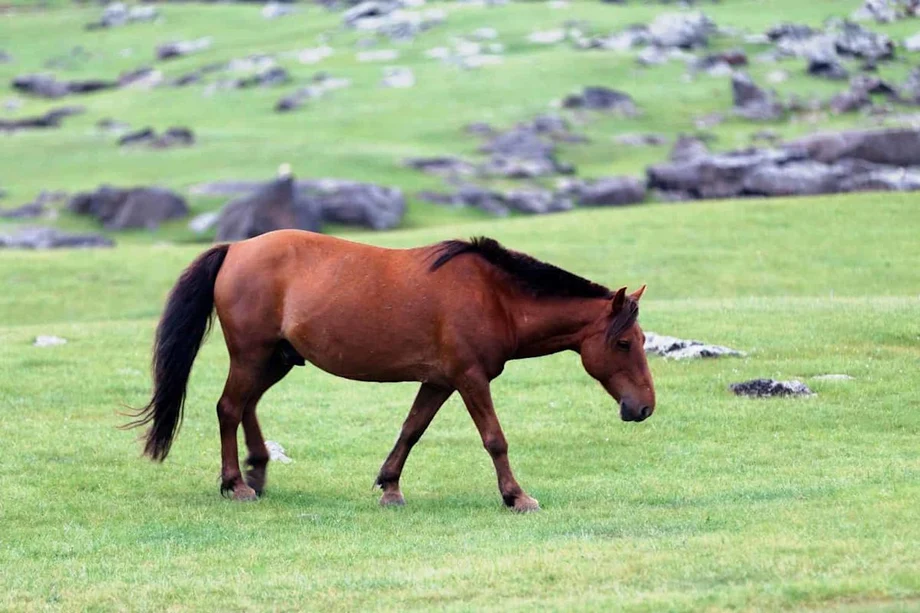
The Mongol Empire stretched across about 9 million square miles at its peak, a connected land empire reaching from East Asia into parts of Europe. Such a size is hard to hold together even with modern roads, radios and computers. In the 1200s, rulers depended on animals, riders and written orders. The animal at the center of that system was the Mongolian horse, a small breed standing about 12 to 14 hands at the withers, the highest point of a horse's shoulders. A hand is a traditional measure equal to four inches, so the breed stood roughly 48 to 56 inches tall.
Contents
- How a Small Horse Changed History
- What Made the Mongolian Horse So Tough
- From Tribes to an Empire in Motion
- Why Warriors Carried Four to Six Horses
- The Yam: A Postal System Built on Fresh Horses
- A Short Timeline of Conquest and Relay
- Who Saw the Yam and Why It Mattered
- Russia and the Long Afterlife of the Relay
- What the Relay Changed for Rulers and Towns
- Horses Still at the Center of Mongolian Life
- From the Yam to the Mongol Derby
- Key Points
That size hid unusual strength. Mongolian horses developed on the Eastern Steppe over thousands of years. A steppe is a broad, dry grassland, and life there rewards animals that can roam far, find food in thin pasture and survive sharp changes in weather. These horses could endure hot, dry summers and winters as cold as minus 40 degrees Fahrenheit. Their coats had two layers, and they used their hooves to scrape snow and ice away from vegetation. They also put on fat in summer, which helped them get through winter.
Those traits mattered far beyond the pasture. Horses gave Mongol warriors movement, food, milk and a way to keep contact across distances that would have slowed armies on foot. The yam relay system turned that animal power into a communication network. Messages could move 120 to 190 miles a day by changing horses and messengers at stations set roughly 20 to 40 miles apart. In simple terms, the horse became both the engine of conquest and the wiring of government.
What Made the Mongolian Horse So Tough
Mongolian horses live in herds that are partly wild, and only the fittest survive. That kind of life leaves little room for weak animals. Over many generations, the breed developed stamina, a stocky body, short legs, a short neck and a large head. None of those features looks grand beside a larger warhorse, but they helped Mongolian horses keep moving over rough ground with little feed.
The winter test was especially severe. Snow can cover the steppe for long periods. A horse that can paw through snow and ice reaches plants that other animals may miss. The ability to live on sparse vegetation meant a rider did not need to carry all feed for a long journey. A warrior could rely on the land and on the horse's capacity to store body fat in warmer months.
That survival skill helps explain why the breed suited the Mongol Empire. Armies moving into northern China, Central Asia and beyond faced different climates and kinds of ground. A horse that could handle the steppe and keep going on poor grazing gave commanders more freedom. The animal was not just transport. Mares could be milked, and the milk was sometimes fermented into airag, a drink made from mare's milk. Horses that died or were killed in battle were used as food.
From Tribes to an Empire in Motion
The Mongol Empire began in 1206, when Genghis Khan united several nomadic tribes. He then expanded his territory through military advances, conquering much of northern China and Central Asia. His successors kept pushing outward until the empire reached about 9 million square miles. Contiguous means the territory was connected as one continuous block, not a scattered set of colonies.
Horses were already central to Mongol life before the empire. People used them for travel, supply transport and herding. Genghis Khan's army turned that daily reliance into military reach. Warriors on horseback could cover far more ground than armies moving on foot, and their animals could live off the sparse grazing of the steppe.
In practical terms, this meant campaigns could move faster and range farther. A mounted force did not have to stop as often for fodder that had to be carried. The same animals could carry riders, transport supplies, provide milk and serve as food when an animal died. For communities living by herding, the line between civilian life and military life was narrow, because the skills used to manage horses and livestock were also useful in war.
Why Warriors Carried Four to Six Horses
One of the clearest examples of that advantage was the number of horses taken on campaign. Estimates vary, but most accounts say each warrior took four to six horses. For a group of 100 warriors, that would mean 400 to 600 horses if the estimate held across the unit. The number is striking, but the logic is simple: a rider changed mounts so no single animal had to carry the full burden for the whole journey.
Changing horses was like changing runners in a relay. One runner does not sprint the whole race; a fresh runner takes the next leg. Mongol riders used the same idea with living animals. A horse could rest, graze and recover while the warrior continued on another mount. That kept army columns moving and reduced the chance that one tired horse would slow a whole unit.
The practice also mattered in battle. Fresh horses allowed warriors to approach quickly, strike and pull back before enemies could organize a response. Commanders could use feigned retreats, a tactic in which a force pretends to flee to draw opponents out of position. Speed made that trick more dangerous, because the withdrawing riders could turn and attack again while the opponent was stretched and confused.
The Yam: A Postal System Built on Fresh Horses
As the empire grew, rulers needed to send orders and gather intelligence across vast distances. The yam, also called the örtöö, a Mongolian word meaning checkpoint, was a relay system that linked strategic points across the empire. The Secret History of the Mongols credits Ögedei Khan, Genghis Khan's son and successor, with founding it in the early to mid 1200s. A simpler postal system existed under Genghis Khan, and as Mongol forces expanded into northern China, they absorbed existing Jin posts into the yam.
The structure was direct. Stations stood roughly 20 to 40 miles apart, or 32 to 64 kilometers. Each station kept spare horses, food and shelter. A messenger could arrive, hand the information to another messenger, rest and let the next rider carry the document onward. The message, in effect, never slept. That was far faster than one rider on one horse trying to carry the same news without a break. At 120 to 190 miles a day, a message could pass three stations in a day if they were 40 miles apart, or about nine if they were 20 miles apart.
A messenger needed a paiza, a small tablet showing authorization by the Mongol Empire. It worked like an official pass, giving the bearer access to station services. Without that token, a rider could not simply take fresh horses from a station meant for imperial business. This detail shows how the yam was governed: speed was valuable, but it was tied to state authority.
A Short Timeline of Conquest and Relay
The key dates are close together, which helps explain how quickly the system had to adapt. A political change in 1206 created a new imperial center. Less than a generation later, the yam gave that center a way to speak to distant commanders. By 1259, the empire had changed again.
- 1206: Genghis Khan united several nomadic tribes, beginning the Mongol Empire.
- Early to mid 1200s: Ögedei Khan organized the yam relay system, according to The Secret History of the Mongols.
- 1259: Möngke Khan died, and the empire later divided into separate khanates, realms ruled by khans.
The dates 1206 and 1259 are 53 years apart. That span covers the rise of a unified empire and the start of a political split. The relay had been built for a single imperial command structure. Once the empire divided, the same routes and habits still mattered, but they served different centers of power.
Who Saw the Yam and Why It Mattered
European travelers including Giovanni da Pian del Carpine, William of Rubruck, Marco Polo and Odoric of Pordenone described the system in detail. Such accounts matter because the yam was a practical machine for empire, visible to outsiders who traveled the routes and wrote about the arrangements they saw.
The word yam itself is older than the empire. Its roots trace back to the Tuoba period, and a Tuoba term for post station staff is related to the Mongolian word jamuchin. That history suggests the Mongols did not invent sending messages by stages from nothing. They took older steppe and northern China practices and built them into an imperial network. The Song, Liao and Jin dynasties had maintained posts in northern China, and the Mongols incorporated Jin posts as they expanded.
Earlier messenger systems existed in the Persian and Roman Empires, so the yam was not the first of its kind. Its scale and efficiency were unusual. A network that could move people and messages from Korea to Persia or from Mongolia to Vietnam, using horses and camel caravans, turned military roads into commercial routes. A caravan is a group of travelers and pack animals moving together. Once stations, food and safe routes existed, trade could use the same spine that the army and government had built.
Russia and the Long Afterlife of the Relay
The yam outlived the Mongol political order in parts of Eurasia. After the Golden Horde broke apart in the 15th century, Russia preserved the system for fast government communication and later postal service. The Russian version was called the yam courier service. It relied on yam duty, an obligation placed on urban and rural populations to support the transport system.
Russian administration gave the system its own machinery. A government office known as the yamskoy prikaz controlled it, and coachmen who performed the service were called yamshchiki. These terms show how a steppe relay became a fixed part of state administration, with officials, assigned duties and recognized workers.
The yam also touched tax collection. The Mongols at first sent their own tax collectors to Russia. After Alexander Nevsky died in 1263, the new grand prince allowed Novgorodians to organize their own tax collection as long as payments to the Mongols continued. Post roads with fixed stations were built after 1300, when the Mongols changed from resident agents known as basqaq to sending envoys whenever tribute was due. That change meant the road network carried envoys and orders, while local arrangements handled collection.
What the Relay Changed for Rulers and Towns
For rulers, the yam shortened the distance between decision and action. An order from a khan could reach a commander far away while the political situation was still current. Intelligence could move toward the center at the same speed. In an empire where a late message could mean a lost campaign or a missed uprising, that speed shaped governance.
For people near the stations, the system brought both contact and obligations. Stations needed horses, food and shelter, so local communities had to support them. In Russia, the duty fell on urban and rural populations. The yam in the empire itself also required station services, and a paiza controlled who could use them.
The system also changed geography. Routes first used for war became routes for people and goods. A road that exists so an army can move or a message can travel also tells merchants where water, shelter and exchange may be found. This is why the yam is often linked to the later growth of postal and communication systems. Centuries later, America's Pony Express used a mounted relay between Missouri and California, following the same basic idea of fresh animals and staged riders.
Horses Still at the Center of Mongolian Life
The empire changed political shape after Möngke Khan died in 1259 and later divided into khanates. Mongolian horses stayed in daily life. Many Mongolians still use them to travel across the steppe, move supplies and herd livestock. Horses also continue to provide milk and meat for many communities. The old practical roles have not vanished; they sit beside modern ones.
Horsemanship is taught from a young age, often as soon as children can walk. That practice makes sense in a culture where riding is not a special event but a normal skill. A traditional Mongolian proverb, with no single named author, says, "A Mongol without a horse is like a bird without wings." The line is simple, but it captures dependence, movement and identity in one image.
Festivals carry the same bond into public life. Naadam, held every July, includes three traditional activities, one of them horse racing. Races run across the open steppe over different distances, and many competitors are children who have grown up on horseback as part of everyday life. For a young rider, a race grows out of years spent around animals.
From the Yam to the Mongol Derby
The Mongol Derby is the most famous horse race in Mongolia and the longest horse race in the world. It covers 620 miles through the steppe. Its design is based on the yam relay system: riders change horses every 25 miles. The horses are living partly wild, and participants ride almost 30 different horses over the course of the race.
A modern race can look like sport, but its rules revive an old solution to an old problem. A single horse cannot cover 620 miles at racing speed without rest. By changing mounts often, riders keep moving while each horse takes a shorter effort. The same principle carried imperial messages across Asia centuries earlier, only now it is used for competition rather than government orders.
The continuity is striking because the Mongol Derby links ancient infrastructure to modern culture. The yam was a system for moving information through an empire. The Derby turns that method into a test of riding skill and endurance. Both depend on the same fact: Mongolian horses can travel across hard country when riders know how to use them in stages.
Key Points
- The Mongol Empire reached about 9 million square miles at its peak, and Mongolian horses were central to movement, supply and communication.
- Mongolian horses stand about 12 to 14 hands, can live in temperatures as low as minus 40 degrees Fahrenheit and survive on sparse grazing.
- Mongol warriors commonly took four to six horses each, allowing them to switch mounts and keep moving during campaigns and battles.
- The yam, credited by The Secret History of the Mongols to Ögedei Khan, used stations about 20 to 40 miles apart and required a paiza for official use.
- Yam messengers could carry information 120 to 190 miles a day, with stations offering fresh horses, food and shelter.
- War routes became commercial routes, linking places such as Korea, Persia, Mongolia and Vietnam, and the system later survived in Russia as the yam courier service.
- Horses remain central to Mongolian life, from Naadam horse racing to the 620 mile Mongol Derby, where riders change horses every 25 miles.