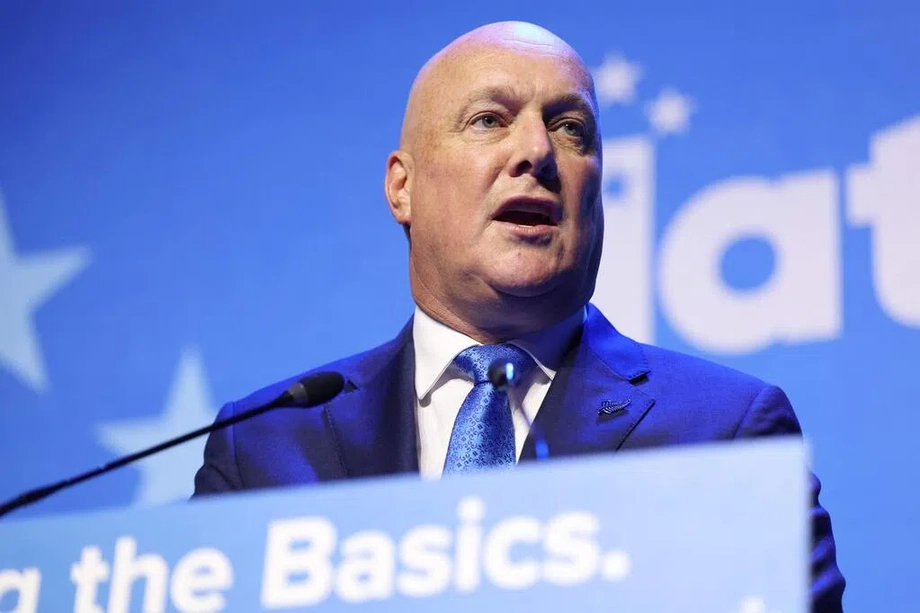
A narrow lead becomes a hung Parliament
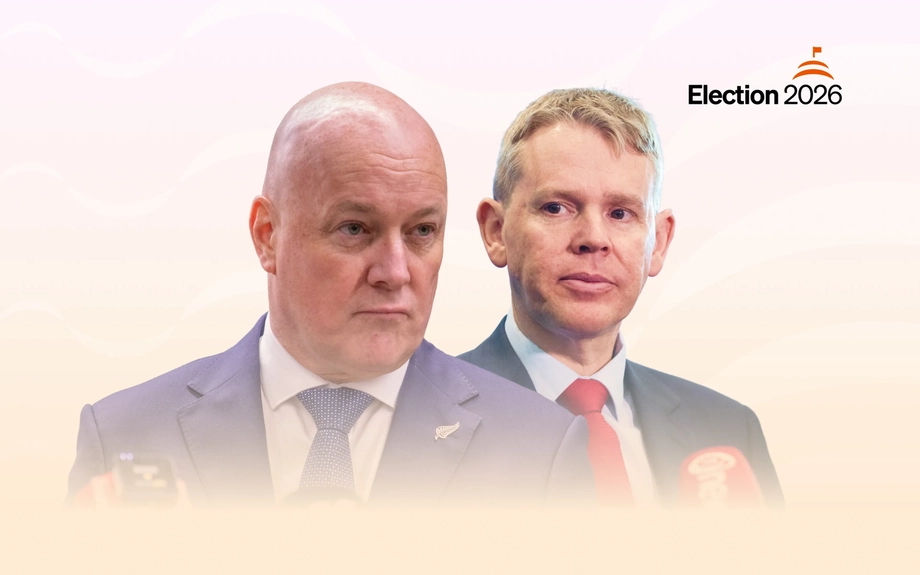
At 2pm on Friday 27 November, New Zealand's Electoral Commission confirmed a result that turned Prime Minister Christopher Luxon's advantage of two seats on election night into a parliamentary stalemate. The National, ACT and New Zealand First bloc won 65 seats in a Parliament of 130 members, one short of the 66 needed to govern. Labour, the Greens and Te Pāti Māori together hold 58. The new centrist Opportunity party holds seven, enough to decide whether Luxon can stay in office or whether New Zealand must vote again.
Contents
- A narrow lead becomes a hung Parliament
- What special votes changed
- The arithmetic behind the deadlock
- Why seven Opportunity MPs matter so much
- Luxon opens the door he once closed
- Where a deal could unravel
- Labour wins the party vote but lacks the seats
- Turnout, special ballots and the official totals
- Where the parties found their votes
- Recounts and dates that frame the next step
- What the talks mean for households
- Key Points
The final count followed the 7 November election, when the same governing parties looked secure after an election night coalition lead of 67 seats to 64. Three seats moved in the official count, including two taken from National. Opposition parties finished level with the governing bloc at 65 when Opportunity's MPs are counted with them, but neither side has a working majority without further talks.
The immediate question is practical: can Luxon assemble a deal with his existing partners and Opportunity before Parliament is due to meet? If he cannot, and no other combination can command 66 votes, the country faces another general election.
What special votes changed
Special votes are ballots cast outside a voter's normal electorate, including by New Zealanders living abroad. They are counted only after polling day, when election officials check rolls, eligibility and possible multiple voting, then count ordinary ballots again. The final result included 484,865 special votes. The Electoral Commission had initially estimated 399,365, a figure often rounded to about 400,000 before the final count put it close to 485,000.
Those ballots shifted three electorate outcomes. Labour's Kieran McAnulty won Wairarapa from National's Mike Butterick by 81 votes. Georgie Dansey took Hamilton East from National's Ryan Hamilton by 173 votes, although one final count table gave the margin as 172. Green candidate Julie Anne Genter beat Labour's Craig Renney in Wellington Bays by 1,610 votes. Renney also failed to return through the party list.
National lost two MPs as those local contests moved, and the Greens gained one list seat. Five electorate contests were still undecided on election night. The governing coalition's preliminary 67 to 64 lead became 65 seats for National, ACT and New Zealand First, 58 for Labour, the Greens and Te Pāti Māori, and seven for Opportunity. Special votes have often favoured parties on the left in New Zealand elections, but the final count concentrated the effect in individual seats rather than giving either bloc a majority.
The arithmetic behind the deadlock
The official party totals give Labour 863,238 party votes, or 29.88 percent, ahead of National on 819,012, or 28.35 percent. The Greens won 406,356 votes and 14.06 percent; ACT 304,521 and 10.54 percent; New Zealand First 277,565 and 9.60 percent; Opportunity 175,093 and 6.06 percent; Te Pāti Māori 18,310 and 0.63 percent. National nevertheless has more MPs, 40 to Labour's 36, because it won more local electorate races.
The full House is National 40, Labour 36, Greens 17, ACT 13, New Zealand First 12, Opportunity seven and Te Pāti Māori five. Those 130 members make it the largest Parliament in New Zealand history. The governing bloc needs one more MP. Labour's bloc plus Opportunity also reaches only 65. That leaves Opportunity's seven MPs as the only bridge to a right bloc majority, though they are not enough to give Labour a majority.
New Zealand uses mixed member proportional representation, known as MMP. Voters cast one vote for a local representative and one for a party. Party vote broadly sets each party's share of Parliament, while electorate wins can add seats. The final Parliament has 59 party list seats and 71 electorate seats. Those additions create an overhang when a party wins more local seats than its party vote share would allow. This Parliament has an overhang of 10 seats, six from National and four from Te Pāti Māori, which is why 130 members need 66 votes for a majority. New Zealand has one house of Parliament and no states, so control of this chamber determines national government.
Why seven Opportunity MPs matter so much
Opportunity entered Parliament with 6.06 percent of the party vote and no experienced MPs among its seven members. Its leader, Qiulae Wong, is 38, a former KPMG consultant who became leader after answering a job advertisement. Her party was polling at about one percent in August last year. It had made three failed attempts to enter Parliament before her rise, and is the first party in decades to reach Parliament with a leader who had never been a cabinet minister.
Wong said during the campaign that she would negotiate first with the party winning the most seats. After the final count, that means National, despite Labour winning the party vote. Opportunity has said it could join a formal coalition or give confidence and supply support, an arrangement in which a smaller party votes for the government on budgets and confidence votes but can act independently on many other bills.
Opportunity's five bottom lines are specific. They include stronger competition powers over what the party calls the supermarket duopoly, limits on political donations and lobbying, a health plan lasting 10 years and designed across parties, an end to bottom trawling in fisheries, and support for New Zealand's climate commitments, the Climate Change Commission and the Paris Agreement. Wong has also said she would not support a government in which New Zealand First leader Winston Peters remains foreign minister.
Luxon opens the door he once closed
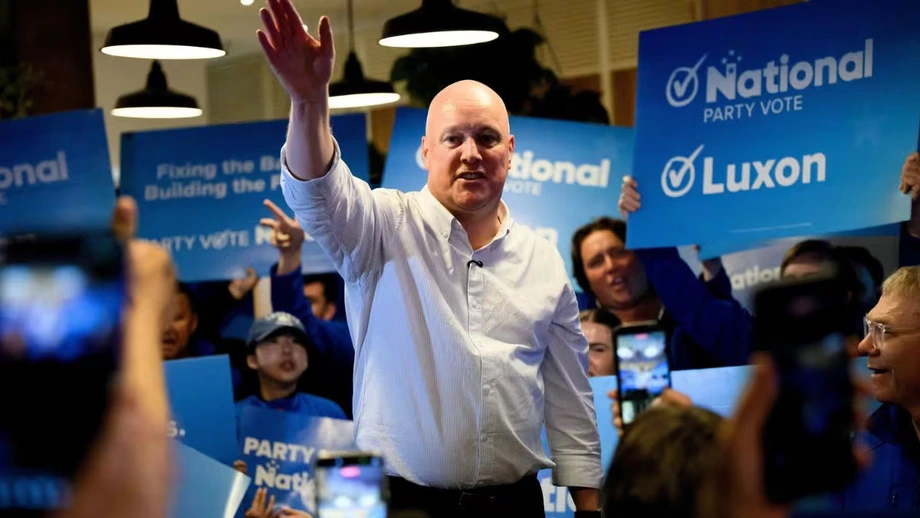
Luxon repeatedly ruled out working with Opportunity during the campaign. The final count changed that position. Prime Minister Christopher Luxon said on Friday that National would begin formal talks with New Zealand First, ACT and Opportunity. He said he had spoken with Winston Peters, David Seymour and Qiulae Wong. He said voters wanted leaders to find common ground after a bitter campaign dominated by the cost of living, and he warned that haste could produce an unstable government.
I want to be upfront with New Zealanders. These negotiations may be challenging, and they could take some time.
Getting it right matters far more than getting it done quickly. Kiwis won't thank us for rushing to an agreement that falls apart, or for sending them back to the polls.
Luxon's negotiating position is weaker than it was after the 2023 election. National's final party vote of 28.35 percent compares with 38.1 percent in 2023, a fall of almost 10 percentage points. His party still has the largest number of MPs, but he needs agreement not only with Opportunity but also with the two existing coalition partners whose policy positions often clash. Party staff had held very preliminary discussions about the rules of engagement before the official declaration.
The government does not collapse while talks continue. Luxon remains prime minister in a caretaker role until a new administration is sworn in. That means ministers keep departments running and respond to events, but they are expected to avoid major new policy decisions that should belong to the next government.
Where a deal could unravel
Opportunity leader Qiulae Wong said after the count that her party would speak with Luxon and that its policy conditions were not open for negotiation. She said a stable government mattered, while adding that the decision would involve parties beyond Opportunity. She also left open the possibility of another election.
All options are on the table.
It's not just up to us.
The friction is easy to see. Opportunity wants stronger climate action and limits on political donations. ACT is unlikely to accept donation reforms, and New Zealand First and ACT have sharply different climate positions. New Zealand First had also ruled out working with Opportunity during the campaign, and its leader, Winston Peters, had not reversed that stance by the time the final count was released.
Wong's objection to Peters serving as foreign minister follows his comments about a Green lawmaker born in China, which were widely criticised as racist. Days before the vote, New Zealand First candidate Michael Laws made sexist remarks about Opportunity candidate Kayla Kingdon-Bebb and other female candidates. Laws did not attend Parliament after the election for the induction of new MPs, and his party did not say whether he would take his seat.
Victoria University of Wellington political scientist Lara Greaves said the chance of another election was real because a negotiation among four parties would be complex. She said the stakes for minor parties were high because voters could judge them by what they gained or by how close they appeared to a larger party.
It's not a 0% chance, it's the highest chance we've ever had of it being another election.
Labour wins the party vote but lacks the seats
Labour leader Chris Hipkins said he was proud that Labour won the highest party vote share, but disappointed that it could not deliver a change of government. Labour's 29.88 percent put it ahead of National by 1.53 percentage points. Seats tell a different story: National has 40 MPs and Labour 36. This is the second election Hipkins has lost, and he said a decision on his leadership would come after a government had been formed.
Labour, the Greens and Te Pāti Māori have 58 seats. Adding Opportunity gives them 65, still one short. A government based on those parties would also need New Zealand First to cross from the right bloc, repeating a move it made after the 2017 election when it joined Labour and the Greens. On the positions parties took into the final count, Luxon has the only straightforward route, provided Opportunity agrees.
The result shows how New Zealand's system with two votes can separate popularity from governing power. Labour won more party votes, but National's candidates won more electorates. Mount Roskill stayed with Labour, where Michael Wood held off Carlos Cheung by 1,128 votes. Te Tai Tokerau stayed with Te Pāti Māori, where Aperahama Edwards won by 583 votes.
Turnout, special ballots and the official totals
The Electoral Commission's detailed count records 2,905,153 party votes and 2,852,687 electorate votes. Valid party votes totalled 2,888,890, while valid electorate votes totalled 2,821,916. A final tally of ballots cast puts the election total at 2,931,604. It includes 26,451 disallowed votes, 16,263 informal party votes and 30,771 informal electorate votes. Special votes made up 484,865 ballots, or 16.5 percent of the total, down from 20.9 percent in 2023. Of those special ballots, 99,118 were overseas votes.
Turnout figures also depend on the group being measured. The Electoral Commission's detailed table lists 3,796,891 eligible voters and a turnout of 76.51 percent. The final result summary gives turnout among enrolled voters as 77.2 percent, down from 78.2 percent in 2023. The commission put enrolment at 92.9 percent, down from 94.7 percent. Turnout in the Māori electorates was 72.9 percent, up from 68 percent in 2023. This was the first election under rules that stopped people enrolling during the two weeks of voting.
Electoral Commission chief executive Karl Le Quesne said the commission had worked hard on enrolment and would analyse the turnout data further. He said weather and voter uncertainty may have affected how many people cast ballots.
Where the parties found their votes
The electorate breakdown shows concentrated pockets of support. Labour's strongest party vote was in Māngere at 65.1 percent, followed by Ōtāhuhu at 63.3 percent and Manurewa at 61.1 percent. National's highest party vote was in Botany at 49.5 percent, with Pakuranga at 45.2 percent and Southland at 39.3 percent. The Greens reached 30.3 percent of the party vote in Wellington Bays, 28.1 percent in Wellington North and 26.1 percent in Dunedin.
Opportunity's best party vote results were in Wellington North at 15.3 percent, Wellington Bays at 12.7 percent, Auckland Central at 10.7 percent and Mount Albert at 10.4 percent. In the Māori electorates, Labour's party vote ranged from 40.5 percent in Te Tai Tonga to 54.0 percent in Ikaroa Rāwhiti. The Greens were second in every Māori electorate in the detailed table, while Te Pāti Māori's party vote ranged from 3.7 percent to 7.1 percent.
These patterns help explain the seat map. National could lose ground in the nationwide party vote and still remain the largest party because its support was spread efficiently across local electorates. Opportunity won no electorate seats but entered Parliament through the party vote, giving its seven MPs the deciding position in government formation.
Recounts and dates that frame the next step
Recount applications are due within three working days of the official declaration, a deadline falling on 3 December. Any recount could matter because one changed seat would alter the arithmetic. The likely timetable allowed about five days for a recount, while the three electorate recounts after the 2023 final count took 12 days without changing winners.
No one yet knows whether a recount will be sought, whether Opportunity will take cabinet posts or give outside support, or whether the parties can bridge their differences. There is no fixed deadline for parties to agree on a government. Parliament is currently required to meet by 14 January. Christmas is four weeks away from the final count, and the coalition agreement in 2023 was announced three weeks after the official count, more than six weeks after the election, so the shape of the next government could remain unclear into 2027.
The coming dates and decisions are limited and specific.
- 27 November: Electoral Commission declares the official count.
- 3 December: Deadline for recount applications.
- 14 January: Deadline for Parliament to meet.
- Until a government is sworn in: Luxon's ministry remains in caretaker mode.
Electoral Commission chief executive Karl Le Quesne said the commission would be ready if politicians called another election. He also said he could not recall recent recounts changing a result and pointed to 2011 as the last example he knew.
We always need to be ready for another election, so we would be prepared if another one was called.
What the talks mean for households
The negotiations start while New Zealand faces rising costs of living and a weak economic forecast. Before the election, living costs and small parties were already shaping the race. An Ipsos survey in that campaign put inflation and living costs among the three biggest concerns for 64 percent of respondents, healthcare for 45 percent and fuel prices for 31 percent. Unemployment had reached 5.7 percent in the September quarter, its highest level since 2015.
Those pressures give the talks a practical edge. A coalition agreement can set tax, health, welfare, climate and fishing policy for the next term. Confidence and supply support can keep a government in office without giving Opportunity cabinet seats, but still requires agreement on budgets and confidence votes. If talks fail and a new election follows, voters would be asked to settle a question Parliament could not answer.
New Zealand First told supporters the result had not provided the certainty the country needed and that the next three months were crucial. None of the parties has shown a strong appetite for an immediate return to the polls, but the arithmetic leaves no easy shortcut. Opportunity can trade support for policy change. National can offer access to ministerial power or a formal place in a cabinet that might include four parties. New Zealand First and ACT can resist concessions that conflict with their own platforms.
Key Points
- The official count left National, ACT and New Zealand First on 65 seats, one short of a majority in a Parliament of 130 members.
- Labour, the Greens and Te Pāti Māori have 58 seats; adding Opportunity gives them 65, also short of a majority.
- Special votes totalled 484,865 and shifted three electorates, including two wins for Labour from National.
- Opportunity leader Qiulae Wong and her seven MPs hold the deciding position in government talks.
- Recount applications close on 3 December, and Parliament is required to meet by 14 January.
- Luxon remains caretaker prime minister while parties negotiate a coalition or confidence and supply arrangement.