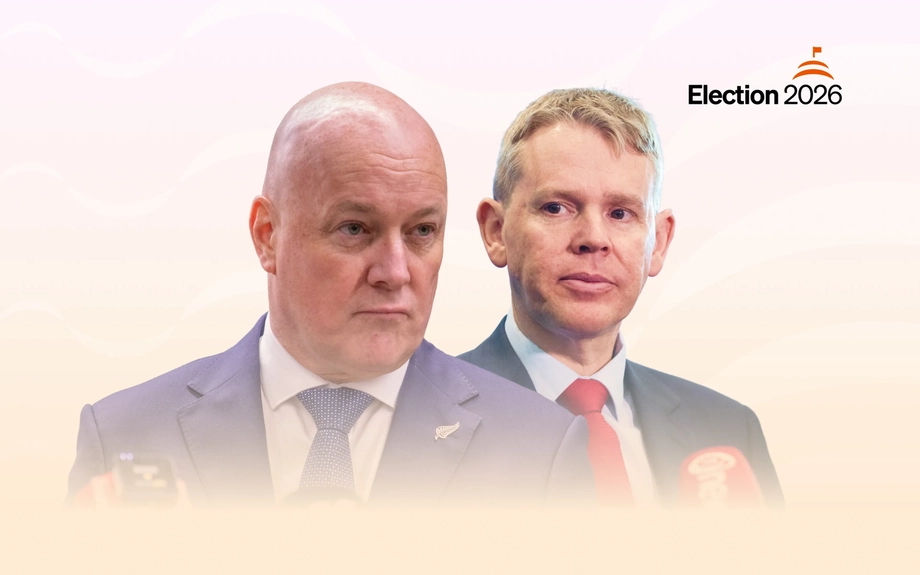
Luxon has the numbers for now, with a narrow margin
New Zealand's governing coalition led by National is projected to hold 67 parliamentary seats after the November 7, 2026 election, putting Prime Minister Christopher Luxon within reach of a second term. The preliminary Electoral Commission figures give National 42 seats, ACT New Zealand 13 and New Zealand First 12, enough to cross the projected majority threshold of 66.
Contents
- Luxon has the numbers for now, with a narrow margin
- What the preliminary seat totals show
- Why parliament is bigger than 120 seats
- The special votes that could change the result
- Five close National races carry wider stakes
- Opportunity enters parliament with choices to make
- National's local success costs senior figures their seats
- Māori electorates and split voting shape the house
- Living costs drove the campaign; government talks come next
- Key Points
Special votes and several close electorate contests could still change that position before official results are released on November 27. Luxon stopped short of claiming victory, while Labour leader Chris Hipkins also held back from conceding defeat.
The most complete preliminary tally projects a parliament of 131 members, including 11 extra seats created by the electoral system. Labour has 36 seats, the Greens 16, Te Pāti Māori five and the newcomer Opportunity seven. Together, those four parties would have 64 seats, two short of the number needed to govern.
National's advantage rests on seats rather than a clear lead in the nationwide party vote. The latest preliminary figures put Labour on 710,223 votes, or 29.4%, and National on 706,642, or 29.2%. National nevertheless leads Labour by six seats because it is ahead in many local electorate contests.
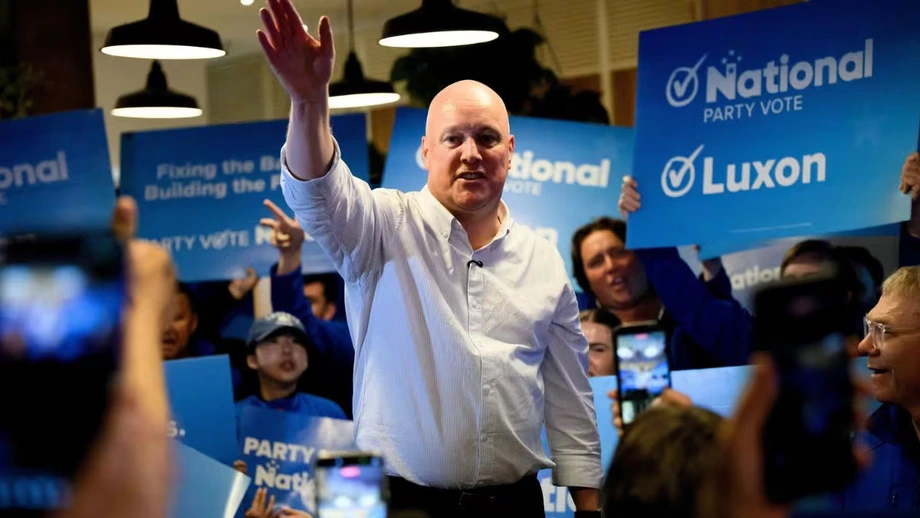
Luxon, speaking to supporters in Auckland as prime minister and National leader, acknowledged both his party's opening and the uncertainty surrounding it.
It is heartening to see that on the numbers so far, National is once again the largest party in parliament, and we have a pathway to forming the next government.
He then cautioned supporters:
But I have to tell you right now, it is too close to call.
What the preliminary seat totals show
The three governing parties retain a workable route to power if their combined 67 seats survive the final count. National cannot govern alone, and neither ACT nor New Zealand First can be left out of that combination without replacement support from another party.
- National: 42 seats, all from electorate contests.
- ACT New Zealand: 13 seats, including one electorate seat.
- New Zealand First: 12 seats, all from its party list.
- Labour: 36 seats, including 21 electorate seats.
- Greens: 16 seats, including two electorate seats.
- Te Pāti Māori: five seats, all from Māori electorates.
- Opportunity: seven seats, all from its party list.
The projected size of parliament changed during counting. An earlier allocation gave Labour 35 seats in a house of 130; the later tally gives it 36 in a house of 131. Both allocations leave National, ACT and New Zealand First on 67 seats, with 66 required for a majority.
That leaves the governing bloc just one seat above the minimum it needs. The final allocation will depend on both the nationwide party vote and the outcome of individual electorate races.
Why parliament is bigger than 120 seats
New Zealand uses mixed member proportional representation, usually called MMP. Each voter makes two choices: one for a local electorate representative and another for a political party. The party vote largely determines how many seats each party receives, with candidates from party lists filling places beyond those won locally.
A party normally qualifies for representation by winning at least 5% of the party vote or one electorate. Parliament usually starts with 120 seats, but it grows when a party wins more local seats than its party vote would normally provide. Those extra places are called overhang seats.
National's projected 42 electorate victories exceed its allocation from the party vote, while Te Pāti Māori's five electorate seats also create an overhang. The latest projection puts the combined overhang at 11 seats, producing a house of 131. The parliament elected in 2023 had 123 seats.
The practical result is that the winning line moves as parliament grows. A majority in a house of 131 requires 66 members. Local contests therefore matter twice: they decide who represents a community, and they can change the size of parliament and the arithmetic of forming a government.
The special votes that could change the result
Special votes remain outside the preliminary totals. They include votes from overseas and ballots requiring additional checks, such as those cast by people on the unpublished electoral roll or under special voting arrangements.
Luxon said about 300,000 special votes remained to be counted; other election night estimates put the number at about 700,000. A confirmed total was not given. The commission's official results, due on November 27, will include those ballots alongside checks of the preliminary count.
Special votes have often improved the position of Labour and the Greens. In 2023, National's allocation fell from 50 seats in the preliminary count to 48 after special votes were included. Labour also took Nelson and Te Atatū from National at that election's final count.
The percentages shown on live results pages need care. A figure such as 99.9% counted refers to the share of voting places that have reported results, rather than the share of every ballot cast. Hundreds of thousands of special votes can therefore remain outstanding even when almost every voting place has reported.
The next steps follow a short timetable:
- November 7: Preliminary counting puts National, ACT and New Zealand First on course for a combined majority.
- Before November 27: Special votes are counted and preliminary results undergo checks.
- November 27: Official results are expected, setting the numbers for substantive coalition negotiations.
- After the official count: Close contests may face recount requests or legal challenges, while parties negotiate government arrangements.
Five close National races carry wider stakes
Wairarapa is among the most exposed National seats. Mike Butterick held an election night lead of just 139 votes over Labour's Kieran McAnulty. In Hamilton East, National's Ryan Hamilton led Labour's Georgie Dansey by 456.
Three other National leads were also narrow: Lloyd Budd was ahead by 1,061 in Whangārei, Blair Cameron by 1,210 in Nelson and Rima Nakhle by 1,484 in Takanini. Those margins leave the candidates waiting for special votes before their positions are settled.
National's overhang makes these contests especially consequential. When a party already has more electorate seats than its party vote supports, losing a local contest can reduce its total representation rather than simply move a place to another candidate on its list. A change in a handful of electorates could therefore alter the coalition's majority.
Other close races could shift representation within the opposing parties. In Te Tai Tokerau, Te Pāti Māori's Aperahama Edwards led the Greens' Hūhana Lyndon by 499 votes. Both parties sit outside the current governing bloc, but the result still affects their strength and the final seat calculation.
Opportunity enters parliament with choices to make
Opportunity is projected to enter parliament for the first time with seven seats and 6% of the party vote. That puts it one percentage point above the 5% threshold for a party without an electorate victory.
Leader Qiulae Wong has said she is open to discussions with either side. Luxon ruled out governing with Opportunity during the campaign, although a change in the final seat totals could make its support more valuable to either major party.
Wong's stated approach to choosing a negotiating partner varied during election coverage between the party with the most votes and the party with the most seats. In her direct explanation of the negotiating order, she said she would begin with the party winning the largest number of seats.
Wong explained the reasoning as Opportunity leader:
We made that call based on the fact that we need a majority of seats in parliament in order to form a government. So that is what we will stick to.
Opportunity also has an internal approval requirement: its board must support a coalition or confidence and supply agreement by a 75% vote. A confidence and supply agreement would allow the party to support a government's survival and spending plans without necessarily joining the cabinet.
On the latest preliminary figures, Labour, the Greens and Te Pāti Māori have 57 seats. Adding Opportunity's seven would bring them to 64, still short of 66. Wong's party becomes decisive only if the final count produces a combination that can reach the majority threshold.
National's local success costs senior figures their seats
National's projected delegation consists entirely of its 42 electorate representatives, leaving no places for candidates relying on its party list. That puts several of its most experienced figures outside parliament even while Luxon retains a route to another term.
Deputy leader Nicola Willis, Justice Minister Paul Goldsmith and Speaker Gerry Brownlee were among the senior figures facing departure. Transport Minister Chris Bishop conceded Hutt South, where Labour's Ginny Andersen held an election night lead of 889 votes, and was also projected to miss a list seat.
Luxon acknowledged the losses in his speech to supporters. National would have to rebuild parts of its parliamentary leadership while bargaining with ACT and New Zealand First over the shape of another administration.
The party's vote share also shows how much its position has changed. National won about 38% in 2023, compared with 29.2% in the latest preliminary tally, a fall of about nine percentage points. Its continued strength in local contests has preserved more seats than that party vote alone would deliver.
Māori electorates and split voting shape the house
Te Pāti Māori is projected to win five of the seven Māori electorates despite receiving only about 0.6% of the nationwide party vote. Labour is projected to take the other two Māori seats.
The Māori electorates are constituencies for voters on the Māori electoral roll. Te Pāti Māori encouraged supporters to give its candidates their electorate vote while using their party vote for other parties on the left. That approach helps explain the gap between its local victories and its small party vote total.
Projected winners include Hana-Rawhiti Maipi-Clarke in Hauraki-Waikato, Debbie Ngarewa-Packer in Te Tai Hauāuru, Oriini Kaipara in Tāmaki Makaurau and Rawiri Waititi in Waiariki. Edwards' narrower lead in Te Tai Tokerau completes the party's provisional five.
ACT and New Zealand First also promoted splitting votes, encouraging supporters to back National electorate candidates while giving their party vote to one of the smaller coalition parties. National publicly opposed that strategy. Both major party leaders criticised attempts to use split voting to gain extra seats through overhangs.
Living costs drove the campaign; government talks come next
Household budgets, healthcare and the economy dominated the contest. Unemployment reached 5.7% in the third quarter, its highest level in 11 years, while voters faced high prices for basic goods and continuing concerns about housing affordability.
National campaigned on a promise of no new taxes. Labour offered help with living costs through free doctor's visits and prescriptions, alongside a cap on public transport fares. Which policies enter a government programme will depend on the final seat totals and negotiations between parties.
Voters made heavy use of advance voting. About 1.91 million voted early, compared with 1.98 million in the 2020 election during the COVID-19 pandemic. The Electoral Commission recorded 913,762 votes in the first five days of advance voting, 28% more than during the equivalent period in 2023.
Luxon said caretaker conventions would apply while the result was settled. Ministers remain in place and routine government business continues, with restraint around major decisions while the next administration is being formed.
Hipkins, speaking as Labour leader to supporters in Upper Hutt, also acknowledged the wait:
Tonight, New Zealand has spoken. It may take us a little bit longer to figure out exactly what it is that you've said.
November 27 is the next firm date. Luxon said meaningful coalition negotiations would begin after the official results, leaving New Zealand with a provisional parliamentary majority for its existing governing parties and an unresolved contest over who will ultimately govern.
Key Points
- National, ACT and New Zealand First are projected to hold 67 seats, above the majority threshold of 66.
- The latest preliminary allocation puts parliament at 131 seats, including 11 overhang seats.
- Labour narrowly leads the party vote, while National holds more seats through electorate victories.
- Special votes and close local races could change the final allocation, due on November 27.
- Opportunity is projected to win seven seats, but the four parties outside the governing bloc currently total only 64.
- Luxon has not claimed victory, and caretaker conventions apply while the result and government formation remain unsettled.