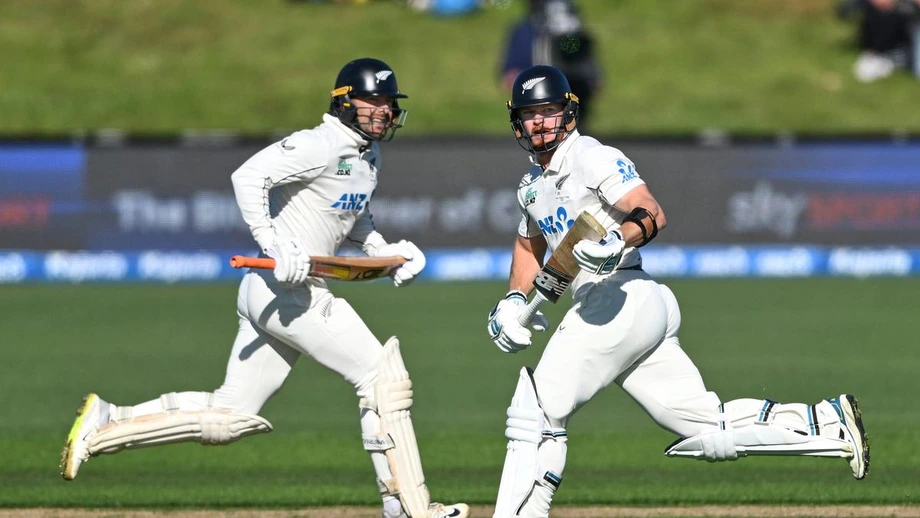
New Zealand finish day one at 246 for 5
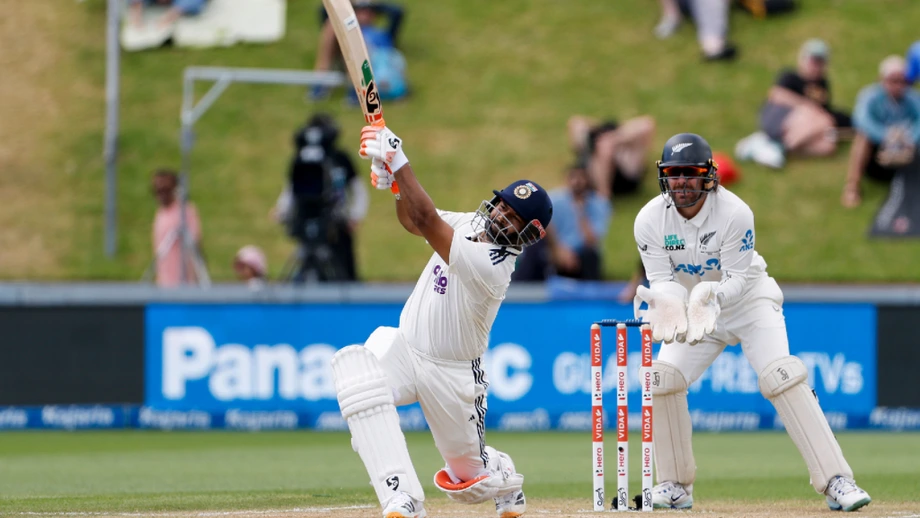
Christchurch, Friday, November 27. New Zealand closed the opening day of the second and final Test against India on 246 for five at Hagley Oval, with Tom Blundell unbeaten on 53 and Glenn Phillips on 36. The hosts slumped to 110 for four, then rebuilt through a stand of 74 for the fifth wicket with Daryl Mitchell and an unbroken 62 for the sixth with Phillips.
Contents
- New Zealand finish day one at 246 for 5
- A day in seven moments
- Latham's escapes and the review India missed
- Brar's debut brings India its first wicket
- India's burst: 110 for 1 became 110 for 4
- Blundell and Phillips deny India a late collapse
- Why the green pitch did not hand India the day
- Siraj's omission becomes the selection story
- Championship stakes and the record book
- A tour of recoveries and records
- What day two will decide
- Key Points
India captain Shubman Gill won the toss and chose to bowl on a bright green surface that suggested early help for fast bowlers. New Zealand reached lunch at 77 for one and tea at 131 for four. India took three wickets for 54 runs in 24 overs of the second session, but could not keep that pressure going after the interval between innings.
Blundell faced 117 balls in his 50th Test. Phillips faced 64. Akash Deep finished as India's most successful bowler with two wickets for 52 runs from 21 overs, while Jasprit Bumrah went without a wicket. Tom Latham survived two chances and made 59, but India's brief burst was not enough to prevent a recovery.
A day in seven moments
The day moved in sharp swings. India had long periods of control, especially with the new ball and in the second session. New Zealand had the two kinds of partnership that matter most in Test cricket: one that absorbed the fresh ball and two that stopped the innings from folding.
The key moments were:
- New Zealand reached lunch at 77 for one. Devon Conway was out on the final ball before the interval, trapped lbw by debutant Gurnoor Brar for 31.
- Latham and Henry Nicholls took New Zealand to 100 in the 36th over.
- Latham was caught behind off Akash Deep for 59 from 128 balls in the 41.3 over. New Zealand were 110 for two.
- Nicholls fell for 16, then Rachin Ravindra for a duck. New Zealand went from 110 for one to 110 for four in 16 deliveries.
- Tea came with New Zealand on 131 for four.
- Washington Sundar ended a stand of 74 by dismissing Mitchell for 31 at 184 for five.
- Stumps came with New Zealand on 246 for five and a recorded run rate of 2.89 runs per over.
Latham's escapes and the review India missed
Latham, the New Zealand captain, had fallen in the first over of both innings in the drawn first Test at Wellington, dismissed each time by Bumrah. On Friday he took strike to Bumrah again and survived. The fifth ball hit him in front of his pad, umpire Richard Illingworth gave him out, and a review showed the ball had pitched just outside leg stump.
The decision review system, known as DRS, allows a team to ask for a video check of an umpire's call. Latham used it successfully in the first over. He survived again in the 15th over when K.L. Rahul could not hold a difficult catch at wide second slip off Akash Deep, with Latham on 29.
Another chance came just after lunch. On the third ball of the 29th over, Brar bowled a full delivery that Latham missed. India appealed for lbw, the umpire said no, and Gill chose not to review because he suspected a double sound from bat and pad. Replays showed a gap between bat and ball.
Former New Zealand pacer Simon Doull, working as a commentator, said India had passed up a clear chance. He explained that the sound came from Latham's foot moving on the crease, not from the bat.
There's a clear gap between bat and ball. I reckon India may have missed a trick here
Latham reached his 32nd Test fifty in 88 balls and made 59 from 128, with six fours. Akash Deep removed him in the second session, inducing a defensive prod that went to Rishabh Pant behind the stumps.
Brar's debut brings India its first wicket
Gurnoor Brar had been brought into India's side as an uncapped fast bowler. An official DD News report said his maiden Test cap made him India's 321st player in the longest format. He replaced Prasidh Krishna, while Mohammed Siraj and Ravindra Jadeja were left out of the XI.
Brar's first wicket arrived on the final ball before lunch. Bowling from around the wicket, he angled the ball into Conway at 135kph. A bowler can hold the seam slightly sideways so the ball moves off the pitch after landing, rather than relying only on swing through the air. Conway pushed forward, missed the inside edge and was struck on the back leg in line with the stumps.
Conway reviewed, but the review technology showed the delivery hitting the top of leg stump. He had made 31 from 79 balls, with four fours. His departure ended an opening stand of 77 and gave India a breakthrough after a morning in which the bowlers had often made the batters play too little.
India's burst: 110 for 1 became 110 for 4
Latham's dismissal at 110 for two was followed in the next over by Nicholls, who top edged a pull from Anshul Kamboj and sent the ball towards Akash Deep near the boundary. Nicholls made 16 from 46 balls.
Ravindra then fell in the following over, also to Akash Deep, after poking at a delivery and edging to Pant. He made a duck after facing nine balls and was out for the third consecutive innings in the cordon. New Zealand had gone from 110 for one to 110 for four in 16 deliveries, exactly the opening India wanted after choosing to field.
At tea, New Zealand were 131 for four, with Mitchell on six and Blundell on eight. India's three second session wickets had cost 54 runs in 24 overs, but the last two wickets did not fall. Mitchell and Blundell added 74 before Sundar broke the stand.
Blundell and Phillips deny India a late collapse
Mitchell's dismissal came when he steered a Sundar offspinner to Dhruv Jurel at leg slip, a close catching position just behind the batter on the leg side. Mitchell made 31. New Zealand were 184 for five, and India had a clear route back into the match.
Blundell then took control. He left well to balls outside his off stump, kept a tight defensive shape and cut when India offered width. He was dropped on 49 when Yashasvi Jaiswal could not hold a difficult chance at gully, diving to his left. Blundell finished unbeaten on 53 from 117 balls.
Phillips gave him steady support, making 36 from 64 balls. Their unbroken stand of 62 came over the last 20 overs. New Zealand scored 25 runs in the final 10 overs without losing a wicket. Blundell said his side had recovered from a difficult position and described a pitch on which batters never felt fully set.
Blundell, New Zealand's wicketkeeper and batter, said the pitch remained difficult late in the day and that his side would value the recovery.
I think we did well to come back from where we were. The conditions are not easy out there. It's a wicket that I felt personally that you're never in. The ball's still doing quite a bit towards the end, so I think we'll take that today.
The partnership turned a possible collapse into a platform. New Zealand ended the day with five wickets in hand, while India still needed the kind of sustained pressure it had shown only in patches.
Why the green pitch did not hand India the day
Gill's choice to bowl followed a simple reading of the ground. The pitch was bright green when players arrived, with dense grass covering, and both captains expected pace and bounce. India had won 10 of its 12 tosses on the tour and wanted the new ball in conditions that looked made for seamers.
The ball did move early, but less than Gill expected. Seam movement happens when the raised seam makes the ball deviate after it lands. India's bowlers often bowled too wide of the stumps or too short to make the batters play. Line means direction, length means where the ball lands. Latham scored freely when deliveries drifted onto his pads.
Akash Deep was the exception. He took both of his wickets in the middle session and finished with two for 52 from 21 overs. The fast bowler said he judged a good spell by how often he made the batter commit to a shot.
Akash Deep, India's fast bowler, described the focus of his spell.
My self-realization was about how much I could force the batter to play.
Bumrah went wicketless. The missed chances mattered as much as the plan. A dropped catch and a declined review allowed Latham to turn a difficult start into the innings that held the first two hours together.
Siraj's omission becomes the selection story
Mohammed Siraj was not in India's XI for Christchurch, and the decision drew sharp public comment. Siraj has 43 wickets in 11 matches in the current World Test Championship cycle, more than any other India bowler. He also missed the drawn first Test at Wellington, where India's bowlers struggled to dismiss New Zealand.
For the opening Test, India selected four specialist quicks in Bumrah, Prasidh Krishna, Akash Deep and Anshul Kamboj, with Washington Sundar as an extra bowling option who also lengthened the batting. The reasoning around the selection pointed to balance in the attack and extra batting depth. Brar's debut continued that approach, with the young fast bowler coming in for Prasidh.
Former India cricketer Mohammed Kaif said Siraj should have been among the first names considered for overseas Tests. He also pointed to praise from bowling coach Morne Morkel, who had described Siraj as bowling well and as a top bowler.
Kaif, writing on X, questioned how India could leave out one of its leading fast bowlers again.
Hard to believe as one of India's premier fast bowler Mohammed Siraj is dropped again. Siraj should be one of the first names considered in India's overseas Test bowling attack, alongside Bumrah.
Siraj's wickets made the selection call a live debate well beyond the dressing room.
Commentator Harsha Bhogle focused on what the choice told bowlers about job security. He said Siraj had slipped down India's order despite his wickets, and that Bumrah was the only bowler from the top five wicket takers in the current cycle who was in the side.
Bhogle, writing on X, said the chosen bowlers had helpful conditions but would understand how quickly places can change.
Siraj is now India's 6th ranked fast bowler. I find it so unfair.
Gill said after the Wellington Test that form had to be weighed. Morkel said he had asked Siraj before the Christchurch match to step back and identify areas to improve. Former India spinner Murali Kartik, speaking on Sony Sports after the toss, wondered whether Siraj was hurt by the omission.
The debate did not change India's team on the field. Once play began, the question moved from selection to execution: whether an attack without Siraj could take 20 wickets on a pitch that offered help only when the bowlers hit the right areas.
Championship stakes and the record book
The World Test Championship is a league that leads to a final. Teams earn points for Test series results, so every match can alter the table. New Zealand entered Christchurch third, behind South Africa and Australia. India were fourth.
India need a win to keep control of their qualification path. A draw or defeat would leave them relying heavily on the home series against Australia, and even a 5-0 result might not be enough. New Zealand, just outside the top two after the Wellington draw, want a win before a difficult tour of Australia.
The first Test at the Basin Reserve ended in a draw, leaving the series of two Tests at 0-0. History has not been kind to India at Hagley Oval. Before this match, India had played only one Test there, in 2020, and lost it. Only once in 15 Tests at the venue had a side chosen to bat first before Gill did.
New Zealand had won six of the previous nine Tests against India. Across 66 Tests between the sides, India had 22 wins, New Zealand had 16 and 28 were drawn. The average first innings score at Hagley Oval is 291, compared with 343 in the second innings, 272 in the third and 248 in the fourth. New Zealand's 246 for five is 45 runs short of that first innings average, with five wickets still available.
A tour of recoveries and records
The Test series followed a run of shorter format matches full of swings. India recovered from a 244 run defeat to win the ODI series 3-1. Siraj took two wickets in that win on his return to the ODI side. Brar, the debutant in Christchurch, had already taken four wickets at Wellington in a win after rain interruptions.
Those results sit behind the Test debate. Gill's toss decision, Brar's debut and Siraj's absence came on a tour where India had already shown both resilience and vulnerability. The Wellington Test then ended in a draw, leaving Christchurch as the last chance for both teams to shape their championship case.
What day two will decide
Play resumes with New Zealand five wickets down and India still searching for a first win of the series. Blundell and Phillips will start with the same job: protect their wickets and add runs. India will start with the new ball and the knowledge that its best period came when Akash Deep and Kamboj made the batters play quickly.
No result was settled by stumps. The immediate questions were practical ones: could India remove the last five batters before they added too many runs, and could New Zealand turn 246 for five into a total that put pressure on India's batters? Those answers will come on day two.
Key Points
- New Zealand closed day one of the second Test on 246 for five at Hagley Oval.
- Tom Blundell scored 53 not out in his 50th Test, and Glenn Phillips was 36 not out.
- India reduced New Zealand to 110 for four, then conceded stands of 74 and 62.
- Gurnoor Brar took his first Test wicket on debut, dismissing Devon Conway before lunch.
- Tom Latham survived two early chances and made 59 before Akash Deep dismissed him.
- Akash Deep finished with two wickets for 52 runs from 21 overs.
- Mohammed Siraj's omission drew criticism because he has 43 wickets in 11 World Test Championship matches.
- New Zealand entered the match third in the championship table, with India fourth.