Two Indian films on one list of 104
The Academy of Motion Picture Arts and Sciences published its eligibility list on Tuesday, 24 November 2026, and two Indian titles were on it. Santosh Davakhar's Marathi thriller Gondhal, picked by the Film Federation of India as the country's official entry in September, stands beside Theja Rio's Nagaland drama Angh, a film that lost that same selection vote and then found a second road into the race. Both are among 104 films eligible in the International Feature Film category at the 99th Academy Awards, the largest field the category has ever had.
Contents
- Two Indian films on one list of 104
- A second door opens for festival winners
- Gondhal: a ritual, a marriage, a murder plot
- Angh: a chief, a missionary, a changing world
- The room where India made its choice
- The fourth Marathi film, and a prize India has never won
- What the rest of the world sent
- From 104 to 15 to five: the dates that matter
- What the two entries change for the films
- Key Points
The arithmetic behind that number matters to anyone following the two films. A record 101 countries and territories sent in entries, and the Academy accepted 100 of them as eligible. Four more films came through the festival route, which is how Angh arrived. Cyprus, El Salvador and Rwanda submitted for the first time, while the Democratic Republic of the Congo sent a film for the first time since 1997 and Sri Lanka for the first time since 2009, according to the Academy's list of submissions.
The category carries rules of its own. A film must run more than 40 minutes, be produced outside the United States and carry more than half its dialogue in a language other than English. It must have opened in cinemas at home between 1 October 2025 and 30 September 2026, and national bodies had to file their entries by 30 September 2026.
A second door opens for festival winners
Until this cycle, the category ran on a simple principle: one country, one film, chosen by a national selection body. That is why Angh, beaten by Gondhal in India's own selection, can still contest the same Oscar. The Academy introduced a rule for the 99th ceremony that lets a non-English film enter the category directly if it wins a designated prize at one of six festivals: the Golden Bear at Berlin, the Best Film Award at Busan, the Palme d'Or at Cannes, the World Cinema Grand Jury Prize at Sundance (for both the dramatic and documentary competitions), the Platform Prize at Toronto and the Golden Lion at Venice.
Angh took the Platform Prize at the 2026 Toronto International Film Festival, where the jury for that section was led by the Argentine filmmaker Pablo Trapero. The prize is the festival's top award in the Platform section, and it turned a national rejection into a place on the Academy's list.
Three other films used the same door: Midday Meal, which won the Best Film Award at Busan; Shame and Money, which took the World Cinema Grand Jury Prize for dramatic film at Sundance; and Yellow Letters, which won the Golden Bear at Berlin. Seven films won a qualifying award in all, and three of them had already been submitted by their home countries, so they came in through the national route. Romania's Fjord, the Palme d'Or winner at Cannes in 2026, appears on the list as a national submission rather than a festival qualifier.
Gondhal: a ritual, a marriage, a murder plot
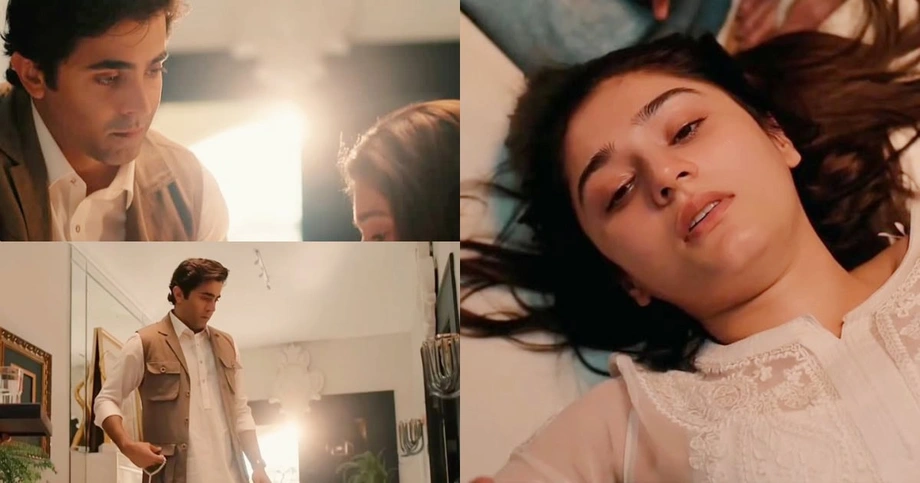
Gondhal is set in rural Maharashtra and unfolds across a single night, against the backdrop of the traditional midnight Gondhal ritual, a performance that brings together music, dance, mythology and religious elements. The story follows Suman, a woman trapped in an unhappy marriage to Anand, a wealthy man. She falls in love with Saheba, a Gondhali performer, and starts looking for a way out. Her plan pulls Anand's obsessive cousin Sarjerao into a dangerous scheme, and what begins as an escape becomes a story of murder, deception, desire and survival.
Ishita Deshmukh plays Suman, with Kishor Kadam, Yogesh Sohoni, Nishad Bhoir, Anuj Prabhu and Dhru Thoke in the cast. Veteran composer Ilaiyaraaja scored the music. The film had its world premiere at the 56th International Film Festival of India in Goa in 2025, in the Indian Panorama section, and Davakhar won the Silver Peacock for Best Director there. It reached cinemas in November 2025 and had a modest run at the box office.
Angh: a chief, a missionary, a changing world
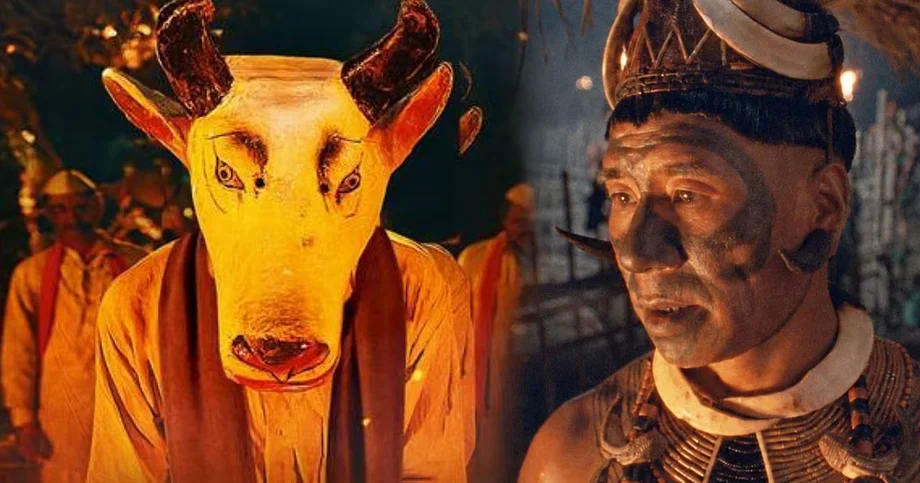
Angh travels to Nagaland in the early 1960s, where an ageing Konyak village chief and his young son live in one of the last communities holding on to an ancient way of life. Their solitary existence is disrupted by the arrival of an American missionary, and the two men are pushed to confront questions of faith, cultural identity and a world shifting under them. In the chief's household, the pressure is personal as well: his wife is ill and his son is mute, and the family must weigh keeping its heritage against surviving the change around it.
The lead roles go to Indigenous Naga actors, with the Scottish actor Douglas Henshall also in the cast. Dialogue in the film is in Konyak and English.
The room where India made its choice
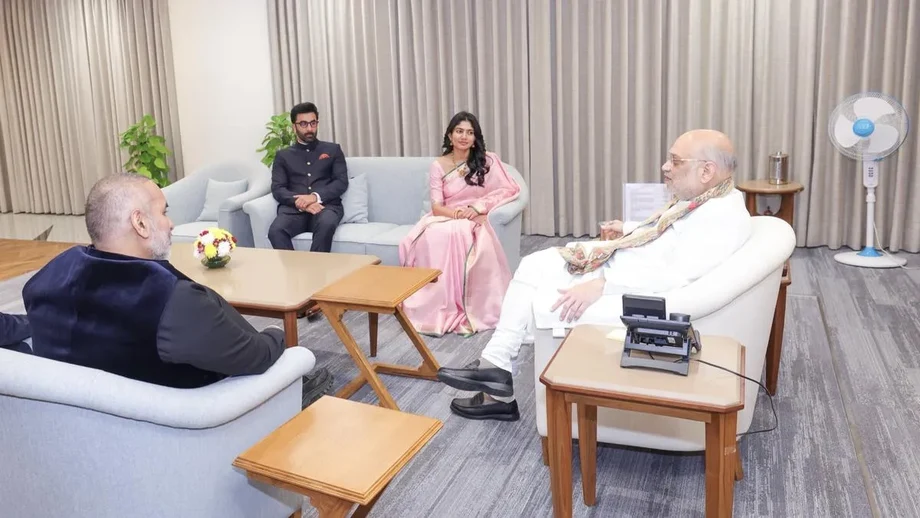
The Film Federation of India announced Gondhal as the country's entry on Friday, 18 September 2026, after a committee chaired by P Sheshadri watched 33 films across ten days. Angh was in that same field, and Sheshadri said the Nagaland film and Ikkis finished in the top three alongside the eventual winner. The field broke down by language in a way that shows how wide the net was:
- 14 Hindi films
- four each in Marathi, Telugu and Gujarati
- three in Tamil
- one each in Malayalam and Nagamese, plus one silent film
The submissions list included Main Vaapas Aaunga, Border 2, Dhurandhar, Haq, 120 Bahadur, Peddi, Bison Kalaamadan, Pravas and Hanuman Ansh, among others. The jury that settled on Gondhal included Vijay Patkar, Hutu Kanodia, Shanti Kumar, Sandeep Parashar, Sanjay Patil, Sabu Joseph, Anil Thomas, Vivek Vaswani, Bijon Dasgupta, Haasan, Vasan and Tannishtha Chatterjee.
Sheshadri described the choice as a win for the industry as a whole, and made clear that the debate inside the room was not quick.
This year we've had four Marathi films, 14 Hindi films, and others films, all the films were good. It's a happy moment for Indian cinema, for Marathi cinema. This time the official entry is 'Gondhal'. We've watched 33 films in last ten days of different languages. There were many other good films for which we were debating about. 'Angh' and 'Ikkis' were in top three list apart from 'Gondhal'.
The fourth Marathi film, and a prize India has never won
Gondhal is the fourth Marathi film to carry India's flag to the Academy, after Shwaas in 2005, Harishchandrachi Factory in 2009 and Court in 2015. That is four Marathi entries in 22 years, against the 14 Hindi films that competed for the single slot this year alone, a measure of how much of India's Oscar traffic has come from one industry.
India has never won the award, which was known for decades as Best Foreign Language Film. Three Indian submissions have been nominated: Mehboob Khan's Mother India, Mira Nair's Salaam Bombay and Ashutosh Gowariker's Lagaan. Deepa Mehta's Water was also nominated, but it went to the ceremony as Canada's entry. Last year India sent Neeraj Ghaywan's Homebound, which did not reach the shortlist.
What the rest of the world sent
Gondhal and Angh sit in a field that stretches from Nepal to Malta. South Asia has three films in the running, with Nepal's Elephants in the Fog joining the two Indian titles and Pakistan's Hanging by a Wire also on the list, alongside Bangladesh's Roid and Sri Lanka's Riverstone. The wider lineup includes Japan's All of a Sudden, Poland's Fatherland, Spain's La Bola Negra, France's Minotaur, South Korea's Possible Love, the United Kingdom's Rehearsals for a Revolution, Canada's Nina Roza and Hungary's Silent Friend.
The record 104 in this category came in a year when two other Oscar lists also swelled. Best Animated Feature reached 38 eligible films, its highest count, and Best Documentary Feature drew 190 entries. Fourteen films appear on both the documentary and the international lists, among them Citizen Osama, Traces, State Film and Rehearsals for a Revolution.
For Nagaland, the entry drew a public reaction from Binalakshmi Nepram, who wrote on X that the news was "a moment of immense pride for 45 million Indigenous Peoples of Northeast India". She tied it to an earlier first for the region, the Manipuri film Boong winning India its first BAFTA for Indigenous films.
From 104 to 15 to five: the dates that matter
The list is a starting gate, not a result. Academy members from every branch can opt in to the preliminary round of voting as long as they meet a minimum viewing requirement, which is the Academy's way of ensuring voters have actually watched the films before marking a ballot. Those votes produce a shortlist of 15, and only from that shortlist do the final five nominees emerge.
- 7 to 11 December 2026: preliminary voting in select categories
- 15 December 2026: Oscar shortlists announced
- 21 January 2027: nominations announced
- 14 March 2027: 99th Academy Awards at the Dolby Theatre at Ovation Hollywood, broadcast live on ABC and streamed on Hulu across more than 200 territories
Nothing about the two films' progress is settled until that December date. Neither has a confirmed place in the 15, and the Academy has not said how many members will take part in the preliminary round.
What the two entries change for the films
For Gondhal, the effect is a second life. A Marathi film that opened to modest business in November 2025 now becomes part of a national campaign that runs until March 2027, with the Federation behind it and the Silver Peacock already on its record. For Angh, the effect is different in kind. Theja Rio's film failed to win the vote that sends one Indian film to the Oscars, and under the old rules that would have ended its season. The Platform Prize in Toronto made the national decision irrelevant, and it gives a film shot in Konyak and English with Naga actors in the lead a place in the same preliminary ballot as the country's official pick.
The two films also arrive with different weight behind them. Gondhal carries a folk form from Maharashtra and the score of a composer who has worked in Indian cinema for five decades. Angh carries a story about a Konyak community in the 1960s and a cast drawn largely from the region it depicts. Both now wait on the same vote.
Key Points
- Gondhal, directed by Santosh Davakhar, is India's official entry and the fourth Marathi film to hold that role, after Shwaas (2005), Harishchandrachi Factory (2009) and Court (2015).
- Angh, directed by Theja Rio and set in 1960s Nagaland, qualified after winning the Platform Prize at the 2026 Toronto International Film Festival.
- The Academy's eligibility list holds a record 104 films: 100 national submissions from 101 countries that entered, plus four festival qualifiers.
- The other festival qualifiers are Midday Meal from Busan, Shame and Money from Sundance and Yellow Letters from Berlin.
- Gondhal was chosen from 33 Indian submissions on 18 September 2026 by a committee chaired by P Sheshadri, with Angh and Ikkis in the top three.
- India has never won the category; its three nominations came for Mother India, Salaam Bombay and Lagaan.
- Preliminary voting runs from 7 to 11 December 2026, a shortlist of 15 follows on 15 December and nominations arrive on 21 January 2027.
- The 99th Academy Awards take place on 14 March 2027 at the Dolby Theatre at Ovation Hollywood.