A Wide Window, and a Request for Patience
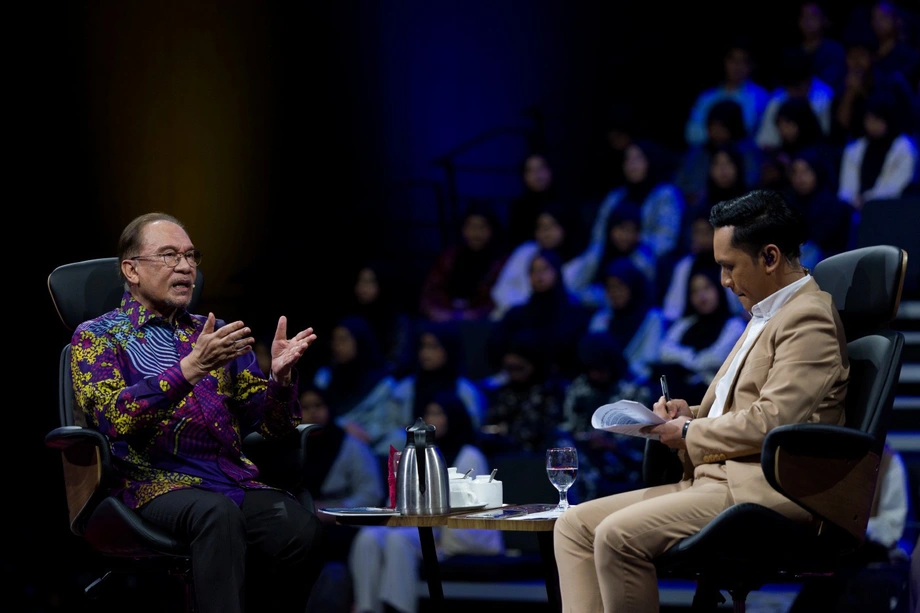
Malaysia will hold its 16th general election before February 2028, Prime Minister Datuk Seri Anwar Ibrahim said on the night of Wednesday, 25 November 2026, giving the country its clearest signal yet on when the next national vote will come. Speaking on TV1 during Radio Televisyen Malaysia's programme Dialog Negara: Di Sebalik Keputusan (National Dialogue: Behind the Decisions), carried simultaneously by RTM and several local media channels, Anwar declined to fix a date but placed the vote either side of National Day in 2027.
Contents
- A Wide Window, and a Request for Patience
- Why February 2028 Is the Hard Edge
- The Push From UMNO and a Refusal to Bend
- What a Second Mandate Would Mean for Anwar
- The Reform List Still Waiting
- Corruption: A Problem He Says He Inherited
- Fatwas, Hadith and the Fight Over Evidence
- Nine Voices in the Studio
- What Is Still Open
- Key Points
GE16 must be held before February 2028; that is the rough timeframe. So, please be patient... It will likely be either before or after National Day. It won't be beyond that.
National Day, or Hari Kebangsaan, falls on 31 August each year, which puts the likely polling period somewhere between the middle of 2027 and the opening weeks of 2028. The Malay word Anwar used for his appeal, "sabarlah", asks people to hold their nerve, and it was aimed at a specific audience: a section of political opinion that has spent recent months demanding that Parliament be dissolved at once so a fresh mandate can be sought from voters.
Anwar, who is also chairman of Pakatan Harapan, answered that pressure without naming a single day. He described the February 2028 limit as a rough outer edge set by the life of the current government's term, and he repeated that nothing beyond it was on the table.
Why February 2028 Is the Hard Edge
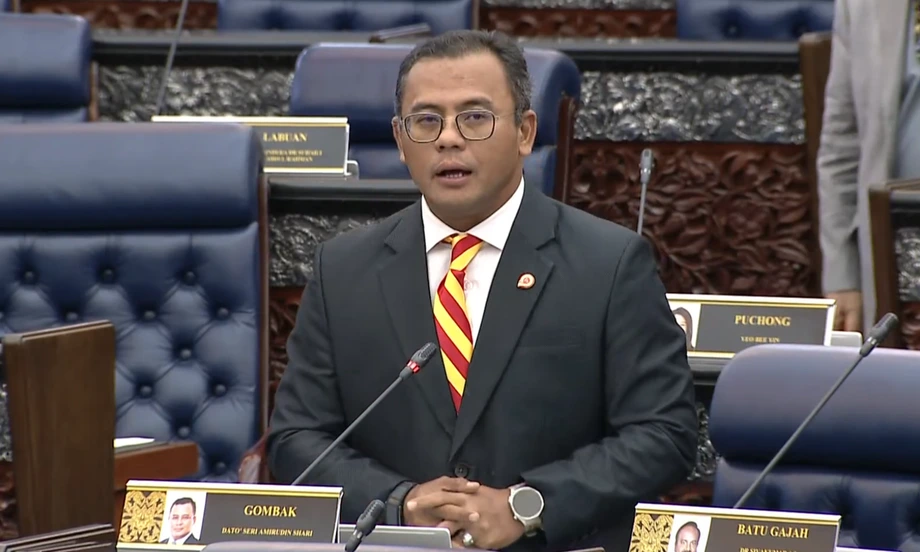
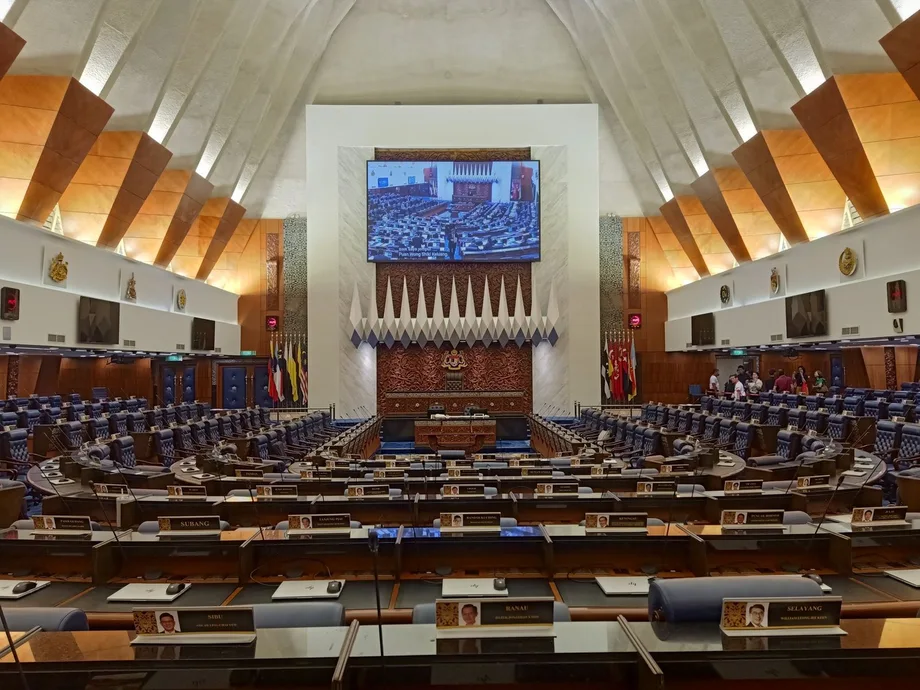
Lawyer Dr Zulqarnain Lukman, an advocate and solicitor, set out the arithmetic in a statement issued the same day. The Dewan Rakyat, the elected lower house of Parliament, still has more than a year to run before its term ends automatically in November 2027, he said, which means the general election can be held at the latest in February 2028. Malaysian rules require polling within 60 days of a dissolution, which is how a November expiry pushes the vote into the first weeks of the following year.
That timetable turns the next 14 months into a negotiation over timing rather than a question of whether an election is coming. The markers Anwar and his critics are working from can be laid out plainly.
- 25 November 2026: Anwar tells a national television audience the election will fall before February 2028, likely before or after National Day.
- 31 August 2027: National Day, the cultural marker he used to describe the window.
- November 2027: the Dewan Rakyat's term expires automatically if it has not been dissolved earlier.
- February 2028: the latest point at which polling can be held under that schedule.
For ordinary Malaysians, the practical effect is that the machinery of an election campaign, from candidate selection to party manifestos, now has a working calendar. For parties in the ruling coalition and outside it, the same calendar sets deadlines for deciding seats, alliances and slogans.
The Push From UMNO and a Refusal to Bend
The loudest calls for an early dissolution came from UMNO's general assembly, which urged the Prime Minister to seek the dissolution of the Dewan Rakyat so that a new mandate could be obtained quickly. Anwar did not follow the demand, and Zulqarnain described that decision as wise and mature.
The lawyer argued that the remaining months are exactly the period Anwar needs to finish reforms that have been promised but not delivered, and he listed the prime minister's term limit as the first item on it.
In this remaining period it is essential for Anwar to complete the institutional reform agenda that has not yet been carried out, such as drafting an act to limit the post of prime minister to two terms.
Zulqarnain added that BN and UMNO could not press the Prime Minister into an early dissolution if the coalition parties of Sabah and Sarawak stood firmly behind him. The UMNO-led bloc, he said, now looks confident enough to boast that it can win GE16 without Pakatan Harapan, after victories in the Johor and Negeri Sembilan state elections.
That reading places the election timing inside a wider power balance: Anwar's ability to ignore the dissolution demand rests on support from Sabah and Sarawak parties, not on the goodwill of his rivals.
What a Second Mandate Would Mean for Anwar
Asked what a new mandate would mean for his administration, Anwar said the shape of the next government depends on how voters divide their support among parties. He was careful to separate the question of who governs from the question of who leads.
On his own plans, the Prime Minister was direct about wanting to stay on. He said the composition of the administration after the election cannot be settled in advance, because it turns on circumstances, backing and the mandate each party receives.
The composition cannot be fixed because we look at the situation and the support and mandate given to the parties. But as for me, of course I want to continue, and with the experience we have, with the strength we have, to lift Malaysia's standing.
He returned to the same theme when describing what a further term would be for. Anwar said he loves the country, believes in its capacity, and places high hopes in young Malaysians to make Malaysia stand tall in the region and the world.
I love this country. I believe in what it can do. I have high hopes for our young people, and I want Malaysia to stand tall as a strong nation in the region and the world.
The Reform List Still Waiting
Beyond the two term limit for prime ministers, Zulqarnain's statement pointed to a series of agencies the government has promised to clean up. Tabung Haji, the national pilgrims' fund that manages savings for Malaysians preparing for the hajj, and Felda, the federal land development authority that resettles smallholders, were named as institutions whose governance must be corrected and put back on the right track. He said amendments to the Tabung Haji Act and the Felda Act would probably be needed to make those fixes stick.
Reform should reach other institutions tied to the bumiputera agenda as well, he said, naming Majlis Amanah Rakyat (MARA), the agency that funds rural and indigenous education and business, and Universiti Teknologi MARA (UiTM), the large public university reserved mainly for bumiputera students. The aim, in his words, is to make sure the original purpose of those institutions is achieved.
His warning about an early election was blunt. If the Dewan Rakyat were dissolved now, another prime minister might lack Anwar's willingness to push through such changes. He also called on the Prime Minister to review the government's communication system so that what the administration has achieved can actually reach the public.
Corruption: A Problem He Says He Inherited
The same television appearance carried a second message about governance. Anwar described corruption as a problem woven into the system he took over, and said fighting it requires steadiness rather than short bursts of enthusiasm.
I inherited a state of affairs that runs through the system. So we must stay firm and keep going, whether it is popular or not; that is a secondary question.
The Prime Minister said the challenge of fighting corruption had turned out to be larger than he expected. Building an understanding of integrity, he said, has to start early, above all among the young.
Those remarks sit alongside his reform list: a term limit law, governance repairs at Tabung Haji and Felda, and changes at MARA and UiTM all depend on Parliament and on public tolerance for unpopular decisions, which is why the timing of the election matters to each of them.
Fatwas, Hadith and the Fight Over Evidence
Anwar used part of the night to urge Malaysians to test religious claims against knowledge and reliable evidence, including claims made by political leaders, himself among them. He said religious outreach must rest on command of the subject, and warned that political opinions are often mistaken for settled religious rulings.
Sometimes in politics the fatwa changes every two years. But people think it comes from a religious teacher, so they follow it closely. In fact, it is a political opinion.
A fatwa is a scholarly opinion on a point of Islamic law. Anwar's argument is that the label carries an authority that a political position does not deserve, and that mixing the two confuses people who cannot tell the difference between religious ruling and political preference. He said social media has made the problem sharper, because anyone can appear to be an expert and issue interpretations of religion for political ends, whether from the government side or the opposition.
Checking sources, he said, is not an attack on faith but part of Islamic scholarly habit.
If you cite a hadith, people ask which one. Which verse of the Quran? Whose commentary are you using?
His advice to the public was to make a habit of checking, weighing and debating views on the basis of clear sources and facts, whoever presents them. Accepting a view blindly, he said, holds back critical thinking and can lower the standing of Islam in society.
Nine Voices in the Studio
The programme was built as a panel discussion rather than a solo interview, and the guest list spanned business, medicine, social work, religion and student politics. Joining the Prime Minister were Komuniti Pejuang Hartanah founder Datuk Ahyat Ishak and KRA group strategy director Amir Fareed Rahim.
The panel also included medical officer and social media influencer Dr Malar Santhi Santherasegapan, entrepreneur and digital content creator Adam Shamil, PlusVibes Group founder and chief executive Dr Madiha Fuad, and Farm Fresh Berhad group chief operating officer Azmi Zainal. Independent preacher Izzhar Nazri, Architects of Diversity (AOD) Malaysia founder Jason Wee and Universiti Teknologi MARA Student Representative Council president Mohamad Adib Hazim Mohamad Razali completed the line-up.
The mix reflects the ground Anwar covered in one sitting: cost of living and business conditions through the entrepreneurs and executives, public health and mental health through the medical and social enterprise voices, religious authority through the preacher and the diversity advocate, and the concerns of young voters through the student leader.
What Is Still Open
No polling date has been set, and no announcement has been made about when Parliament will be dissolved. The Prime Minister gave a limit and a rough preference, not a schedule, and the Election Commission has not published a timetable.
Who leads the next government is also undecided in public. Anwar said the make-up of the administration depends on the mandate each party wins, which leaves open the coalition arithmetic that would follow the vote. His own intention to continue is stated, but the decision belongs to voters and to the parties that would have to form a government together.
The next fixed points are National Day on 31 August 2027, the automatic expiry of the Dewan Rakyat's term in November 2027, and February 2028 as the final limit Anwar named.
Key Points
- Prime Minister Anwar Ibrahim said the 16th general election must be held before February 2028, likely before or after National Day in 2027.
- He made the statement on RTM's Dialog Negara: Di Sebalik Keputusan on TV1 on the night of 25 November 2026, asking critics to be patient.
- Lawyer Dr Zulqarnain Lukman said the Dewan Rakyat's term ends automatically in November 2027, which sets February 2028 as the latest polling date.
- UMNO's general assembly had urged an immediate dissolution of Parliament; Anwar did not act on the call.
- Zulqarnain said the remaining months should be used for a two term limit on the prime minister and governance repairs at Tabung Haji, Felda, MARA and UiTM.
- Anwar said the next government's composition depends on the mandate each party wins, and that he wants to continue leading if given the chance.
- He described corruption as a problem built into the system he inherited and said the challenge was larger than expected.
- He urged Malaysians to check religious claims against sources, warning that political opinions are often mistaken for fatwas that change every two years.
- No polling date, dissolution date or election timetable has been announced.