A gas promise needs a delivery plan
Sarawak wants a guarantee that PETRONAS can deliver 1.2 billion standard cubic feet of gas a day, not simply agree to that volume on paper, as negotiations over control of the state's gas industry approach a proposed settlement by the end of 2026.
Contents
- A gas promise needs a delivery plan
- What the May declaration agreed
- Why Sarawak wants certainty about the gas
- A proposed joint venture could connect supply and demand
- Which laws are in dispute?
- How negotiations reached the Federal Court
- Money and payment disputes remain central
- Major gas investment continues alongside the talks
- Election politics adds pressure to compromise
- Key Points
Premier Abang Johari Tun Openg says an independent technical committee is examining the positions of Petroliam Nasional Bhd, or PETRONAS, and Petroleum Sarawak Bhd, or PETROS, to help them reach a compromise. A final commercial agreement has yet to be reached. If negotiations do not produce a settlement outside court, the Federal Court is scheduled to hear their constitutional disputes over five days from January 25 to 29, 2027.
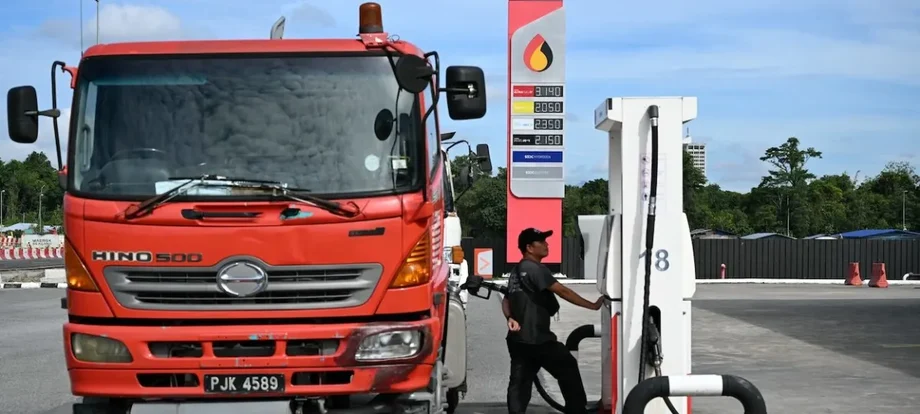
The immediate issue is practical: where will Sarawak's promised gas come from, and how will it reach power stations and other customers? PETRONAS has agreed in principle to the daily allocation, with the remaining gas intended for liquefied natural gas exports. Sarawak wants certainty about the resources and infrastructure needed to make that arrangement work.
Behind those delivery questions lies a larger contest over who can regulate, distribute and earn revenue from gas in Sarawak. PETRONAS relies on federal petroleum law, while the state maintains that its own laws continue to apply.
The proposed settlement therefore has to connect three things: legal authority, commercial payments and physical gas supply. Abang Johari describes negotiations as nearing their final stage, with the two companies guided by a declaration signed by the federal and Sarawak governments in May 2025.
What the May declaration agreed
Prime Minister Anwar Ibrahim and Abang Johari met at Perdana Putra on May 9, 2025, with senior leaders of both companies present. The Prime Minister's Office said the governments had agreed to resolve the outstanding issues through negotiations and finalise basic principles to support the talks.
The resulting joint declaration recognises federal and Sarawak laws and sets out a division of responsibilities: PETROS would oversee domestic gas distribution in Sarawak, while PETRONAS would continue handling LNG exports. LNG is natural gas cooled into liquid form so it can be transported by ship.
The declaration also provides for the 1.2 billion standard cubic feet daily supply and cooperation on future projects. The Prime Minister's Office described the wider cooperation as including faster commercial energy supply to ASEAN countries, connecting the settlement to Malaysia's regional energy ambitions.
Abang Johari says the technical committee was appointed to examine areas of disagreement and help the companies find common ground. He maintains that the negotiations should follow what he and Anwar agreed, and that neither company should exercise authority beyond that of its respective government.
The remaining work is to turn those political commitments into detailed operating and commercial terms. The companies need arrangements that tell them how gas will be allocated, delivered and paid for while their legal responsibilities remain contested.
Why Sarawak wants certainty about the gas
Sarawak's priority is securing fuel for domestic needs, especially electricity generation. Abang Johari says agreement on a daily volume is insufficient without knowing the gas source and whether it can actually be delivered to users.
The proposed allocation is measured in standard cubic feet, a unit that expresses gas volume at specified temperature and pressure conditions. Using common conditions allows suppliers and customers to compare quantities consistently. At 1.2 billion standard cubic feet a day, the proposed volume would amount to about 438 billion standard cubic feet over a year of 365 days.
Power stations need a dependable flow rather than an annual promise alone. The question for Sarawak is therefore how production, pipelines and delivery arrangements will support that daily supply while PETRONAS continues serving LNG customers.
Abang Johari accepts that gas remaining after the domestic allocation can be used for LNG exports. His position puts the focus on securing Sarawak's supply within a wider system that must also serve export commitments.
A proposed joint venture could connect supply and demand
Abang Johari has proposed a joint entity between PETRONAS and PETROS to explore for and produce gas. The companies are discussing whether such an arrangement could provide the resources needed for Sarawak's energy and industrial development.
He has identified gas from areas near Natuna as a potential source that could be piped directly to Kuching at a lower cost. Sarawak is also developing a hub intended to support industries with lower carbon emissions and infrastructure for gas pipelines on land.
The proposal would give the two companies a shared role earlier in the supply process. Exploration finds gas deposits, production brings the gas out of the ground, and pipelines carry it towards processing facilities and customers. Combining those activities with a domestic supply commitment could help align the gas source with its intended destination.
The proposed entity remains under discussion. Its ownership, investment requirements and delivery schedule have not been announced. For Sarawak, the central commercial question is whether the arrangement can provide an identified source of gas and a workable route to shore.
Which laws are in dispute?
PETRONAS maintains that the Petroleum Development Act 1974 gives it authority over Malaysia's hydrocarbon resources and supports its national role in managing petroleum operations. It also seeks to preserve the connected production, processing and export arrangements that support Malaysia's LNG industry.
Sarawak argues that its Oil Mining Ordinance 1958 remains in force alongside federal legislation. The state appointed PETROS as its sole gas aggregator in February 2024 under the Distribution of Gas Ordinance 2016. An aggregator coordinates gas supplies and distribution for a market, bringing producers and customers into an organised supply arrangement.
The 2016 ordinance requires a licence to supply or distribute gas in Sarawak. PETRONAS maintains that its federal rights mean it does not need a state licence. That disagreement affects which authority can set requirements for the company's activities within the state.
Malaysia's Federal Constitution divides legislative powers between federal and state governments. Lawyer Hafiz Hassan points to Federal List Item 8(j), covering mineral resources, oils, oilfields and petroleum products, subject to State List Item 2(c), which covers matters including prospecting permits and mining leases.
Article 75 provides that federal law prevails where state law is inconsistent with it, with the state law becoming void to the extent of that inconsistency. The petitions place the validity and application of the disputed laws before the Federal Court.
How negotiations reached the Federal Court
PETRONAS is challenging the Sarawak legislature's authority to enact 10 laws, including the Oil Mining Ordinance and the Environment (Reduction of Greenhouse Gas Emission) Ordinance 2023. Sarawak has separately challenged the Petroleum Development Act 1974, the Continental Shelf Act 1966 and the Petroleum Mining Act 1966.
The litigation followed repeated efforts to settle the dispute politically. Sarawak announced in November 2024 that negotiations had effectively concluded, yet discussions continued. Anwar also described the matter as resolved in early 2025, before the May declaration established a framework for further work.
The main steps show how the negotiations and court proceedings have developed alongside each other:
- February 2024: Sarawak appointed PETROS as its sole gas aggregator.
- November 2024: Sarawak announced that negotiations had effectively concluded, although talks continued.
- May 9, 2025: Federal and Sarawak leaders agreed to pursue a negotiated resolution, followed by the joint declaration that month.
- January 2026: PETRONAS applied to the Federal Court for clarification of the laws governing its Sarawak operations.
- February 2026: Sarawak brought its challenge to three federal petroleum laws.
- March 2026: The Federal Court granted PETRONAS permission to proceed with its constitutional challenge.
- End of 2026: Abang Johari hopes to secure a settlement outside court.
- January 25 to 29, 2027: The Federal Court is scheduled to hear the petitions if the dispute remains unresolved.
The technical committee provides a route towards compromise while the legal process continues. The year-end target leaves the governments and companies a limited period to translate their broad understanding into agreed terms before the scheduled hearing.
Money and payment disputes remain central
Harridon Suffian, an economist at Universiti Kuala Lumpur, identifies Sarawak's financial returns as another unresolved part of the negotiations. He says PETRONAS rejected a numerical value proposed by Sarawak because of the effect it would have on the company's revenue structure.
Harridon says a concrete agreement would need to specify distribution volumes and clearly state the royalty or financial value payable to Sarawak. He describes the outstanding terms as involving several figures still requiring agreement.
Harridon explains the role of the political commitments in directing the companies towards a commercial settlement:
The political agreements are substantially directions and instructions for both parties, Petronas and Petros, to move forward towards an agreement.
The dispute has also reached individual business transactions. A case involving Shell MDS concerns which party is entitled to receive payment for gas supplied in Bintulu. PETRONAS and PETROS are involved in a separate dispute over a bank guarantee worth RM7.95 million.
Those cases give the wider argument a concrete commercial dimension. Companies buying gas need clarity about whom they must pay, while suppliers need enforceable arrangements governing payment and financial security.
Major gas investment continues alongside the talks
Sarawak's gas industry is also preparing for substantial new development. PETRONAS and its partners signed agreements on November 1, 2026, for the coordinated development of Lang Lebah and B14, two offshore fields with combined resources estimated at more than 6.5 trillion cubic feet.
The Lang Lebah and B14 agreements would give TotalEnergies a 30 per cent interest and operatorship of both fields, with PTTEP and KUFPEC holding 25 per cent each and PETRONAS Carigali retaining 20 per cent. Completion remains subject to regulatory approvals.
The planned development targets production of about 10 billion cubic metres a year once output reaches a steady level, supplying the existing Malaysia LNG liquefaction plant. The project places a large future source of gas within Sarawak's continuing export economy.
The proposed PETRONAS and PETROS settlement addresses how domestic distribution and national petroleum responsibilities will operate alongside such investments. For developers and customers, a workable agreement would provide greater certainty about regulatory duties and supply arrangements.
Election politics adds pressure to compromise
Abang Johari called for public support for greater control over strategic resources on October 31, citing Sarawak's takeover of Bintulu port and investment in Affin Bank. He also reaffirmed the state's claims under the Malaysia Agreement 1963, which concerns the arrangements under which Sabah and Sarawak joined the federation.
Ahmad Zaharuddin Sani Ahmad Sabri, an analyst at Global Asia Consulting, warns that election rhetoric could narrow the room for agreement by making concessions harder to defend publicly. He describes the political risk this way:
When constitutional disputes become election slogans, compromise becomes politically expensive, and judicial decisions become politically dangerous.
Hafiz Hassan distinguishes the constitutional treatment of ports from petroleum. Ports and harbours generally fall under state jurisdiction unless declared federal, while petroleum authority involves provisions in both federal and state lists. The legal route for controlling one strategic asset therefore differs from the route for another.
Amalina Anuar, a visiting fellow at the ISEAS - Yusof Ishak Institute, examines the wider stakes in her April 9, 2026, analysis of the dispute. She places the confrontation against a Sarawak election due in 2026 and a national general election that must be held before February 2028.
Amalina argues that Anwar faces competing pressures: PETRONAS contributes to federal finances, while Sarawak's ruling Gabungan Parti Sarawak coalition supplies parliamentary support for his government. Her analysis also identifies consequences for Sabah, which has similar interests in petroleum authority and revenue.
She gives Sarawak's share of Malaysia's oil and gas reserves as 61 per cent and Sabah's as 19 per cent. Together, that is 80 per cent, illustrating why a dispute centred on Sarawak has wider importance for East Malaysia and the federation.
Zaharuddin warns that prolonged confrontation could discourage investment, delay petroleum projects and complicate energy supply. The immediate task is to agree on a settlement that supplies Sarawak reliably, defines the companies' responsibilities and resolves the financial terms before the January hearing.
Key Points
- Abang Johari hopes the PETRONAS and PETROS dispute can be settled outside court by the end of 2026.
- Sarawak seeks certainty about the source and delivery of 1.2 billion standard cubic feet of gas a day.
- An independent technical committee is examining disagreements under the May 2025 joint declaration.
- A proposed joint entity would explore for and produce gas, with supply from near Natuna under discussion.
- Legal authority, distribution arrangements and Sarawak's financial returns remain central to negotiations.
- The Federal Court hearing is scheduled for January 25 to 29, 2027, if a settlement is not reached.