Gold Reserves Confirmed Near Protected Rhino Habitat
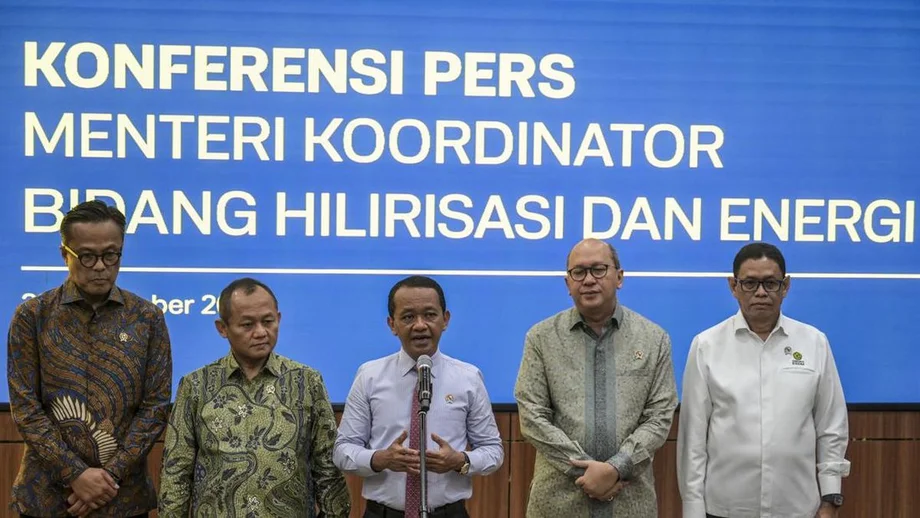
On Monday, November 23, 2026, Indonesia confirmed that gold deposits exist near Ujung Kulon National Park in Pandeglang Regency, Banten, while promising that no mining will take place inside the protected sanctuary. Speaking at the Ministry of Energy and Mineral Resources (ESDM) office in Central Jakarta, Coordinating Minister for Downstreaming and Energy Transition Bahlil Lahadalia, who also serves as Minister of ESDM and Chairman of the Golkar Party, stated that zero mining permits have been granted or processed for the area.
Contents
- Gold Reserves Confirmed Near Protected Rhino Habitat
- How Resource Mapping Differs From a Mining License
- Environment Minister Seeks Removal of Ujung Kulon Waters
- Why Rhino Relocation Proposals Triggered Public Suspicion
- Forestry Ministry Pledges No Mining Approvals Inside Park
- Timeline of Mapping and Policy Statements
- What Remains Undecided for Ujung Kulon
- Key Points
Geological surveys have detected mineral potential in coastal waters bordering the park, yet officials stressed that state resource records exist solely to inventory national wealth rather than authorize digging. Addressing reporters after a press conference in Jakarta, Minister Bahlil pushed back against rumors of imminent extraction inside the conservation zone.
There are reserves. Those reserves contain gold. Yet that is just so the country knows there are reserves there. It does not mean a permit is immediately issued. Only someone who is not sane would issue a permit in that national park.
Bahlil added that protecting conservation zones is a legal duty he intends to uphold throughout his time in office. Explaining his personal commitment to environmental protection during the same briefing, the minister pledged to block any permit request affecting Ujung Kulon.
No permits will ever be issued in those areas. We must uphold our obligations to protect them. If anyone tries to issue a permit, I assure you I will not approve it.
How Resource Mapping Differs From a Mining License
Understanding why Ujung Kulon appeared on a government mining map requires looking at how Indonesia regulates mineral extraction. The Geological Agency (Badan Geologi), a unit within the Ministry of ESDM, surveys regions across the archipelago, including volcanic belts and offshore waters, to calculate the nation's underground and seabed resources.
State mapping of areas holding potential mineral reserves began in 2014 and receives updates every five years, with revisions completed in 2017 and 2022 based on proposals submitted by regional governments. Under ESDM Ministerial Decision Number 65.K/MB.01/MEM.B/2026 on the Mining Area of Banten Province, portions of the sea surrounding Ujung Kulon fall inside a designated Mining Business Area (WUP) polygon.
Government maps attached to the 2026 ministerial decision place the core land boundaries of Ujung Kulon National Park outside that WUP polygon. Head of the Geological Agency Lana Saria also stated that government geologists have never carried out exploration inside the national park itself, leaving authorities with no field data on potential mineral volumes within the rhino sanctuary.
Even in waters or districts listed on a resource map, companies cannot legally dig without clearing multiple administrative gates. First, the government must carve out a Special Mining Business Permit Area (WIUPK), and only after that step can the Ministry of ESDM issue a Mining Business Permit (IUP) to an operator. Minister Bahlil clarified how far the Ujung Kulon area sits from any active licensing step.
There is absolutely nothing yet. There isn't even a WIUPK, let alone an IUP.
Environment Minister Seeks Removal of Ujung Kulon Waters
Despite the absence of active mining licenses, environmental authorities want the coastal waters stripped from the Banten mining map altogether. On Thursday, November 19, 2026, Minister of Environment and Forestry and Head of the Environmental Control Agency (KLH/BPLH) Moh Jumhur Hidayat sent an official letter to Minister Bahlil asking him to remove the waters around Ujung Kulon from WUP status.
In a press release announcing the letter on November 19, Minister Jumhur explained that his agency wants formal protection locked in during the earliest planning phase before any survey vessel approaches the coastline.
This request has been made so that ESDM Ministerial Decision Number 65.K/MB.01/MEM.B/2026 can be evaluated.
Ujung Kulon serves as the only remaining wild refuge on Earth for the Javan rhino, scientifically known as Rhinoceros sondaicus, a species recognized by its single horn. No mining activity currently occurs at the WUP site, and no study has measured direct impacts on the animals, yet Jumhur noted that published research shows the rhinos require highly specific, undisturbed surroundings across connected land, coastal, and marine habitats.
TNUK is the last natural habitat of the Javan Rhino (Rhinoceros sondaicus). This species is critically endangered, with fewer than 50 individuals remaining in the wild that survive in just this area.
Minister Jumhur warned that even preliminary offshore surveys could disrupt the fragile sanctuary. Outlining the physical risks in his statement, he pointed to how industrial activity travels across water and land.
Mining activities can pressurize ecosystems through noise, vibration, sedimentation, pollution, changes in water quality, and increased human activities.
KLH urged related ministries to verify boundaries together by overlaying the WUP coordinates against the borders of Ujung Kulon National Park, marine conservation zones, the Environmental Protection and Management Plan (RPPLH), and regional land and sea spatial plans. While that review proceeds, KLH requested a suspension of any utilization in the contested waters.
Why Rhino Relocation Proposals Triggered Public Suspicion
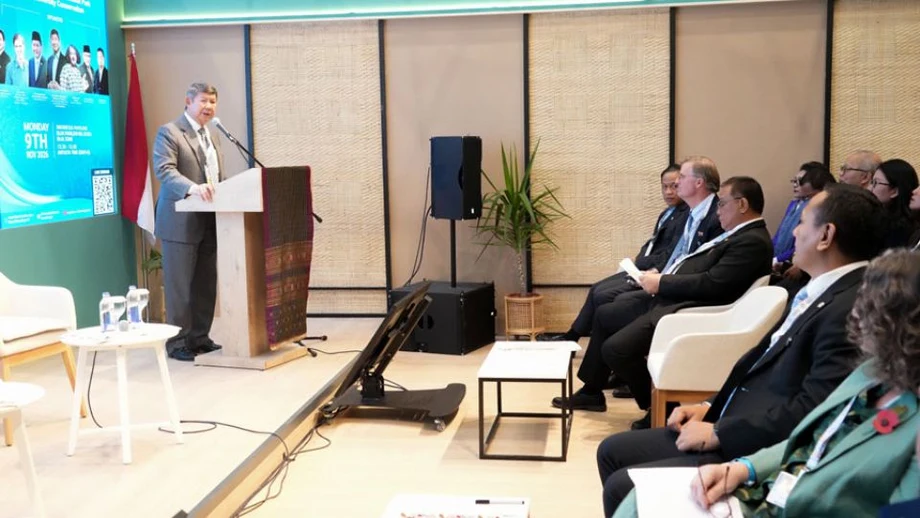
Public alarm over gold in Banten intensified because it collided with a separate conservation proposal made one week earlier in Turkey. On November 12, 2026, during a media briefing at the United Nations Climate Change Conference (COP31) in Antalya, Special Presidential Envoy for Climate and Energy Hashim Djojohadikusumo proposed establishing a second habitat for Javan rhinos at Alas Purwo National Park in East Java.
Hashim presented the idea as a safety measure to reduce extinction risks for a species whose entire wild population lives in one vulnerable peninsula exposed to earthquakes, tsunamis, volcanic eruptions, and low genetic diversity. Social media users soon connected the relocation talk to the Banten WUP map and rumors of gold inside the park, questioning whether wildlife was being moved to make way for mines.
On Tuesday, November 17, 2026, the Ministry of Forestry issued a statement directly addressing the mineral rumors and separating them from conservation planning. Ristianto Pribadi, Head of Public Relations and Foreign Cooperation at the Ministry of Forestry, stated that any discussion of a second habitat rests purely on protecting the species rather than altering Ujung Kulon's legal status as a conservation area.
The government's focus is on preserving the Javan rhino and the integrity of its habitat. Every conservation step must provide real benefits for the survival of the species while maintaining the protection of Ujung Kulon.
Forestry Ministry Pledges No Mining Approvals Inside Park
Ministry of Forestry leadership also reinforced the legal wall around Ujung Kulon by addressing forest land permits. Under Indonesian law, extracting minerals inside state forest zones requires a Forest Area Use Approval (PPKH) issued by the forestry ministry, alongside energy ministry permits. Minister of Forestry Raja Juli Antoni pledged that Ujung Kulon will remain the primary home of the Javan rhino and ruled out any mining clearance.
I promise I will never issue a mining PPKH in Ujung Kulon National Park.
Active conservation programs continue inside the Banten peninsula while ongoing wildlife planning remains in the research stage. Rangers and scientists manage the Javan Rhino Study and Conservation Area (JRSCA), covering roughly 5,100 hectares in the Gunung Honje section of Ujung Kulon, alongside ecosystem rehabilitation, security patrols, and population tracking.
Ministry officials also clarified that establishing a second habitat would never involve emptying Ujung Kulon of its rhinos. Should scientists recommend translocation after thorough study, only a small portion of the population would be considered for movement, and authorities have made no decisions yet regarding the exact destination, number of rhinos, transfer method, or timetable.
Timeline of Mapping and Policy Statements
Events surrounding the Banten mineral map and Javan rhino protection span more than a decade of state geological surveys and recent diplomatic and ministerial announcements.
- 2014: Indonesia's Geological Agency begins mapping and designating areas with potential mineral reserves across regions.
- 2017 and 2022: The government updates mining area designations every five years based on proposals from regional governments.
- 2026: ESDM Ministerial Decision Number 65.K/MB.01/MEM.B/2026 includes waters near Ujung Kulon inside a Mining Business Area (WUP) polygon while leaving the core park outside.
- November 12, 2026: Special Presidential Envoy Hashim Djojohadikusumo proposes creating a second Javan rhino habitat at COP31 in Antalya, Turkey.
- November 17, 2026: Ministry of Forestry spokesperson Ristianto Pribadi separates rhino conservation planning from mineral rumors.
- November 19, 2026: Environment and Forestry Minister Moh Jumhur Hidayat writes to Minister Bahlil requesting removal of Ujung Kulon waters from the WUP map.
- November 23, 2026: Minister Bahlil Lahadalia confirms gold reserves near Ujung Kulon, states no WIUPK or IUP exists, and pledges never to approve mining in the park.
What Remains Undecided for Ujung Kulon
Several administrative and scientific questions remain open as agencies coordinate their response. First, the Ministry of ESDM has not yet announced whether it will formally revise Decision Number 65.K/MB.01/MEM.B/2026 to delete the coastal waters bordering Ujung Kulon from the Banten WUP map, as requested by Minister Jumhur on November 19.
Second, the exact volume and commercial value of gold deposits in the surrounding waters remain unquantified, and no agency holds mineral data from inside the protected park boundaries because the Geological Agency has never surveyed there. Third, forestry scientists have yet to conclude studies or set any dates, sites, or animal counts for a potential partial translocation of Javan rhinos.
For residents of Pandeglang Regency, fishing communities along the Banten coast, and conservation workers guarding fewer than 50 rhinos, the combined pledges from the energy and forestry ministries mean no drilling, digging, or forest clearance is authorized today, while interministerial mapping checks will decide whether offshore survey zones are permanently erased from state mining maps.
Key Points
- Coordinating Minister and ESDM Minister Bahlil Lahadalia confirmed on November 23, 2026, that gold reserves exist near Ujung Kulon National Park in Banten, while stating that zero WIUPK or IUP mining permits have been issued.
- State mining maps were established in 2014 and updated in 2017 and 2022, and ESDM Ministerial Decision Number 65.K/MB.01/MEM.B/2026 includes nearby coastal waters in a WUP polygon while excluding the core park.
- Geological Agency head Lana Saria confirmed no mineral exploration has ever taken place inside Ujung Kulon National Park.
- Environment and Forestry Minister Moh Jumhur Hidayat sent a formal letter on November 19, 2026, asking to remove Ujung Kulon waters from the WUP to protect the fewer than 50 wild Javan rhinos from survey noise and pollution.
- Forestry Minister Raja Juli Antoni pledged never to issue a Forest Area Use Approval (PPKH) for mining in Ujung Kulon, where rangers manage the JRSCA sanctuary covering 5,100 hectares in Gunung Honje.
- Proposals raised at COP31 on November 12, 2026, to build a second Javan rhino habitat remain under scientific review, with no site, schedule, or translocation count decided.