Instant Fish Soup Brought to Disaster Relief
Researchers at the University of the Philippines Visayas have created an instant alternative to the popular Filipino dish sinigang. Designed specifically for emergency relief packs, the product brings familiar comfort food to people displaced by severe weather events.
Contents
Standard relief packages during major storms often consist of rice, canned goods, and instant noodles. When typhoons Tino and Uwan struck back to back a year prior, those supplies affected more than 16 million people. The government maintains a stockpile of 3.79 million family food packs in warehouses nationwide to meet such emergencies.
Surveys conducted before the project showed that 87.10% of respondents felt current relief packs lacked nutritional value. Meanwhile, 93.55% expressed a desire for healthier alternatives in emergency distributions.
Prof. Encarnacion Emilia served as the project leader for the initiative, which received funding support from the Department of Agriculture-Bureau of Agricultural Research. The product name is Seafood on the Spot, abbreviated as SOS.
Local Fish and Traditional Souring Agents
The instant meal relies on underutilized local fish species, specifically salay-salay or yellowstripe scad. Fisherfolk typically sell this catch at very low prices in local markets.
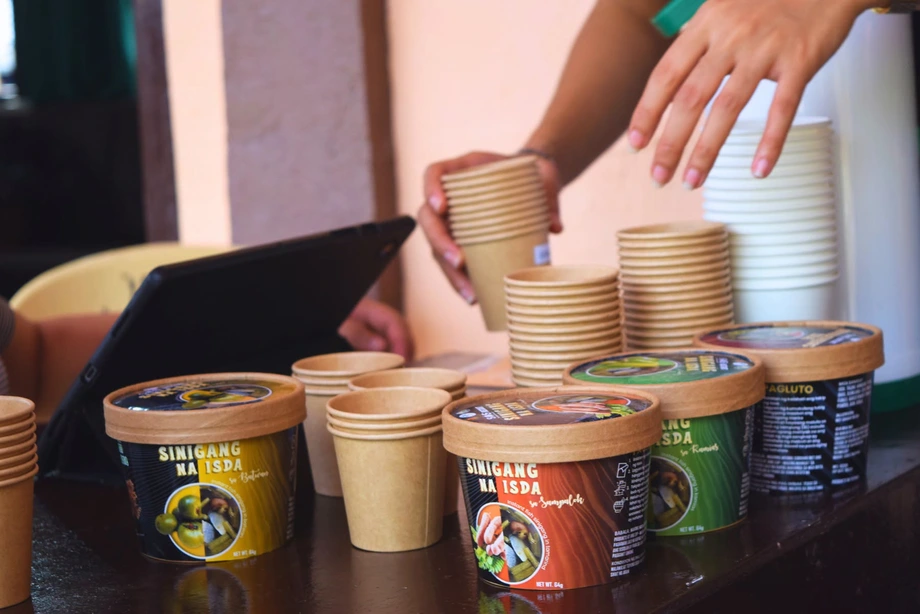
For the broth, researchers used traditional souring agents native to the Philippines. These include sampalok, batwan, and kamias, combined with real vegetables and fish pieces inside a paper cup.
Preparation requires only peeling back the lid and adding hot water, much like instant cup noodles. The design eliminates the need for stoves, cooking pots, or complex kitchen setups in crowded evacuation centers.
Traditional plastic seasoning sachets were replaced with a thin, edible film made from seaweed. This film dissolves completely when hot water is poured into the cup, which reduces both preparation steps and plastic waste.
Consumer Testing Across the Country
From August to October 2026, the research team conducted consumer testing across multiple regions in Luzon, Visayas, and Mindanao. Test locations included Nasidman in Ajuy, Iloilo, Barangay Carmen in Cagayan de Oro City, Bulakan in Bulacan, and Masantol in Pampanga.
Testing sites represented communities that face regular threats from floods, high tides, rough seas, and typhoons. Local officials and residents participated in evaluating the taste, convenience, and nutritional value of the meal.
Initial hesitation over the concept of instant sinigang quickly gave way to positive feedback. Preliminary results from approximately 230 consumer responses showed top purchase-intent ratings of 5 out of 5.
Social welfare workers noted that the cup serves as a practical viand to pair with rice. The meal helps ease the heavy cooking demands placed on community kitchens during disasters.
Community Responses and Expert Perspectives
Local leaders in disaster-prone regions shared their views on the new emergency food option during the testing phase. Officials pointed out the limitations of standard rations currently distributed during crises.
A local official in Bulakan described the common reliance on noodles during emergencies by pointing out shortcomings in nutritional content. The official spoke directly about the physical characteristics of standard relief items.
If we give out noodles, honestly they are not nutritious; the noodles just swell.
Another local official in Bulakan initially viewed the instant format with caution before tasting the final product. The official offered a balanced assessment of the innovation.
It is a healthier option, despite the fact that it is instant.
Prof. Encarnacion Emilia explained the broader mission behind the development of the seafood meal during community trials. The project aims to support individuals working within the local fishing sector.
Para kanino ba itong ginagawa natin? Sa industriya ng pangisdaan, ginagawa natin ang mga pag-aaral na ito upang makatulong, lalo na sa maliliit na mangingisda.
Translating the statement provides clarity on the primary beneficiaries of the research initiative. The project translates to supporting small-scale fisherfolk who harvest the ingredients.
Who are we doing this for? In the fisheries industry, we do these studies to help, especially small-scale fishers.
Next Steps for the Seafood Meal
Researchers are currently working on several improvements before the product reaches widespread distribution. Priorities include developing a more durable cup and creating a larger serving size.
The team is also in the process of securing official food safety registration for the product. No specific release date was given for the completion of these regulatory steps.
Local government units could soon gain access to a shelf-stable emergency meal option. The product supports domestic fisheries, minimizes environmental waste, and provides familiar nourishment during adverse weather conditions.
Key Points
- Researchers developed an instant fish sinigang product named Seafood on the Spot inside paper cups.
- Funding for the project was provided by the Department of Agriculture-Bureau of Agricultural Research.
- Consumer testing took place in Iloilo, Cagayan de Oro, Bulacan, and Pampanga between August and October 2026.
- The meal uses salay-salay fish and edible seaweed film instead of plastic seasoning packets.
- Surveys showed 87.10% of people found standard relief packs lacking in nutrition.