Transforming National Energy Policies
Thailand is preparing for a major shift in how the country powers its vehicles and industries. The Department of Energy Business, operating under the Ministry of Energy, has published a comprehensive proposal known as the Oil Plan 2026. This blueprint outlines how the nation will manage fuel supply, production, and consumption from 2026 through 2050. Energy officials are responding to a rapidly changing world where global conflicts disrupt supply chains and the growing popularity of electric vehicles alters daily fuel habits. By modernizing the national energy strategy, the government aims to strengthen energy security while cutting greenhouse gas emissions.
Contents
Professor Wibul Sriserirojana, Director of the Energy Research Institute, noted that geopolitical tensions in the Middle East during early 2026 drove up Thailand's demand for diesel fuel and forced the government to implement emergency buffers. Meanwhile, Dr. Sarawut Kaewtathip, Director General of the Department of Energy Business, explained that the updated framework accelerates the country's carbon neutrality target by fifteen years, shifting the net zero goal from 2065 to 2050. Wuttitat Tantivess, Deputy Director General of the Department of Energy Business, added that under the long-term vision, daily national fuel demand will shrink from current levels to just seventy million liters per day by 2050.
Fuel Consumption Trends and Economic Context
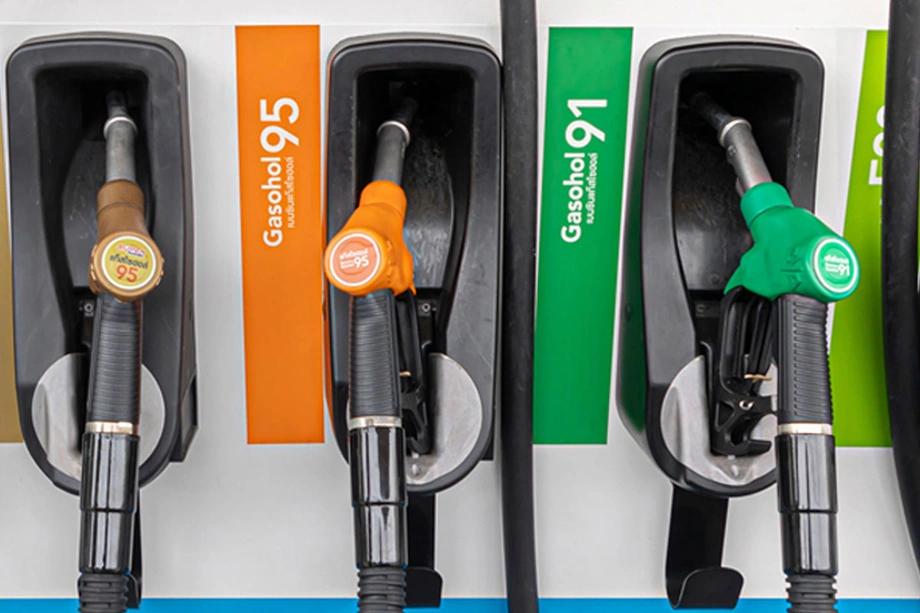
Official data covering the full twelve months of 2025 shows that daily fuel consumption across Thailand averaged 154.85 million liters, representing a slight decrease of 0.2 percent compared to the previous year. Natural gas for vehicles experienced the sharpest drop, falling by 16.4 percent as motorists abandoned the fuel. Diesel consumption decreased by 2.6 percent, and liquefied petroleum gas dropped by 1.4 percent. In contrast, commercial jet fuel increased by 7.6 percent to reach an average of 17.23 million liters per day, supported by government tourism campaigns and rising flight numbers. Gasoline consumption also grew by 1.1 percent, driven largely by motorists choosing Gasohol 95 over Gasohol 91 because the price gap between the two fuels narrowed.
The contraction in diesel and industrial fuels reflects broader economic headwinds during the same period. Gross domestic product growth for 2025 slowed to 2.2 percent due to sluggish third-quarter economic activity and manufacturing slowdowns. The manufacturing production index averaged 95.81, contracting by 0.8 percent from the prior year, while the freight shipment index fell by 1.3 percent. Wuttitat Tantivess explained that the government evaluates future demand using two distinct scenarios to prepare for these economic and technological shifts. The business as usual scenario projects that oil demand will peak in 2034 at 130 million liters per day before declining to 106 million liters by 2050, accompanied by 22.6 million electric vehicles. The aggressive net zero scenario projects that demand will peak sooner in 2029 at 125 million liters per day before dropping steeply to 70 million liters by 2050, with electric vehicles surging to 26 million units.
Restructuring Gasoline and Diesel Grades
The core structural change in the new policy centers on streamlining the types of fuel sold at service stations across the country. Gasohol 20, which blends regular gasoline with twenty percent ethanol, is designated as the primary baseline gasoline. The policy targets a fifty percent market share for Gasohol 20 by 2032. To achieve this, authorities plan to eliminate Gasohol 91 entirely by 2027 and are studying the feasibility of phasing out conventional unleaded gasoline by 2032. For diesel vehicles, biodiesel containing seven percent palm-derived methyl ester serves as the base fuel, while authorities aim to expand higher blends such as B20 to twenty percent market penetration by 2032 to absorb domestic agricultural surpluses.
Dr. Kurujit Nakornthap, Director of the Petroleum and Energy Institute of Thailand, welcomed the decision to designate Gasohol 20 and biodiesel B7 as the primary future fuels. He recommended that the government go further by eliminating unneeded fuel grades such as Gasohol 91 and Gasohol 85, while allowing ethanol and biofuel prices to float according to market forces. Supaporn BoonsiritJinda, President of the Thai Automotive Industry Association, stated that car manufacturers fully support the transition toward Gasohol 20 and B7 standards. She requested that policymakers maintain Gasohol 95, which uses a ten percent ethanol blend, to ensure proper fuel compatibility for older vehicles currently on the road.
Securing Fuel Reserves and Supply Chains
Thailand currently relies on six domestic oil refineries with a combined installation capacity of approximately 200 million liters per day, a figure expected to rise to 220 million liters per year by 2028 following completion of the clean fuel project by Thai Oil. To protect the country against international supply shocks, the Ministry of Energy is diversifying its crude oil imports. While Middle Eastern suppliers historically provided more than half of the national supply, the updated strategy reduces that dependence to between twenty and thirty percent, replacing those barrels with imports from Africa, the United States, and Latin America.
Authorities are also modernizing the strategic petroleum reserve system. Current legal requirements mandate that companies maintain crude oil reserves equivalent to six percent of imports and finished products at one percent, which translates to roughly forty to fifty days of operational supply. The government is studying innovative underground storage caverns in northeastern provinces such as Khon Kaen and Nakhon Ratchasima to expand these buffers safely. Furthermore, the regulatory framework is expanding through amendments to the Fuel Trade Act, requiring smaller fuel distributors to connect their inventory data through automated application programming interfaces by January 1, 2027, for crude oil and January 1, 2028, for refined products.
Concerns Over Impacts on Older Vehicles
The proposed elimination of Gasohol 91 and Gasohol 95 has sparked political debate regarding its fairness to owners of older vehicles. Weerapat Kajchuchevat, a member of the House of Representatives and deputy leader of the People's Party, criticized the timeline during a public statement, arguing that the policy lacks sufficient preparation for millions of motorists. Government statistics show that Thailand has approximately 46 million registered vehicles in total. More than half of those vehicles, totaling 25 million units, have been in service for over seven years.
If the government pushes ahead with phasing out these fuel types, it must prepare clear support measures and transition projects for citizens who own older cars. Right now, there is no proper plan in place, making this feel like floating a proposal without deep consideration.
Weerapat Kajchuchevat pointed out that vehicle owners cannot easily purchase new cars because trade-in programs are limited, and public transportation networks remain inadequate outside major urban centers. He urged officials to slow down the transition and address the financial realities of drivers who rely on older passenger cars and commercial pickup trucks. While acknowledging that the government appears willing to pause and reconsider the timeline, he emphasized that any future iteration of the policy must coordinate fuel pricing strategies, public loan usage, and clean energy targets more carefully.
Timeline of Key Developments
- January through December 2025: National fuel consumption averaged 154.85 million liters per day
- November 16, 2026: Opposition lawmakers raised concerns over potential impacts on 25 million older vehicles
- November 27, 2026: Public consultation and QR code feedback period closed for the energy blueprint
- January 1, 2027: Mandatory API data connection deadline for crude oil inventories
- January 1, 2028: Mandatory API data connection deadline for refined petroleum products
- 2027: Target date for the complete phase-out of Gasohol 91 fuel
- 2032: Target date for Gasohol 20 to reach fifty percent market share and potential phase-out of unleaded gasoline
- 2050: Target year for achieving net zero greenhouse gas emissions under the updated national vision
The Bottom Line
- Thailand adopted an accelerated target to achieve net zero emissions by 2050 rather than 2065
- Total daily fuel consumption fell slightly by 0.2 percent in 2025 to average 154.85 million liters
- The national energy plan designates Gasohol 20 and biodiesel B7 as the primary future fuel standards
- Gasohol 91 is scheduled for complete discontinuation by 2027
- Lawmakers have called for formal support programs to protect owners of the 25 million vehicles older than seven years