Higher ticket prices fail to close the cost gap
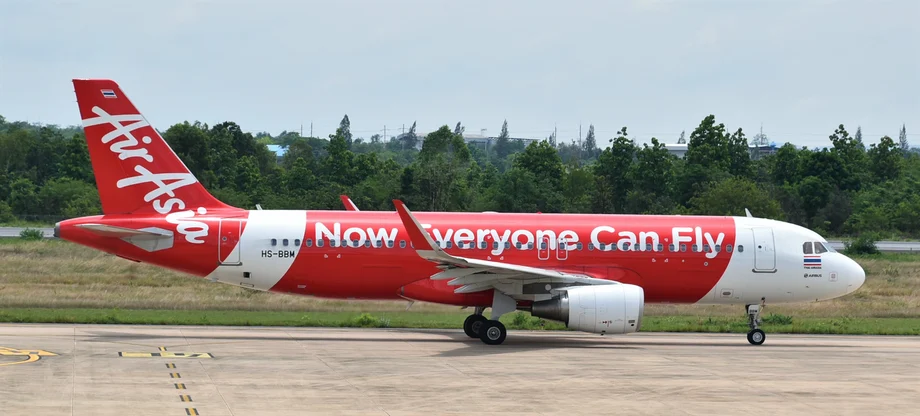
Thai AirAsia's parent company, Asia Aviation (AAV), reported a net loss of 2.368 billion baht for the quarter ended September 30, 2026, as a sharp increase in fuel prices and the expense of maintaining aircraft outweighed higher fares. The loss widened from 874.75 million baht a year earlier, even after the airline cut available seats by 26%.
Contents
- Higher ticket prices fail to close the cost gap
- Why flying less did not cut costs enough
- Passengers paid more as fewer seats were offered
- Suvarnabhumi pause reshaped the route network
- Nine months of losses deepen the financial strain
- Less cash and more debt make funding a priority
- December fleet target anchors the recovery plan
- Thai Airways also faced rising costs
- Service and tourism projects continue alongside cuts
- Key Points
AAV, which owns all of Thai AirAsia, said in its November 12 quarterly results announcement that sales and services revenue fell 13% to 8.073 billion baht. Average fares rose 24% to 2,023 baht per passenger, but passenger numbers dropped 29% during the quieter tourism season.
The airline's central problem was the gap between what each unit of flying capacity earned and what it cost. Revenue per available seat kilometre reached 1.96 baht, while the equivalent cost rose to 2.50 baht. That left a gap of 0.54 baht for every available seat flown one kilometre.
AAV now plans to reverse some of its flight reductions during the final quarter, targeting 54 aircraft in operation in December, up from 42 at the end of September. Its recovery plan combines more flights, restored routes and efforts to raise cash while fuel costs remain a major burden.
Why flying less did not cut costs enough
Thai AirAsia offered 4.41 million seats in the third quarter, down 26% from the same period in 2025. AAV said the cost of sales and services fell only 2%, showing how little of the expense disappeared when flights were reduced.
Aircraft maintenance and depreciation continued to weigh on the business. Depreciation is the accounting charge that spreads the cost of an aircraft or other asset over its useful life. When an airline flies less, expenses that continue regardless of flight numbers are spread across fewer units of capacity.
Fuel added another layer of pressure. AAV put the average jet fuel price at about $137 per barrel. More detailed operating figures showed an increase of 61% from a year earlier, with quarterly fuel expenses reaching 3.381 billion baht, equivalent to 42% of sales and services revenue, despite fuel consumption falling by about one third.
Cost per available seat kilometre, known as CASK, increased 40% to 2.50 baht. Excluding fuel, it still rose 36% to 1.68 baht. Maintenance, aircraft return costs and the smaller flying programme therefore mattered alongside the price of oil. Selling and administrative expenses were held at 8% of sales and services revenue.
Passengers paid more as fewer seats were offered
Thai AirAsia carried about 3.36 million passengers during the quarter. Its load factor, the percentage of available seats occupied, fell four percentage points to 76%. In simple terms, roughly 76 of every 100 available seats were filled.
Domestic passengers paid an average fare of 1,590 baht, up 28%, while the average international fare increased 26% to 3,066 baht. Across the network, the average reached 2,023 baht. These increases helped limit the revenue decline, but they could not compensate for the combination of fewer travellers and higher costs.
Revenue per available seat kilometre, or RASK, rose 29% to 1.96 baht. This measure accounts for both available seats and flight distance, allowing an airline to compare revenue across a network of shorter and longer routes. Its increase was slower than the 40% rise in the matching cost measure.
Total quarterly revenue, which includes income beyond sales and services, was 8.225 billion baht, down 17% from 9.930 billion baht a year earlier. The narrower sales and services figure of 8.073 billion baht was the measure used in AAV's main operating announcement.
Suvarnabhumi pause reshaped the route network
Thai AirAsia's domestic business carried 2.38 million passengers, down 25%, after available seats fell 22% to 3.04 million. The domestic load factor was 78%. Operations at Bangkok's Suvarnabhumi Airport were temporarily suspended in August and September as the airline consolidated flights at Don Mueang.
International services carried 987,000 passengers, down 37%, against a 33% reduction in seats to 1.37 million. Their load factor was 72%, six percentage points below the domestic network. Services to Singapore and Indonesia resumed during the quarter after some flights had been paused in the previous three months.
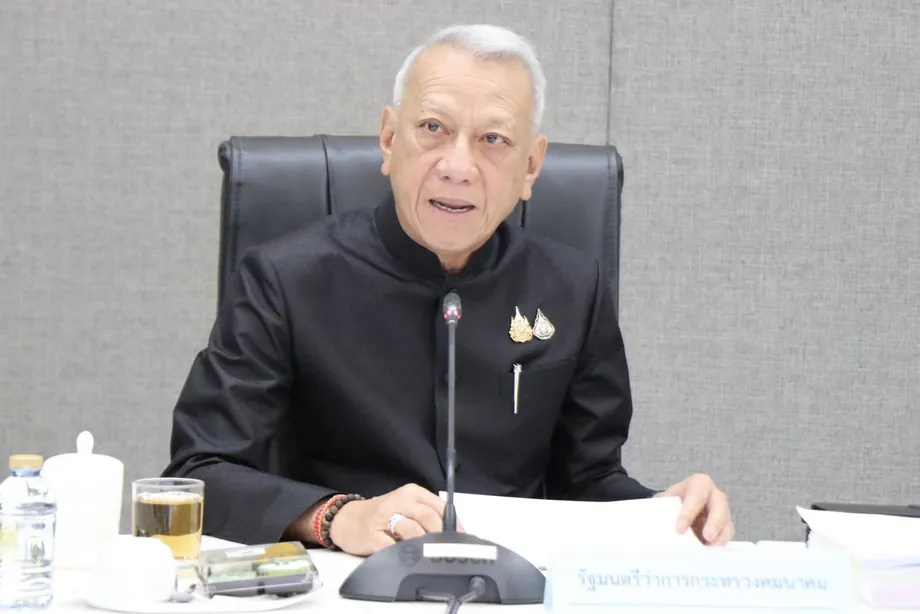
AAV's chief executive, Pairach Pornpattanangkul, who also leads Thai AirAsia, said management reduced frequencies and temporarily suspended routes that could not make a profit. Seats were redirected towards routes with stronger demand. For travellers, those decisions meant fewer departures on some routes even as fares increased.
The schedule changes and recovery targets span several months:
- August and September 2026: Suvarnabhumi operations were temporarily suspended, with flights consolidated at Don Mueang.
- September 30: Thai AirAsia ended the quarter with 62 aircraft, of which 42 were operating.
- October: AAV said services began returning at Suvarnabhumi, including routes to Chiang Mai, Krabi and Phuket.
- November 12: AAV announced its third quarter results and recovery plans.
- December: The airline aims to have 54 aircraft operating for the New Year travel period.
Nine months of losses deepen the financial strain
AAV's net loss for the first nine months reached 3.853 billion baht, reversing a profit of 726.71 million baht in the same period of 2025. The third quarter accounted for about 61% of that nine month loss, using the quarterly loss of 2.368 billion baht.
Sales and services revenue for January through September fell 2% to 31.648 billion baht. Available seats declined 9% to 16.57 million, and the load factor slipped to 82% from 83%. The average fare was 1,969 baht per passenger.
Fuel expenses increased 14% to 12.416 billion baht. Earnings before interest, tax, depreciation and amortisation, known as EBITDA, fell to 3.349 billion baht from 4.349 billion baht, a decline of about 23%. EBITDA provides a view of earnings before financing costs and several accounting charges.
For the third quarter alone, EBITDA was negative 410 million baht. AAV also reported a core operating loss of 2.255 billion baht and a foreign exchange loss of 141 million baht. Over nine months, the reported core operating loss reached 2.695 billion baht, compared with 785 million baht a year earlier, while foreign exchange losses totalled 1.448 billion baht.
Shareholders' losses also widened. The quarterly basic loss per share increased to 0.1843 baht from 0.0681 baht. For the first nine months, AAV reported a loss per share of 0.2999 baht, against earnings of 0.0566 baht a year earlier.
Less cash and more debt make funding a priority
AAV ended September with cash and cash equivalents of 1.443 billion baht, down 61% from the end of 2025. Interest bearing debt, excluding lease liabilities, rose 29% to 15.633 billion baht following new debenture issues. Debentures are a form of borrowing from investors.
The ratio of net interest bearing debt to equity increased to 1.5 times from 0.6 times. This measure compares borrowing after deducting cash with shareholders' equity. Its rise shows that debt became a larger part of AAV's financial structure as its cash balance declined.
Management said it had prepared additional funding options, including aircraft sale and leaseback transactions and discussions with financial institutions. A sale and leaseback releases money by selling an aircraft and renting it back, allowing the airline to keep using it while taking on future lease payments.
AAV did not give the amount or completion date of the proposed financing arrangements. The practical challenge is to fund the return of more aircraft and flights while retaining enough cash to absorb further swings in fuel costs.
December fleet target anchors the recovery plan
Thai AirAsia plans to increase domestic capacity by more than 40% from the third quarter during the final three months of 2026. It is targeting a return to a 40% domestic market share, supported by restored routes and more departures on popular services.
The December target of 54 operating aircraft would represent an increase of 12 aircraft, or nearly 29%, from September's 42. International plans include restoring services to major Indian cities and destinations in the Association of Southeast Asian Nations, including Kuala Lumpur.
Pairach, AAV and Thai AirAsia's chief executive, said the airline expected the tourism season to improve results. In remarks translated from Thai, he linked the forecast to the planned increase in aircraft use:
The company expects fourth quarter performance to improve compared with the second and third quarters, and we aim to operate 54 aircraft in December to serve passengers during the New Year period.
Operating more aircraft can spread continuing expenses across more flying capacity. It also increases spending on fuel and operations. The recovery plan therefore depends on attracting enough passengers, at fares that cover those costs, as the airline rebuilds its schedule.
Thai Airways also faced rising costs
Thai Airways recorded a consolidated third quarter net loss of 418 million baht, compared with a profit of 4.42 billion baht a year earlier. Its loss attributable to shareholders of the parent company was about 432 million baht.
Unlike AAV, Thai Airways increased quarterly revenue, excluding one time items, by 12.9% to 50.13 billion baht. Operating expenses on the same basis rose faster, increasing 29.1% to 46.29 billion baht as average aviation fuel prices climbed 59.8%.
Thai Airways also recorded 1.13 billion baht in net exceptional expenses associated mainly with flooding, foreign exchange and changes in the value of financial derivatives. It remained profitable over the first nine months, earning 11.23 billion baht, down from 26.39 billion baht a year earlier.
The two airlines entered the final quarter with different financial positions. Thai Airways operated 91 aircraft at September 30 and reported 135.49 billion baht in cash, cash equivalents and other current financial assets. AAV's cash and cash equivalents stood at 1.443 billion baht. Thai Airways' figure includes a broader range of financial assets.
Service and tourism projects continue alongside cuts
Thai AirAsia reported a Net Promoter Score of 61, above its target of 50, and punctuality of 90%. Net Promoter Score measures customers' willingness to recommend a service. AAV also said its staffing arrangements allowed flights to operate normally during heavy rain and flooding in Bangkok near the end of the quarter.
For passengers aged 60 and above, the airline described benefits including dedicated check in counters, priority baggage delivery and seating beside a companion without an additional charge. A promotion with the Tourism Authority of Thailand offered a discount of 500 baht per booking; AAV said the available discounts were quickly taken up.
At Don Mueang, Thai AirAsia said GUINAULT Combo Units entered full use in September to supply electricity and air conditioning to parked aircraft. These units replace the use of an aircraft's auxiliary power unit, a small onboard engine, for those functions. The company gave no emissions reduction figure.
AAV also cited the second year of its Journey D project with the tourism authority, supporting community tourism in Songkhla after flooding. Its announcement highlighted AirAsia's 17th consecutive Skytrax award for the world's best low cost airline and recognition in the World Finance Sustainability Awards 2026. The immediate financial priority remains restoring profitable flying while securing sufficient cash.
Key Points
- AAV lost 2.368 billion baht in the third quarter, compared with 874.75 million baht a year earlier.
- Average fares rose 24%, but passenger numbers fell 29% and unit costs increased 40%.
- The first nine months produced a net loss of 3.853 billion baht, reversing a profit in 2025.
- Cash and cash equivalents fell 61% from the end of 2025 to 1.443 billion baht.
- Thai AirAsia aims to operate 54 aircraft in December and recover a 40% domestic market share.
- Management is preparing aircraft sale and leaseback transactions and discussing funding with financial institutions.