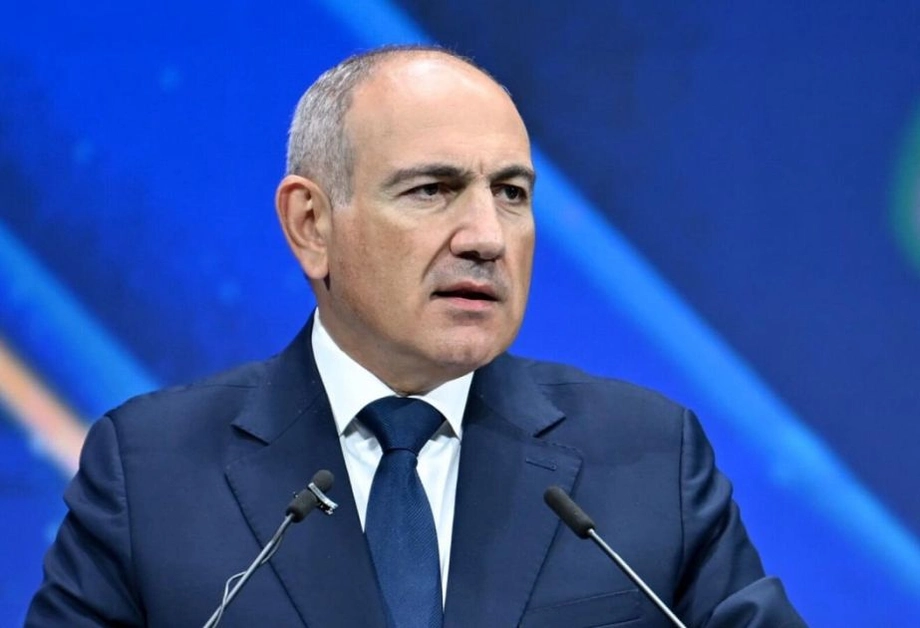
New Economic Vision for the South Caucasus
Armenian Prime Minister Nikol Pashinyan has proposed that Armenia could import electricity from Azerbaijan and Turkey while exporting artificial intelligence technologies to both neighbors. Pashinyan presented the plan as a way to build lasting regional peace through shared economic interests, speaking during an open discussion titled "Armenia's Opportunities in the Field of Artificial Intelligence: From Vision to Action" at the Meridian Expo Center. The event took place on November 21, 2026, within the framework of DigiTec 2026, and featured Rev Lebaredian, Vice President at NVIDIA, alongside Anna Hakobyan, spouse of the Prime Minister of Armenia. Pashinyan argued that critics of normalizing relations with Azerbaijan and Turkey should look at the long-term benefits of trade.
Contents
Anyone who criticizes the normalization of relations with our neighbors Azerbaijan and Turkey should think strategically about what this issue means for our future.
Pashinyan explained that fears of dependency are misplaced, noting that trading different resources creates mutual reliance rather than vulnerability. The proposal forms part of a broader strategy to diversify Armenia's energy supplies and expand international partnerships, moving away from exclusive reliance on traditional partners.
Energy Connectivity Discussions and Regional Corridors
Energy interests are driving fresh reconciliation efforts between Armenia, Azerbaijan, and Turkey. On March 10, Armenian Prime Minister Nikol Pashinyan, infrastructure minister Davit Khudatyan, and Turkish Energy Minister Alparslan Bayraktar met on the sidelines of a gathering sponsored by the International Atomic Energy Agency to discuss electricity interconnection, nuclear energy, and natural gas. Turkish Energy Minister Alparslan Bayraktar stated in a social media post that these infrastructure and energy issues would contribute to lasting peace and stability in the region.
We discussed infrastructure and energy issues that will contribute to lasting peace and stability in our region; within this scope, we addressed areas of cooperation, primarily electricity interconnection, nuclear energy, and natural gas.
The March 10 meeting followed Pashinyan's visit to Istanbul in June and a subsequent meeting in Antalya on November 11 with Turkish President Recep Tayyip Erdogan, where both leaders discussed reopening transport links. Turkey previously completed a gas pipeline link in 2025 to Azerbaijan's Nakhchivan exclave, which is expected to extend through southern Armenia. These developments are tied to the Trump Route for International Peace and Prosperity, known as the TRIPP project, which involves transportation routes as well as power transmission lines and gas pipelines.
Grid Integration and Infrastructure Plans
Azerbaijan began constructing the Zangezur high-voltage power transmission line on January 29, a project implemented by AzerEnergy. The two-circuit 330 kilovolt line features a total capacity of 1,000 megawatts, connecting Jabrayil to Aghbend and Nakhchivan to the Ordubad border. Armenian experts estimate that connecting Armenia's electricity grid with Azerbaijan and Turkey will take around one year, though full integration of the energy systems will take several years. Armenia currently produces and consumes around seven billion kilowatt-hours annually, with roughly 40 percent of its power generation coming from the Metsamor Nuclear Power Plant. Linking the grids would allow Armenia to export surplus electricity or earn transit revenues if export models are not utilized.
Prime Minister Pashinyan addressed questions about the grid integration during a press briefing on Thursday, pointing out that Armenia's energy system is currently connected only to the Georgian and Iranian grids. He emphasized that connecting to Turkish and Azerbaijani networks would expand export opportunities and increase regional cooperation. Armenian Prime Minister Nikol Pashinyan stated during questions to the government on November 18, in response to remarks by MP Edgar Arakelyan, that Armenia had previously exported electricity to Turkey indirectly through intermediaries. The government now seeks to establish direct economic relations.
Legislative Steps and the TRIPP Project Launch
Armenia's parliament ratified the framework agreement on strategic cooperation concerning the TRIPP project on October 28 by 63 votes to 32. Armenian President Vahagn Khachaturyan subsequently signed the law ratifying the framework agreement on November 12. Prime Minister Pashinyan announced the official launch date during his discussion with NVIDIA Vice-President Rev Lebaredian at the DigiTec 2026 technology exhibition and conference.
- January 29: Azerbaijan begins construction of the Zangezur high-voltage power transmission line.
- October 28: Armenia's parliament ratifies the TRIPP framework agreement by 63 votes to 32.
- November 11: Pashinyan and Turkish President Recep Tayyip Erdogan meet in Antalya to discuss trade ties and normalization.
- November 12: President Vahagn Khachaturyan signs the law ratifying the TRIPP framework agreement.
- November 18: Pashinyan discusses previous indirect electricity exports to Turkey during questions to the government.
- November 21: Pashinyan participates in the DigiTec 2026 open discussion at the Meridian Expo Center.
- November 23: Scheduled official announcement date for the TRIPP project launch.
Shifting Security Paradigms and National Independence
Pashinyan links economic diversification directly to national independence, arguing that true independence requires transforming dependence on a few parties into interactions with many partners. When a country relies on a single source for energy or trade, external actors can dictate terms. Broadening the network of economic partners reduces this vulnerability.
Independence is the process of transforming dependence on a few parties into dependence on many parties. When you depend on a few countries, they can dictate their terms to you.
The Prime Minister also noted that economic interdependence acts as a security guarantee. By allowing goods and energy to flow through Armenia to international markets, major powers gain a direct stake in maintaining stability in the region. This approach marks a shift away from traditional security guarantees toward a model based on shared economic interests.
At a Glance
- Prime Minister Nikol Pashinyan proposed importing electricity from Azerbaijan and Turkey while exporting artificial intelligence technologies.
- The proposal was discussed at the DigiTec 2026 open discussion, held within the framework of DigiTec 2026, alongside NVIDIA Vice-President Rev Lebaredian.
- Armenia and Turkey have explored energy connectivity, building on meetings between Pashinyan and Turkish officials.
- Azerbaijan is constructing the Zangezur high-voltage power transmission line to integrate regional grids.
- Armenia ratified the TRIPP framework agreement on October 28, with the project launch announced for November 23.