Fighting Severe Obesity with Medical Science
Obesity is a medical condition where the human body carries too much fat, which can lead to serious illnesses like heart disease and diabetes. In China, about 640 million people are considered overweight or obese, and nearly 10 million adults live with severe or moderate obesity. Treating people with severe obesity is very difficult because standard diet and exercise changes often do not work well enough on their own. Doctors need powerful tools to help patients lose significant amounts of weight and protect their hearts and metabolic systems, which control how the body turns food into energy.
Contents
A medication called mazdutide is designed to help address this challenge by working on two different natural hormone receptors in the human body at the same time. Hormones are chemical messengers that tell organs what to do. One part of the drug mimics a hormone called GLP-1, which slows down how fast food leaves the stomach, reduces feelings of hunger, and tells the brain that the stomach is full. The other part mimics a hormone called GCG, which tells the liver to stop making new fat and helps the body burn stored fat faster. This dual action helps patients consume fewer calories while burning more energy.
Recent clinical tests have pushed medical boundaries, similar to how rising childhood obesity rates have forced healthcare systems across Asia to rethink how they treat weight issues in growing populations. To prove how well mazdutide works, researchers set up a head-to-head clinical trial, which means testing one medicine directly against another leading medicine in the exact same group of patients rather than comparing them in separate studies. This rigorous approach gives doctors and patients clear proof of which treatment performs better.
The testing process for new medicines involves multiple phases to ensure safety and effectiveness before doctors can prescribe them widely. Clinical research starts with small safety trials and moves to larger groups of patients to measure exact results. The new data comes from a mid-stage trial registered under the number NCT07000955, involving 104 adult participants in China with severe obesity. Patients were split into different groups to receive either mazdutide, a placebo which is an inactive substance with no medicine in it, or another popular treatment called tirzepatide.
Record-Breaking Results in Clinical Testing
Results from the 44-week study showed that patients taking a 15 milligram weekly dose of mazdutide achieved an average weight loss of 25.9 percent of their starting body weight. For comparison, patients taking a 15 milligram weekly dose of tirzepatide achieved an average weight loss of 23.1 percent, while the placebo group lost only 1.8 percent. Furthermore, about 77.5 percent of the participants in the mazdutide group managed to lose at least 20 percent of their total body weight during the treatment period.
Professor Bi Yan, the head of endocrinology at Nanjing Drum Tower Hospital and the principal investigator for the trial, explained the significance of these findings for patients struggling with severe weight issues. She noted that patients with severe obesity face extremely high health risks that require substantial and lasting weight reduction.
Mazdutide 15 mg weekly dosing demonstrated good overall safety and tolerability in Chinese participants with moderate-to-severe obesity, with a mean weight reduction of 25.9 percent after 44 weeks of treatment, and over three-quarters of participants achieving at least 20 percent weight loss.
In addition to losing weight, patients in the mazdutide group showed major improvements in their waistlines and insulin resistance, which is a condition where the body does not respond properly to insulin and can lead to type 2 diabetes. When compared directly against tirzepatide, the mazdutide group showed numerical advantages in both total weight reduction and better metabolic health indicators.
Comparing Leading Treatments for Diabetes and Obesity
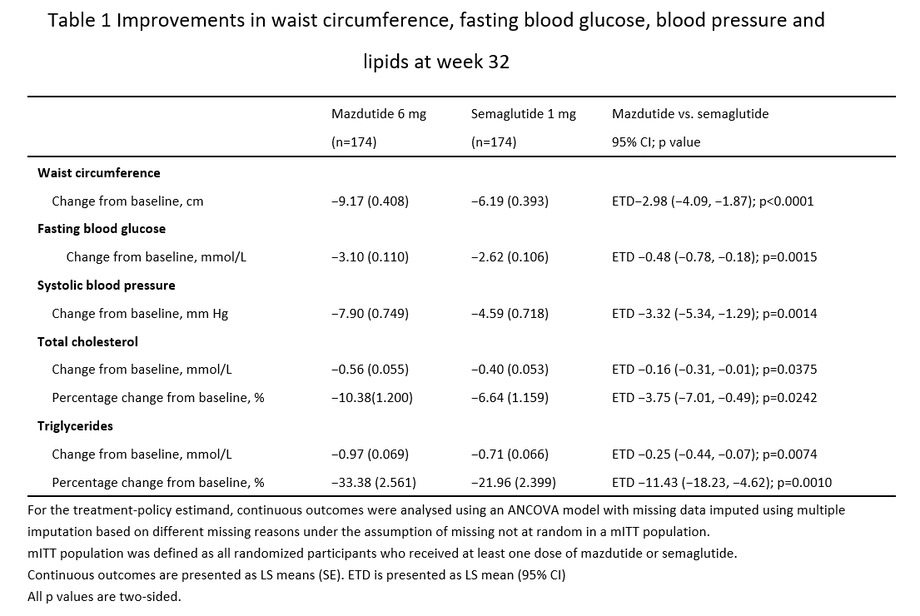
Researchers have also tested mazdutide against another widely used medication called semaglutide in a separate large study called DREAMS-3. That trial involved 329 Chinese adults who had both type 2 diabetes and obesity, a combination that doctors often refer to as diabesity. Controlling blood sugar and body weight at the same time is vital because having diabetes makes heart disease and other complications much more likely.
In the DREAMS-3 trial, patients took either a 6 milligram dose of mazdutide or a 1st-line dose of semaglutide for 32 weeks. The results showed that 48.0 percent of patients taking mazdutide reached the dual targets of having a healthy blood sugar level and losing at least 10 percent of their body weight. By comparison, only 21.0 percent of patients taking semaglutide reached those same dual targets. Professor Ji Linong from Peking University People's Hospital discussed the broader impact of these comparative studies.
This head-to-head Phase 3 DREAMS-3 study demonstrates that mazdutide delivered superior glycemic and weight loss efficacy in patients with T2D and obesity compared with semaglutide, alongside significant improvements in cardiometabolic risk factors.
The company that developed the drug, Innovent Biologics, released detailed data from these clinical programs, showing that mazdutide consistently beats older single-target drugs in reducing blood sugar, shrinking waistlines, and clearing fat from the liver. Clinical testing involves nine major Phase 3 studies in total, examining everything from adolescent obesity to sleep apnea and liver disease.
Understanding Safety and Side Effects
Every powerful medicine comes with potential side effects that doctors must monitor carefully during treatment. In the clinical trials for mazdutide, the most common side effects were related to the digestive system as the body adjusted to the medication. These included mild to moderate nausea, diarrhea, and vomiting, which typically happened during the early weeks when doctors were increasing the dose. Most of these digestive issues were temporary and went away on their own without forcing patients to stop the treatment.
Medical researchers also checked for dangerous drops in blood sugar, known as hypoglycemia, and found that the risk was very low, with no severe cases reported during the studies. Only a very small percentage of participants stopped taking the drug due to adverse events, which indicates that the medicine is generally well tolerated by adult patients. Doctors manage these side effects by starting patients on a low dose and slowly increasing it over several weeks to let the digestive system get used to the active ingredients.
Dr. Qian Lei, the chief research officer at Innovent, emphasized that the safety profile remains consistent across different clinical trials. He noted that the company is continuing to study higher doses to see if they can help even more patients achieve better metabolic health without increasing safety risks.
The Changing Market for Weight Loss Drugs
The global market for weight loss and diabetes medications is expanding rapidly as more people gain access to advanced treatments. Major pharmaceutical companies are competing fiercely to introduce better products, lower prices, and easier ways to take the medication. For example, pharmaceutical giant Eli Lilly reported massive global revenue growth driven by its own injectable treatments, while competitor Novo Nordisk continues to sell millions of doses of its popular treatments worldwide.
At the same time, pharmaceutical companies are working on new delivery methods, such as pills taken by mouth and monthly injections, to make treatments more convenient for patients who dislike needles. Other researchers are testing combination therapies that help patients burn fat while protecting their muscle mass, preventing the weakness that sometimes happens during rapid weight loss.
In China, the government has taken steps to make breakthrough treatments more affordable for everyday families. Recently, medical authorities added mazdutide to the national health insurance catalog for treating type 2 diabetes. This inclusion allows patients to receive insurance financial support when treating diabetes, while the weight loss use remains available through private self-pay channels.
At a Glance
- Mazdutide is the world first approved dual receptor agonist that targets both GCG and GLP-1 hormones to reduce body weight and control blood sugar.
- A mid-stage clinical trial showed that a 15 milligram weekly dose of mazdutide helped patients achieve an average weight loss of 25.9 percent after 44 weeks.
- Direct comparative trials showed that mazdutide outperformed both tirzepatide and semaglutide in lowering body weight and improving metabolic health.
- Common side effects include mild digestive issues like nausea and diarrhea, which mostly occur during the initial dose escalation period.
- The adult diabetes treatment use of mazdutide was successfully added to China national health insurance catalog to lower costs for patients.