A Historic Arrival at the Closest Planet
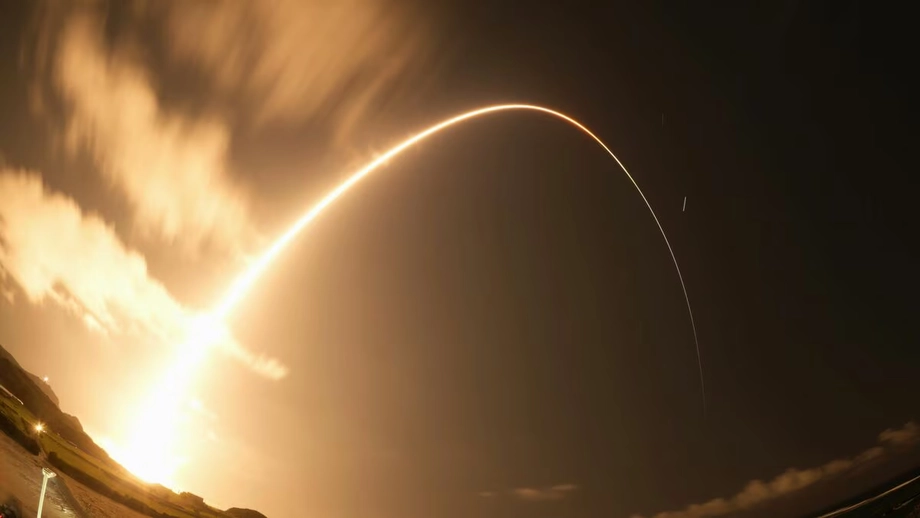
The joint European and Japanese space mission known as BepiColombo has finally reached its destination after traveling more than 10 billion kilometers through the inner solar system. On November 22, 2026, at 3:25 a.m. Japan time, the spacecraft executed a complex engine burn that allowed it to be captured by Mercury's gravity. The operation marked the end of an eight-year-and-one-month trek that began when an Ariane 5 rocket lifted off from the Guiana Space Centre in French Guiana on October 20, 2018.
Contents
Reaching the innermost planet of the solar system required immense planning because a spacecraft falling inward toward the sun picks up enormous speed. To stay in orbit rather than fly past the planet, the mission relied on a long circuitous route featuring nine planetary gravity assists. This included one pass by Earth, two by Venus, and six by Mercury. The final stage of the approach used a weak capture technique, where the spacecraft used four chemical propulsion thrusters to slow down just enough for the planet's gravity to grab hold at an altitude of about 635 kilometers.
Overcoming Unexpected Obstacles Along the Way
The journey did not go entirely according to plan. In April 2024, an unexpected electric current developed in the power system of the Mercury Transfer Module, reducing the power available to the ion thrusters. Engineers had to redesign the trajectory, which delayed the arrival date by nearly a year from its original schedule in December 2025. Ground controllers separated the transfer module on September 3, 2026, leaving the two science probes to handle the final approach on their own.
Flight controllers in Germany waited anxiously as radio signals took about 10 minutes to travel one way across the 94 million miles separating Earth and the spacecraft. Ignacio Clérigo, the spacecraft operations manager, explained the delicate nature of the capture maneuver. The ground control team had to pre-load the burn procedure so the spacecraft would execute it autonomously without human intervention.
It is a very difficult mission and very challenging because we are flying into a very, very harsh environment.
That sentiment was echoed by Bruno Sousa, the head of operations definition and engineering at the European Space Agency, during a live broadcast. Mercury presents extreme conditions where temperatures can plunge below minus 290 degrees Fahrenheit at night and climb above 750 degrees during the day. The hardware faces intense radiation and heat baking it from both direct sunlight and thermal energy rising off the planet's rocky surface.
Two Probes, Two Distinct Jobs
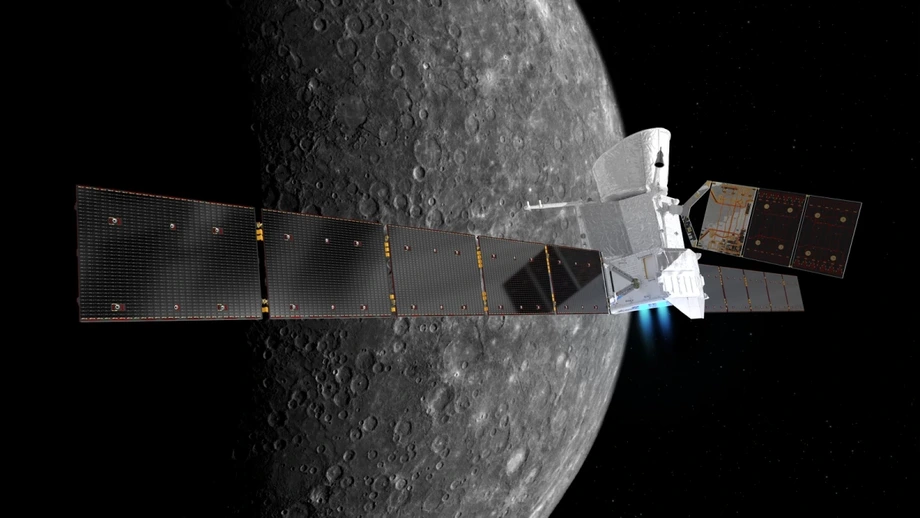
The BepiColombo spacecraft actually consists of two separate science probes stacked together. One is the Mercury Planetary Orbiter, built by the European Space Agency, and the other is the Mercury Magnetospheric Orbiter, nicknamed Mio, built by the Japan Aerospace Exploration Agency. The two units will remain joined until mid-December 2026, when they will separate and settle into their own unique orbits.
The European orbiter weighs approximately 1,230 kilograms and carries 11 scientific instruments, including an X-ray spectrometer designed to map the chemical composition of the surface. It will skim as low as 480 kilometers above the planet to examine impact craters, volcanic plains, and the dense interior. Meanwhile, the Japanese probe Mio is an octagonal spacecraft weighing about 255 kilograms. It carries five instruments and will follow an elliptical path reaching up to 11,640 kilometers away to study the planet's magnetic field, plasma, and interaction with the solar wind.
Unlocking the Mysteries of a Dense World
Mercury is the smallest rocky planet in the solar system and remains one of the least understood. Scientists hope the dual-probe setup will solve longstanding questions about its formation. Most notably, Mercury possesses an unusually large iron core that makes up about 60 percent of its total mass, surrounded by a relatively thin rocky mantle. Researchers are eager to learn how such a small body retained volatile elements like potassium and sulfur instead of losing them to space during the intense heat of the early solar system.
Having two orbiters operating simultaneously allows researchers to separate internal magnetic signals from disturbances caused by the solar wind. Geraint Jones, the lead project scientist, highlighted the unique advantage of the mission.
The mission will provide the ability to compare unprecedented measurements taken by two spacecraft at the planet at the same time.
By comparing data collected at different altitudes, scientists expect to map out how the magnetic field originates deep within the planet's molten interior.
Timeline of the Mission
- October 20, 2018: The BepiColombo spacecraft launches from French Guiana aboard an Ariane 5 rocket.
- April 2024: A power system anomaly in the transfer module forces a one-year schedule delay.
- September 3, 2026: The transfer module separates from the science probes after nearly eight years of service.
- November 22, 2026: The spacecraft executes its main engine burn and enters Mercury orbit.
- December 9 to 10, 2026: The Japanese probe Mio separates from the European orbiter.
- March 10, 2027: The European orbiter reaches its final science altitude.
- April 6, 2027: Full-scale scientific observations begin across both orbits.
The current mission is planned to last for at least one Earth year, which equates to four Mercury years, with a possible one-year extension before extreme heat and fuel depletion end operations. No date has been set for potential mission extensions beyond that window, as the harsh thermal environment places heavy strain on onboard electronics.
The Essentials
- The BepiColombo mission is a joint undertaking by the European Space Agency and the Japan Aerospace Exploration Agency.
- The spacecraft traveled over 10 billion kilometers and completed nine gravity-assist flybys before entering orbit.
- Mercury is only the second planet in history to be orbited by multiple spacecraft, following NASA's Mariner 10 flybys and Messenger orbital mission.
- The European orbiter will study the surface and internal structure from a low altitude, while Mio will study the magnetic field from a wider orbit.
- Full-scale scientific mapping and data collection are scheduled to begin on April 6, 2027.