Mekong River Basin Faces Mounting Environmental and Weather Challenges
Vietnam is pressing member countries in the Mekong River basin to significantly upgrade emergency mechanisms, share reservoir operation data faster, and coordinate joint responses to floods, droughts, and environmental emergencies. The push comes as erratic weather patterns, severe sediment depletion, and ecosystem degradation place unprecedented strain on local communities throughout the region. During the 33rd Session of the Mekong River Commission Council and the 31st Joint Session with Development Partners held in Hanoi on November 20, 2026, officials addressed these mounting threats. The meeting was presided over by Trinh Viet Hung, Vietnam Minister of Agriculture and Environment and Chairman of the Vietnam Mekong River Commission. Representatives from Cambodia, Laos, Thailand, Vietnam, the Commission Secretariat, and various development partners gathered to chart a course for sustainable water resource management. Trinh Viet Hung told delegates that environmental and weather challenges do not respect national boundaries, requiring robust collective action.
Contents
- Mekong River Basin Faces Mounting Environmental and Weather Challenges
- New Leadership Structure for Vietnam Mekong River Commission
- Historic Data-Sharing Agreement Signed With Upstream Nations
- Severe Water Shortage Forecasts and Salinity Intrusion Risks
- Agricultural Pressures and Local Preparedness Plans
- Key Dates and Chronology of Events
- Broader Regional Cooperation and the 2027 Leadership Transition
- At a Glance
These challenges are not limited to any national border. Therefore, countries need to strengthen coordinated action to effectively respond to cross-border risks.
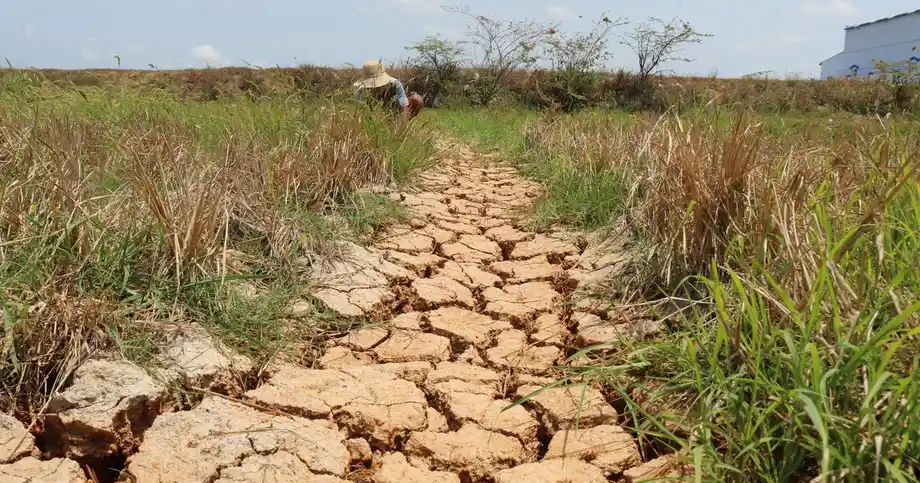
The urgency behind these cooperative efforts stems from growing scientific warnings regarding regional climate patterns. International studies and government assessments indicate that a strong or very strong El Nino weather phenomenon may emerge toward the end of 2026. This atmospheric shift threatens to reduce river flows, trigger severe droughts, and intensify saltwater intrusion across the Mekong Delta during the upcoming dry season of 2026 to 2027.
New Leadership Structure for Vietnam Mekong River Commission
The domestic framework supporting these diplomatic initiatives underwent significant institutional restructuring earlier in the year. On March 11, 2026, Deputy Prime Minister Tran Hong Ha signed Decision No. 426/QĐ-TTg, which formally defined the structure, duties, and powers of the Vietnam Mekong River Commission. Under this regulatory framework, the interdisciplinary coordinating body assists the Prime Minister in managing and utilizing water resources sustainably across the Mekong basin, as well as the Cuu Long and Se San-Srepok river basins in Vietnam. The mandate aligns with the 1995 Mekong Agreement and national water and environmental laws. The organization is tasked with proposing national policies, supervising cross-border projects, maintaining hydrological databases, and organizing scientific research to mitigate the impacts of upstream economic development. Administratively, the commission is led by the Minister of Agriculture and Environment, who serves as Chairman. The permanent vice chairmanship was assigned to Do Duc Duy, Minister of Natural Resources and Environment, who also acts as Vietnam member on the Joint Committee of the Mekong River Commission. The organizational structure includes specialized subcommittees for the Cuu Long and Se San-Srepok river basins, supported by a standing office based in Hanoi and a representative office in Ho Chi Minh City.
Historic Data-Sharing Agreement Signed With Upstream Nations
Cooperation expanded beyond the traditional commission framework when six riparian countries signed a landmark memorandum of understanding on hydrological information sharing. The agreement was finalized during the 2nd Lancang-Mekong Water Resources Cooperation Ministerial Meeting in Hanoi on November 19, 2026, which marked the tenth anniversary of the regional cooperation mechanism. Vietnamese Minister of Agriculture and Environment Trinh Viet Hung co-chaired the ministerial meeting alongside Liu Dongshun, China Vice Minister of Water Resources. Under the terms of the new agreement, the participating governments agreed to share real-time hydrological data from twenty-four key monitoring stations distributed across the entire river basin. Cambodia contributes seven stations, Thailand and Laos provide six stations each, China and Vietnam contribute two stations each, and Myanmar provides one station. Vietnam stations are strategically situated at Tan Chau and Chau Doc near the Cambodian border. These upstream data feeds are vital for forecasting water flows into the Mekong Delta, a productive region that supports approximately seventeen million residents and serves as a major hub for rice, seafood, and fruit production. More than seventy projects have already been carried out under the framework special fund, focusing on rural water supply, dam safety monitoring, and small basin management.
Trinh Viet Hung highlighted the foundational principles required for effective regional cooperation during the ministerial discussions.
Trust and transparency must underpin cooperation, people must be at its heart and commitments must be turned into concrete action.
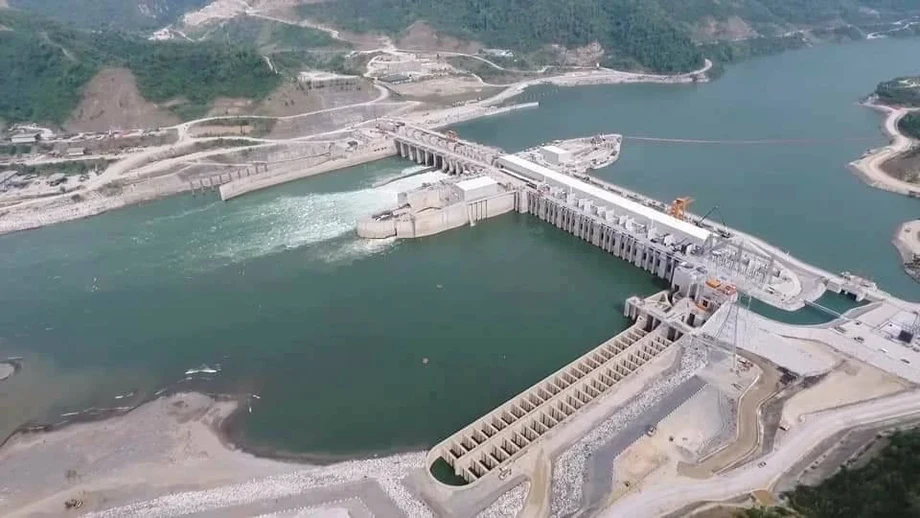
The data-sharing pact aims to provide advance notice of reservoir operations, helping downstream communities prepare for hydrological extremes.
Severe Water Shortage Forecasts and Salinity Intrusion Risks
Domestic authorities have already translated regional forecasts into concrete domestic preparedness measures through Decision 4281/QĐ-BNNMT, issued by the Ministry of Agriculture and Environment. The official scenario identifies the water situation across the entire Cuu Long river basin as being in a state of severe water shortage for the dry season spanning November 2026 to May 2027. The anticipated persistence of El Nino is expected to raise temperatures across the Mekong Delta by one to two degrees Celsius above historical averages, with early heatwaves potentially arriving in February 2027. Rainfall across the lower basin is projected to experience severe deficits ranging from twenty to forty percent at the end of 2026, before worsening to between thirty and sixty percent in January 2027. Consequently, total upstream water volume entering through the Kratie station in Cambodia between November 2026 and May 2027 is forecast to reach only 53 to 68.5 billion cubic meters, representing a decrease of 26 to 43 percent compared to historical averages. The Tonle Lake in Cambodia will provide limited supplemental flows, concentrating its discharge between November 2026 and early January 2027 before dropping significantly. Total water volume reaching the Mekong Delta through the Tan Chau and Chau Doc stations is projected at 103 to 133 billion cubic meters over the seven-month dry season, approximately twenty percent below normal levels. Salinity intrusion is expected to match the severity of the severe 2019 to 2020 dry season. Projected saltwater boundaries with salinity levels reaching four grams per liter could penetrate 90 to 125 kilometers inland along the Vam Co Dong and Vam Co Tây rivers, 85 to 90 kilometers up the Cua Tieu river, 70 to 85 kilometers up the Ham Luong river, and 55 to 65 kilometers up the Co Chien and Hau rivers.
Agricultural Pressures and Local Preparedness Plans
Agricultural production and domestic water supplies face immense pressure as saline water forces the closure of freshwater intake sluices. Total water demand across the basin during the seven-month dry season is estimated at 23.3 billion cubic meters for irrigation, livestock, and aquaculture, alongside 737.8 million cubic meters for domestic, industrial, and service use. Vulnerable irrigation systems in downstream areas, including Go Công, North and South Ben Tre, South Mang Thit, Long Phu-Tiep Nhut, and North Ca Mau, face high risks of water deficits. The Ministry of Agriculture and Environment has urged local authorities in Tay Ninh, Dong Thap, Vinh Long, Can Tho, An Giang, and Ca Mau to establish detailed operational plans that prioritize human consumption and essential needs above all else. Local water treatment plants must inspect backup storage capacities and prepare emergency water transport for isolated coastal areas and remote islands. Farmers are advised to adopt short-duration crops that tolerate drought and salinity, while orchard owners must carefully monitor irrigation water quality to protect sensitive crops such as durian.
Swiss Ambassador to Vietnam Thomas Gass, speaking on behalf of international development partners during the Hanoi sessions, reaffirmed the commitment of the international community to support the region.
Joint efforts should be further intensified to protect the environment, local communities and economic activities that depend on the Mekong River.
Development partners praised the institutional roadmap toward financial autonomy for the commission by 2030, which coincides with the implementation of the current 2026-2030 Strategic Plan.
Key Dates and Chronology of Events
A sequence of major institutional decisions and high-level meetings has shaped the current regional water diplomacy and domestic planning efforts:
- March 11, 2026: Deputy Prime Minister Tran Hong Ha signed Decision No. 426/QĐ-TTg, establishing the updated organizational structure and duties of the Vietnam Mekong River Commission.
- November 19, 2026: Ministers from six Mekong-Lancang countries met in Hanoi to sign a memorandum of understanding on hydrological data sharing across twenty-four key stations.
- November 20, 2026: The 33rd Session of the Mekong River Commission Council and the 31st Joint Session with Development Partners convened in Hanoi, addressing El Nino risks and strategic planning.
- November 20, 2026: Ministerial chairmanship for the 2027 term was formally handed over to Thor Chetha, Cambodian Minister of Water Resources and Meteorology.
- November 2026 to May 2027: The active dry season period covered by official water shortage scenarios and localized salinity intrusion countermeasures.
Broader Regional Cooperation and the 2027 Leadership Transition
The diplomatic gatherings also celebrated thirty years of formal dialogue relations between the commission and upstream neighbors China and Myanmar, highlighting an era of expanding trust and open communication. Throughout the meetings, officials underscored the necessity of reinforcing infrastructure investments that safeguard regional communities. These initiatives connect directly with ongoing domestic infrastructure developments across Vietnam, such as the construction of the large pumped-storage facility in Khanh Hoa province, which highlights the country's broader transition toward advanced energy security and climate resilience management. At the conclusion of the Hanoi meetings, Trinh Viet Hung officially handed over the chairmanship of the Mekong River Commission Council for the 2027 term to Thor Chetha, Minister of Water Resources and Meteorology and Chairman of the Cambodia National Mekong Committee. Vietnamese representatives pledged full support and close cooperation with Cambodia for the upcoming term, ensuring continuity in addressing cross-border water security. Looking ahead, the commission will prioritize strengthening its core advisory role, monitoring river flow patterns closely, expanding early warning capabilities, and ensuring that sustainable development remains at the forefront of river basin management.
At a Glance
- Vietnam hosted the 33rd Session of the Mekong River Commission Council in Hanoi on November 20, 2026.
- Six Mekong nations signed an agreement to share real-time hydrological data from twenty-four monitoring stations.
- Officials warned that a strong El Nino event could severely reduce river flows and increase saltwater intrusion during the 2026-2027 dry season.
- Cambodian Minister Thor Chetha assumed the council chairmanship for the 2027 term from outgoing Vietnamese chair Trinh Viet Hung.
- Domestic authorities issued Decision 4281/QĐ-BNNMT to manage anticipated water deficits and protect vulnerable agricultural zones across the Mekong Delta.