A Rising Marine Economic Hub off the Central Coast
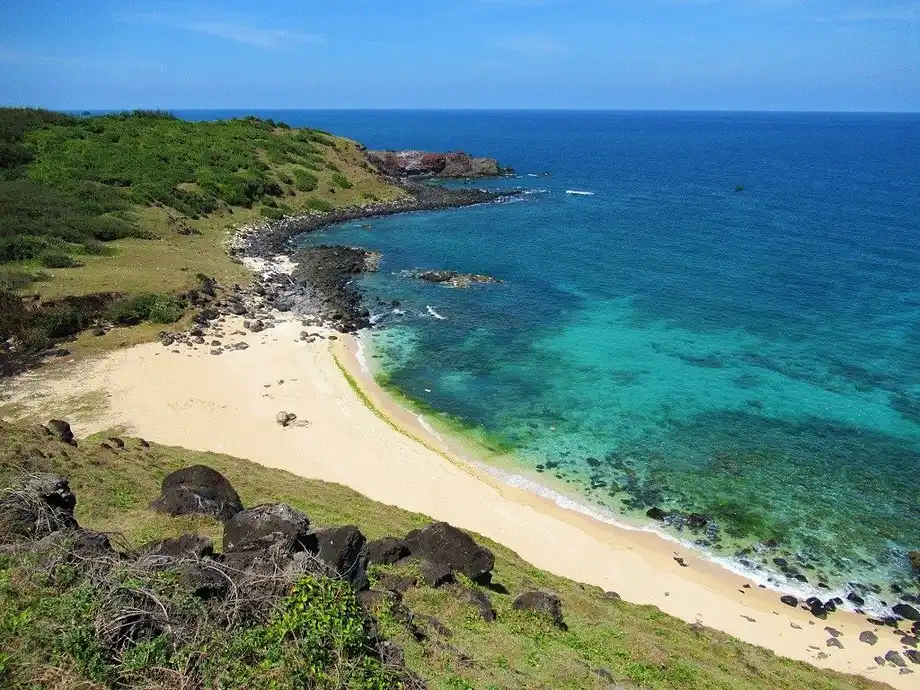
The Phu Quy special zone, an island district located about 120 kilometres southeast of the mainland of Vietnam, is actively transforming its economy by focusing on marine tourism and fisheries. Formed through the merger of Long Hai, Ngu Phung and Tam Thanh communes, the island supports a population of around 32,000 residents across its 18 square kilometres. Known locally as a pearl island because of its clear blue waters and volcanic landscapes, the district sits about 120 kilometres southeast of Phan Thiet port. Local authorities note that tourism accelerated after the island gained access to a stable 24/7 electricity supply in 2016, which marked a turning point for its socio-economic development. Transport links have improved with five high-speed boats and regular cargo vessels operating along the Phan Thiet to Phu Quy route, facilitating travel and trade. In 2025, the special zone welcomed approximately 155,000 visitors, representing a 5% increase compared to the previous year, and generated more than 200 billion VND (nearly 7.6 million USD) in tourism revenue. Looking at a broader timeframe, the island welcomed 635,899 visitors and earned nearly 1.59 trillion VND (61.7 million USD) in total tourism revenue during the 2021 to 2025 period. Before its merger with Lam Dong province in July 2025, the former Binh Thuan province officially recognised Phu Quy as a provincial-level tourism area, establishing a framework for more structured development.
Contents
- A Rising Marine Economic Hub off the Central Coast
- International Recognition and Slow-Paced Island Appeal
- Community-Based Tourism Projects for 2026 to 2030
- Aligning Local Goals with National Marine Tourism Strategies
- Fisheries as a Core Economic Pillar and Offshore Operations
- Future Outlook and Regional Logistics Centre Goals
- The Essentials
International Recognition and Slow-Paced Island Appeal
The appeal of the island extends beyond domestic travellers, as highlighted when the French maritime website figaronautisme.meteoconsult.fr featured Phu Quy and Nha Trang on January 18 as two of the most stunning destinations along the East Sea. The publication described Phu Quy as a lesser-known destination with modest infrastructure and services, offering travellers a slow-paced environment untouched by mass tourism. Visitors to the island can explore beaches such as Trieu Duong Bay, Doi Dua, Bai Nho - Ganh Hang, Lach Xanh and rolling central hills. The landscape features volcanic cliffs, rugged coastlines, and coves suited for low-key activities like swimming, coastal exploration, and nearshore snorkelling. Alongside natural attractions, the special zone holds 25 religious and cultural establishments and historical sites, including the Ban Tranh Princess Temple, Linh Quang Pagoda, and An Thanh Whale Temple, all designated as national cultural relic sites. Similar balancing acts between visitor access and environmental preservation have surfaced elsewhere in the region, such as when crowds gathered at an island within the Hong Kong UNESCO Global Geopark during holiday periods.
Community-Based Tourism Projects for 2026 to 2030
Local leaders are implementing a community-based tourism development project for 2026 to 2030 to elevate service quality while preserving traditional cultural values. Le Hong Loi, Chairman of the People's Committee of the special zone, stated that the locality plans to establish at least one community-based tourism site equipped with a community house and a regularly operating traditional cultural and arts club between 2026 and 2029. The plan targets professional training and certificates for all community tourism team members, along with tourism management training for at least 30% of business owners and skills training for at least 70% of workers in the sector. Each community-based tourism site is required to have at least one person capable of communicating in a foreign language. The initiative also involves developing models linked to new-style rural area development, combining local agricultural and fisheries production with dining, shopping, and tour promotion. Additional measures include preserving craft villages, developing One Commune One Product items, and establishing a site that meets the national standard TCVN 13259:2020 on community-based tourism. By 2030, the administration aims to have 80% of establishment owners trained in tourism management and at least 70% of workers improving their professional qualifications. Digital transformation efforts include creating a database and standardised digital maps of community-based tourism sites across the island.
Aligning Local Goals with National Marine Tourism Strategies
The development trajectory of Phu Quy aligns with broader national strategies, including the Politburo's Resolution No. 26-NQ/TW, dated August 22, 2026, which emphasises positioning tourism as a spearhead economic sector. Vietnam aims to transition from measuring success purely by visitor numbers to focusing on high-value, experience-based tourism. On a national scale, tourism figures for 2025 reached nearly 21.2 million international arrivals, up 20.4% year-on-year, alongside 137 million domestic tourist arrivals and total revenue of around 1 quadrillion VND (38.78 billion USD). Marine tourism worldwide contributes significantly to economic output, supporting employment and regional development according to data from the World Travel & Tourism Council. For island economies like Phu Quy, this means diversifying offerings beyond standard beach holidays into water sports, diving, recreational fishing, island tours, stand-up paddleboarding, and parasailing. Strategic priorities across the country involve improving regional transport integration, encouraging low-emission practices, reducing single-use plastics, and applying digital technology to monitor environmental carrying capacity.
Fisheries as a Core Economic Pillar and Offshore Operations
Fisheries remain a fundamental economic pillar for Phu Quy, supported by extensive fishing grounds and abundant seafood resources in south-central Vietnam. According to Le Hong Loi, Chairman of the People's Committee of the special zone, local fishermen have made substantial investments in offshore fishing fleets and modern equipment. The island currently maintains nearly 1,678 fishing vessels, which includes more than 160 logistics and seafood boats dedicated to offshore operations. Fishermen regularly operate in distant waters such as the Truong Sa archipelago and DK1 platform areas, generating an annual seafood output that averages around 30,000 tonnes. In addition to open-sea fishing, the island operates one of the province's largest semi-natural floating cage aquaculture models, comprising more than 50 farming facilities covering 7,000 square metres and yielding over 100 tonnes of seafood annually. Local authorities conduct regular patrols and inspections to enforce regulations, raise awareness about protecting marine resources, prevent illegal fishing, and prohibit harmful practices such as using explosives.
Future Outlook and Regional Logistics Centre Goals
Looking ahead, municipal leaders intend to develop Phu Quy into a comprehensive marine tourism and fisheries service centre. Nguyen Van Khoa, Chairman of the provincial Tourism Association, noted that the tourism industry on the island remains in its early stages of development compared to other regions, but possesses strong growth potential due to its marine ecosystems and heritage. Deputy Director of the provincial Department of Culture, Sports and Tourism Nguyen Lam Ngoc indicated that the island is projected to emerge as a primary destination by 2030 through sustainable practices tied to coastal ecosystems. Planned infrastructure investments aim to modernise fishing fleets, expand seafood processing capacity, and strengthen logistics services. These upgrades are designed to reinforce the island's function as a hub for fisheries support, search-and-rescue operations, and seafood processing for the entire south-central coastal region of Vietnam. Similar public interest in artificial islands and marine infrastructure has been observed elsewhere, reflecting growing public engagement with maritime engineering and coastal tourism projects.
The Essentials
- Phu Quy is an island district covering 18 square kilometres with a population of about 32,000, located 120 kilometres southeast of the mainland in Vietnam.
- The special zone recorded 155,000 visitors in 2025, generating over 200 billion VND in tourism revenue, while cumulative figures for 2021 to 2025 reached 635,899 visitors and nearly 1.59 trillion VND.
- A community-based tourism development project for 2026 to 2030 targets professional training for workers, digital maps, and adherence to national standard TCVN 13259:2020.
- Fisheries form a major economic driver, supported by a fleet of nearly 1,678 vessels, extensive offshore operations in the Truong Sa and DK1 areas, and an annual seafood output of 30,000 tonnes.
- Local authorities aim to establish the island as a key marine tourism and fisheries logistics hub in south-central Vietnam by 2030 through infrastructure upgrades and environmental protection campaigns.