Thai Currency and Stock Market Face Severe Pressures
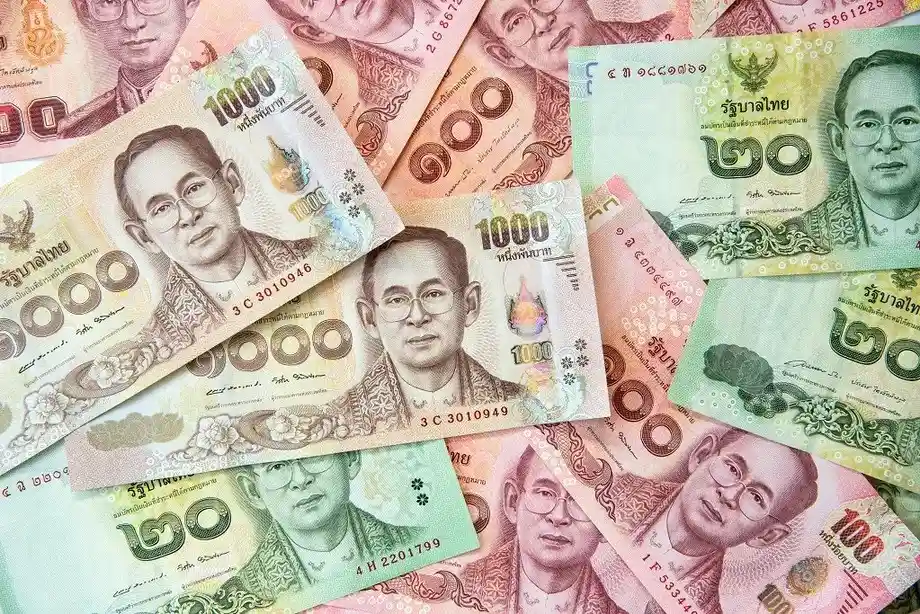
The Thai Baht recently weakened to 34.02 Baht per dollar, marking its lowest level in 19 months, while the Thai stock market dropped to a seven-month low at 1,443 points. Financial markets across Asia experienced substantial turbulence during the week of November 16 to 20, 2026. This downward movement was driven by a combination of geopolitical tensions in the Middle East, lower than expected domestic economic growth, and rising expectations that the United States central bank will increase interest rates. For average readers, a central bank is the main government institution that manages a country is money supply and interest rates, and when it raises rates, borrowing becomes more expensive, which often pulls money out of developing countries and strengthens the local currency of the issuing nation.
Contents
- Thai Currency and Stock Market Face Severe Pressures
- Federal Reserve Rate Expectations and Regional Currency Weakness
- Gold Prices and Bond Yields Surge Amid Market Shifts
- Impact on the Stock Exchange of Thailand and Sectoral Shifts
- Comparative Analysis of Currency Pressures
- Timeline of Market Developments
- The Bottom Line
KASIKORNBANK projected that the Baht would trade within a range of 33.70 to 34.20 Baht per dollar for the subsequent week, while investors continued to monitor foreign capital flows and export data. The strengthening of the United States dollar stems from persistent inflation concerns and strong demand for safe-haven assets. When global uncertainty rises, investors traditionally rush to buy stable currencies like the dollar, which acts as a financial shelter during turbulent times.
Federal Reserve Rate Expectations and Regional Currency Weakness
The global foreign exchange market faced immense pressure as the United States dollar surged, dragging down major Asian currencies alongside the Baht. In Japan, the Yen weakened past 162 per dollar, touching its lowest level in nearly 40 years at 162.70 in Tokyo, driven by a practice known as carry trade where investors borrow low-interest currencies to invest in higher-yielding assets. Satsuki Katayama, Minister of Finance of Japan, noted that authorities stand ready to take appropriate action if market volatility becomes excessive. Meanwhile, the South Korean Won fell to 1,559.10 per dollar, nearing levels not seen since the global financial crisis of 2009. Koo Yun-cheol, Minister of Finance of South Korea, remarked that the currency was excessively weak relative to national economic fundamentals, pointing to foreign investors selling local stocks to rebalance portfolios.
United States Federal Reserve officials signaled aggressive policy tightening to combat stubborn price pressures. Christopher Waller, Member of the Board of Governors of the Federal Reserve, stated that the central bank should consider raising interest rates by 0.50 percent at its upcoming December meeting. Wichuda Jitchan, a financial news editor with over 30 years of journalism experience, highlighted that these remarks intensified expectations of proactive monetary tightening. Furthermore, minutes from the Federal Open Market Committee meeting held on October 27 and 28 showed that almost all policymakers acknowledged the ongoing risk of inflation and the potential need for further rate increases in the coming months.
Gold Prices and Bond Yields Surge Amid Market Shifts
Global gold prices slumped below the 3,600 dollars per ounce threshold as surging United States bond yields reduced the appeal of non-yielding assets. Nattawut Wongrawat, Director of Research at Globlex Securities, explained that the 10-year and 30-year United States Treasury bond yields climbed above 5 percent, offering guaranteed returns that overshadowed gold. The price of gold in Thailand saw dramatic intraday swings on November 20, 2026, dropping sharply before trading with gold bars bought at 56,950 Baht and sold at 57,150 Baht according to the Thai Gold Traders Association. Nattawut Wongrawat advised short-term speculators to exercise caution while noting that long-term investors might view the current price correction as an accumulation opportunity spanning a multi-year horizon.
The stronger dollar made dollar-denominated commodities more expensive for holders of other currencies, dampening global demand. At the same time, foreign investors reduced their exposure to Thai financial assets, recording net sales in both equities and government bonds during the mid-November sessions. Analysts from commercial banks noted that rising government bond yields increase the opportunity cost of holding precious metals, as investors prefer assets that generate regular interest income.
Impact on the Stock Exchange of Thailand and Sectoral Shifts
The Stock Exchange of Thailand index reflected regional weakness, falling to 1,443 points as selling pressure hit technology, electronics, and energy counters. Electronic component manufacturers declined in tandem with global technology shares following reports of tighter United States export controls on advanced artificial intelligence chips destined for international data centers. Energy stocks faced additional headwinds from declining global crude oil inventories and fluctuating commodity prices. Veeravat Virochpoka, Assistant Managing Director of Securities Analysis at FSS International Investment Advisory, noted that the Thai market lacked fresh positive catalysts to offset external pressures from United States monetary policy expectations.
Despite the broader market decline, certain sectors attracted selective buying interest. Utility and power plant shares found support following adjustments to pool gas pricing formulas by the National Energy Policy Council, which helped alleviate cost burdens for electricity producers. Financial institutions such as Bangkok Bank and Kasikornbank experienced mixed trading volumes as institutional investors rotated portfolios toward defensive dividend-paying equities to weather the heightened volatility.
Comparative Analysis of Currency Pressures
The current depreciation of the Thai Baht diverges from trends observed during the first three quarters of the year. Sanguan Jungsakul, Senior Director and Head of Investment and Market Research at Krungthai Bank, pointed out that earlier currency weakness was largely driven by trade deficits and high energy import costs. By contrast, the late-year decline occurred despite lower oil prices, driven instead by intense global macroeconomic stress and a persistently strong United States dollar index that climbed from near 100 toward 104. Sanguan Jungsakul estimated that the Baht could peak in weakness at no higher than 34.50 per dollar through the first quarter of next year before stabilizing once the Federal Reserve concludes its monetary tightening cycle.
Bank of Thailand Governor Vitai Ratanakorn stated that while interest rate differentials between Thailand and the United States influence capital movements, the primary driver of currency volatility remains the broad-based appreciation of the dollar index. Vitai Ratanakorn emphasized that monetary authorities monitor exchange rates, inflation, and capital flows continuously, remaining prepared to adapt policy decisions based on incoming economic data at upcoming meetings.
Timeline of Market Developments
- Mid-November 2026: Thai Baht weakens past 34.00 per dollar to reach a 19-month low of 34.02.
- October 27-28, 2026: Federal Reserve holds a policy meeting emphasizing ongoing inflation risks.
- November 18-20, 2026: Regional currencies including the Japanese Yen and South Korean Won face heavy selling pressure.
- November 19, 2026: SET Index touches a seven-month low at 1,443 points amid technology and energy sell-offs.
- November 20, 2026: Thai gold prices experience sharp intraday revisions as global bullion trades below 3,600 dollars per ounce.
Market participants continue to monitor upcoming domestic export figures, United States personal consumption expenditures inflation data, and foreign capital movements to gauge the trajectory of regional asset prices. Policymakers maintain a data-dependent stance as global financial conditions evolve in response to shifting central bank signals.
The Bottom Line
- The Thai Baht reached a 19-month low of 34.02 per dollar due to global dollar strength and interest rate concerns.
- The Stock Exchange of Thailand index dropped to a seven-month low of 1,443 points amid foreign capital outflows.
- Federal Reserve officials signaled potential interest rate increases to combat persistent inflationary pressures.
- Global gold prices declined below 3,600 dollars per ounce as United States Treasury bond yields surpassed 5 percent.
- Thai monetary authorities continue tracking economic data closely to navigate ongoing external financial volatility.