A Law Student Fight for Future Generations
Charvi S, a 20-year-old law student studying at the National Law School of India University in Bengaluru, decided to challenge a deep-rooted tradition after experiencing personal hardships. Born to parents who are first cousins within the Reddy community, she lives with cone dystrophy and photophobia, genetic conditions causing a 40 per cent visual impairment, involuntary eye movements, and severe light sensitivity. Represented by Advocate-on-Record Anjuman Tripathy and Senior Advocate Kaadambari Singh, she filed a Public Interest Litigation under Article 32 of the Indian Constitution, asking the highest court to examine whether the law should continue protecting marriages between close blood relatives.
Contents
The petition challenges the exceptions allowed under Section 5(iv) and Section 5(v) of the Hindu Marriage Act, 1955, alongside Section 4(d) of the Special Marriage Act, 1954. These legal provisions generally prohibit marriages between people within prohibited degrees or sapinda relationships, but they carve out exemptions where traditional customs allow such unions. A sapinda relationship extends up to the third generation through the mother and the fifth generation through the father. The litigation argues that preserving these customs exposes children to avoidable genetic harm and violates Articles 14, 15, 15(3), 21, 25(2)(b), and 47 of the Constitution.
Understanding Genetic Risks and Consanguinity
Consanguinity refers to marriages between people who are closely related by blood, such as first cousins or uncles and nieces. When two closely related people have children, they share a greater portion of their genetic material, which significantly increases homozygosity. This biological term means that a child is more likely to inherit two identical copies of a faulty recessive gene from both parents. While healthy individuals carry various altered recessive genes without showing symptoms, consanguineous unions raise the mathematical probability that both parents carry the exact same hidden genetic mutation, passing double trouble onto their offspring.
Medical studies cited in the petition highlight that such unions double the risk of autosomal recessive disorders, congenital anomalies, sensory impairments, developmental disabilities, infant mortality, and lifelong health complications. Photophobia is an abnormal intolerance of light caused by damaged photoreceptors, while cone dystrophy involves the progressive breakdown of light-sensitive cells in the retina. The petitioner emphasised that these medical outcomes are entirely foreseeable and preventable through proper public health policies, asserting that state welfare responsibilities under the Constitution outweigh traditional customs when child health is at stake.
The legal challenge arrives as debates over personal laws and uniform civil codes continue to shape judicial discourse in India, echoing earlier legal efforts to balance individual freedoms with institutional protections, much like the recent discussions on university equity regulations aimed at safeguarding student welfare across campuses. Just as lawmakers grapple with crafting fair campus rules, the courts are increasingly asked to evaluate how personal choices intersect with public health and social protection.
Data and Prevalence Across Communities
Data from the National Family Health Survey shows that consanguineous marriages remain deeply entrenched across various religious and regional demographics in India. According to the survey cited in the petition, 13 per cent of ever-married women were related to their husbands prior to marriage, and 11 per cent of all marriages nationwide are consanguineous. First-cousin marriages account for 8 per cent of all marriages. Urban and rural areas display similar rates of such unions, showing that modern city life has not automatically reduced the practice.
The prevalence varies significantly across different religious communities and geographic regions. Muslim women report the highest rate of consanguineous marriages at 15.8 per cent, followed by Buddhist or Neo-Buddhist women at 14.5 per cent, Christian women at 11.9 per cent, and Hindu women at 10.1 per cent. Regionally, southern states exhibit the highest concentrations. More than one-fourth of women in Tamil Nadu, Andhra Pradesh, and Karnataka, and nearly one-fifth of women in Telangana and Puducherry, reported being married to blood relatives, with Kerala standing as the lone southern exception.
Supreme Court Observations and Limits of Judicial Power
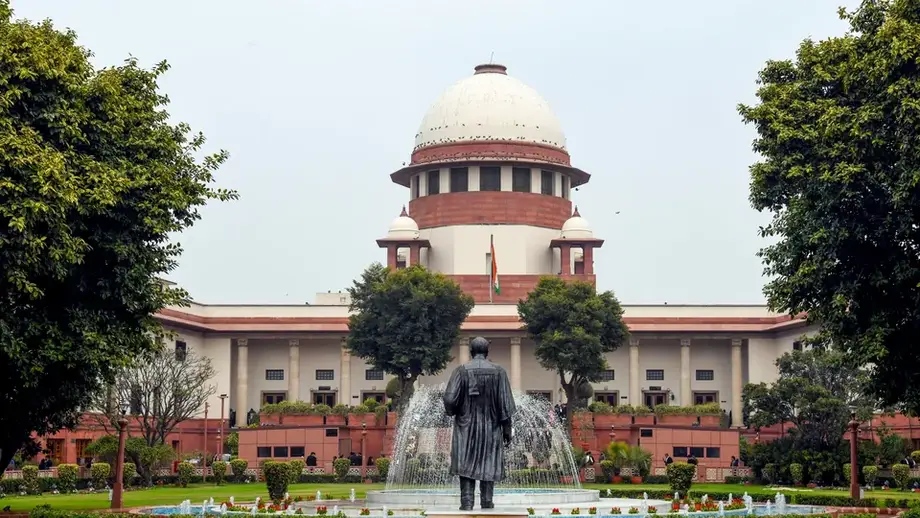
A Supreme Court bench comprising Chief Justice Surya Kant, Justice Joymalya Bagchi, and Justice V. Mohana heard the petition on November 20, 2026, and issued a limited notice to the Union government. The judges clarified that they do not intend to issue mandatory orders or ban consanguineous marriages outright. Justice Bagchi and Chief Justice Kant observed that regulating social reform laws and personal family structures falls exclusively within the domain of Parliament, and the judiciary cannot unilaterally rewrite or invalidate traditional marital practices without legislative action.
The bench chose to sensitise the central government instead of forcing a judicial ban, drawing parallels to earlier rulings where the court recognized the personal choice to marry an HIV-positive person with full knowledge of the medical situation. The court emphasized that marriage is fundamentally a matter of personal choice, but individuals must possess accurate medical information to make truly informed decisions. The judges suggested that the government explore legislative desirability and spread awareness through public campaigns, Anganwadi workers, local panchayats, and school and college curricula.
Proposed Safeguards and Preventative Measures
The petition explicitly clarified that its goal is not to criminalize existing marriages, penalize families, or target specific communities. Instead, the legal team proposed practical preventive measures to protect future generations from severe genetic disorders. The requested safeguards include mandatory premarital genetic counselling, risk disclosure, medically advised genetic screening, and certification before solemnizing marriages within prohibited or sapinda degrees where custom permits.
Furthermore, the plea asks the authorities to establish voluntary genetic screening programs and interim guidelines in districts identified as having high concentrations of consanguineous unions. These measures aim to foster scientific literacy and empower young couples to understand hereditary health risks before starting families. The Supreme Court has now asked the Union government to submit its response regarding the desirability of legislation and nationwide awareness drives.
At a Glance
- The Supreme Court issued a notice to the Union government on November 20, 2026, regarding consanguineous marriages.
- The Public Interest Litigation was filed by 20-year-old law student Charvi S, who was born to first-cousin parents and suffers from cone dystrophy.
- National Family Health Survey data shows that 11 per cent of marriages nationwide are between blood relatives, peaking in southern states.
- The bench consisting of Chief Justice Surya Kant, Justice Joymalya Bagchi, and Justice V. Mohana stated it will only sensitise the government rather than issue a direct ban.
- The petition seeks preventive safeguards such as premarital genetic counselling, voluntary screening, risk disclosures, and educational awareness campaigns.