New Delhi Rejects Foreign Summons Over High Profile Lawsuit
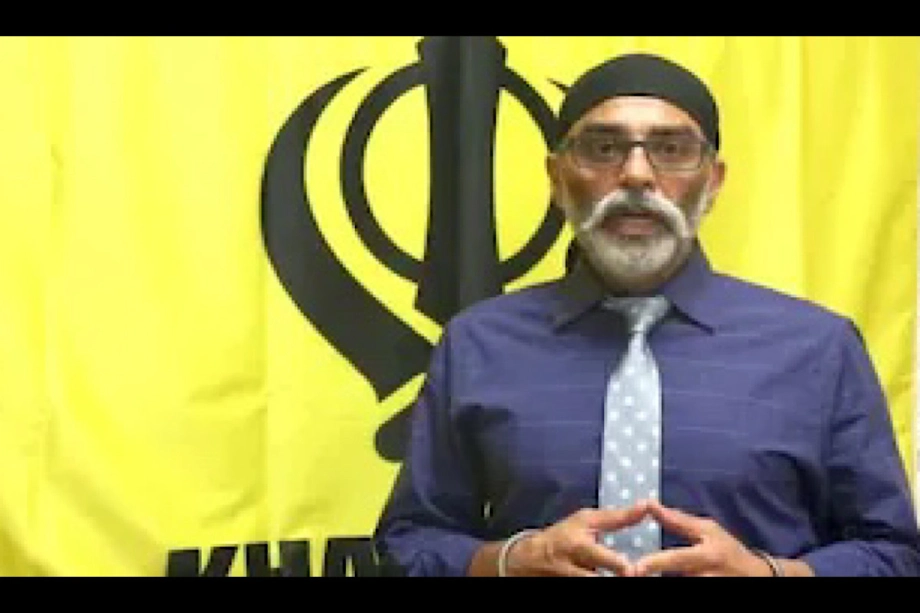
India has firmly rejected a series of legal moves by a United States federal court aiming to deliver civil summonses to top national security figures. Gurpatwant Singh Pannun, a designated terrorist wanted by Indian authorities on multiple charges, filed a civil lawsuit in the United States alleging a conspiracy to target him. The Ministry of External Affairs in New Delhi has dismissed the claims as fabricated and malicious. Foreign ministry spokesperson Randhir Jaiswal stated that official requests for serving judicial documents in India must exclusively route through the designated central authority, which is the Department of Legal Affairs inside the Ministry of Law and Justice.
Contents
The underlying legal dispute stems from an alleged assassination plot on American soil that first came to public attention when federal prosecutors indicted Indian national Nikhil Gupta. The civil case, handled by the United States District Court for the Southern District of New York, names several defendants, including the Government of India, National Security Advisor Ajit Doval, former Research and Analysis Wing chief Samant Goel, and former intelligence officer Vikash Yadav. The plaintiff, who serves as general counsel for the banned organisation Sikhs for Justice, is seeking financial compensation for assault and emotional distress, alleging that his life remains in jeopardy.
Court Orders and Alternative Service Methods
Judge Katherine Polk Failla of the Southern District of New York issued an order instructing the court clerk to dispatch judicial documents directly to three district courts in New Delhi. Under this arrangement, papers for Ajit Doval were directed to the Patiala House District Court, while documents concerning Samant Goel were sent to the Tis Hazari and Dwarka district courts. The United States court invoked Article 19 of the Hague Convention on the Service Abroad of Judicial and Extrajudicial Documents alongside provisions of India's Code of Civil Procedure to justify transmitting the paperwork through local Indian judicial bodies.
This unusual step followed multiple failed attempts to personally deliver the legal notices. Process servers hired by the plaintiff tried three times to hand documents to Ajit Doval during his official visits to the United States, including a trip on February 12-13. During one attempt at Blair House, the presidential guest house in Washington, United States Secret Service agents guarding the premises refused to accept the papers and threatened to arrest the process server if he placed the envelope on the ground. The server ultimately left the sealed envelope outside a nearby Starbucks coffee shop approximately 100 feet away, a method the court later deemed insufficient. Subsequent attempts to serve the documents through standard diplomatic channels under the Hague Convention also broke down when Indian authorities returned the paperwork, noting that civil tort lawsuits fall outside the scope of that treaty.
Foreign Secretary Reactions and Diplomatic Context
Indian officials have maintained a consistent stance regarding the accusations, describing them as entirely unwarranted and unsubstantiated. Foreign Secretary Vikram Misri addressed the media, pointing out the background of the individual behind the legal action and the nature of the organisation he represents. The Sikhs for Justice group was declared an unlawful association under the Unlawful Activities Prevention Act of 1967 due to activities aimed at disrupting the sovereignty and territorial integrity of India. Despite the lodging of the civil lawsuit, New Delhi emphasized that its perspective on the underlying situation remains unchanged.
The diplomatic friction unfolded alongside high level political visits. Prime Minister Narendra Modi traveled to the United States on September 21-23 to attend the Quad Leaders Summit and address the United Nations Summit of the Future. While bilateral discussions between India and the United States routinely encompass matters of mutual concern, Indian representatives stressed that the formal legal proceedings initiated by private litigants do not alter the official diplomatic framework between the two nations.
Criminal Proceedings and Sentencing in New York
While the civil lawsuit moves through alternative service channels, criminal prosecutions in federal court have reached significant milestones. Fifty-five-year-old Indian businessman Nikhil Gupta appeared before United States District Judge Victor Marrero in Manhattan for sentencing. Gupta had previously pleaded guilty on February 13, 2026, to three federal charges, which include murder-for-hire, conspiracy to commit murder-for-hire, and conspiracy to commit money laundering.
Federal prosecutors submitted a comprehensive sentencing memorandum detailing how Gupta acted as an intermediary in the recruitment of a hitman, unaware that his criminal contact was a confidential source working with the Drug Enforcement Administration and that the purported assassin was an undercover federal agent. Court filings revealed recorded communications where Gupta instructed the undercover agent to eliminate anyone accompanying the primary target. Following judicial review, Judge Marrero sentenced Nikhil Gupta to 19 years and 7 months in federal prison.
Disclosures Regarding Co-Defendants and Investigation Timeline
Court documents unsealed during the legal proceedings brought to light extraordinary details concerning former intelligence operative Vikash Yadav. Prosecutors disclosed that Yadav offered lucrative side deals, including official clearance for an aircraft carrying up to two thousand kilograms of illicit drugs at Imphal Airport in Manipur, alongside offers of military-grade assault rifles, to ensure the operation succeeded. Following public exposure of his role, Indian authorities confirmed that Yadav was no longer employed by the government, and Delhi Police arrested him in late 2023 on unrelated kidnapping charges before releasing him on bail.
The legal filings also touched upon the broader geopolitical context, referencing the June 2023 killing of Hardeep Singh Nijjar in British Columbia. While early allegations connected the incidents, a separate United States federal indictment unsealed in July 2026 formally charged members of the Lawrence Bishnoi criminal syndicate with the Nijjar murder, attributing that killing to ongoing organised gang rivalries rather than state operations. Meanwhile, the legal battle involving the civil summonses in Delhi district courts continues as the American judiciary awaits written accounts of the steps undertaken locally.
At a Glance
- Gurpatwant Singh Pannun filed a civil lawsuit in the United States District Court for the Southern District of New York alleging an assassination plot.
- Judge Katherine Polk Failla ordered summonses delivered to Ajit Doval and Samant Goel through the Patiala House, Tis Hazari, and Dwarka district courts in New Delhi.
- India rejected the lawsuit as fabricated and malicious, stating that foreign legal requests must route through the Ministry of Law and Justice.
- Nikhil Gupta pleaded guilty to murder-for-hire charges and received a sentence of 19 years and 7 months in prison from Judge Victor Marrero.
- Process servers failed to deliver notices directly to Ajit Doval during his United States visits due to security interventions by the Secret Service.