Warm water brings a new reality to Sanriku
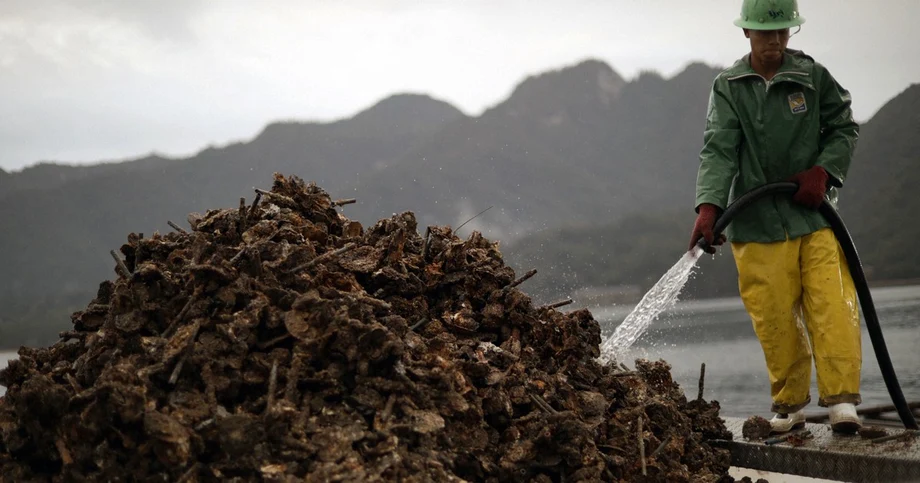
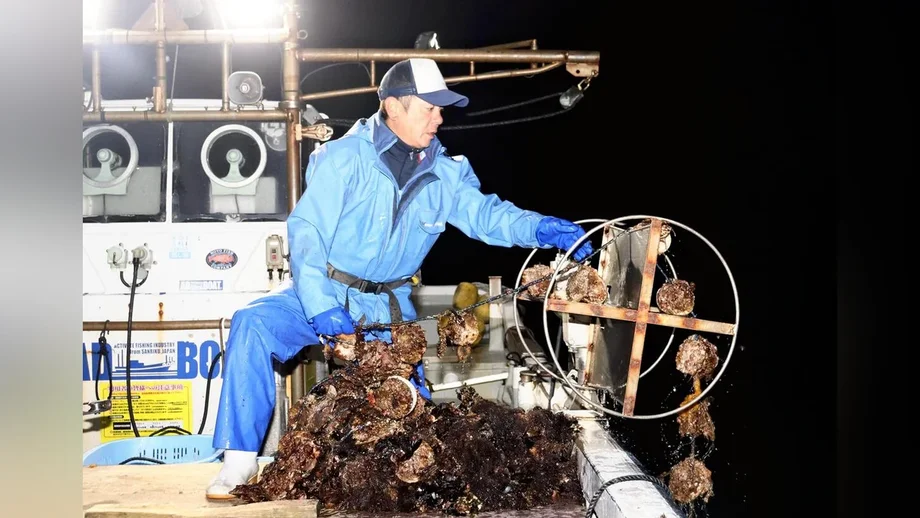
In Ofunato, Iwate Prefecture, scallop farmer Jun Sasaki hauled up ropes from Oikiri Bay before dawn on the 29th of last month. The ropes weighed about 50 kilograms, but many of the scallops attached to them had died. Sasaki shipped only about 100 kilograms, roughly one tenth of the amount he could sell around five years ago.
Contents
- Warm water brings a new reality to Sanriku
- Scallops and salmon hit by severe declines
- Why has the sea changed so quickly?
- New oyster and scallop methods tested in Iwate
- Southern species are appearing farther north
- Other fisheries show the pressure across Japan
- Kelp faces a different kind of heat risk
- What the changes mean for coastal communities
- Key Points
Iwate's scallop landings, which stood near 6,000 tonnes before the 2011 earthquake and tsunami, fell to about 380 tonnes in fiscal 2025. This season is expected to bring a similar amount. The decline is part of a wider change in the Sanriku coast, where the warm Kuroshio Current and cold Oyashio Current meet. The meeting of those currents has helped make the region one of the world's rich fishing grounds, but warmer water is shifting the conditions that local fisheries depend on.
"Nature is our counterpart, so there is nothing we can do about that, but the amount we can ship is so small I do not even want to tell people," Sasaki said.
Scallops and salmon are struggling as species usually found farther south turn up in Iwate waters. Fisheries workers and researchers are trying new growing methods and species, while communities face the immediate effects of fewer catches and lower harvests.
Scallops and salmon hit by severe declines
Iwate's autumn salmon run has also weakened sharply. The prefectural fisheries technology centre in Kamaishi forecast that 9,400 salmon, weighing about 26 tonnes, would return to the coast between September and February. That forecast is just 0.1 percent of the catch recorded before the 2011 disaster.
The collapse reaches well beyond Iwate. National salmon returns, the number of fish caught in rivers and at sea as they come back to Japan, fell from roughly 50 million to 90 million a year in the 1990s and 2000s to about 6.9 million in 2025. In Fukushima's Kido River, which once produced more than 100,000 salmon in a strong season, only 25 were caught last year. In Hokkaido, river catches of pink salmon had reached zero by the end of September 2026.
Warmer seas are considered one cause of the salmon decline. Young fish spend part of their lives in the ocean, where water conditions affect their growth and survival. The falling returns have also led to calls for changes in fish conservation and resource management, alongside efforts to reduce climate pressures.
Why has the sea changed so quickly?
One factor affecting Sanriku is the Kuroshio Extension, the current that flows east from the warm Kuroshio. It has usually moved away from Japan near the Boso Peninsula, but in recent years it has shifted north toward waters off Sanriku. The change has contributed to marine heatwaves, periods when ocean temperatures rise unusually high. Some areas have recorded water more than 5 degrees Celsius above the usual level.
High temperatures have become a regular strain for shellfish. Researchers believe they have also reduced phytoplankton, tiny plant like organisms that form the base of the marine food supply. Scallops, Pacific oysters and abalone depend on this food, and warmer water can also make it harder for them to grow.
Climate change is affecting coasts across Japan, though the scale and causes vary by species. The Japan Meteorological Agency says sea surface temperature in Japanese waters has risen at an average rate of 1.36 degrees Celsius per century. That long term increase puts pressure on cold water species such as kelp, while more sudden marine heatwaves can add stress during vulnerable periods of growth.
New oyster and scallop methods tested in Iwate
In Yamada Bay, Pacific oyster harvests have suffered. Iwate's fisheries technology centre began trial farming European flat oysters in 2024 because they are considered more tolerant of warm water. The first shipment went to Tokyo's Toyosu market and other destinations in October.
Other oyster farmers in Japan have faced even more severe losses. Hiroshima Prefecture, the country's leading oyster producing area, harvested about 10,100 tonnes last season, around 40 percent less than the year before. The value of its production fell to 16.2 billion yen, down 6 billion yen. Some farmers in Kure reported that as many as eight in every 10 oysters died this season. Mass deaths have occurred for a second consecutive year, with losses exceeding 80 percent across all sea areas in one reported account.
Iwate's Ofunato fisheries promotion centre is testing ways to keep scallops away from the hottest water. One method, called deep hanging, grows them at a depth of 30 metres, three times the usual depth. Another, autumn hanging, starts cultivation in the fall. Early trials found that scallops grew successfully while avoiding the hottest summer conditions.
Centre fisheries promotion manager Mitsuru Ito said the trials would continue. He said the aim was to support fishers and maintain and expand production of Iwate scallops.
We want to continue the experiments and, while supporting fishers, connect them to maintaining and expanding production of scallops from Iwate.
Southern species are appearing farther north
As waters warm, the places where marine animals can live may also shift. A survey at Otsuchi's fish market by the University of Tokyo's Otsuchi Coastal Center found four fish species, including the barred knifejaw, that are usually associated with warmer seas and had not previously been recorded along Iwate's coast. The survey covered 2024 and 2025.
In summer, a turban shell, usually found south of Chiba Prefecture on Japan's Pacific coast, was caught in a fishing ground off Taro, in Miyako. In November, an Ise lobster, usually found south of Ibaraki Prefecture, was found at Kuji Port. The discoveries suggest that the species' ranges may be expanding north.
For fishers, the arrivals of southern species sit alongside the loss of familiar catches. A new species may create a chance to develop a fishery, but finding one animal does not by itself create a reliable harvest. Fisheries need to know whether it can survive and reproduce in the area, and whether enough can be caught to support a business.
Other fisheries show the pressure across Japan
Pacific saury catches have also fallen steeply. Nationwide landings from August through October were 8,796 tonnes, down 81 percent from the same period a year earlier and the lowest for that period since records began in 1989. The estimated amount of saury in a survey area stretching from waters near Japan to the 180th meridian was 429,000 tonnes, compared with about 1.099 million tonnes the year before.
In Miyagi Prefecture, Kesennuma Port had received only 665 tonnes by November 20, 2026, less than one tenth of its 2025 total. Onagawa had landed about 490 tonnes, less than half the previous record low from 2021. At Onagawa's fish market, executive director Hideyuki Tanno said low pressure systems and rising sea temperatures had helped produce the lowest volume handled since the market opened.
The shortage has affected processors and local events. A festival in Onagawa served frozen saury caught in 2025 for its grilled fish event. Kesennuma food maker Abecho stopped selling fresh saury earlier than usual because supplies were small and the fish were undersized. Fisheries information specialists have pointed to fewer saury not only near Japan but also farther offshore. Researchers caution that a shift in habitat caused by warmer water alone cannot explain the species' sharp decline.
In Hokkaido, the forecast return of autumn salmon was about 3.65 million fish, 47 percent below the previous year. Hiroshima's oyster losses and the weaker salmon and saury catches show that the strains are not limited to Sanriku, even though each fishery faces its own mix of conditions.
Kelp faces a different kind of heat risk
Kelp, a seaweed used in Japanese cooking, is also vulnerable to warmer water. Hokkaido produces more than 90 percent of Japan's kelp. Its harvest was 8,213 tonnes in fiscal 2024 and 9,907 tonnes in fiscal 2025, both below 10,000 tonnes. Production once exceeded 30,000 tonnes in some years.
For cultivated Japanese kelp, the young plants are especially sensitive. Hokkaido University professor Norishige Yotsukura says the best water temperature for moving seedlings from tanks to the sea is 16 to 17 degrees Celsius. Above 20 degrees, growth can fail and young kelp can die. When autumn stays warm, farmers must delay moving seedlings to the sea. A hot summer can then damage mature kelp before harvest, shortening the growing period and reducing its size and thickness.
A Hokkaido University team simulated the effects of rising temperatures on 11 kelp related seaweed species. Under a medium emissions scenario, four species could disappear from Japanese shores by the 2090s. Under a high emissions scenario, the number could reach six. Hokkaido University, food company Fujicco, RIKEN and the Minami Kayabe fisheries cooperative are working to develop a Japanese kelp variety that can better withstand warm water.
What the changes mean for coastal communities
Fewer catches affect more than the people on fishing boats. Aquaculture depends on feed, equipment, processing, transport and buyers. When harvests shrink, income falls across those connected jobs, and a community can struggle to maintain the name and supply system behind a local seafood brand.
The pressure is visible in both farmed and wild fisheries. A scallop farmer cannot control a marine heatwave, and moving cultivation deeper or switching the season can help only if the methods work across years. Breeding heat tolerant varieties may take time, while warmer water is already affecting the timing and survival of crops.
For wild fish such as salmon and saury, the changing sea is part of the challenge, alongside the need to manage fish stocks and protect populations. The figures from rivers, ports and farms show that the problem is not simply that one fish has moved north. Some fisheries are producing less, some familiar species are returning in far smaller numbers, and new species are appearing in places where they were rarely seen.
Key Points
- Iwate's scallop landings fell from about 6,000 tonnes before the 2011 disaster to about 380 tonnes in fiscal 2025.
- Iwate's forecast autumn salmon return was 9,400 fish, about 0.1 percent of the pre disaster catch.
- Trials are testing deeper and autumn scallop cultivation, as well as European flat oysters that may tolerate warmer water.
- Warm water has coincided with southern marine species appearing in Iwate, including turban shells and Ise lobsters.
- National saury and salmon figures, and recent oyster and kelp harvests, show that fisheries across Japan are under pressure.