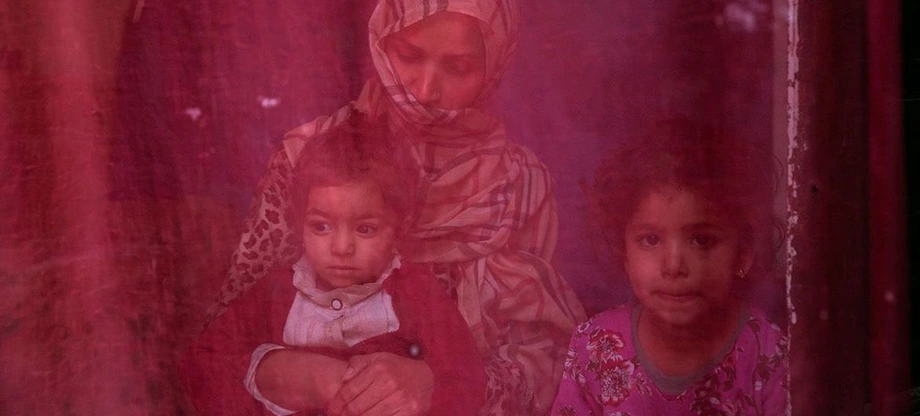
Restrictions and aid cuts collide
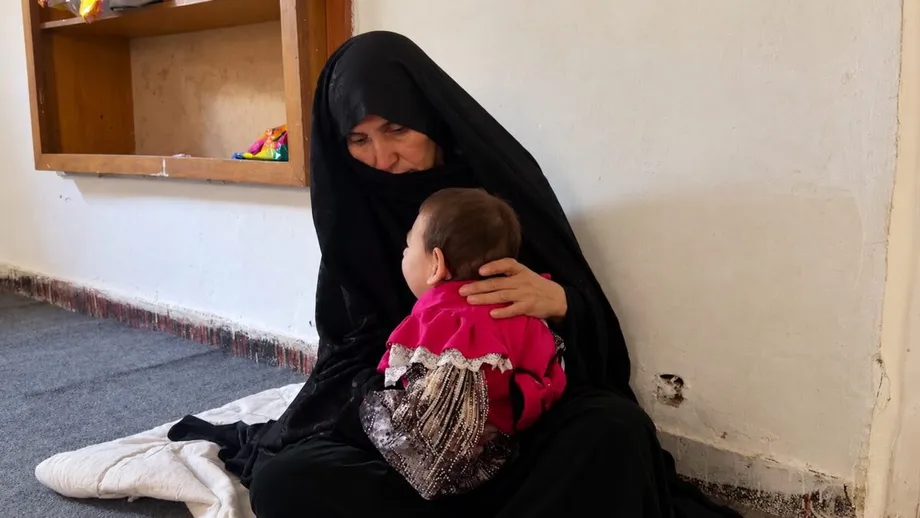
Nearly 300 humanitarian health facilities in Afghanistan have closed or suspended services, leaving more than one million women and girls affected, according to figures from UN Women, the UN Office for the Coordination of Humanitarian Affairs (OCHA) and their partners. At the same time, rules limiting women's movement and work make it harder for many to reach the care that remains. The result is a growing threat to pregnancy care, treatment for other illnesses and support for survivors of violence.
Contents
- Restrictions and aid cuts collide
- Why can reaching a doctor be difficult?
- Clinic closures leave fewer places to turn
- What happens when girls cannot study medicine?
- Local women's groups provide support
- Restrictions also affect aid workers
- Some specialist care remains available
- Key dates in the growing crisis
- What to Know
More than 100 edicts issued since the Taliban returned to power in 2021 have restricted women's access to education, employment and public spaces. Funding cuts to relief work have added another strain. In its UN account, UN Women warned that Afghanistan's 22 million women and girls face a growing risk of losing access to healthcare over the longer term.
The barriers can work together. A woman may need a female health worker to examine her, permission or a male relative to travel, and a clinic that is still open. If any one of those is missing, she may not receive care in time. For a pregnancy emergency, waiting can have life threatening consequences.
Sofia Calltorp, UN Women's Chief of Humanitarian Action, described meeting a woman in Kunar who had suffered repeated miscarriages without healthcare. Calltorp also said men told her that restrictions prevented them from supporting women. She described other women displaced after an earthquake, some of whom had since been displaced again by hostilities with Pakistan or severe flooding.
"One woman that I met in Kunar told me that she had suffered multiple miscarriages without access to healthcare. I also met with men who spoke of restrictions preventing them from supporting women," Calltorp said.
Why can reaching a doctor be difficult?
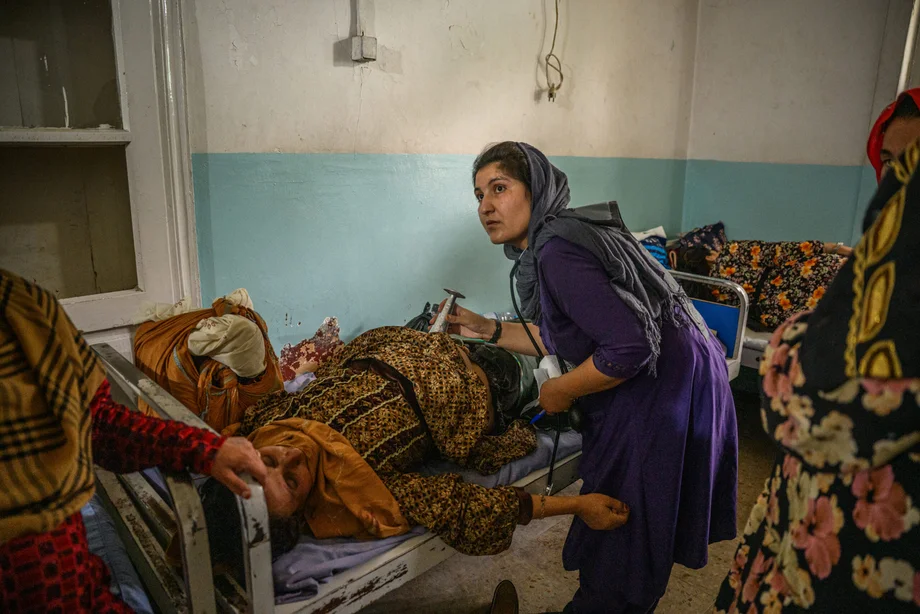
Rules and local enforcement can limit which health workers treat women, while shortages of female doctors and nurses leave patients with fewer choices. A woman who is accompanied by a male relative may also find it hard to describe symptoms privately. The problem extends beyond childbirth: heart disease and other illnesses can go untreated when no suitable female specialist is available.
A nursing assistant in Kabul described a patient who visited a male doctor four times with her father, but could not discuss her condition while he was in the room. On her fifth visit, the doctor sent the father to a pharmacy after the patient indicated that she needed privacy. The patient was then able to explain her illness and begin treatment.
Women's education is closely tied to the supply of future care. The Taliban barred women and girls from medical training institutions in December 2024, adding to restrictions on secondary education. About 2.6 million girls have been barred from secondary school, according to UN Women. When girls cannot continue studying and women cannot train as health professionals, fewer female doctors, nurses and midwives can enter the workforce.
One estimate puts the number of female nurses and midwives at nearly 12,000 in 2022, with a possible fall to between 5,500 and 7,500 by 2035. A UNICEF assessment published on April 28, 2026, warned that Afghanistan could lack as many as 5,400 female health workers by 2030. These estimates use different time periods, but both point to a shrinking pool of women able to provide care.
Clinic closures leave fewer places to turn
The figures show how quickly service losses have accumulated. A March 2025 estimate counted 167 closed health facilities serving about 1.6 million people. Médecins Sans Frontières (MSF) later reported more than 400 health facility closures during 2025 after international funding cuts. The current UN Women and OCHA figure counts nearly 300 facilities that are closed or suspended and says more than one million women and girls are affected.
Each figure describes a different point or measure of the disruption. Together, they show why a national count does not tell a pregnant woman whether a nearby maternity unit is open, staffed or able to provide emergency treatment.
UN Women, OCHA and partners also report that more than 193 service points for survivors of gender based violence have closed, affecting more than one million girls. Around 3.4 million women and girls in need are now unlikely to have access to water, sanitation and hygiene services. Those services include safe water and toilets, which are necessary for health and personal dignity.
Other measures point to the human cost. A survey of healthcare workers and hospital data found at least 161 preventable deaths. In Kunar, fatal newborn asphyxiation rose 156 percent from 2024 to 2025. Blood transfusion services and maternity centres have shut down, leaving women at risk when they bleed during childbirth and limiting treatment for newborns.
Some services continue under pressure. MSF assisted with 54,300 births in 2025, including 3,210 Cesarean sections. At Boost Provincial Hospital in Helmand, the maternity department handled an average of 90 deliveries each day. Those numbers show the scale of demand being met by remaining facilities, while other communities have lost nearby services.
What happens when girls cannot study medicine?
Afghanistan already had one of the world's highest maternal mortality rates in 2020, before the Taliban's return to power. Restrictions on medical training now threaten the number of workers available to care for mothers and children, as well as the quality and reach of treatment.
Men are not permitted to work as midwives, and restrictions can prevent male health workers from examining female patients or their babies. In practice, that leaves women dependent on the presence of female staff. If no female specialist is available, a patient may have to travel elsewhere or leave without an examination.
Training has not stopped everywhere. At least six hospitals continue some covert training of women. International health groups also provide limited programmes. MSI Reproductive Choices reported that 250 women had applied for midwifery training before donor funding was cut; the organisation later secured some funding, but for a smaller group.
Some trainees have completed midwifery degrees but cannot take exit exams or gain formal work experience because of education restrictions. A midwife in Herat who studied midwifery and Pashto literature has been able to work with a mobile team travelling to remote areas. Such efforts can bring care closer to some women, but they cannot replace a broad and steadily trained health workforce.
Local women's groups provide support
UN Women provides emergency cash assistance, counselling and small business training. Local women's organisations deliver some of these programmes, including services designed to prevent violence and help women facing abuse at home.
Calltorp, who had just returned from Afghanistan, described a 24 year old woman who had been kept inside her home by her father for 18 months, abused and sometimes left without food. Calltorp said a programme involving both the woman and her father helped stop the abuse. She described the woman's own words:
I feel like life is not meant for me.
Calltorp said cash, counselling and training are vital, but cannot undo the effects of restrictions that have weakened protection against violence in the home. The example also shows what a local organisation can do when it has support and can reach a family. Many women continue to care for their families and support one another, but the programmes available remain limited against needs across the country.
Restrictions also affect aid workers
Barriers can interfere with the delivery of aid as well as women's ability to receive it. OCHA recorded 29 incidents affecting humanitarian access in October 2026. Twenty one involved interference in aid activities, and 11 incidents were classified as gender related. Two of the recorded interventions affected women's access to services or assistance.
Four of the 21 incidents involved restrictions on women aid workers' participation. Other incidents included delays or problems with agreements, interference in programmes, requests for sensitive information about staff or aid recipients, and restrictions affecting movement of supplies between provinces.
When women aid workers cannot take part, agencies may struggle to reach women and girls in ways that meet local requirements. OCHA says restrictions have disrupted education, health, nutrition and other humanitarian work. Women and girls also face barriers to getting hygiene and dignity supplies.
UN Women Special Representative in Afghanistan Susan Ferguson said funding cuts force humanitarian agencies to make decisions about who can receive support and who must be turned away. She described Afghan women as fighting for their survival and urged governments and donors to increase their support.
"I urge all governments and other international donors to stand with us and with Afghan women and girls. Stay the course and increase, not cut, your support. Back these women," Ferguson said.
Some specialist care remains available
On November 16, UNAMA chief Rabab Fatima visited a fistula repair ward at Mirwais Regional Hospital in Kandahar. The ward, supported by the World Health Organization (WHO), treats obstetric fistula, a childbirth injury that can cause chronic pain and loss of bladder control. Women who cannot get treatment may live with physical suffering and social isolation.
WHO and the Islamic Development Bank support fistula centres at Mirwais Regional Hospital and Rabia Balkhi Hospital in Kabul. The programme is expected to directly help 300 women with fistula and indirectly support around 300,000 women and girls of reproductive age. The visit highlighted the need to keep prevention, treatment and rehabilitation services running.
Specialist centres can treat particular conditions, but they do not remove the wider barriers created by travel restrictions, shortages of female health workers and financial hardship. A February 2026 assessment of conditions in Afghanistan identified all three as obstacles to women reaching medical services.
Key dates in the growing crisis
2020: Afghanistan had one of the world's highest maternal mortality rates.
2021: The Taliban returned to power, followed by more than 100 edicts restricting women's rights and movement.
December 2024: Taliban authorities barred women from medical training institutions.
2025: Health facility closures and international funding cuts put further pressure on services; MSF assisted with 54,300 births.
October 2026: OCHA recorded 29 incidents affecting humanitarian access.
November 16, 2026: UNAMA chief Rabab Fatima visited a WHO supported fistula repair ward in Kandahar.
No timetable has been given for lifting the restrictions on women's medical education. The next stages of Afghanistan's healthcare crisis will depend in part on whether authorities change those rules and whether donors restore support to clinics, training and relief programmes.
What to Know
Nearly 300 health facilities are closed or suspended, affecting more than one million women and girls.
About 2.6 million girls have been barred from secondary education, while women are also blocked from medical training.
OCHA recorded 29 humanitarian access incidents in October 2026, including two that affected women's access to assistance.
Women's organisations, health groups and specialist centres continue to provide care, but their services reach only part of the need.