A small change in appointments could have a large price tag
A study of 5,847 patients in Japan's Shizuoka Prefecture has put a familiar medical routine under scrutiny: returning almost every month for cholesterol treatment when the condition is stable. Over an average of 5.3 years, serious cardiovascular events or death occurred in 5.6% of patients attending roughly monthly and 5.6% of those attending every two to three months.
Contents
- A small change in appointments could have a large price tag
- What the Shizuoka researchers measured
- Equal percentages, with uncertainty still attached
- How fewer visits become a savings estimate
- The starting number of visits changes the answer
- Why national patient counts need careful handling
- Expanding the proposal to blood pressure and diabetes
- Less expensive medicines underpin the trillion yen proposal
- Another study shows why small charges deserve attention
- A reform tool already exists, but uptake is limited
- Key Points
The finding sits at the centre of a proposal to save more than ¥1 trillion annually by combining fewer routine appointments for selected patients with less expensive medicines. Allied Medical, a company that analyses medical records and participates in the research, puts the potential savings at more than ¥1 trillion, possibly approaching ¥2 trillion.
Japan's immediate financial pressures make that proposition attractive. Preliminary medical expenditure for fiscal 2025 was put at ¥49.2 trillion. Because that measure covers about 98% of the broader national medical expenditure total, the corresponding total would exceed ¥50 trillion. At the same time, hospitals and clinics face rising operating costs.
The most useful question is therefore practical: which appointments and prescriptions help patients enough to justify their cost? The Shizuoka research offers evidence for reviewing some appointment schedules. Turning that evidence into a national savings figure requires further decisions about eligible patients, billing rules and how many visits could actually be removed.
What the Shizuoka researchers measured
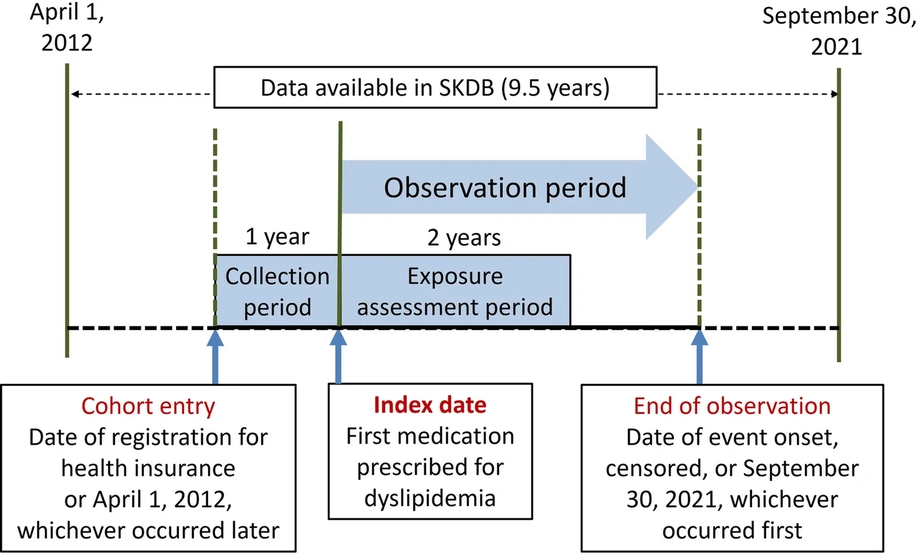
Taku Matsunaga, Eiji Nakatani and colleagues used the Shizuoka Kokuho Database, which contains medical and care insurance information for more than 2.5 million residents. Their visit frequency study examined records from April 1, 2012, to September 30, 2021. The paper records acceptance on July 7, 2026.
Dyslipidaemia means abnormal levels of fats in the blood, including cholesterol and triglycerides. Treatment aims to reduce the risk of problems such as heart attacks and strokes. Researchers compared people starting medicines to lower these blood fats, grouping them by prescription visits during their first two years of treatment.
The group attending less often had eight to 12 visits over two years. The group attending more often had at least 22. Researchers matched patients using characteristics including age, other illnesses, smoking, blood pressure and laboratory results, making the groups more comparable. The final analysis included 1,435 patients attending less often and 4,412 attending more often.
Selection was important. Participants were at least 40 years old, and the researchers excluded people with previous cardiac or cerebrovascular events, cancer, maintenance dialysis or insulin treatment by self injection. Patients experiencing the study outcomes within the first two years were also excluded. Both groups continued treatment, with minimum attendance requirements throughout those two years.
Equal percentages, with uncertainty still attached
Researchers recorded the combined outcome of cardiac events, cerebrovascular events or death in 81 patients attending less often and 249 attending more often. Both proportions rounded to 5.6%. Separate analyses of heart problems, cerebrovascular problems and deaths also found no statistically significant differences.
The adjusted hazard ratio for the combined outcome was 1.08. A hazard ratio compares how quickly events occur over time; a value of one means the rates are the same. Its 95% confidence interval ran from 0.84 to 1.38, leaving uncertainty compatible with either a lower event rate or a clinically meaningful increase among patients attending less often.
Researchers examined existing treatment patterns rather than randomly assigning appointment schedules. They adjusted for many differences between patients, but detailed information about medicine doses, dose changes and the timing of additional treatment was unavailable. Those factors can influence how often a doctor needs to see someone.
The study authors described the potential application in their conclusion:
Extending visit intervals may therefore be a reasonable option for selected stable patients receiving lipid-lowering therapy for primary prevention.
Primary prevention means trying to prevent a first cardiovascular event. For patients, the practical proposal is continued medication with an appointment schedule chosen by a doctor according to cardiovascular risk and response to treatment.
How fewer visits become a savings estimate
Japan's medical bills are assembled from a national schedule of fees. Services receive points, with each point worth ¥10. A consultation and a pharmacy visit can generate several charges beyond the medicine itself, including fees for prescribing, dispensing and medication guidance.
The savings calculation uses an illustrative 490 points for a medical visit and 170 points for pharmacy services. Together, those charges amount to ¥6,600, excluding the medicine's price. Actual charges depend on the services and applicable billing conditions.
Moving from 12 appointments a year to six would remove six sets of those charges. At ¥6,600 each, the annual reduction would be ¥39,600 per patient. For someone paying 30% of the relevant charges, the corresponding reduction in personal payments would be ¥11,880, assuming the same billing conditions. Other patients have different payment shares.
The national cholesterol treatment estimate starts with about 4.6 million patients and assumes that 70%, roughly 3.2 million people, have sufficiently controlled blood fats to be candidates for fewer appointments. Multiplying 3.2 million by ¥39,600 produces approximately ¥127 billion in annual savings.
That calculation combines several kinds of evidence. The patient count comes from national estimates, while the 70% control assumption draws on a review using health screening data from 2008 and 2009. Doctors would still need to assess which patients can safely wait longer between appointments.
The starting number of visits changes the answer
Allied Medical's analysis of 540,000 prescriptions from clinics found that patients receiving treatment for dyslipidaemia attended about 10 times a year on average. This creates an important arithmetic issue: the ¥127 billion calculation assumes six fewer visits, whereas moving from the observed average of 10 visits to six removes four.
Using four fewer visits at ¥6,600 gives ¥26,400 per patient annually. Applied to the same assumed 3.2 million eligible patients, that would produce approximately ¥84.5 billion in savings. Moving from 10 visits to four would remove six appointments, but would require a schedule closer to one visit every three months.
The difference matters because the study's less frequent group covered a range of four to six appointments annually. A national policy would need a realistic mix of schedules rather than a single assumed reduction for everyone.
Longer intervals could also spare patients trips, waiting time and travel expenses. For clinics and pharmacies, however, the charges removed from patients' bills and insurance claims are also revenue. Changing appointment patterns therefore affects both household convenience and the finances of organisations delivering care.
Why national patient counts need careful handling
The Ministry of Health, Labour and Welfare's 2023 Patient Survey distinguishes between patients receiving care on a survey day and the larger population receiving continuing treatment. For dyslipidaemia, it gives an estimated 162,000 outpatients on the survey day, equivalent to 130 per 100,000 residents.
The ministry calculates the continuing treatment population using estimated inpatients, first outpatient visits, repeat outpatient visits, average intervals between appointments and an adjustment for operating days. Someone receiving medicine every three months can belong to the continuing treatment population even when absent on the survey day.
The survey also puts the broader continuing treatment population at 22.101 million for circulatory diseases and 11.967 million for endocrine, nutritional and metabolic diseases. These broad categories contain multiple conditions, so calculations targeting particular diseases need the relevant disease counts.
Dates matter too. The government's 2014 dyslipidaemia table, published on December 17, 2015, organises patients by residence, sex and age. It is a historical dataset. The distinction between its survey year and publication date is essential when comparing it with figures from 2023.
Expanding the proposal to blood pressure and diabetes
Allied Medical has also analysed appointment frequency among patients with hypertension and diabetes. Its analyses found no statistically significant difference in severe outcomes between groups attending at intervals of one month or less and those attending at longer intervals.
The wider savings calculation uses approximately 16 million patients with essential hypertension and 3.6 million with type 2 diabetes. It assumes 45% in each group have achieved the relevant blood pressure or blood glucose targets, producing roughly 8.8 million potentially eligible patients across the two conditions.
Six fewer appointments per patient, using the same ¥39,600 annual saving, produces about ¥348 billion. Adding the cholesterol treatment estimate gives roughly ¥475 billion annually from reduced visits across the three conditions.
Patients can have hypertension, diabetes and dyslipidaemia together, with all three managed during one appointment. A national calculation needs to account for that overlap, because one avoided appointment generates one set of avoided charges even when it addresses several conditions. The total also depends on whether six visits can realistically be removed for each eligible patient.
Less expensive medicines underpin the trillion yen proposal
Nakatani and colleagues also used Shizuoka medical data in studies published in 2024 and 2025 comparing treatment combinations involving three commonly used types of diabetes medicine with different prices. The comparisons found no statistically significant differences in severe disease outcomes between the more expensive and less expensive treatment groups.
Allied Medical conducted related analyses using clinic records for combinations involving two blood pressure medicines and two cholesterol medicines. Those comparisons likewise found no statistically significant differences in severe outcomes between the costlier and cheaper options studied.
The proposed approach is to begin with standard, less expensive treatment when a doctor judges it appropriate, then consider longer appointment intervals once the condition is stable. Medicine selection still depends on the patient's needs, including other illnesses, response to treatment and monitoring requirements.
The estimate of more than ¥1 trillion combines changes in prescribing with changes in appointment frequency. A detailed national breakdown showing medicine prices, eligible populations, overlapping conditions and implementation costs has not been specified here. The clearest figures to examine are therefore the individual assumptions, beginning with the cost per avoided visit and the number of visits actually removed.
Another study shows why small charges deserve attention
A separate low value care study examined 52 services in insurance records covering 1,923,484 people from April 2022 to March 2023. Low value care means services expected to offer little benefit in the circumstances identified by the study's measures.
Using narrower definitions, researchers identified about 3.1 million episodes costing ¥5.3 billion, or 0.65% of the population's ¥823.7 billion in medical spending. Broader definitions identified about 3.7 million episodes costing ¥8.4 billion, or 1.02% of spending.
Services costing less than US$80 each accounted for 67% of unnecessary spending under the narrower definition, compared with 33% for more expensive services. More than 99% of identified episodes involved services classified as very inexpensive or inexpensive. Small charges accumulated into substantial spending because they occurred so often.
After adjustment for age, sex and region, the national estimate was approximately ¥207 billion to ¥331 billion annually, including ¥330.5 billion under the broader definition. Its scope was 52 specified services. Adding those estimates to the appointment and medicine proposals would require checking for overlapping spending.
A reform tool already exists, but uptake is limited
Japan introduced refill prescriptions in 2022, allowing eligible patients to obtain further supplies under a doctor's prescription without a new consultation each time. The Shizuoka study says uptake remained below 1% more than two years after introduction.
The main dates show how the research and policy developed:
- April 2012 to September 2021: the Shizuoka records used in the appointment frequency study were collected.
- 2022: Japan introduced refill prescriptions.
- April 2022 to March 2023: the separate study measured 52 low value care services.
- October 2023: the national Patient Survey measured treatment use and patient populations.
- July 7, 2026: the Shizuoka appointment frequency paper was accepted.
Japan also faces a difficult provider funding problem. Figures cited for fiscal 2025 put 83% of municipal public hospitals in recurring deficit. The Japan Medical Association said 45% of clinics recorded losses from their core medical activities in fiscal 2024, an increase of 14 percentage points from the previous year.
Journalist Tsuyoshi Sugitani, who writes about medical spending, has also raised concerns about possible excessive billing in treatment for chronic conditions. For patients, the concrete issue is whether charges on an itemised statement match the care received. For policymakers, the wider task is to reduce avoidable spending while maintaining access to appointments when patients need them.
The Shizuoka findings support reviewing schedules for selected patients whose treatment is continuing and whose condition is stable. The national financial outcome will depend on clinical decisions, actual appointment reductions, prescribing choices and payment arrangements that allow providers to keep delivering necessary care.
Key Points
- A Shizuoka study followed 5,847 patients for an average of 5.3 years; cardiovascular events or death occurred in 5.6% of both appointment frequency groups.
- The authors support considering longer intervals for selected stable patients, with uncertainty around the size of any difference in risk.
- An illustrative six fewer visits saves ¥39,600 annually per patient in consultation and pharmacy charges, excluding medicines.
- The approximately ¥475 billion estimate for fewer visits depends on patient eligibility, existing schedules and overlap between conditions.
- Allied Medical's estimate exceeding ¥1 trillion also includes less expensive prescribing choices.
- A separate national analysis estimated ¥207 billion to ¥331 billion in annual spending on 52 low value care services.