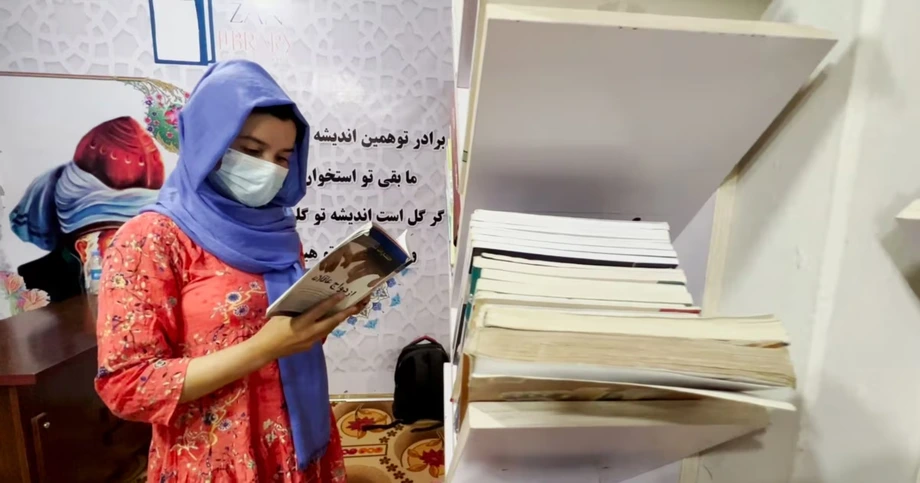
Leaving Afghanistan no longer guarantees a classroom
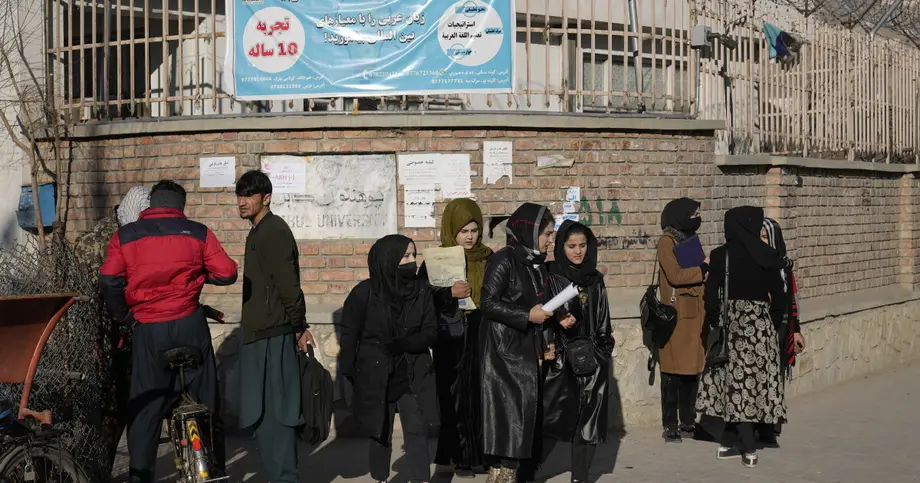
Zahra was only months away from completing a medical degree in Kabul when the Taliban banned women from universities in December 2022. Her family moved to Iran so she and her sister could keep studying. Four years later, both remain outside education because they lack valid residency permits.
Contents
- Leaving Afghanistan no longer guarantees a classroom
- How the restrictions accumulated
- In Iran, a degree is not enough
- What Iran's school rules allow
- Deportation adds urgency to the loss of education
- In Quetta, an English course replaces a school place
- Medical students face another interruption
- Afghanistan's schools face growing pressure
- Alternative classes keep learning alive, but access stays limited
- Key Points
Her experience reflects a growing problem for Afghan girls and women who sought an education across the border. Iran and Pakistan allow eligible Afghans to study, but residency requirements, expired documents and deportation campaigns have blocked access for some of those who left Afghanistan specifically to continue learning.
Zahra, an Afghan medical student living in Tehran, described how her family's immigration status stopped her studies:
Our visa expired quickly, and without legal residency permits we were denied permission to study.
Zahra, Roya and Nilofar, the women whose experiences are described here, are identified by names used to protect their safety. Their accounts show how an education interrupted by Taliban restrictions can remain out of reach after a family has moved to another country.
The latest national figures show the scale of what returning students face. In its November 4, 2026 account of the Afghanistan Education Situation report, UN News said UNESCO and UNICEF counted more than 2.6 million girls barred from school beyond sixth grade. Afghanistan remains the only country where girls and women are formally excluded from secondary and higher education.
The Afghanistan Education Situation Report 2026 was jointly published by UNESCO and UNICEF, with a release dated November 4, 2026. Its figure of more than 2.6 million girls refers to those denied secondary education since 2021.
For families deciding whether to stay abroad or return, the choices are narrowing: permission to study may depend on residency documents overseas, while the ban awaits girls at home.
How the restrictions accumulated
The Taliban's education restrictions developed in stages after the movement returned to power in August 2021. Girls above sixth grade were excluded when schools reopened for boys in September that year. In March 2022, the authorities suspended their return to secondary classrooms, and later restrictions reached universities and medical training.
The main developments span five years:
- September 2021: Schools reopened for boys while girls above sixth grade remained excluded.
- March 2022: The Taliban suspended girls' education beyond sixth grade.
- December 2022: Women were banned from universities.
- December 2024: Women were barred from medical training courses.
- March 2025: Temporary registration documents expired for an estimated 2 million Afghans in Iran, followed by restrictions on services for foreigners without valid residency papers.
- November 2026: UNESCO and UNICEF reported that more than 2.6 million girls had been denied secondary education since 2021.
Taliban officials have repeatedly described the school restrictions as temporary and dependent on suitable conditions. They have given no date for reopening secondary schools or universities to girls and women.
In Iran, a degree is not enough
Roya left Afghanistan about four years ago because she wanted to continue studying. She already holds a bachelor's degree and applied to several Iranian universities for a master's programme. Her applications were rejected because she lacked a legal residency permit.
Roya, an Afghan graduate living in Tehran, explained the ambition behind her move:
I always wanted to study, to get a master's degree, and to do something with my life, and that was the reason I left my country.
Zahra and Roya describe the same obstacle at different stages of higher education. Zahra needs to complete medical studies interrupted near graduation; Roya wants to advance beyond a degree she has already earned. Both say they face the daily risk of deportation.
What Iran's school rules allow
Iran's Education Ministry requires foreign nationals to have valid residency documents, attend schools in the area where they are registered and obtain letters of introduction from agencies responsible for migrants. Families must therefore satisfy immigration and administrative requirements as well as find a school.
Nader Yarahmadi, head of the Interior Ministry's centre for foreign nationals and immigrants, said on September 27, 2026, that Afghan children could attend school without their own documents if their parents held valid residency permits. He said the children's paperwork could be completed during the school year.
Afghan children can also study alongside Iranian pupils without paying additional tuition fees. These provisions offer access to eligible families, but the requirement for a parent's valid residency remains central. Zahra and Roya's accounts concern university applications, where they say their own lack of legal status prevented admission.
Iran's changes in March 2025 made that status harder to maintain for many Afghans. Registration slips that had provided temporary legal standing to an estimated 2 million people expired. From March 21, access to services, including education, was restricted for foreigners without valid residency documents.
Many Afghans who arrived in recent years say their visas have expired and obtaining legal residency has become nearly impossible. For those families, tuition costs are only part of the problem: they first need documents that allow them to enter the education system.
Deportation adds urgency to the loss of education
About 1.9 million Afghans returned from Iran in 2025, including 1.26 million who were deported. Those figures put deportations at roughly two thirds of that year's returns. Figures cited by the United Nations recorded nearly 492,300 further deportations by October 12, 2026.
Pakistan has also been carrying out a sustained campaign against undocumented Afghans since 2023. UNHCR, the UN refugee agency, and the International Organization for Migration recorded more than 2.39 million returns from Pakistan between September 2023 and May 16, 2026.
Afghan migrants in Pakistan describe fear of arrest during police raids. For girls trying to resume school, immigration enforcement adds another disruption to years already lost: a family may be sent back before a student can secure admission or complete a course.
In Quetta, an English course replaces a school place
Nilofar was in her final year of high school when Taliban restrictions ended her education in Afghanistan. She travelled to Pakistan with relatives hoping to finish school, but she could not obtain a residency permit and never enrolled.
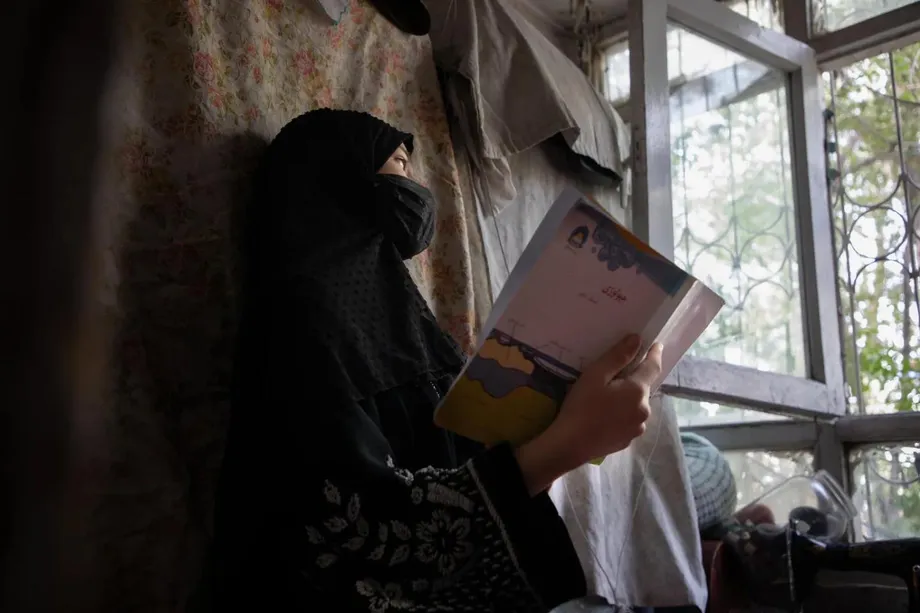
She now lives in Hazara Town, a neighbourhood of Quetta, the capital of Balochistan Province. An English language course, which requires no identity card, is the learning opportunity she has been able to access.
Nilofar, an Afghan student whose schooling remains unfinished, described the gap between her reason for moving and her daily reality:
I came to Pakistan to get a proper education. Now, all I can do is take courses from time to time.
Pakistani officials say Afghans with valid visas, residency papers and local identity cards can attend schools and universities. Rights advocates say those requirements leave out people whose documents are delayed by administrative backlogs or whose refugee status has been cancelled.
Nilofar measures the cost in academic years. She said that if she had continued studying over the past four or five years, she would now be in her fourth semester at university. Instead, she is still seeking a route back into formal education.
Medical students face another interruption
Hundreds of Afghan medical students in Pakistan, including many women, are fighting to continue courses they had already begun. The Pakistan Medical and Dental Council ordered them to return home and instructed colleges not to arrange their enrolment for the academic year.
Pakistani courts have issued interim orders protecting students from immediate deportation. An interim order is a temporary court measure while a dispute is considered. The students' longer term permission to remain and continue their courses is still unresolved.
Women studying medicine face a particularly narrow set of options because Afghanistan has banned both university study and medical training for women. Another Afghan student described spending more than a year learning midwifery before her training centre closed. She is now trying to continue learning online.
Zahra's interrupted medical degree and the students' difficulties in Pakistan show how restrictions can reach people close to completing professional training. Years of study remain unfinished when a student loses permission to attend the institution providing the qualification.
Afghanistan's schools face growing pressure
UNESCO and UNICEF's November report describes an education system struggling to meet rising demand. Afghanistan's population aged seven to 18 grew from approximately 10.4 million in 2019 to 11.5 million in 2024, an increase of about 1.1 million, or nearly 11 percent.
By September 2026, approximately 1.23 million Afghans had returned to the country that year, including more than 245,000 returnee children requiring education support. Their arrival added demand for classrooms, teachers and materials to a system already strained by recurring emergencies and insufficient investment.
Public primary schools enrolled approximately 6.6 million children in 2025, about 560,000 more than in 2022. Yet the agencies reported that 53 percent of children of primary school age remained outside formal general education, while information about private, Islamic and alternative education was incomplete.
The report also identified gaps in learning. A national assessment of more than 55,000 pupils across all 34 provinces found that fewer than half of Grade 4 pupils met the minimum language proficiency expected for Grade 3. Only one in four met the mathematics threshold for that grade. Fewer than one in 100 children aged three to four participated in early childhood education programmes.
Taliban Education Ministry official Sibghatullah Wasil, the deputy responsible for finance and administration, said about 1 million new students had entered schools and religious schools over two years. That figure excluded girls above sixth grade. Higher enrolment among eligible children leaves the ban on older girls unchanged.
Universities also remain much smaller than before the restrictions. Higher education enrolment reached about 208,000 in 2026, up from 189,000 in 2024 but below approximately 430,000 in 2020. The 2026 figure is less than half the 2020 total.
Alternative classes keep learning alive, but access stays limited
Community education, private tutoring, literacy programmes and online lessons provide some opportunities for Afghan girls. By October 2026, UNESCO and UNICEF counted approximately 5,300 community-driven classes serving about 162,000 learners, with girls making up 64 percent, or roughly 104,000.
The agencies described those opportunities as insufficient. The report's authors explained why formal schooling remains essential:
nothing can replace in-person schooling and substitute for their fundamental human right to formal education
Amnesty International has pointed to clandestine online schooling, protests and travel abroad as ways girls have resisted exclusion. Farashta Abbasi, a researcher at Human Rights Watch, said the education ban also damages women's rights to work and travel and contributes to forced marriage and child marriage.
Richard Bennett, the UN special rapporteur on human rights in Afghanistan, has warned that the exclusion may amount to a crime against humanity. The wider issue of alleged persecution remains before the International Criminal Court, where the Taliban investigation continues after judges closed other strands of the Afghanistan inquiry.
UNESCO and UNICEF are calling for girls' and women's right to education to be fully restored, alongside investment in teachers, learning materials and education quality. Their report connects the exclusion of girls with a wider shortage of places and resources affecting Afghan children.
Nilofar's experience brings those findings back to a single student's lost time. An English course gives her somewhere to learn, but she says it "can't be a substitute for school." For her, Zahra and Roya, the immediate goal remains the education they moved abroad to complete.
Key Points
- Afghan girls and women in Iran and Pakistan describe losing access to education because they lack valid residency documents.
- Iran permits eligible Afghan children to attend school, including some whose paperwork can be completed while they study, provided their parents have valid residency.
- Pakistani courts have temporarily protected Afghan medical students from deportation while their future studies remain unresolved.
- UNESCO and UNICEF's Afghanistan Education Situation Report 2026, released on November 4, reported that more than 2.6 million Afghan girls had been denied secondary education since 2021 and 53 percent of primary school-age children were outside formal general education.
- By September 2026, approximately 1.23 million Afghans had returned that year, including more than 245,000 returnee children requiring education support, adding pressure to schools where teachers, materials and classroom places are already stretched.
- The Taliban has given no date for restoring secondary and university education for girls and women.