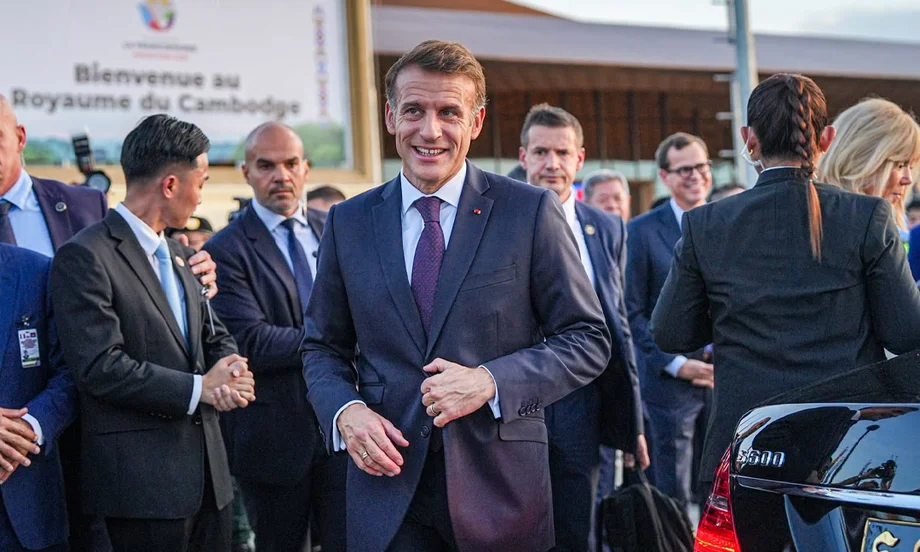
Research centre and business deals anchor Phnom Penh visit
France and Cambodia are preparing agreements spanning artificial intelligence, energy, health, defence and heritage during President Emmanuel Macron's visit to Phnom Penh, with a proposed national AI research centre among the most concrete projects. Cambodian partners also plan research cooperation aimed at training 60 AI specialists over four years and giving researchers access to powerful computers in Romania.
Contents
- Research centre and business deals anchor Phnom Penh visit
- What Cambodia wants from a national AI centre
- Three partnerships target skills, computing and adaptable software
- Why speaking Khmer is only part of the challenge
- A wholesale market proposal connects diplomacy to daily trade
- FrancoTech opens investment channels beyond France
- Angkor gives the partnership a visible result
- The summit joins cultural priorities with digital ambitions
- What comes next in Cambodia and Malaysia
- Key Points
Macron arrived on Saturday, November 14, 2026, accompanied by his wife, Brigitte Macron, ahead of the November 15 and 16 summit of the International Organisation of La Francophonie, known as the OIF. His visit is the first by a French president to Cambodia since François Mitterrand travelled there in 1993, a gap of 33 years.
Meetings with Prime Minister Hun Manet are expected to bring agreements covering both public institutions and commercial cooperation. The planned package has been put at 28 agreements, while other published tallies give approximately 10. The final number and the scope of each agreement have not been confirmed.
Cambodia's ambitions extend beyond signing ceremonies. Plans discussed at the accompanying FrancoTech forum connect a research building, specialist training, computing access and technology that understands Khmer. A separate proposal would draw on the expertise of France's Rungis wholesale market to help Cambodia develop a modern wholesale market.
Macron is also due to visit Angkor with King Norodom Sihamoni for a ceremony marking the completion of 14 years of restoration work at West Mebon temple. The programme brings a completed heritage project alongside proposals whose benefits will depend on the research, training and business activity that follow.
What Cambodia wants from a national AI centre
Cambodia and France plan an agreement to establish a National Artificial Intelligence and Data Science Research Centre, with signing expected in Macron's presence. Huy Siv E, who leads energy and digital projects at the French Development Agency, described the proposal at FrancoTech on November 14.
The project involves Cambodia's Ministry of Posts and Telecommunications and the Cambodia Academy of Digital Technology, or CADT, with French financing through the development agency. Its intended users include entrepreneurs, school pupils and university students researching and developing AI.
Artificial intelligence uses computer systems to perform tasks such as recognising speech, answering questions or finding patterns in information. Data science involves examining information to identify useful patterns. A centre bringing the two together would give Cambodian researchers a place to develop tools for local needs.
The proposed centre would house graphics processing units, known as GPUs. These chips can perform many calculations at once, making them useful for training AI systems and running them after development.
Cambodian students have already contributed to the building's design. A team from the Royal University of Fine Arts won first prize in an architecture competition organised through cooperation involving the ministry, the French Development Agency and CADT. A model of the winning design was displayed at FrancoTech.
Three partnerships target skills, computing and adaptable software
CADT plans to sign three cooperation agreements with French and Romanian partners on November 15. Together, they address three practical needs: people who can build AI, computers powerful enough to develop it and software that Cambodian teams can adapt.
A proposed partnership with a university in Grenoble, France, aims to train 60 AI specialists over four years. That equals an average of 15 specialists a year, although the actual training schedule has not been detailed.
A second agreement, with a university in Bucharest, would give Cambodian researchers access to a Romanian computing network designed for university research. Large AI models require substantial processing power, which can be difficult for an individual research team to obtain.
Seng Sopheap, CADT's president, explained the purpose of the computing partnership in a November 14 interview:
We know that building AI models requires substantial computing power. This partnership will allow us to use a large computing network of this kind,
The third agreement would link CADT with a French company working on open source AI. Open source models make key technical components available for others to examine and adapt under their licensing terms. Sopheap said the cooperation would help researchers develop tools they could operate themselves.
Why speaking Khmer is only part of the challenge
Sopheap told a FrancoTech roundtable on November 14 that Cambodia needs AI suited to its language, history, culture and institutions. His concern reaches beyond translating the words shown on a screen.
The CADT president described the requirement in direct terms:
For a country like Cambodia, using artificial intelligence is very important, but we have to make sure it understands our language, understands our history and respects our culture,
Seydina Moussa Ndiaye, director of the FORCE-N programme at Senegal's Cheikh Hamidou Kane Digital University, illustrated the problem with a hypothetical assistant answering in Wolof, a language widely spoken in Senegal, while describing a procedure used in another country.
A Cambodian user could face the equivalent problem: fluent Khmer instructions that send someone through the wrong process for obtaining a public service. Useful AI therefore needs accurate local information as well as understandable language.
Ndiaye proposed shared language resources, access to computing infrastructure and agreed testing methods. People familiar with local languages and practices should help prepare the resources, with clear terms for how their contributions may be used. He also called for testing before deployment, responsibility for decisions generated by AI and human supervision suited to each service.
Alexandre Zapolsky, president of French software company LINAGORA, advocated adaptable open source models and voice tools that could help people who struggle with existing digital public services. Université Grenoble Alpes president Yassine Lakhnech focused on technical skills, saying universities could help institutions develop systems and govern technology supplied by others.
A wholesale market proposal connects diplomacy to daily trade
Macron brought French business leaders to Cambodia to seek new markets and expand trade opportunities. In a message posted on X on November 14, he identified Cambodia's interest in French wholesale market expertise as an example of possible cooperation.
The proposal would draw on experience from Rungis in France to develop a modern wholesale market in Cambodia. Wholesale markets bring together goods sold in large quantities to traders and businesses, which then supply shops, restaurants and other customers.
For Cambodia, the proposal concerns the organisation of trade infrastructure as much as the sale of French expertise. A functioning wholesale market needs arrangements for receiving goods, bringing buyers and sellers together and moving products onward. The project places an everyday commercial activity alongside the visit's more technical AI agenda.
Macron presented the visits to Cambodia and Malaysia as a way to protect jobs and livelihoods by creating economic and trade opportunities. He also said partnerships with more countries could reduce dependence on a single source of supply.
The commercial and digital proposals share that concern with having more choices. Businesses would gain possible markets and partners, while Cambodian researchers would gain access to training, computing and software through institutions in several countries.
FrancoTech opens investment channels beyond France
Cambodia exchanged three investment cooperation documents with Francophonie partners at FrancoTech on November 14. Deputy Prime Minister Sun Chanthol, first vice chairman of the Council for the Development of Cambodia, delivered the keynote address and presided over the exchange.
The council's agreements covered investment cooperation and information sharing with partners in the Republic of Congo, Monaco and Gabon. Chea Vuthy, secretary general of the council's investment committee, represented the Cambodian institution.
- A memorandum with the Republic of Congo's investment promotion agency involved Michel Djombo Balombelly, the country's minister responsible for industrial development, special economic zones and private sector promotion.
- A memorandum with the Monaco Chamber of Commerce was exchanged with its chief executive, Guillaume Rose.
- A letter of intent with Gabon's national investment promotion agency involved its director general, Ghislain Moandza Mboma.
The documents create channels for cooperation and exchanging information about investment opportunities. They show Cambodia using the summit's business programme to develop relationships beyond the visit's bilateral focus on France.
FrancoTech is taking place at the Koh Pich Convention and Exhibition Center, with more than 100 exhibition booths from over 16 countries. Its programme runs through November 16 and includes eight roundtable discussions over three days.
Following the opening AI discussion, subjects include digital government, financial technology, agriculture, tourism, and technology and culture. The National Bank of Cambodia and the Ministry of Posts and Telecommunications are organising the Black Swan international financial technology conference, focusing on consumer protection and wider access to financial services.
Angkor gives the partnership a visible result
West Mebon temple in the Angkor archaeological area, in Siem Reap province, is the focus of the heritage portion of Macron's visit. Cambodian and French specialists have worked together for 14 years on its restoration and conservation.
Macron wrote on X on November 14 that the work reflected trust and cooperation between the two countries. He linked current projects to relationships built by earlier generations who had learned to work together.
The Angkor programme places Macron alongside King Norodom Sihamoni at the restoration project's closing ceremony. The published schedule gives the afternoon of November 17, while the initial itinerary described a Monday visit, which falls on November 16 in 2026.
The temple project provides a concrete example of cooperation sustained over many years. Its completion also connects the presidential visit with the summit's wider attention to cultural heritage and diversity.
The summit joins cultural priorities with digital ambitions
Cambodia is hosting the 20th Francophonie Summit on November 15 and 16. The OIF brings together states and governments connected through French, with participation extending to countries where it is not the main language.
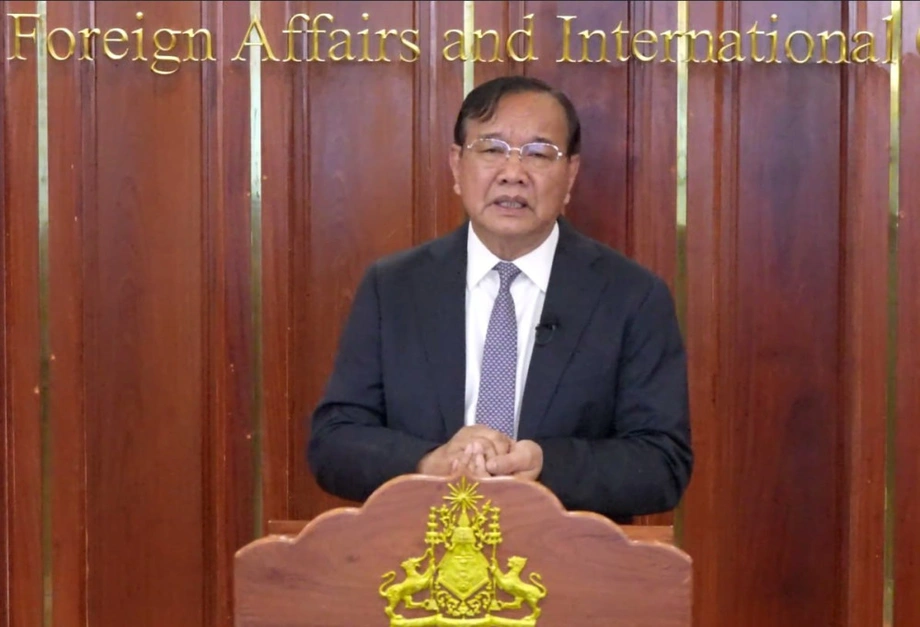
Foreign Minister Prak Sokhonn has identified three proposed summit outcomes: the Phnom Penh Declaration, a resolution on crises and strengthening peace, and an appeal on cultural heritage and diversity. Cambodia's preparations for those three proposed summit texts also placed peace and cultural protection at the centre of the gathering.
At the 48th Francophonie Ministerial Conference, Prak Sokhonn said digital technology and AI could create opportunities for young people and economies. He urged members to ensure that the benefits were widely shared and that French and other languages had a place in the technology.
The FrancoTech discussions translate that ambition into practical proposals. Shared language data, trained researchers and access to computers would help Cambodian teams develop tools for Khmer users while working with partners in Europe and Africa.
Ndiaye described French as a connection between research communities and companies, while calling for cooperation that also supports Khmer, Wolof and other languages. The focus is on using a shared diplomatic and research network to develop technology that serves different communities.
What comes next in Cambodia and Malaysia
Macron's regional programme continues to Malaysia, where cooperation announcements are expected in defence and rare earth minerals. Rare earths are a group of metals used in technologies including powerful magnets and electronics, making access to supplies a commercial concern.
The trip also takes place amid continuing social unrest in France, with further protests expected on November 14. Macron's stated focus on jobs, livelihoods and new markets connects the overseas business programme with economic concerns at home.
The principal dates and planned steps are:
- November 14: Macron arrived in Phnom Penh; FrancoTech discussions and investment document exchanges took place.
- November 15: CADT planned three agreements covering AI training, computing access and open source cooperation.
- November 15 and 16: Cambodia hosts the Francophonie Summit, while FrancoTech continues through November 16.
- November 17: The published Angkor programme schedules the West Mebon closing ceremony, although the initial itinerary placed it on Monday, November 16.
- After Cambodia: Macron is expected to continue to Malaysia for further economic and defence cooperation discussions.
The regional calendar also includes an ASEAN summit in Manila, with US President Donald Trump expected to attend, and the annual APEC forum in Shenzhen, China. For Cambodia, the most immediate next steps are the planned agreements and the work needed to turn research and commercial proposals into operating projects.
Key Points
- Macron's visit is the first by a French president to Cambodia since Mitterrand's visit in 1993.
- The planned cooperation package spans AI, energy, health, defence and heritage, with published totals ranging from approximately 10 agreements to 28.
- A proposed national AI centre would support research, students and entrepreneurs with French development financing.
- CADT partnerships aim to train 60 AI specialists over four years, provide Romanian computing access and support adaptable software.
- Cambodia is exploring French Rungis expertise for a modern wholesale market and exchanged three investment cooperation documents with other Francophonie partners.
- The West Mebon ceremony would mark the completion of 14 years of Cambodian and French restoration work.